PuenteIslandia

Aprende normas de tráfico con explicaciones claras y ejemplos visuales en nuestro libro ilustrado, diseñado para que estudiar sea sencillo y ameno.


4. Puente

Un puente es una estructura que lleva una carretera, camino o vía férrea sobre un obstáculo como un río, valle, línea ferroviaria u otra carretera. Un puente de carretera puede transportar una o más calzadas junto con instalaciones para peatones o ciclistas.

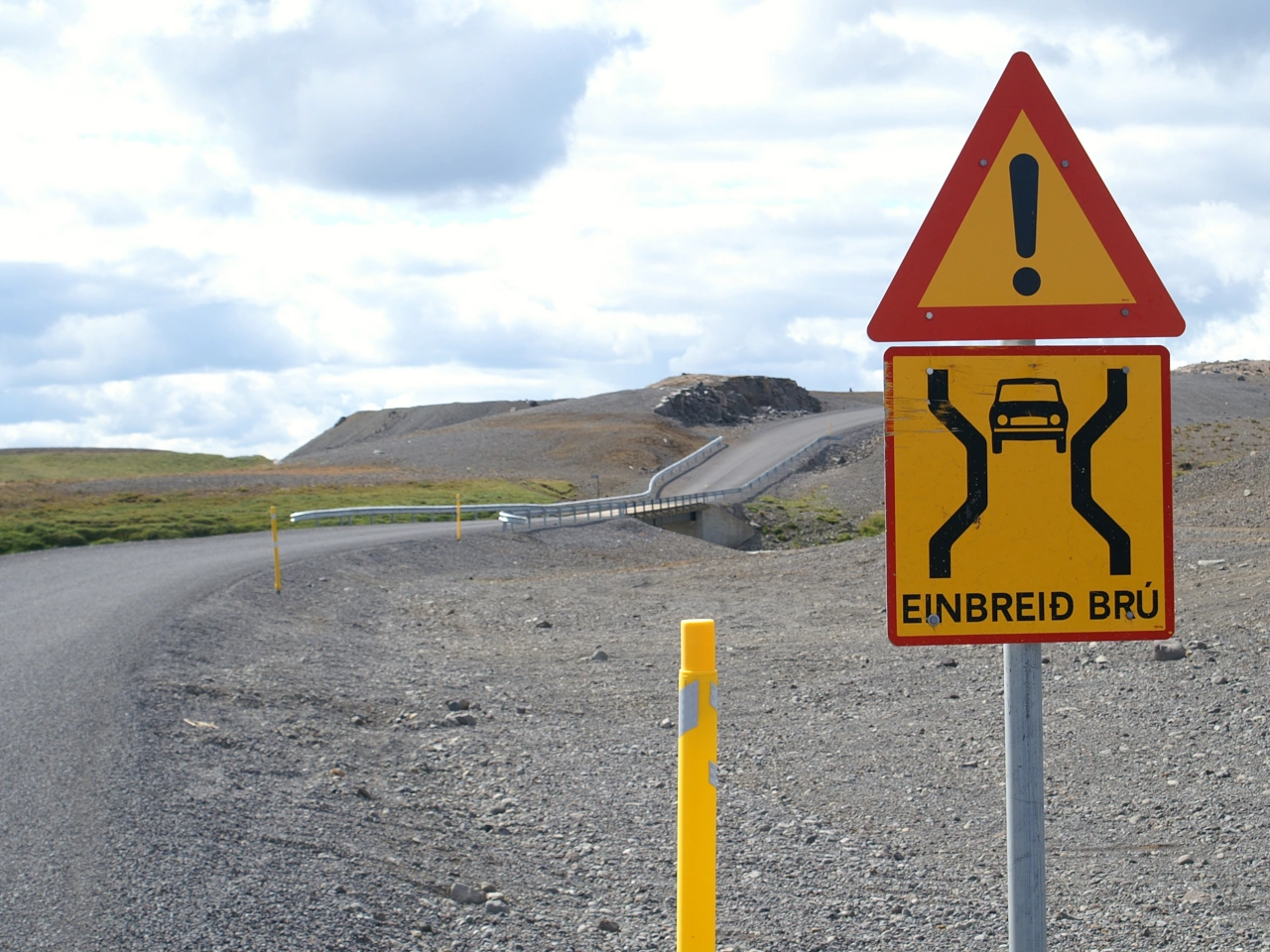
Los conductores deben respetar cualquier restricción de velocidad, peso, altura, anchura o acceso de vehículos aplicable al puente. Puede ser necesario especial cuidado en puentes estrechos, expuestos o móviles y cuando condiciones meteorológicas como viento, lluvia o hielo afecten a la superficie.
Puente
What is a bridge?

A bridge is a structure that carries a road, path or railway over an obstacle such as a river, valley, railway or another road.

Can a bridge carry several traffic lanes?

Yes. Road bridges may carry one or several traffic lanes and can also contain pavements, cycle facilities or public-transport infrastructure.

Can a bridge have a weight limit?

Yes. A bridge may have restrictions on the maximum vehicle mass or axle load that it can safely accommodate. Drivers of heavy vehicles must obey the applicable signs.

Can a bridge have a width or height restriction?

Yes. Narrow bridges or structures forming part of a bridge can have width, height or other dimensional restrictions indicated by traffic signs.

What is a movable bridge?

A movable bridge is a bridge that can open, lift, swing or otherwise move to allow ships or other traffic to pass beneath or through it.

What should you do when a movable bridge is opening?

Stop when required by the traffic lights, barriers or other signals and remain behind the designated stopping point until the crossing is reopened.

Can bridges become slippery?

Yes. Bridge surfaces can become wet, icy or slippery and may sometimes cool differently from the surrounding road. Drivers should adapt their speed to the actual conditions.

Can strong winds be dangerous on a bridge?

Yes. Exposed bridges can be affected by crosswinds, particularly for motorcycles, bicycles, high-sided vehicles and vehicles towing trailers.

Can you stop or park on a bridge?

This depends on the local traffic rules, road layout and signs. Stopping or parking may be prohibited where it would create danger, obstruct traffic or reduce the available road width.

Can pedestrians and cyclists use a bridge?

Yes, where permitted. Bridges may provide pavements, cycle paths or shared facilities, while high-speed or restricted bridges may prohibit certain road users.

Can traffic be restricted to one direction on a narrow bridge?

Yes. Priority signs, traffic lights or other traffic-management measures may control which direction passes first where two-way traffic cannot safely meet.

Should you overtake on a narrow bridge?

Only when overtaking is legal and clearly safe. Limited width or visibility can make overtaking inappropriate even where no specific prohibition is shown.

1 Islandia 2 Autopista 3 Límite de velocidad 4 Puente 5 Ceda el paso 6 Vía con prioridad 7 Adelantamiento 8 Cruce de animales 9 Curva 10 Semáforos 11 Permiso de conducir 12 Marcha atrás 13 Matrícula 14 Peligros 15 Cambio de rasante sin visibilidad 16 Autobús 17 Policía 18 Ambulancia 19 Norma europea de emisiones 20 Bache 21 Camino 22 Partículas 23 Contaminación del aire 24 Hora punta 25 Código de circulación 26 Canaleta de la calle 27 Bicicleta de carga 28 Vehículo forestal 29 Vehículo de construcción 30 Camión articulado 31 Trolebús 32 Speed pedelec 33 Vehículo de reparto 34 Motor al ralentí 35 Grúa 36 Tracción a las cuatro ruedas 37 Bicicleta 38 Equipamiento de motocicleta 39 Vía férrea 40 Caravana 41 Remolque 42 Enganche de remolque 43 Camión de bomberos 44 Sirena 45 Convoy 46 Luces de vehículos de emergencia 47 Maquinaria agrícola 48 Bicicleta eléctrica 49 Vehículo eléctrico 50 Pedelec 51 Cuadriciclo 52 Microcoche 53 Vehículo todoterreno 54 Furgoneta 55 Vehículo recreativo 56 Scooter 57 Trikke 58 Vehículo de movilidad personal 59 Monopatín 60 Segway 61 Patinete 62 Patines 63 Cartero 64 Autoestopista 65 Niño pequeño 66 Niño 67 Discapacidad 68 Tren para automóviles 69 km/h 70 mph 71 Velocímetro 72 Altura libre del vehículo 73 Camino de tierra 74 Conducción 75 Sistema start-stop 76 Cambio manual 77 Cambio automático 78 Acelerador 79 Cuentarrevoluciones 80 Volante 81 Dirección asistida 82 Exploración visual 83 Espejo 84 Combustible 85 Indicador de combustible 86 Gasolina 87 Diésel 88 Líquido de escape diésel 89 Seguro de automóvil 90 Botiquín de primeros auxilios 91 Extintor 92 Ropa de alta visibilidad 93 Primeros auxilios 94 Barrera escalonada de hormigón 95 Barreras 96 Luces del vehículo 97 Alumbrado público 98 Luces de cruce 99 Luces de carretera 100 Luces antiniebla ...