


DouaneTchéquie
 Règles de circulation
 Tchéquie
13. Douane
La douane est l’autorité publique chargée de contrôler les marchandises entrant ou sortant d’un pays ou territoire douanier. Dans la circulation routière, un poste douanier est un lieu où les conducteurs peuvent être tenus de s’arrêter afin que les agents inspectent le véhicule, les bagages, le chargement et les documents pertinents.
Les contrôles douaniers peuvent avoir lieu aux frontières, ports, terminaux de ferry, aéroports ou points de contrôle intérieurs. Les conducteurs doivent respecter tous les panneaux, signaux de voie, barrières et instructions des agents des douanes. Les obligations de déclaration dépendent des pays concernés ainsi que du type, de la valeur, de la quantité et de l’usage prévu des marchandises transportées.
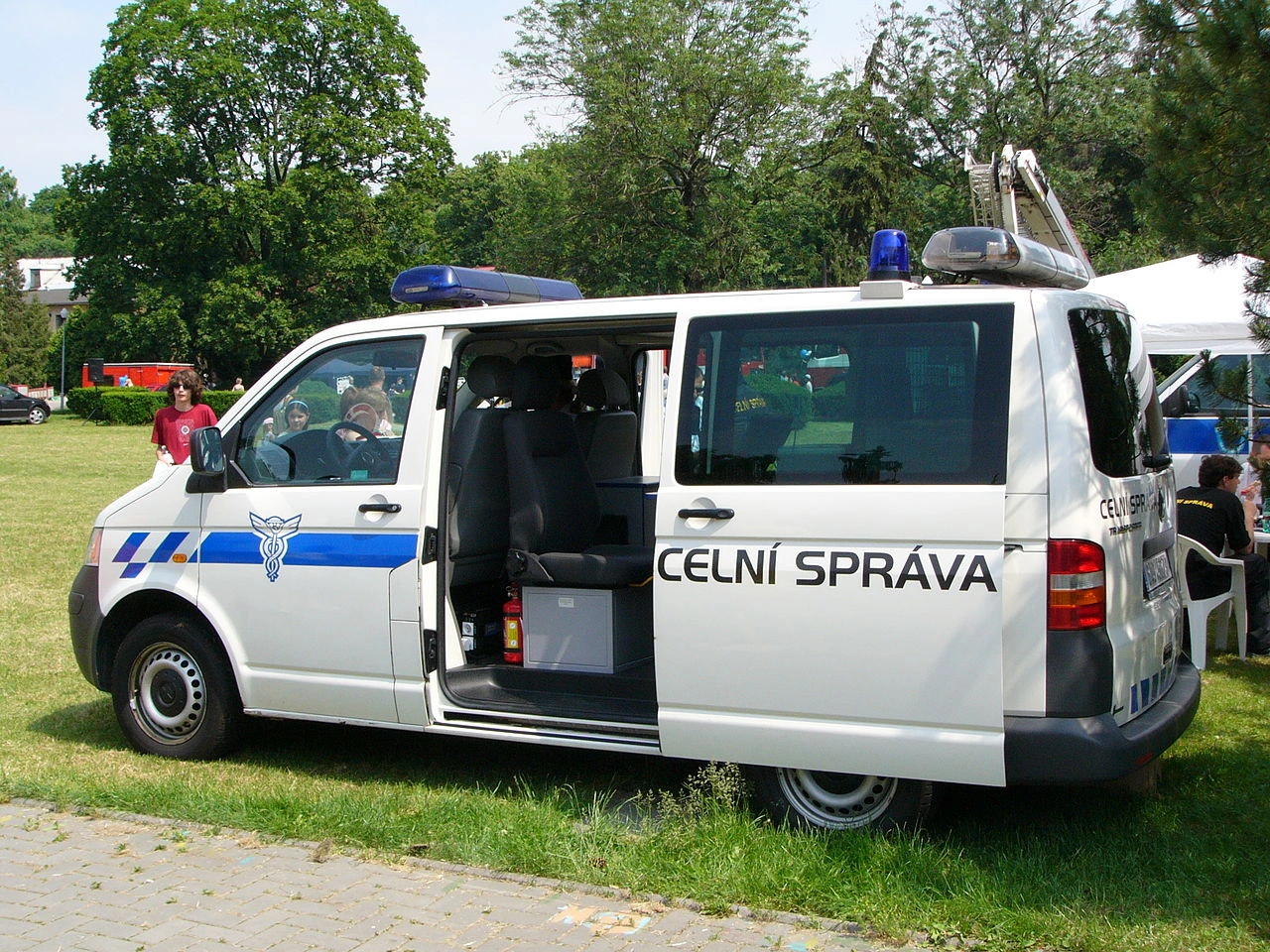
What is customs?
Customs is the government service that controls goods entering or leaving a country or customs territory, collects applicable duties and taxes, and enforces restrictions on prohibited or regulated goods.
What is a customs checkpoint?
A customs checkpoint is a control point where drivers and passengers may be required to stop, declare goods and present documents. Vehicles, luggage and cargo may be inspected in accordance with local law.
How can you recognise a customs checkpoint?
It may be indicated by signs displaying words such as Customs, Douane, Zoll or another local-language equivalent. Barriers, traffic lights, lane arrows and instructions from officers may also control access.
Must you stop at a customs sign?
Yes, when the sign or officer requires it. Reduce speed, enter the indicated lane and stop at the line, barrier or place shown.
Is customs the same as passport control?
No. Customs primarily controls goods, money and cargo. Passport or immigration control concerns people, identity documents and permission to enter or leave a territory. Both controls may take place at the same border facility.
Is a customs border always the same as a national border?
No. Several countries may form a customs union with no routine customs formalities between them. Some territories may also have a different customs status from the country to which they belong.
Does every border have a permanent customs checkpoint?
No. Some borders have permanent facilities, while others have mobile, temporary or selective controls. Borders within a customs union may have no routine customs checkpoint.
Can customs checks take place away from a border?
Yes. Depending on local law, checks may occur at ports, ferry terminals, airports, warehouses, inspection areas or inland road-control locations.
What should you do when approaching customs?
Reduce speed, observe the lane signs and be prepared to stop. Keep the required identification, vehicle, travel and goods documents accessible and follow the officers’ instructions.
Which documents may customs request?
Customs may request identification, vehicle documents, receipts, invoices, transport papers, customs declarations, permits or proof of ownership, depending on the journey and goods carried.
Which goods must be declared?
Goods exceeding duty-free allowances, commercial goods and certain restricted products may require a declaration. The applicable rules depend on the customs territory, journey, quantity, value and intended use.
What do red and green customs channels mean?
Where these channels are used, the red channel is generally for travellers who have goods to declare or need assistance. The green channel is for travellers who believe they have nothing that must be declared. Using the green channel does not prevent an inspection.
Can customs inspect your vehicle or luggage?
Yes, subject to local law. Officers may examine luggage, cargo spaces, vehicle compartments and accompanying documents to verify that customs rules are being followed.
Does duty-free mean that goods never need to be declared?
No. Duty-free allowances normally apply only within specified values, quantities and conditions. Restricted goods or quantities exceeding an allowance may still require declaration and payment.
Must cash be declared?
Many countries require travellers carrying cash or other monetary instruments above a specified amount to make a declaration. The threshold, definition of cash and procedure differ between customs territories.
Do personal belongings count as imported goods?
Ordinary personal belongings used during a journey are often admitted without duties, but newly purchased, high-value, commercial or restricted goods may be subject to special requirements.
What rules apply to commercial cargo?
Commercial goods normally require customs documentation and may be subject to duties, taxes, inspections, permits, origin rules and transit procedures. The driver must carry the documents required for the shipment.
What are restricted goods?
Restricted goods may include certain foods, plants, animals, medicines, weapons, cultural objects, protected species, counterfeit products and hazardous materials. Requirements vary by country.
What happens if goods are not declared?
Undeclared goods may be detained or seized, and the traveller may have to pay duties, taxes, fines or other penalties. Serious cases may lead to criminal proceedings.
Whose instructions should you follow at a customs checkpoint?
Follow the instructions of authorised customs, police and border officers, together with traffic lights, barriers, lane signals and road signs.


