

Carte d’identitéWallonie
 Règles de circulation
 Wallonie
64. Carte d’identité
Une carte d’identité est un document officiel servant à prouver l’identité d’une personne. Elle est normalement délivrée par un gouvernement ou une autre autorité compétente et contient des informations telles que le nom, la date de naissance, la photographie et un numéro unique de document ou d’identification.
Une carte d’identité peut être exigée pour des contrôles d’identité, procédures administratives, voyages ou accès à des services. L’obligation d’en posséder ou d’en porter une, les informations qu’elle contient et son utilisation éventuelle comme document de voyage varient selon les pays.
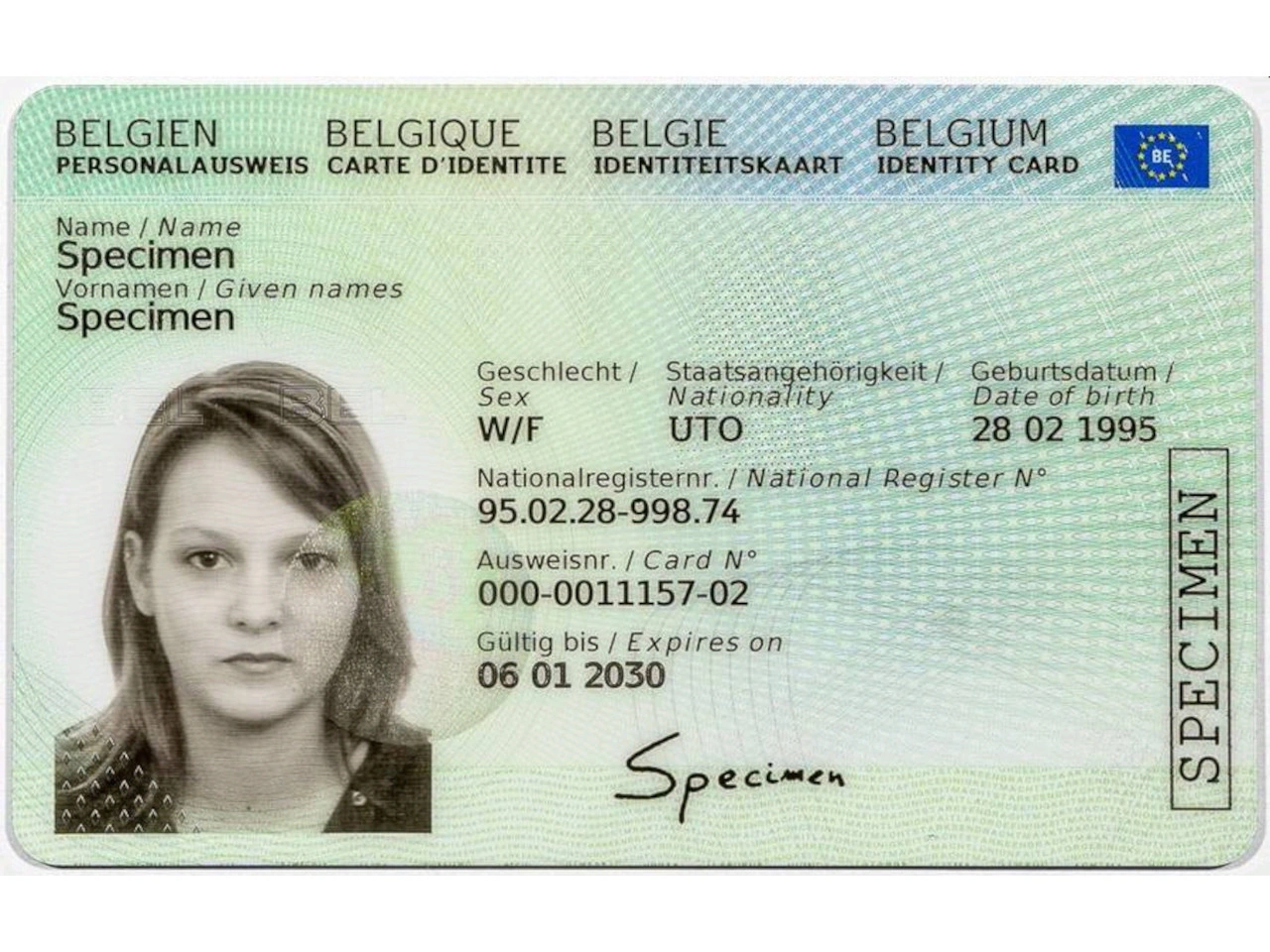
What is the Belgian eID?
The Belgian eID is the electronic identity card issued to Belgian citizens from the age at which the ordinary Belgian identity-card system applies. It proves the holder's identity and contains an electronic chip that can also be used for electronic identification.
At what age do Belgians receive an identity card?
The Belgian eID is issued from the age of 12. Belgian children younger than 12 can instead have a Kids-ID.
From what age must you carry an identity card in Belgium?
Every Belgian must normally carry their identity card from the age of 15. In the event of loss, theft or destruction, the recognised temporary proof of the declaration can serve as identification in the circumstances provided by law.
Must a driver carry an identity card in Belgium?
A Belgian who is subject to the general obligation to carry an identity card must continue to do so while driving. The identity card and driving licence are separate documents and serve different purposes.
Is a Belgian identity card the same as a driving licence?
No. The identity card proves the person's identity. A driving licence proves that the person is authorised to drive the vehicle category concerned.
Can a Belgian identity card replace your driving licence?
No. A person driving a motor vehicle for which a driving licence is required must hold and carry the appropriate valid driving licence. Carrying an identity card does not replace this requirement.
Can the police ask for your identity card after a traffic offence?
Yes. A person over 15 must show their identity card or equivalent proof when requested by an authorised person following an offence against Belgian road-traffic legislation.
Must you show your identity card after a traffic accident?
Yes, when required. A person over 15 involved in a road accident must show their identity card or equivalent proof to other persons involved who request it. An authorised person may also require identification.
Why is identification important after a traffic accident?
Identification allows the people involved and the authorities to establish the identity of the parties so that the accident can be properly recorded and the necessary information exchanged.
Can a Belgian eID be used as a travel document?
Yes. A valid Belgian eID can be used as an identity and travel document within the European Union and in certain other destinations that accept it. Entry requirements should always be checked before travelling.
What should you do if your Belgian identity card is lost or stolen?
Report the loss or theft as quickly as possible through DOC STOP so that the document can be blocked. You must then follow the applicable procedure to obtain temporary identification and request a new identity card.
Can you receive temporary identification after losing your Belgian eID?
Yes. After the loss, theft or destruction has been reported, the municipality or police can issue an Annex 12 in the applicable circumstances. It serves as temporary proof of identity within Belgium.


