

Zone piétonneWallonie
 Règles de circulation
 Wallonie
10. Zone piétonne
Une zone piétonne est un secteur composé d’une ou plusieurs rues principalement réservées aux piétons. L’accès des véhicules à moteur est normalement interdit ou limité aux usagers autorisés, à certains usages ou à des horaires déterminés.
Les piétons peuvent généralement utiliser toute la largeur de l’espace routier disponible. Les règles concernant les cyclistes, les livraisons, les transports publics, la vitesse des véhicules, l’arrêt et le stationnement dépendent de la signalisation et de la réglementation locales.

How can you recognise a pedestrian zone in Belgium?
A Belgian pedestrian zone begins at traffic sign F103 and ends at traffic sign F105. The entrance sign may also display authorised users, access hours and other conditions.
 Début d'une zone pour piétons.
Signal routier F103 • Commencement d'une zone piétonne. Ce signal est placé à droite, à chaque accès d'une zone piétonne; il peut être répété à gauche.
Verkeersbord F103 • Begin van een voetgangerszone. Dit verkeersbord wordt rechts geplaatst aan elke toegang tot een voetgangerszone; het mag links herhaald worden.
 Fin de la zone pour piétons.
Signal routier F105 • Fin d'une zone piétonne. Ce signal est placé à droite, à chaque sortie d'une zone piétonne; il peut être répété à gauche.
Verkeersbord F105 • Einde van een voetgangerszone. Dit verkeersbord wordt rechts geplaatst aan elke uitgang van een voetgangerszone; het mag links herhaald worden.
What changes for pedestrian zones under Belgium’s new Road Code?
Belgium’s new Code of the Public Road takes effect on 1 June 2027. The current traffic sign F103 marking the beginning of a pedestrian zone becomes traffic sign R14, while traffic sign F105 marking the end becomes traffic sign R15. Under the new rules, cyclists, other cycle users and speed pedelec riders are allowed to enter a pedestrian zone unless traffic signs prohibit them from doing so. They must adapt their behaviour to pedestrians and, when pedestrian traffic is too dense, dismount and continue on foot.
 Début d'une zone pour piétons.
Signal routier R14 • Début d’une zone piétonne. La vitesse maximale qui s’y applique peut être indiquée à titre informatif sur le signal en bas à droite.
Verkeersbord R14 • Begin van een voetgangerszone. De maximale snelheid die er geldt, kan rechtsonder als aanwijzing op het verkeersbord aangeduid zijn.
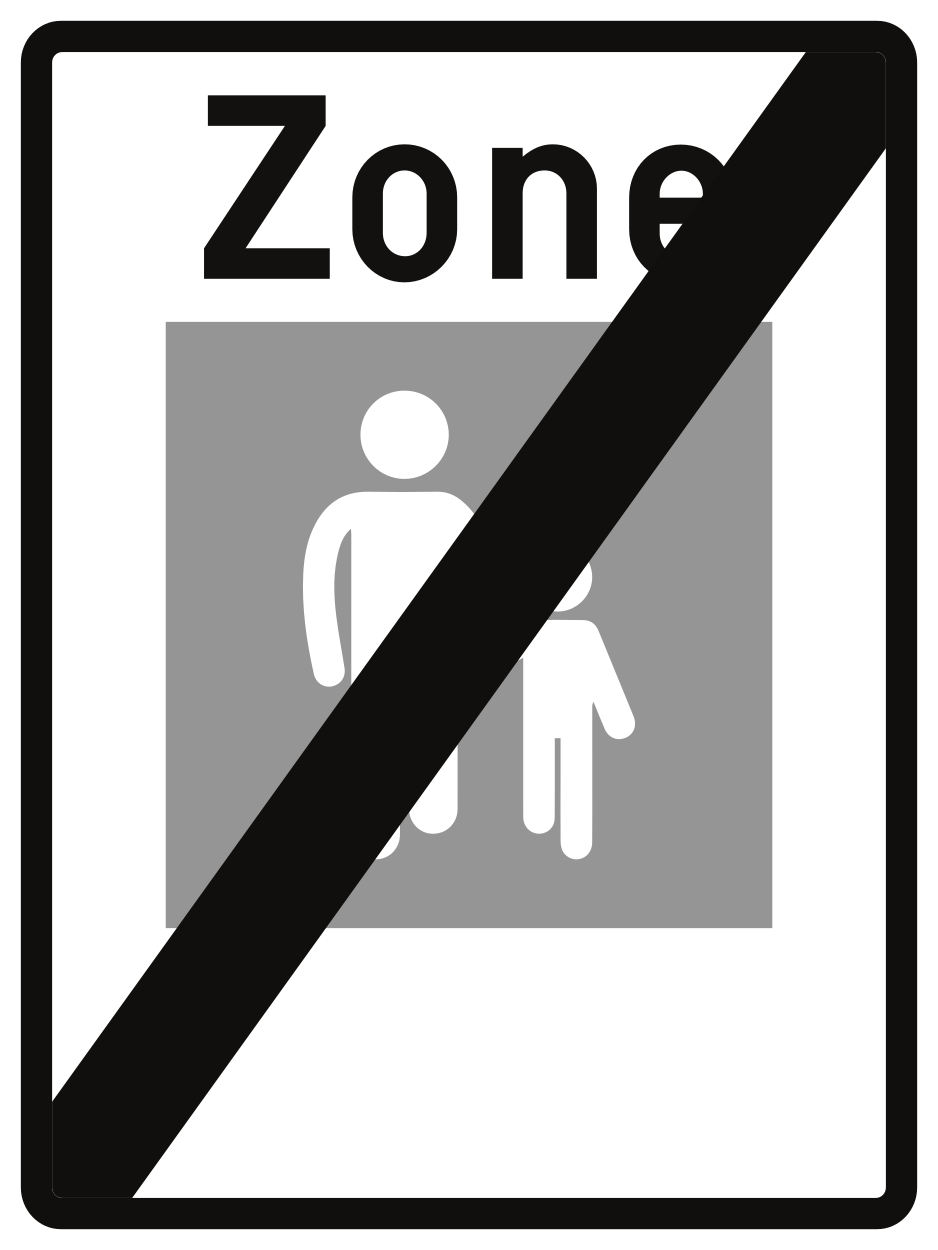 Fin de la zone pour piétons.
Signal routier R15 • Fin d’une zone piétonne.
Verkeersbord R15 • Einde van een voetgangerszone.
Who may normally enter a Belgian pedestrian zone?
By default, only pedestrians may enter. Vehicles and cyclists may enter only when they belong to a legally permitted category or when the entrance sign expressly permits their access.
Which vehicles are automatically permitted?
Permitted categories include vehicles used to supervise, inspect, maintain or clean the zone, authorised priority vehicles when required by their mission and vehicles operating regular public-transport services.
May residents drive into a Belgian pedestrian zone?
Living in the zone does not automatically provide vehicle access. A driver may enter when the vehicle’s garage is located inside the zone and can be reached only through it, subject to the required access card.
May cyclists enter a Belgian pedestrian zone?
Only when cyclist access is indicated on the F103 entrance sign. The sign may restrict cycling to particular hours or days.
Must cyclists dismount when the zone is crowded?
Yes. Cyclists must dismount when the density of pedestrian traffic makes it difficult for them to continue riding safely.
May delivery vehicles enter?
Delivery vehicles may enter when the F103 sign permits loading or unloading and must respect the displayed hours, days and access conditions. Certain businesses may also receive access in cases of absolute necessity under the legally prescribed permit rules.
May taxis enter?
Taxis may enter when the entrance sign permits them and when they have a specific destination inside the zone to collect or drop off passengers. Any displayed time restrictions must be respected.
May emergency vehicles enter?
Yes. Priority vehicles may enter when the nature of their official assignment justifies doing so.
May buses or trams enter?
Vehicles operating regular public-transport services may enter a Belgian pedestrian zone. Pedestrians should therefore remain attentive even though the area is primarily reserved for them.
May medical and home-care vehicles enter?
Vehicles used in the practice of a medical profession or for home care may enter under the applicable access-card requirements.
Which authorised users need an access card?
An official free-passage card is required for several categories, including eligible garage users, certain business deliveries, vehicles carrying out work, medical or home-care vehicles and specified tourist or horse-drawn transport.
Where may pedestrians walk?
Pedestrians may use the full width of the public road throughout the pedestrian zone.
How fast may authorised vehicles travel?
Every authorised driver must travel at walking pace. Belgian law does not express this rule as a fixed numerical speed limit.
Must authorised drivers give way to pedestrians?
Authorised drivers must leave pedestrians free passage, stop when necessary and must not endanger or hinder them.
May children play in a Belgian pedestrian zone?
Yes. Playing is legally permitted, although authorised vehicles, cyclists and public transport may still be present.
May you park in a Belgian pedestrian zone?
No. Parking is prohibited throughout the pedestrian zone, including for vehicles that are otherwise authorised to enter.
May an authorised vehicle stop to load or unload?
Authorised loading or unloading may take place under the conditions shown on the entrance sign. The vehicle may not remain longer than necessary or turn the stop into prohibited parking.
Does cyclist access turn the area into a cycling zone?
No. It remains a pedestrian zone. Pedestrians retain the use of the full road width, and cyclists must adapt to pedestrian traffic and dismount when necessary.
Does an intersection end a Belgian pedestrian zone?
No. A pedestrian zone may include one or more connected public roads. Its rules continue until traffic sign F105 indicates the exit.
When do the Belgian pedestrian-zone rules end?
The special rules end when a road user passes traffic sign F105. The rules of the surrounding road or another signed area then apply.


