SattelzugWallonien

Lerne Verkehrsregeln mit klaren Erklärungen und visuellen Beispielen in unserem illustrierten Buch – einfach, verständlich und anschaulich.


86. Sattelzug

Ein Sattelzug ist eine Fahrzeugkombination aus einer Sattelzugmaschine und einem Sattelanhänger, die hauptsächlich dem Gütertransport dient. Der Sattelanhänger ist so mit der Zugmaschine verbunden, dass ein wesentlicher Teil seines Gewichts von der Zugmaschine getragen wird und nicht ausschließlich von seinen eigenen Rädern.

Sattelzüge werden häufig im Fernverkehr eingesetzt und können Container, Kühlgut, Flüssigkeiten, Schüttgut oder andere Ladung transportieren. Besondere Vorschriften können für Führerscheine, höchstzulässige Abmessungen und Massen, Geschwindigkeitsbegrenzungen, Fahrstreifennutzung, Überholen, Beladung sowie Lenk- und Ruhezeiten gelten.
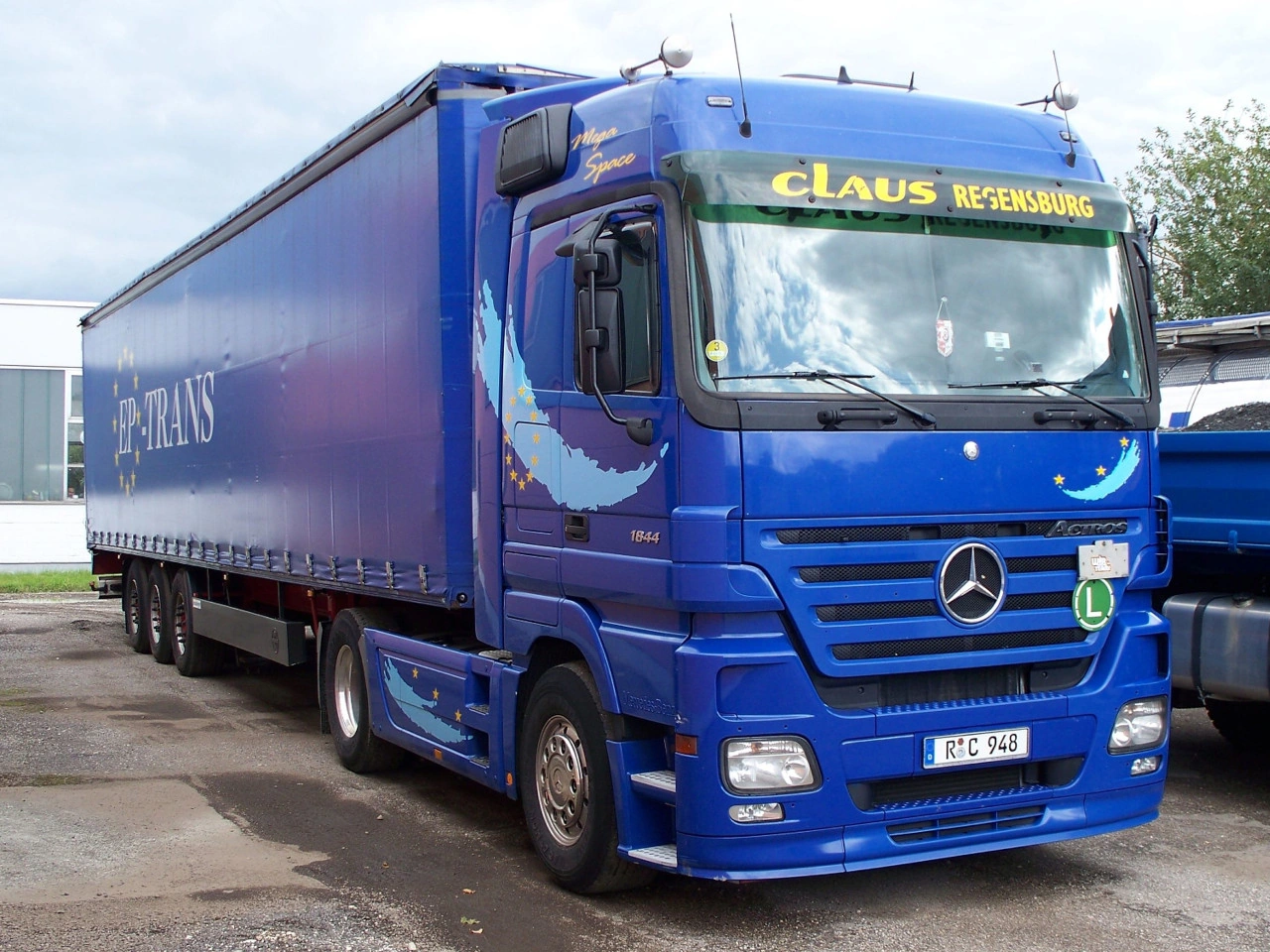
Sattelzug
What is a semi-trailer truck in Belgium?

A Belgian semi-trailer truck consists of a tractor and a semi-trailer coupled together. Belgian technical regulations refer to this combination as an articulated vehicle.

What is legally considered a semi-trailer in Belgium?

A semi-trailer is a towed vehicle designed to be coupled to a semi-trailer tractor or dolly and to transfer a significant static vertical load to that towing vehicle.

What is a road tractor in Belgium?

A tractor is a motor vehicle in category N1, N2 or N3 designed primarily to tow semi-trailers or trailers.

Which driving licence normally applies to a Belgian semi-trailer truck?

A heavy tractor with a semi-trailer whose maximum authorised mass exceeds 750 kg normally requires a category CE driving licence. Category C by itself normally permits only a trailer with a maximum authorised mass not exceeding 750 kg.

Do professional semi-trailer truck drivers need Code 95 in Belgium?

Generally yes. Most professional drivers using category C and CE vehicles must hold the required professional competence, indicated by Code 95, unless a specific exemption applies.

What is the maximum length of a normal Belgian semi-trailer combination?

A standard articulated tractor-semi-trailer combination may generally be up to 16.5 metres long when the applicable geometric requirements concerning the semi-trailer and coupling are satisfied.

How heavy can a Belgian semi-trailer combination be?

The permitted maximum mass depends on the number of axles, suspension, configuration, region and type of transport. Common articulated configurations can reach up to approximately 44 tonnes under the applicable technical rules, while different limits apply to other combinations.

What is the maximum motorway speed for a semi-trailer truck in Belgium?

For a vehicle or combination with a maximum authorised mass exceeding 3.5 tonnes, the maximum speed on a Belgian motorway is 90 km/h, unless a lower limit applies.

Which motorway lanes may a Belgian semi-trailer truck use?

Under the rules currently applicable until 31 May 2027, when a motorway has three or more lanes in the same direction, vehicles and combinations exceeding 3.5 tonnes may normally use only the two rightmost lanes, except where particular lane-direction signs require otherwise.

Will the motorway lane rule change in June 2027?

Yes. From 1 June 2027, under the new Code of the Public Road, vehicles and combinations exceeding 3.5 tonnes may not use the leftmost lane of a motorway with three or more lanes in their direction. This replaces the current two-rightmost-lanes wording.

May a heavy semi-trailer truck overtake in rain in Belgium?

For vehicles and combinations used to transport goods with a maximum authorised mass exceeding 7.5 tonnes, overtaking is prohibited during precipitation on motorways, autowegen and roads with at least four lanes, subject to the specific exceptions provided by law.

Must heavy trucks keep extra distance outside built-up areas?

Yes. Outside built-up areas, vehicles and combinations exceeding 7.5 tonnes or longer than 7 metres must normally maintain at least 50 metres from another such vehicle travelling ahead.

Can a semi-trailer truck park indefinitely on a Belgian road?

No. Within built-up areas, vehicles and combinations with a maximum authorised mass exceeding 7.5 tonnes may not normally remain parked on the public road for more than eight consecutive hours except in specifically designated parking places.

1 Wallonien 2 Autobahn 3 Schnellstraße 4 Wohngebiet 5 Geschlossene Ortschaft 6 Zone 7 Geschwindigkeitsbegrenzung 8 Radweg 9 Fahrradstraße 10 Fußgängerzone 11 Bremsschwelle 12 Zoll 13 Einbahnverkehr 14 Kaianlage 15 Steigung oder Gefälle 16 Busspur 17 Sackgasse 18 Stoppschild 19 Vorfahrt gewähren 20 Kreisverkehr 21 Vorfahrtstraße 22 Fahrbahnverengung 23 Vorrang vor dem Gegenverkehr 24 Gegenverkehr Vorrang gewähren 25 Fußgängerüberweg 26 Bahnübergang 27 Vorgeschriebene Fahrtrichtung 28 Abbiegeverbot 29 Schulbereich 30 Wild- oder Viehwechsel 31 Steinschlag 32 Kurve 33 Richtungstafel 34 Falschfahrt 35 Straßenarbeiten 36 Höhenbegrenzung 37 Breitenbegrenzung 38 Gewichtsbeschränkung 39 Geschwindigkeitskontrolle 40 Selektive Sperren 41 Wegweiser an einer Kreuzung 42 Vorfahrt an der nächsten Kreuzung 43 Ampeln 44 Fußgängerampeln 45 Führerschein 46 Kilometrierungsmarkierung 47 Verkehrsspiegel 48 Staatsgrenze 49 Radroute 50 Parken 51 Parkverbot 52 Kiss and Ride 53 Parkuhr 54 Verkehrsmanagement 55 Rückwärtsfahren 56 Ungeregelte Kreuzung 57 Fahrbahnschäden 58 Ringstraße 59 Radschnellweg 60 Kennzeichen 61 Ladestation 62 Allgemeine Gefahr 63 Abbiegen bei Rot 64 Personalausweis 65 Brandgefahr 66 Fußgänger 67 Moped 68 Pkw 69 Lkw 70 Bus 71 Polizei 72 Krankenwagen 73 Straßenbahnsignale 74 Europäische Abgasnorm 75 Schlagloch 76 Platz 77 Weg 78 Feinstaub 79 Luftverschmutzung 80 Hauptverkehrszeit 81 Straßenverkehrsordnung 82 Straßenrinne 83 Lastenfahrrad 84 Forstfahrzeug 85 Baufahrzeug 86 Sattelzug 87 Oberleitungsbus 88 Speed-Pedelec 89 Lieferfahrzeug 90 Leerlauf 91 Abschleppwagen 92 Allradantrieb 93 Verbot für Fahrzeuge 94 Fahrrad 95 Motorradausrüstung 96 Triebwagen 97 Gleis 98 Öffentlicher Verkehr 99 Wohnwagen 100 Anhänger ...