


Cycling streetAustria
 Traffic rules
 Austria
11. Cycling street
A cycling street is a street designed or legally designated to give cyclists a prominent position in mixed traffic. Motor vehicles may usually enter, but they must adapt their speed and driving behaviour to the presence of cyclists.
Depending on the country, cyclists may be permitted to use more of the carriageway and motor vehicles may be prohibited from overtaking them. The speed limit, priority rules, permitted vehicles and beginning and end of the street depend on local traffic signs and regulations.
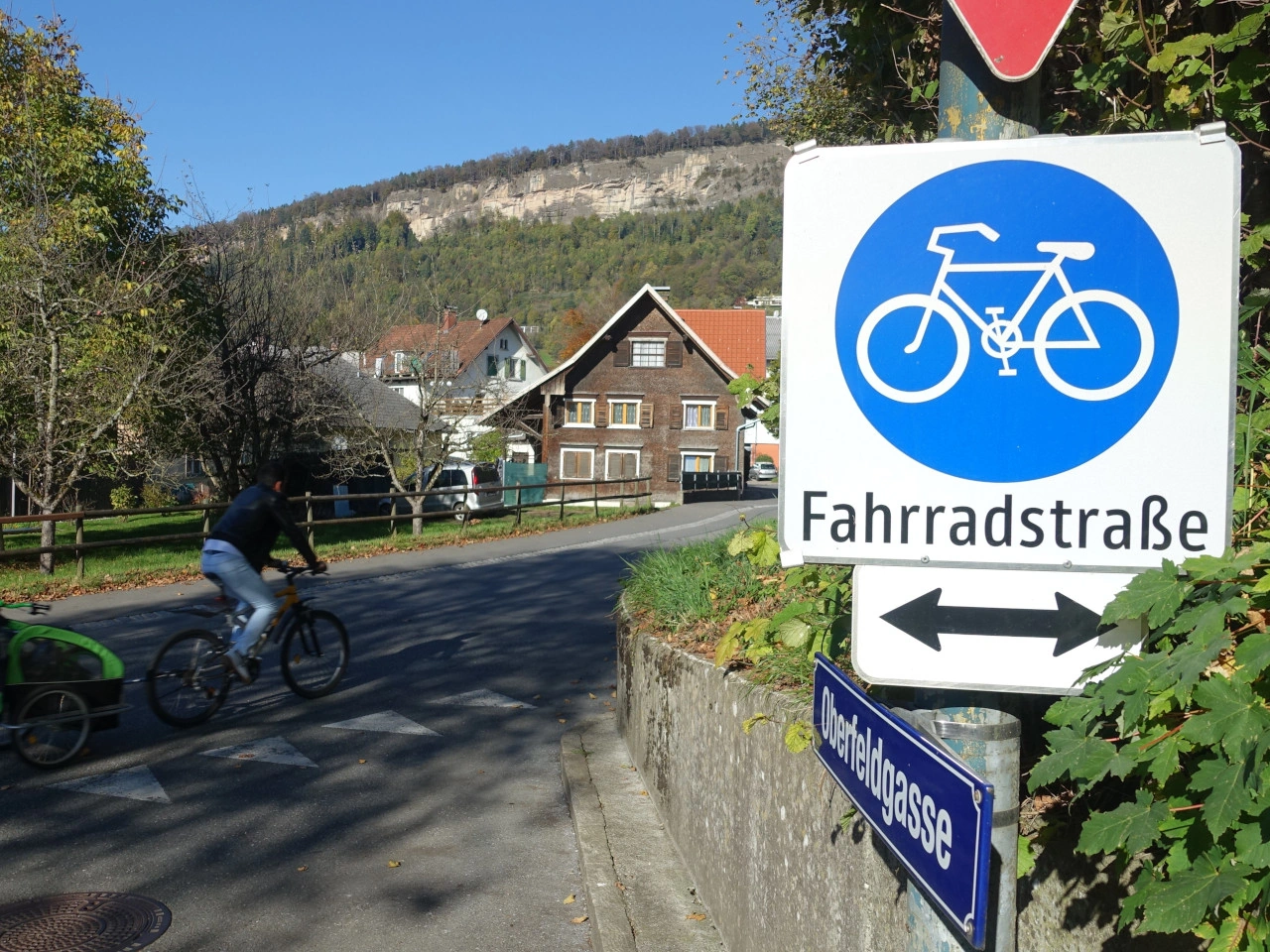
Wikimedia.org • Franzfoto • CC BY-SA
What is a cycling street?
A cycling street is a road where cycling is given a prominent position while motor vehicles may usually continue to use the road under additional restrictions.
How can you recognise a cycling street?
It may be identified by special entrance signs, bicycle symbols, coloured surfacing or distinctive road markings. The legally required signs differ between countries.
Is a cycling street the same as a bike path?
No. A bike path is a separate part of the road or a separate route intended for cyclists. On a cycling street, cyclists and motor vehicles normally share the carriageway.
Is a cycling street the same as a cycling zone?
Not always. A cycling street may refer to one individual street, while a cycling zone may include several connected streets governed by the same rules. Local terminology varies.
May motor vehicles use a cycling street?
Usually, yes. A cycling street is not normally closed to motor traffic, although access may be restricted by additional signs or local regulations.
Do cyclists have to stay close to the edge of the road?
This depends on local law. In some cycling streets, cyclists may use a larger part of the carriageway or ride in the centre of the lane. In others, the normal positioning rules continue to apply.
May cyclists ride side by side?
This depends on the rules of the country and the available road width. Cyclists may often ride side by side where this does not endanger or unlawfully obstruct other road users.
May motor vehicles overtake cyclists?
Some countries expressly prohibit motor vehicles from overtaking cyclists on cycling streets. Elsewhere, overtaking may remain permitted only when the legally required distance and other safety conditions can be respected.
May cyclists overtake motor vehicles?
Normally, cyclists may overtake other vehicles when the manoeuvre is permitted and can be completed safely. They must still observe local overtaking, lane and intersection rules.
What is the speed limit on a cycling street?
There is no universal speed limit. Many countries impose a low maximum speed, commonly 30 km/h or less, but drivers must follow the signs and laws applying locally.
Do cyclists automatically have priority?
No. A cycling street does not normally give cyclists automatic priority at every intersection. Traffic lights, priority signs, crossings and the ordinary priority rules remain applicable.
Do pedestrians have special rights on a cycling street?
Not necessarily. Pedestrians normally use pavements, crossings and other designated facilities. A cycling street is different from a pedestrian zone or residential shared-space area.
May you stop or park on a cycling street?
Stopping and parking depend on the ordinary rules and any local signs or markings. Vehicles must not block cyclists, pavements, crossings, entrances or other traffic.
Does a cycling street always have red surfacing?
No. Coloured surfacing may make the street easier to recognise, but it does not necessarily have legal meaning by itself. The official signs and local regulations determine which rules apply.
When do the cycling-street rules end?
The special rules normally end at an end sign, the end of the designated street or another legally defined boundary. The exact rule differs between countries.


