


Wrong-way drivingCanada
An introduction to the traffic rules and road signs of Canada. Learn about driving, road safety and much more in our illustrated book, with answers to frequently asked questions.
For informational purposes only. Always follow official regulations. Some content and images were created with AI assistance.
 Traffic rules
 Canada
27. Wrong-way driving
Wrong-way driving occurs when a driver travels against the legally permitted direction of traffic. It may happen on a one-way road, divided road, freeway entrance or exit, or another road section reserved for traffic travelling in one direction.
Wrong-way driving creates an extreme risk of a head-on collision. Drivers must follow direction signs, no-entry signs, lane arrows and pavement markings. Anyone who accidentally enters a road in the wrong direction should slow down, warn other traffic, stop in the safest available place and contact the emergency services.
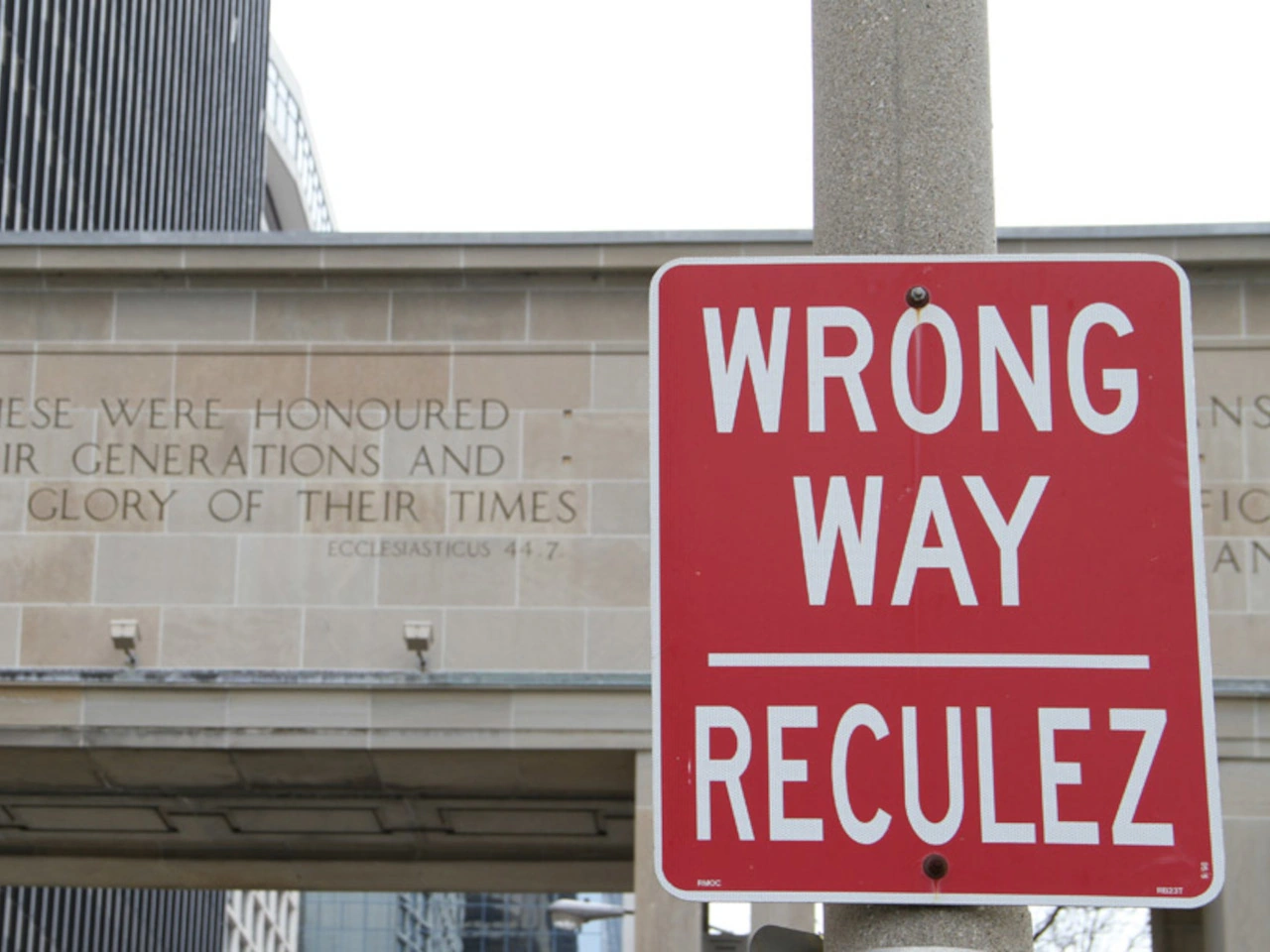
Wikimedia.org • Ken Banks • CC BY
How can you avoid driving the wrong way in Canada?
Traffic normally keeps right here. Keep to the correct side of the road and use no-entry and one-way signs to identify prohibited approaches; do not enter an exit ramp against its permitted direction.
🔗 icbc.com • ICBC — Learn to Drive Smart, March2026; subject guidance
What signs can prevent wrong-way driving in Canada?
No-entry and one-way controls are set under the relevant province or territory; do not assume every junction is arranged identically. Before entering a motorway, expressway, one-way street or slip road, check the permitted direction rather than relying only on a navigation app.
🔗 icbc.com • ICBC — Learn to Drive Smart, March2026; subject guidance


