

ChinaChina
 Traffic rules
 China
China
1. China
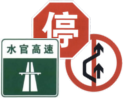
Mainland China covers a vast part of East Asia, stretching from densely populated coastal regions to deserts, high plateaus and major mountain ranges in the west. Traffic drives on the right. Driving environments range from enormous multi-lane urban road systems and an extensive expressway network to remote highways where distances between services can be substantial. Written road information is primarily in standard Chinese characters. Pinyin or English may also appear on directional signs, particularly on major routes and in cities, but bilingual signage is not universal; when English is used, Chinese place names are generally rendered in Hanyu Pinyin.
China has no nationwide motorway vignette, but many expressways are toll roads using ETC electronic collection and toll stations. Small passenger cars may travel at up to 120 km/h on expressways, although posted limits and lane-specific minimum speeds must be followed. A particularly important rule for foreign visitors is that an overseas licence or International Driving Permit cannot normally be used by itself in mainland China; short-term visitors with a valid foreign licence can instead apply for a Chinese temporary driving permit. Traffic regulations and vehicle-access restrictions can also vary locally, especially in major cities.
AI-generated by Traffic-rules.com • WCIT • CC BY-SA
Which side of the road do you drive on in mainland China?
Drive on the right-hand side of the road and normally overtake on the left.
What emergency numbers are used in China?
Use 110 for police, 119 for fire, 120 for medical emergencies and 122 for road-traffic accidents.
What is the alcohol limit for driving in China?
A blood-alcohol concentration of 20 mg/100 ml or more but below 80 mg/100 ml is classified as drinking and driving, while 80 mg/100 ml or more is classified as drunk driving. The safest rule is not to drink before driving.
Can you drive in China with a foreign driving licence?
Not with the foreign licence alone. A foreign licence is not directly valid for driving in mainland China. Eligible short-term visitors can apply for a Chinese temporary driving permit, while longer-term residents can apply to exchange or obtain a Chinese licence under the applicable procedure.
Is an International Driving Permit valid in mainland China?
No. An International Driving Permit by itself is not valid for driving in mainland China. Foreign visitors must obtain the appropriate Chinese driving licence or temporary driving permit.
How long can a Chinese temporary driving permit be valid?
For a short stay, a temporary permit can generally be issued for up to 3 months. Where the authorised stay exceeds three months, its validity can in applicable cases be extended to as much as 1 year.
What speed limits apply on urban roads in China when no speed limit is posted?
Where there is no speed-limit sign or marking, the maximum is generally 30 km/h on an urban road without a centre line and 50 km/h where there is only one motor-vehicle lane in each direction.
What speed limits apply on ordinary highways in China when no limit is posted?
Where there is no speed-limit sign or marking, the maximum is generally 40 km/h on a highway without a centre line and 70 km/h where there is only one motor-vehicle lane in each direction.
What is the expressway speed limit in China?
For a small passenger car, the national maximum on an expressway is 120 km/h. Other motor vehicles are generally limited to 100 km/h and motorcycles to 80 km/h, while lower posted limits always take precedence.
Is there a minimum speed on Chinese expressways?
Yes. The general minimum expressway speed is 60 km/h. Lane-specific minimums also apply: on a two-lane carriageway the left lane normally has a 100 km/h minimum, while on roads with three or more lanes the leftmost lane normally has a 110 km/h minimum and the adjacent middle lane a 90 km/h minimum.
Who is prohibited from Chinese expressways?
Pedestrians, non-motor vehicles, tractors, wheeled special-purpose machinery, articulated buses, full-trailer combinations and vehicles designed for less than 70 km/h are prohibited from expressways.
Are motorcycles allowed on expressways in China?
National rules recognise motorcycle use of expressways and set a maximum of 80 km/h, with passengers prohibited on two-wheeled motorcycles. However, individual provinces can impose stricter access restrictions, so motorcycle riders must check local rules and entrance signs.
Do you need a motorway vignette in China?
No. Mainland China does not use a nationwide motorway vignette. Many expressways are instead tolled according to the road travelled and vehicle category.
How are expressway tolls paid in China?
China uses the nationwide ETC electronic toll system extensively. Vehicles without ETC can also use appropriate toll-station lanes and pay the applicable road charge using the payment methods accepted there.
Must cars use headlights during the daytime in China?
There is no general nationwide requirement to use dipped headlights throughout every clear daytime journey. Drivers must use the required lighting at night, during poor visibility and wherever signs, tunnels or traffic conditions require it.
Are winter tyres mandatory throughout China?
There is no single nationwide fixed winter-tyre season for ordinary passenger cars. China's climate varies enormously, so drivers in snowy or icy regions should use equipment appropriate to the conditions and obey temporary local restrictions or traffic-control measures.
Are seat belts compulsory in China?
Yes. Drivers and passengers must use seat belts as required when travelling in a motor vehicle.
Must children use a child restraint in China?
National child-protection law requires parents and guardians to take measures such as providing child safety seats to prevent traffic injuries. The national provision does not itself establish one universal age or height threshold, and more specific requirements may exist locally.
Are motorcycle helmets compulsory in China?
Yes. Both the motorcycle rider and passenger must wear the required safety helmet.
Can you use a mobile phone while driving in China?
Drivers must not make or answer handheld phone calls or engage in similar activities that interfere with safe driving.
Does priority from the right apply in China?
Yes. At an uncontrolled intersection with no signs or markings determining priority, drivers must stop and observe before entering and give way to traffic approaching from the right. Turning vehicles must also give way to vehicles travelling straight.
Who has priority at a roundabout in China?
A driver entering a roundabout must give way to vehicles already circulating on it.
Can you turn right at a red traffic light in China?
Generally yes when a standard circular red light is displayed: a right-turning vehicle may proceed if it does not obstruct vehicles or pedestrians that have the right of way. A red directional arrow, prohibitory sign or other traffic control can prohibit the turn.
What does a yellow traffic light mean in China?
A yellow light warns that the signal is changing. Vehicles that have already crossed the stop line may continue; other vehicles should not enter the intersection.
Do pedestrians have priority at pedestrian crossings in China?
Drivers approaching a pedestrian crossing must slow down. Where a pedestrian is crossing, the driver must stop and give way.
Can you drive in the expressway emergency lane in China?
No. Driving or stopping in the emergency lane is prohibited except in an emergency or where traffic authorities specifically permit its use.
What must you do if your vehicle breaks down on a Chinese expressway?
Switch on the hazard-warning lights and move the vehicle away from traffic if possible. If it cannot be moved, keep the hazards operating, place the warning triangle at least 150 metres behind the vehicle, move occupants to the right-side shoulder or another safe area and call for assistance.
Can Chinese cities impose their own vehicle restrictions?
Yes. Local traffic authorities may impose vehicle-access, licence-plate, time-of-day or road-specific restrictions according to local traffic conditions. Drivers should check current municipal rules before entering major cities.
What language is used on road signs in China?
Road information is primarily displayed in standard Chinese characters. Pinyin or English may also be used on some directional signs, but it is not required on every road sign; where foreign-language text is used, Chinese remains the primary language.
Do these rules also apply in Hong Kong and Macao?
No. This page covers mainland China. Hong Kong and Macao have separate traffic laws and road systems; in particular, Hong Kong uses left-hand traffic.

