

TunnelChina
 Traffic rules
 China
China
8. Tunnel
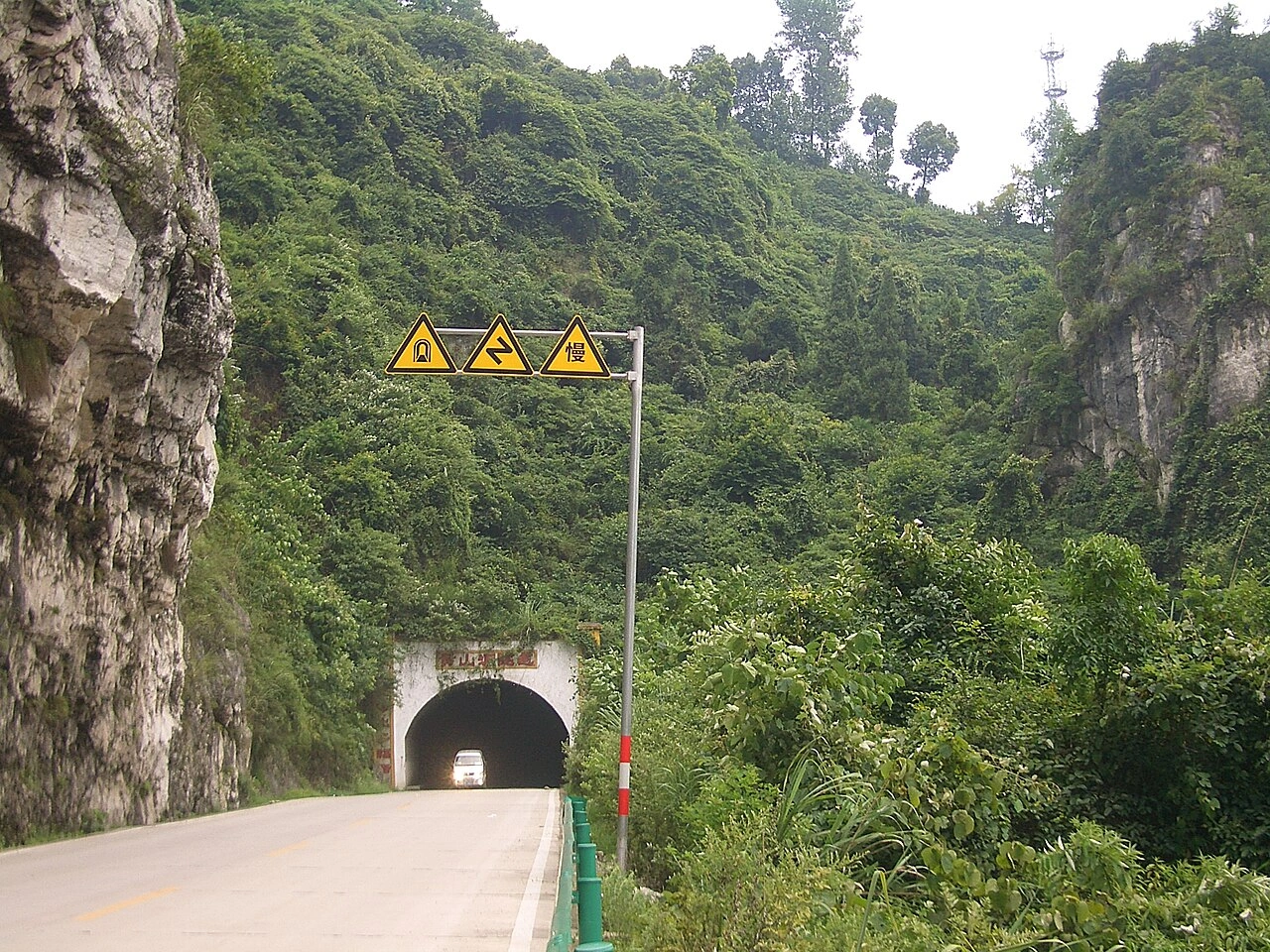
A tunnel is a covered passage that carries a road through or beneath an obstacle such as a hill, mountain, building, waterway or another transport route. Road tunnels may contain one or more traffic lanes and can carry traffic in one or both directions.
Driving in a tunnel requires particular attention because visibility, available escape routes and space for avoiding hazards are limited. Drivers should follow the applicable lighting, speed, lane and following-distance rules and pay attention to emergency exits, traffic signals and variable-message signs.
Wikimedia.org • Vmenkov • CC BY-SA
What is a road tunnel?
A road tunnel is a covered passage that carries a road through or beneath an obstacle.
Should you use headlights in a tunnel?
Follow the local lighting rules and traffic signs. Many countries require dipped headlights in tunnels even during daylight, while general visibility rules may also require vehicle lights.
Should you increase your following distance in a tunnel?
Yes. Additional distance gives more time to react to sudden congestion, a breakdown or another hazard where escape space may be limited.
Can you stop or park in a tunnel?
Voluntary stopping and parking are generally prohibited or strongly restricted in road tunnels. Drivers should stop only where permitted or when traffic, an emergency or another unavoidable situation requires it.
Can you reverse or make a U-turn in a tunnel?
Normally this should not be done unless specifically authorised or directed by emergency or traffic-control personnel. Motorway tunnels are additionally subject to the normal motorway prohibitions on reversing and U-turns.
What should you do if traffic stops in a tunnel?
Keep a safe distance from the vehicle ahead, follow traffic signals and instructions and avoid blocking emergency access. Switch on hazard warning lights where appropriate to warn following traffic.
What should you do if your vehicle breaks down in a tunnel?
Move into an emergency bay or other safe position if possible, switch on the hazard warning lights and follow the tunnel's emergency procedures. Use an emergency telephone or contact the emergency services where necessary.
What should you do if there is a fire in a tunnel?
Follow the emergency signs and instructions immediately. If evacuation is necessary, leave the vehicle and use the indicated emergency exit rather than remaining in a dangerous traffic or smoke-filled area.
What are tunnel emergency exits?
Emergency exits provide a route away from the traffic tunnel during incidents such as a fire. Signs may indicate the nearest exit and the direction or distance to it.
Should you remove sunglasses before entering a tunnel?
Where necessary, removing dark sunglasses before entering can help your eyes adapt more quickly to the lower light level inside the tunnel.
Can speed limits change inside a tunnel?
Yes. Tunnels may have permanent or variable speed restrictions. Drivers must follow the speed limit currently indicated.
Can dangerous goods be restricted in tunnels?
Yes. Certain tunnels may restrict vehicles carrying dangerous goods because an incident in an enclosed space can create additional risks. Follow all applicable tunnel-category and dangerous-goods signs.


