


Traffic signsItaly
 Traffic rules
 Italy

51. What does this traffic sign mean?
This traffic sign indicates that handcarts are prohibited. People using handcarts may not enter or continue beyond the sign. Other road users may still be permitted unless another restriction applies.
English • Traffic sign II.57 • No hand-propelled vehicles. Hand-propelled vehicles are prohibited.
Italiano • Figura II.57 • Transito vietato ai veicoli a braccia. Vieta il transito ai veicoli a braccia.
Sources
🔗 Commons.wikimedia.org
🔗 Normattiva.it • D.P.R. 495/1992 • testo vigente • art. 117, comma 1(f)
🔗 Gazzettaufficiale.it • Gazzetta Ufficiale • Figura II.57 • pagina 261
Replacement SVG: Commons.wikimedia.org • Wikimedia Commons original • No machine-readable author provided. Benedicto16 assumed (based on copyright claims). • Public domain • Original revision 2013-10-08. Wikimedia original unmodified.
Image via Commons.wikimedia.org
No machine-readable author provided. Benedicto16 assumed (based on copyright claims). • Public domain • Source revision 2013-10-08. Wikimedia original unmodified.


52. What does this traffic sign mean?
This traffic sign indicates that horsecarts are prohibited. Horse-drawn vehicles may not enter or continue beyond the sign. Other road users may still be permitted unless another restriction applies.
English • Traffic sign II.53 • No animal-drawn vehicles. Animal-drawn vehicles are prohibited.
Italiano • Figura II.53 • Transito vietato ai veicoli a trazione animale. Vieta il transito ai veicoli a trazione animale.
Sources
🔗 Commons.wikimedia.org
🔗 Normattiva.it • D.P.R. 495/1992 • testo vigente • art. 117, comma 1(b)
🔗 Gazzettaufficiale.it • Gazzetta Ufficiale • Figura II.53 • pagina 260
Replacement SVG: Commons.wikimedia.org • Wikimedia Commons original • Author not stated on source page • Public domain • Original revision 2013-10-07. Wikimedia original unmodified.
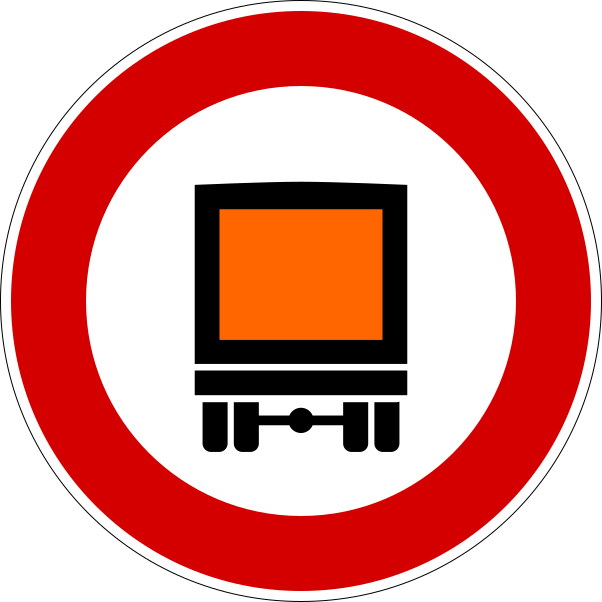
53. What does this traffic sign mean?
This traffic sign indicates that vehicles carrying dangerous goods are prohibited. Vehicles carrying the dangerous goods covered by the sign may not enter or continue beyond it.
English • Traffic sign II.63 • No vehicles carrying dangerous goods. Vehicles carrying dangerous goods are prohibited.
Italiano • Figura II.63 • Transito vietato ai veicoli che trasportano merci pericolose. Vieta il transito ai veicoli che trasportano merci pericolose.
Sources
🔗 Commons.wikimedia.org
🔗 Normattiva.it • D.P.R. 495/1992 • testo vigente • art. 117, comma 1(n)
🔗 Gazzettaufficiale.it • Gazzetta Ufficiale • Figura II.63 • pagina 263
SVG source: F l a n k e r • Public domain • Original revision 2024-01-03. Wikimedia original unmodified.
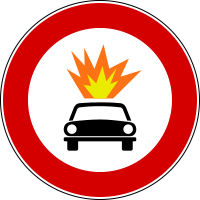
54. What does this traffic sign mean?
This traffic sign indicates that vehicles carrying flammable or explosive substances are prohibited. Vehicles carrying the substances covered by the sign may not enter or continue beyond it.
English • Traffic sign II.64/a • No vehicles carrying explosives or readily flammable products. Any exemptions for small quantities are specified on a supplementary plate.
Italiano • Figura II.64/a • Transito vietato ai veicoli che trasportano esplosivi o prodotti facilmente infiammabili. Vieta il transito ai veicoli che trasportano esplosivi o prodotti facilmente infiammabili. Eventuali deroghe per piccole quantità sono precisate da un pannello.
Sources
🔗 Commons.wikimedia.org
🔗 Normattiva.it • D.P.R. 495/1992 • testo vigente • art. 117, comma 1(o)
🔗 Gazzettaufficiale.it • Gazzetta Ufficiale • Figura II.64/a • pagina 263
SVG source: F l a n k e r • Public domain • Original revision 2006-11-07. Wikimedia original unmodified.
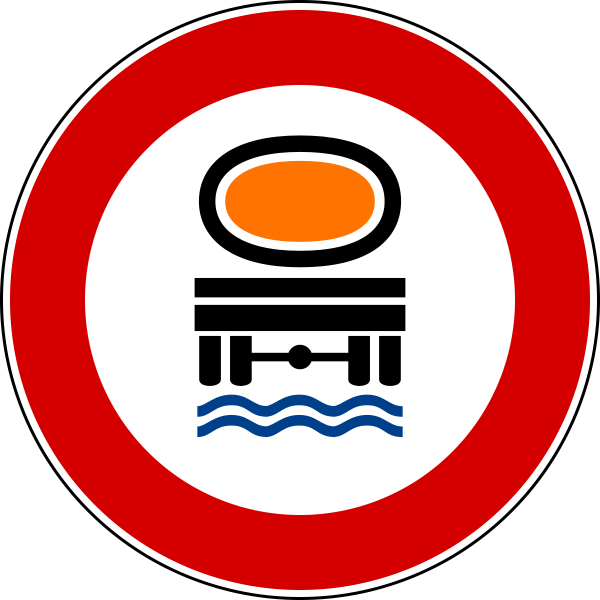
55. What does this traffic sign mean?
This traffic sign indicates that vehicles carrying water-polluting substances are prohibited. Vehicles carrying the substances covered by the sign may not enter or continue beyond it.
English • Traffic sign II.64/b • No vehicles carrying products liable to contaminate water. Any exemptions for small quantities are specified on a supplementary plate.
Italiano • Figura II.64/b • Transito vietato ai veicoli che trasportano prodotti suscettibili di contaminare l’acqua. Vieta il transito ai veicoli che trasportano prodotti suscettibili di contaminare l’acqua. Eventuali deroghe per piccole quantità sono precisate da un pannello.
Sources
🔗 Commons.wikimedia.org
🔗 Normattiva.it • D.P.R. 495/1992 • testo vigente • art. 117, comma 1(o)
🔗 Gazzettaufficiale.it • Gazzetta Ufficiale • Figura II.64/b • pagina 264
SVG source: F l a n k e r • Public domain • Original revision 2010-07-18. Wikimedia original unmodified.
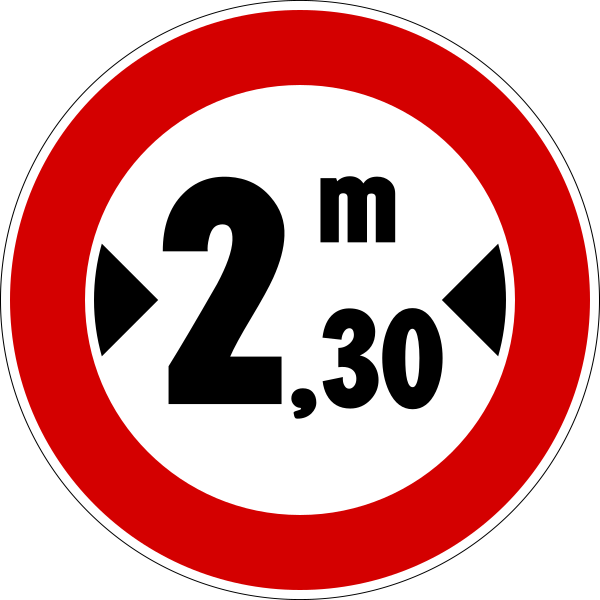
56. What does this traffic sign mean?
This traffic sign indicates that vehicles wider than indicated are prohibited. A vehicle or vehicle combination whose overall width, including its load, exceeds the displayed limit may not continue beyond the sign.
English • Traffic sign II.65 • No vehicles wider than indicated. The prohibition applies where the vehicle's actual width at the time of passage exceeds the value shown in metres.
Italiano • Figura II.65 • Transito vietato ai veicoli aventi larghezza superiore a quella indicata. Vieta il transito ai veicoli la cui larghezza effettiva al momento del passaggio supera il valore indicato in metri.
Sources
🔗 Commons.wikimedia.org
🔗 Normattiva.it • D.P.R. 495/1992 • testo vigente • art. 118, comma 1(a), 3
🔗 Gazzettaufficiale.it • Gazzetta Ufficiale • Figura II.65 • pagina 264
SVG source: Original: Ministero dei Lavori Pubblici Vectorization: Arbalete • Public domain • Original revision 2024-09-18. Wikimedia original unmodified.
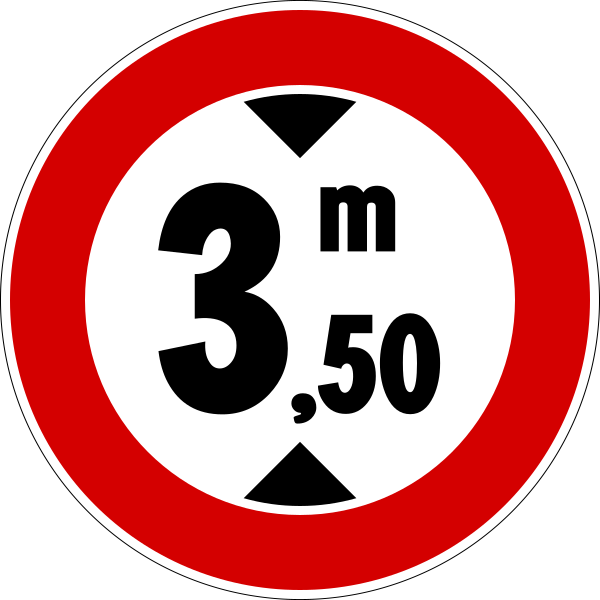
57. What does this traffic sign mean?
This traffic sign indicates that vehicles higher than indicated are prohibited. A vehicle or vehicle combination whose overall height, including its load, exceeds the displayed limit may not continue beyond the sign.
English • Traffic sign II.66 • No vehicles higher than indicated. The prohibition applies where the vehicle's actual overall height at the time of passage exceeds the value shown in metres.
Italiano • Figura II.66 • Transito vietato ai veicoli aventi altezza complessiva superiore a quella indicata. Vieta il transito ai veicoli la cui altezza complessiva effettiva al momento del passaggio supera il valore indicato in metri.
Sources
🔗 Commons.wikimedia.org
🔗 Normattiva.it • D.P.R. 495/1992 • testo vigente • art. 118, comma 1(b), 3
🔗 Gazzettaufficiale.it • Gazzetta Ufficiale • Figura II.66 • pagina 264
SVG source: Original: Ministero dei Lavori Pubblici Vectorization: Arbalete • Public domain • Original revision 2024-09-18. Wikimedia original unmodified.
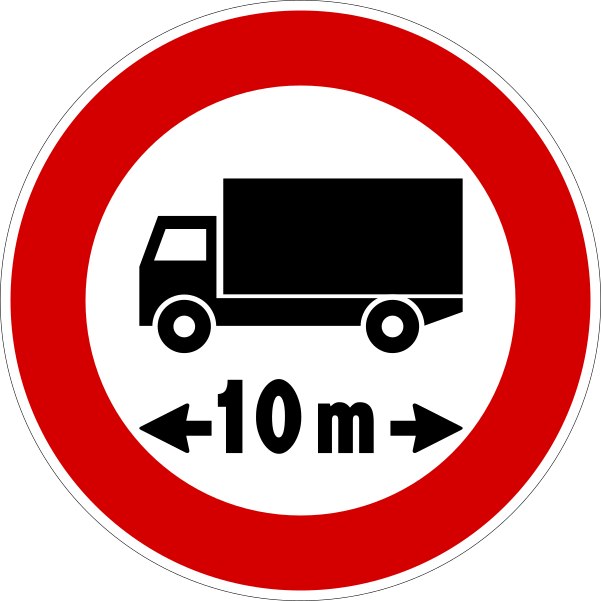
58. What does this traffic sign mean?
This traffic sign indicates that vehicles longer than indicated are prohibited. A vehicle or vehicle combination whose overall length, including its load, exceeds the displayed limit may not continue beyond the sign.
English • Traffic sign II.67 • No vehicles or vehicle combinations longer than indicated. The prohibition applies where their actual length at the time of passage exceeds the value shown in metres.
Italiano • Figura II.67 • Transito vietato ai veicoli o complessi di veicoli aventi lunghezza superiore a quella indicata. Vieta il transito ai veicoli o complessi di veicoli la cui lunghezza effettiva al momento del passaggio supera il valore indicato in metri.
Sources
🔗 Commons.wikimedia.org
🔗 Normattiva.it • D.P.R. 495/1992 • testo vigente • art. 118, comma 1(c), 3
🔗 Gazzettaufficiale.it • Gazzetta Ufficiale • Figura II.67 • pagina 264
SVG source: F l a n k e r • Public domain • Original revision 2023-10-01. Wikimedia original unmodified.
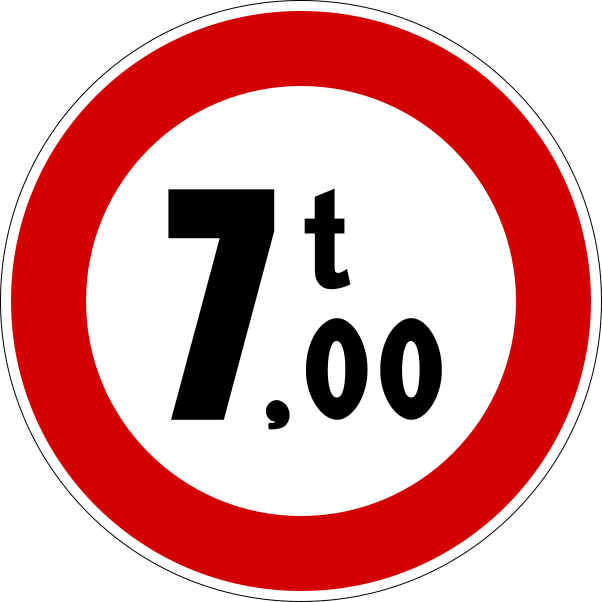
59. What does this traffic sign mean?
This traffic sign indicates that vehicles heavier than indicated are prohibited. Vehicles or vehicle combinations exceeding the displayed mass limit may not continue beyond the sign. The legally relevant mass is determined by the applicable local rules.
English • Traffic sign II.68 • No vehicles with a mass exceeding the indicated value. The prohibition applies where the vehicle's actual mass at the time of passage exceeds the value shown in tonnes.
Italiano • Figura II.68 • Transito vietato ai veicoli aventi massa superiore a quella indicata. Vieta il transito ai veicoli la cui massa effettiva al momento del passaggio supera il valore indicato in tonnellate.
Sources
🔗 Commons.wikimedia.org
🔗 Normattiva.it • D.P.R. 495/1992 • testo vigente • art. 118, comma 1(d), 3
🔗 Gazzettaufficiale.it • Gazzetta Ufficiale • Figura II.68 • pagina 265
SVG source: F l a n k e r • Public domain • Original revision 2024-01-13. Wikimedia original unmodified.
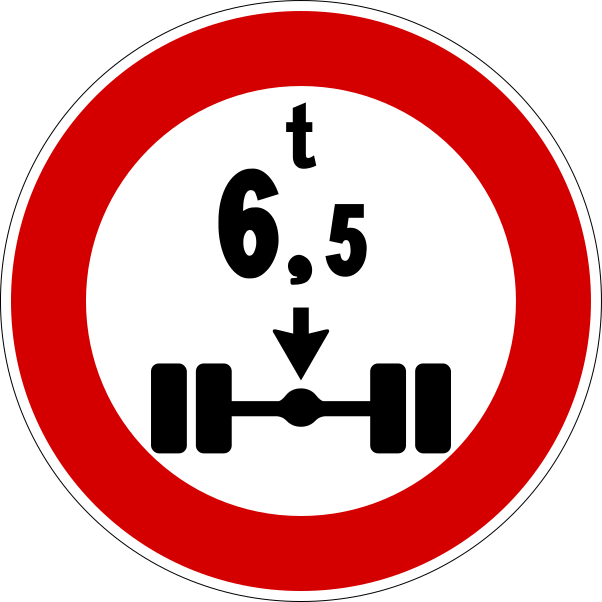
60. What does this traffic sign mean?
This traffic sign indicates that vehicles exceeding the indicated axle-load limit are prohibited. A vehicle whose load on an axle exceeds the displayed limit may not continue beyond the sign.
English • Traffic sign II.69 • No vehicles with an axle load exceeding the indicated value. The prohibition applies where the actual load on the most heavily loaded axle exceeds the value shown in tonnes.
Italiano • Figura II.69 • Transito vietato ai veicoli aventi massa per asse superiore a quella indicata. Vieta il transito ai veicoli la cui massa effettiva sull’asse più caricato supera il valore indicato in tonnellate.
Sources
🔗 Commons.wikimedia.org
🔗 Normattiva.it • D.P.R. 495/1992 • testo vigente • art. 118, comma 1(e), 3
🔗 Gazzettaufficiale.it • Gazzetta Ufficiale • Figura II.69 • pagina 265
Image via Commons.wikimedia.org
F l a n k e r • Public domain • Source revision 2024-01-13. Wikimedia original unmodified.
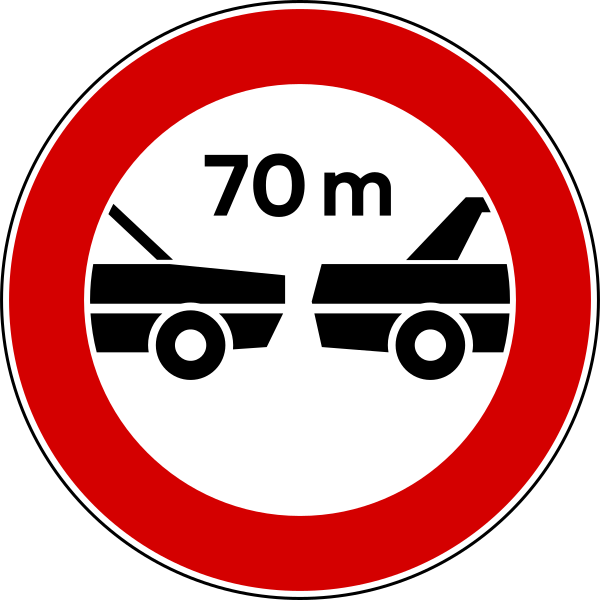
61. What does this traffic sign mean?
This traffic sign indicates the minimum distance that must be maintained from the vehicle ahead. Drivers must keep at least the distance shown.
English • Traffic sign II.49 • Compulsory minimum following distance. Drivers must not follow the vehicle ahead at less than the distance shown in metres.
Italiano • Figura II.49 • Distanziamento minimo obbligatorio. Vieta di seguire il veicolo che precede a una distanza inferiore a quella indicata in metri.
Sources
🔗 Commons.wikimedia.org
🔗 Normattiva.it • D.P.R. 495/1992 • testo vigente • art. 116, comma 1(d)
🔗 Gazzettaufficiale.it • Gazzetta Ufficiale • Figura II.49 • pagina 259
SVG source: F l a n k e r • Public domain • Original revision 2010-07-17. Wikimedia original unmodified.
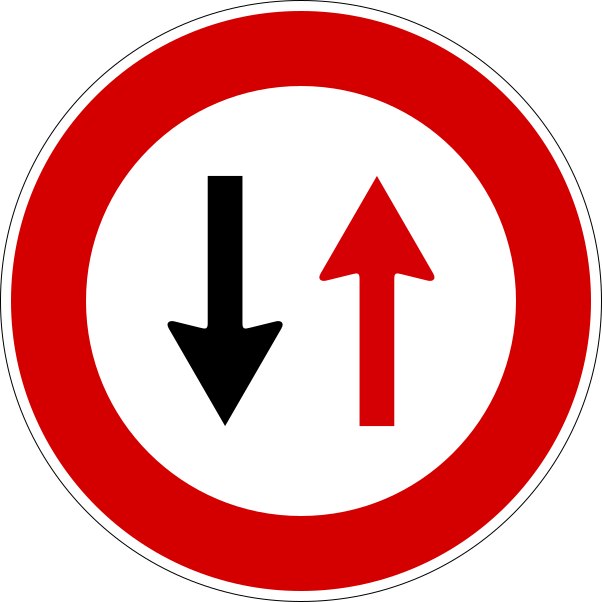
62. What does this traffic sign mean?
This traffic sign indicates a road narrowing where you must give way to oncoming traffic. Allow approaching traffic to pass before entering or continuing through the narrow section when required.
English • Traffic sign II.41 • Give way where traffic takes turns through a narrow section. Drivers must give way to oncoming vehicles.
Italiano • Figura II.41 • Dare precedenza nei sensi unici alternati. In una strettoia regolata a senso unico alternato, obbliga a dare precedenza ai veicoli provenienti in senso inverso.
Sources
🔗 Commons.wikimedia.org
🔗 Normattiva.it • D.P.R. 495/1992 • testo vigente • art. 110, comma 1
🔗 Gazzettaufficiale.it • Gazzetta Ufficiale • Figura II.41 • pagina 256
SVG source: F l a n k e r • Public domain • Original revision 2023-12-07. Wikimedia original unmodified.
Current figure reference verified in Normattiva.it • Normattiva, current article 110.
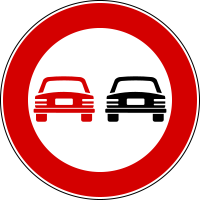
63. What does this traffic sign mean?
This traffic sign indicates that overtaking is prohibited. The vehicles covered by the prohibition and any categories that may still be overtaken depend on the applicable local rules.
English • Traffic sign II.48 • No overtaking. Overtaking motor vehicles other than mopeds and motorcycles is prohibited, even if the manoeuvre can be completed within your own half of the carriageway, with or without a continuous line.
Italiano • Figura II.48 • Divieto di sorpasso. Vieta di sorpassare i veicoli a motore, eccetto i ciclomotori e i motocicli, anche quando la manovra può compiersi entro la propria semicarreggiata, con o senza striscia continua.
Sources
🔗 Commons.wikimedia.org (F l a n k e r • CC BY-SA 3.0)
🔗 Normattiva.it • D.P.R. 495/1992 • testo vigente • art. 116, comma 1(c)
🔗 Gazzettaufficiale.it • Gazzetta Ufficiale • Figura II.48 • pagina 259
SVG source: F l a n k e r • CC BY-SA 3.0 • Original revision 2010-07-15. Wikimedia original unmodified.
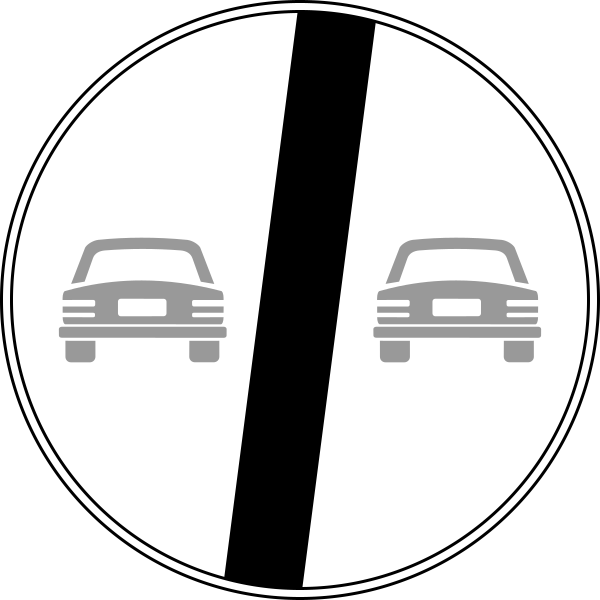
64. What does this traffic sign mean?
This traffic sign indicates the end of the overtaking prohibition. The preceding overtaking restriction ends at this point. Overtaking remains subject to the applicable traffic rules and any other restrictions.
English • Traffic sign II.72 • End of overtaking prohibition. Marks the end of the overtaking prohibition for all vehicles.
Italiano • Figura II.72 • Fine divieto di sorpasso. Indica la fine del divieto di sorpasso per tutti i veicoli.
Sources
🔗 Commons.wikimedia.org (F l a n k e r • CC BY-SA 3.0)
🔗 Normattiva.it • D.P.R. 495/1992 • testo vigente • art. 119, comma 1(c)
🔗 Gazzettaufficiale.it • Gazzetta Ufficiale • Figura II.72 • pagina 266
SVG source: F l a n k e r • CC BY-SA 3.0 • Original revision 2010-07-17. Wikimedia original unmodified.
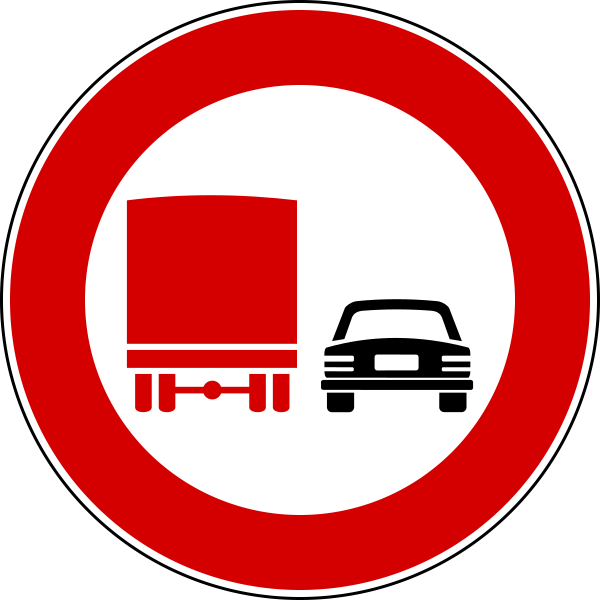
65. What does this traffic sign mean?
This traffic sign indicates that overtaking is prohibited for trucks. Trucks covered by the sign may not overtake where the prohibition applies. The affected truck categories and any exceptions depend on the applicable local rules.
English • Traffic sign II.52 • No overtaking by vehicles with a fully laden mass exceeding 3.5 t. Vehicles not used for passenger transport whose fully laden mass recorded in the registration document exceeds 3.5 t must not overtake motor vehicles. Non-motorised vehicles may be overtaken only within the driver's own half of the carriageway. A supplementary plate may specify a different mass.
Italiano • Figura II.52 • Divieto di sorpasso per i veicoli di massa a pieno carico superiore a 3,5 t. Vieta di sorpassare veicoli a motore ai veicoli non adibiti al trasporto di persone con massa a pieno carico superiore a 3,5 t indicata nella carta di circolazione. Il sorpasso di veicoli senza motore è consentito soltanto entro la propria semicarreggiata. Un pannello può precisare una massa diversa.
Sources
🔗 Commons.wikimedia.org
🔗 Normattiva.it • D.P.R. 495/1992 • testo vigente • art. 117, comma 1(a)
🔗 Gazzettaufficiale.it • Gazzetta Ufficiale • Figura II.52 • pagina 260
SVG source: F l a n k e r • Public domain • Original revision 2010-07-17. Wikimedia original unmodified.
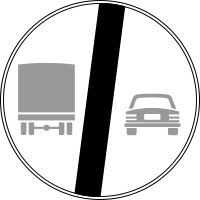
66. What does this traffic sign mean?
This traffic sign indicates the end of the overtaking prohibition for trucks. The preceding truck overtaking restriction ends at this point. Other overtaking rules and restrictions may still apply.
English • Traffic sign II.73 • End of overtaking prohibition for vehicles with a fully laden mass exceeding 3.5 t. Ends the prohibition for vehicles not used for passenger transport whose fully laden mass recorded in the registration document exceeds 3.5 t.
Italiano • Figura II.73 • Fine divieto di sorpasso per i veicoli di massa a pieno carico superiore a 3,5 t. Indica la fine del divieto di sorpasso per i veicoli non adibiti al trasporto di persone con massa a pieno carico superiore a 3,5 t indicata nella carta di circolazione.
Sources
🔗 Commons.wikimedia.org
🔗 Normattiva.it • D.P.R. 495/1992 • testo vigente • art. 119, comma 1(d)
🔗 Gazzettaufficiale.it • Gazzetta Ufficiale • Figura II.73 • pagina 266
SVG source: F l a n k e r • Public domain • Original revision 2006-12-02. Wikimedia original unmodified.
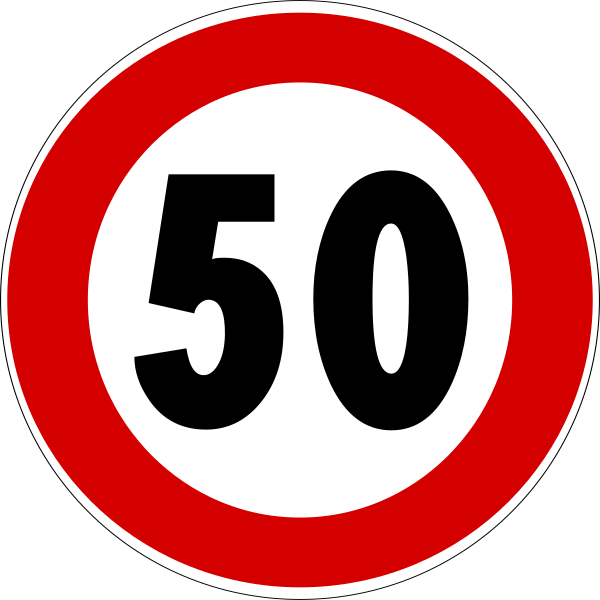
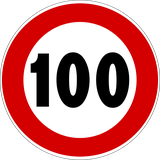
67. What does this traffic sign mean?
This traffic sign indicates the start of a speed limit. The displayed value is the maximum permitted speed from this point. The limit remains in force until it ends or is replaced according to the applicable traffic signs and local rules.
English • Traffic sign II.50 • Maximum speed limit. Shows the maximum speed in km/h for the section concerned. General driving rules and any lower limits for particular vehicle categories still apply.
Italiano • Figura II.50 • Limite massimo di velocità. Indica la velocità massima in km/h sul tratto interessato. Restano applicabili le norme di comportamento e gli eventuali limiti inferiori previsti per determinate categorie di veicoli.
Sources
🔗 Commons.wikimedia.org
🔗 Normattiva.it • D.P.R. 495/1992 • testo vigente • art. 116, comma 1(e)
🔗 Gazzettaufficiale.it • Gazzetta Ufficiale • Figura II.50 • pagina 260
SVG source: F l a n k e r • Public domain • Original revision 2023-06-19. Wikimedia original unmodified.
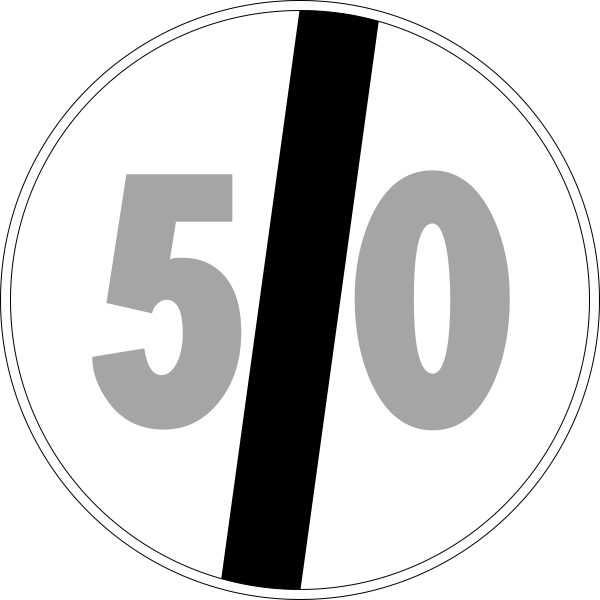
68. What does this traffic sign mean?
This traffic sign indicates the end of the previously indicated speed limit. From this point, follow any newly posted limit or the applicable default speed rules for the road and vehicle category.
English • Traffic sign II.71 • End of speed limit. The general limits applying to that type of road resume.
Italiano • Figura II.71 • Fine limitazione di velocità. Indica il ripristino dei limiti generali di velocità vigenti per quel tipo di strada.
Sources
🔗 Commons.wikimedia.org
🔗 Normattiva.it • D.P.R. 495/1992 • testo vigente • art. 119, comma 1(b)
🔗 Gazzettaufficiale.it • Gazzetta Ufficiale • Figura II.71 • pagina 266
SVG source: Original: Ministero dei Lavori Pubblici Vectorization: Arbalete • Public domain • Original revision 2024-09-03. Wikimedia original unmodified.
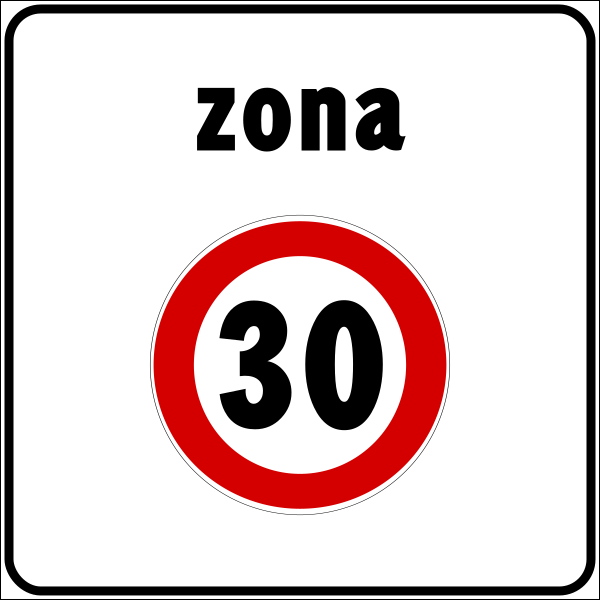
69. What does this traffic sign mean?
This traffic sign indicates the start of a zone with a speed limit. The displayed speed limit applies throughout the zone according to the applicable zonal rules, until the zone is ended or another rule replaces it.
English • Traffic sign II.323/a • Speed limit zone. Marks the beginning of an area where the indicated speed must not be exceeded.
Italiano • Figura II.323/a • Zona a velocità limitata. Indica l’inizio di un’area nella quale non è consentito superare la velocità indicata nel cartello.
Sources
🔗 Commons.wikimedia.org
🔗 Normattiva.it • D.P.R. 495/1992 • testo vigente • art. 135, comma 14
🔗 Normattiva.it • Allegati ufficiali aggiornati • Figura II.323/a
SVG source: Original: Ministero dei Lavori Pubblici Vectorization: Arbalete • Public domain • Original revision 2023-06-19. Wikimedia original unmodified.
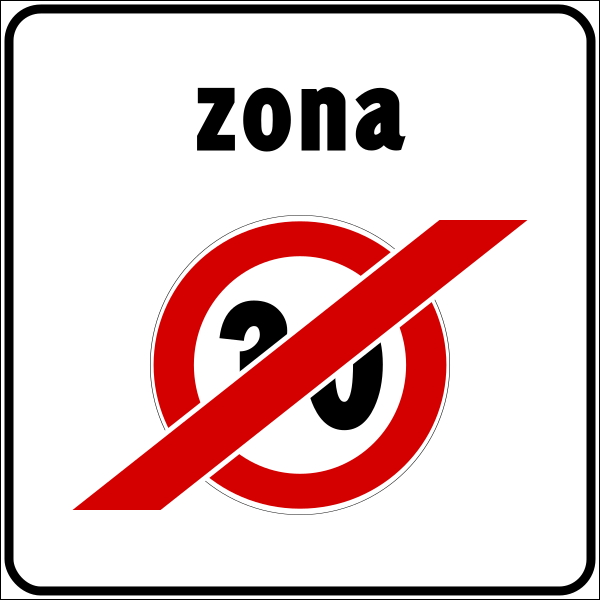
70. What does this traffic sign mean?
This traffic sign indicates the end of the zone with a speed limit. The zonal speed limit ends at this point. Follow any newly posted limit or the applicable default speed rules.
English • Traffic sign II.323/b • End of speed limit zone. Marks the exit from the previously signposted zone speed limit.
Italiano • Figura II.323/b • Fine zona a velocità limitata. Indica l’uscita dall’area con il limite di velocità di zona precedentemente segnalato.
Sources
🔗 Commons.wikimedia.org
🔗 Normattiva.it • D.P.R. 495/1992 • testo vigente • art. 135, comma 14
🔗 Normattiva.it • Allegati ufficiali aggiornati • Figura II.323/b
Image via Commons.wikimedia.org
Original: Ministero dei Lavori Pubblici Vectorization: Arbalete • CC BY-SA 4.0 • Source revision 2023-06-24. Wikimedia original unmodified.
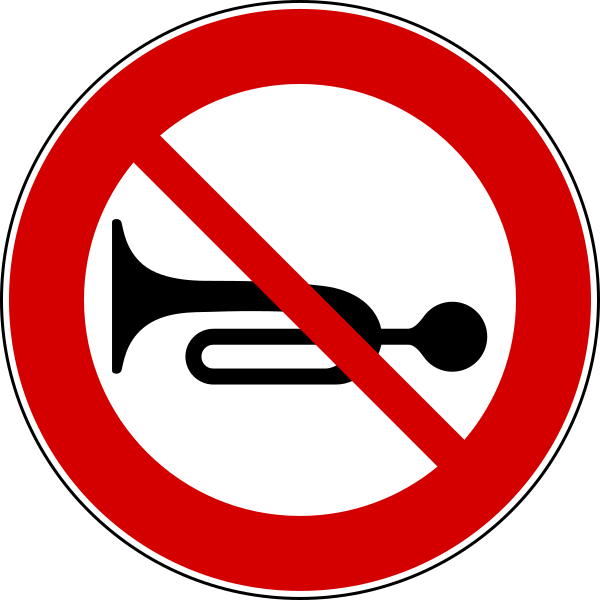
71. What does this traffic sign mean?
This traffic sign indicates that using the horn is prohibited. The horn or other audible warning device may not be used where the prohibition applies, except where an applicable local rule permits or requires it.
English • Traffic sign II.51 • Sound signals prohibited. Use of horns is prohibited except in immediate danger.
Italiano • Figura II.51 • Divieto di segnalazioni acustiche. Vieta l’uso degli avvisatori acustici, salvo in caso di pericolo immediato.
Sources
🔗 Commons.wikimedia.org (F l a n k e r • CC BY-SA 3.0)
🔗 Normattiva.it • D.P.R. 495/1992 • testo vigente • art. 116, comma 1(f)
🔗 Gazzettaufficiale.it • Gazzetta Ufficiale • Figura II.51 • pagina 260
SVG source: F l a n k e r • CC BY-SA 3.0 • Original revision 2010-07-17. Wikimedia original unmodified.
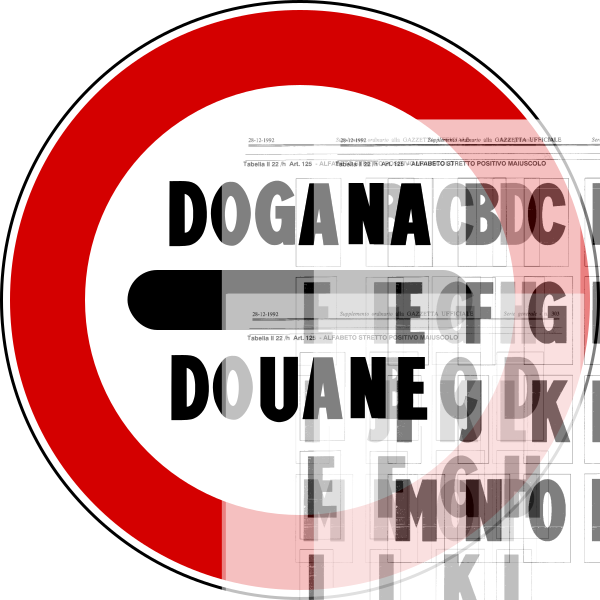
72. What does this traffic sign mean?
This traffic sign indicates a checkpoint with restricted entry. Road users may not proceed beyond the checkpoint unless they are authorised or permitted to continue according to the applicable rules and instructions.
English • Traffic sign II.96 • Stop — Customs. Marks a customs checkpoint where stopping is compulsory. The word beneath the bar may be in the neighbouring country's language.
Italiano • Figura II.96 • Alt — Dogana. Segnala un varco doganale al quale è obbligatorio fermarsi. La parola sotto la barra può essere nella lingua dello Stato confinante.
Sources
🔗 Commons.wikimedia.org
🔗 Normattiva.it • D.P.R. 495/1992 • testo vigente • art. 123, comma 2
🔗 Gazzettaufficiale.it • Gazzetta Ufficiale • Figura II.96 • pagina 276
Image via Commons.wikimedia.org
F l a n k e r • Public domain • Source revision 2025-05-10. Wikimedia original unmodified.
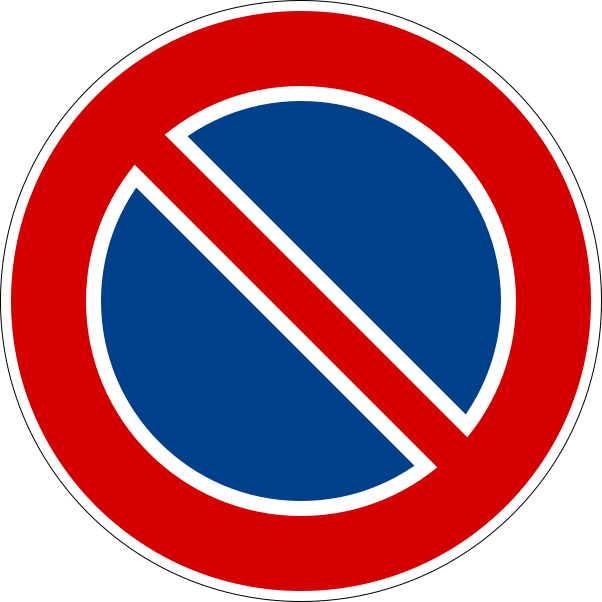
73. What does this traffic sign mean?
This traffic sign indicates that parking is prohibited. Vehicles may not be parked in the area covered by the sign unless an exception applies. Brief stopping to pick up or drop off passengers or to load or unload goods may still be permitted where local rules allow it.
English • Traffic sign II.74 • No parking. Without supplementary information, the prohibition is permanent outside built-up areas and applies from 8 to 20 h on urban roads. Plates may specify times, categories or street-cleaning operations.
Italiano • Figura II.74 • Divieto di sosta. Indica il divieto di sosta. In assenza di indicazioni integrative è permanente sulle strade extraurbane; sulle strade urbane vale dalle ore 8 alle ore 20. I pannelli possono precisare tempi, categorie o operazioni di pulizia.
Sources
🔗 Commons.wikimedia.org
🔗 Normattiva.it • D.P.R. 495/1992 • testo vigente • art. 120, comma 1(a)
🔗 Gazzettaufficiale.it • Gazzetta Ufficiale • Figura II.74 • pagina 266
SVG source: F l a n k e r • Public domain • Original revision 2024-01-14. Wikimedia original unmodified.
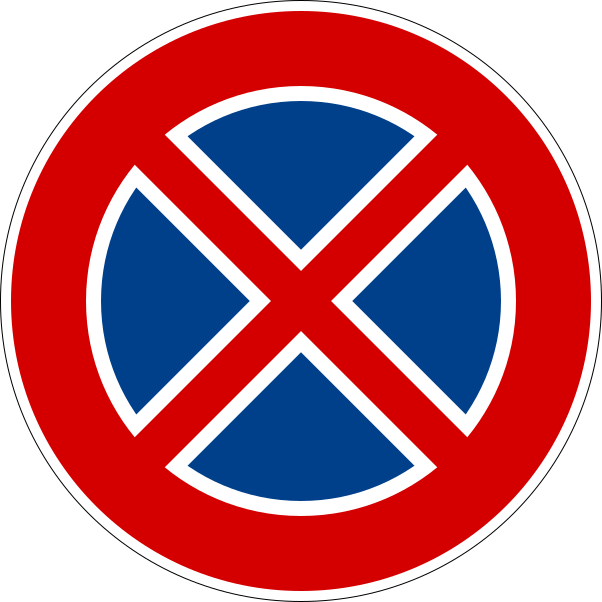
74. What does this traffic sign mean?
This traffic sign indicates that parking and stopping are prohibited. Vehicles may not stop or park voluntarily where the restriction applies, except where an applicable rule provides an exemption or stopping is required by traffic conditions.
English • Traffic sign II.75 • No stopping. Without supplementary information, parking, stopping and any voluntary momentary halt are permanently prohibited.
Italiano • Figura II.75 • Divieto di fermata. In assenza di indicazioni integrative vieta permanentemente la sosta, la fermata e qualsiasi momentaneo arresto volontario del veicolo.
Sources
🔗 Commons.wikimedia.org (F l a n k e r • CC BY-SA 3.0)
🔗 Normattiva.it • D.P.R. 495/1992 • testo vigente • art. 120, comma 1(b)
🔗 Gazzettaufficiale.it • Gazzetta Ufficiale • Figura II.75 • pagina 266
SVG source: F l a n k e r • CC BY-SA 3.0 • Original revision 2024-01-14. Wikimedia original unmodified.
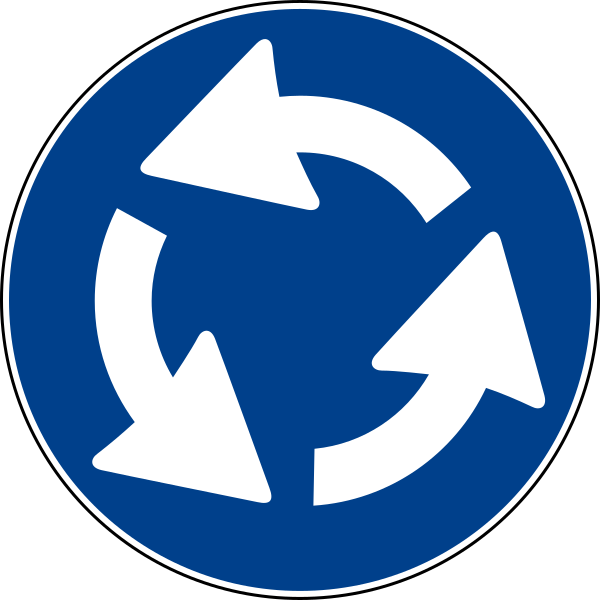
75. What does this traffic sign mean?
This traffic sign indicates the mandatory direction around a roundabout. Traffic must circulate in the direction shown by the arrows. The sign does not itself determine priority; follow the applicable priority signs, traffic signals and local rules.
English • Traffic sign II.84 • Roundabout. Drivers must circulate in the direction shown by the arrows within the roundabout area.
Italiano • Figura II.84 • Rotatoria. Obbliga a circolare nel verso indicato dalle frecce, in corrispondenza dell’area con circolazione rotatoria.
Sources
🔗 Commons.wikimedia.org (F l a n k e r • CC BY-SA 3.0)
🔗 Normattiva.it • D.P.R. 495/1992 • testo vigente • art. 122, comma 6
🔗 Gazzettaufficiale.it • Gazzetta Ufficiale • Figura II.84 • pagina 271
SVG source: F l a n k e r • CC BY-SA 3.0 • Original revision 2010-07-17. Wikimedia original unmodified.
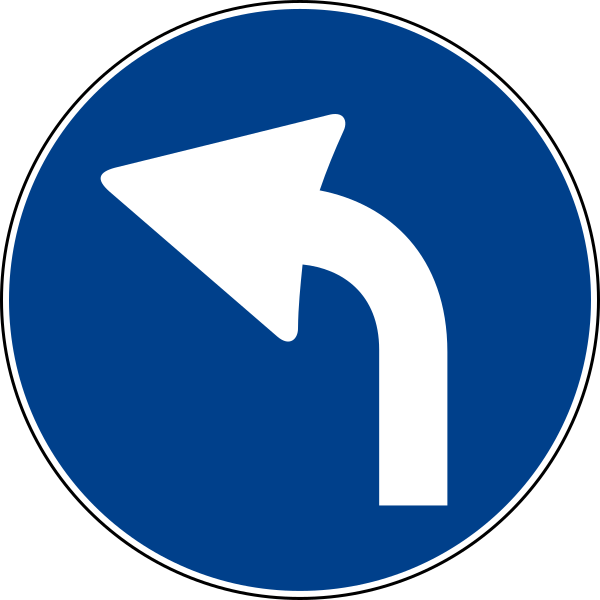
76. What does this traffic sign mean?
This traffic sign indicates that turning left is mandatory at the junction ahead. Traffic must turn left and may not continue straight ahead or turn right.
English • Traffic sign II.80/e • Advance indication of compulsory left turn. Warns that turning left is compulsory.
Italiano • Figura II.80/e • Preavviso di direzione obbligatoria a sinistra. Preavvisa l’obbligo di svoltare a sinistra.
Sources
🔗 Commons.wikimedia.org (F l a n k e r • CC BY-SA 3.0)
🔗 Normattiva.it • D.P.R. 495/1992 • testo vigente • art. 122, comma 2
🔗 Gazzettaufficiale.it • Gazzetta Ufficiale • Figura II.80/e • pagina 270
SVG source: F l a n k e r • CC BY-SA 3.0 • Original revision 2010-07-17. Wikimedia original unmodified.
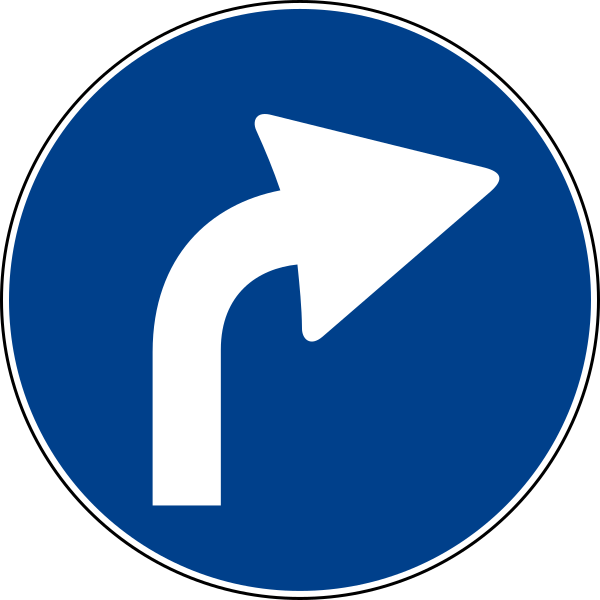
77. What does this traffic sign mean?
This traffic sign indicates that turning right is mandatory at the junction ahead. Traffic must turn right and may not continue straight ahead or turn left.
English • Traffic sign II.80/d • Advance indication of compulsory right turn. Warns that turning right is compulsory.
Italiano • Figura II.80/d • Preavviso di direzione obbligatoria a destra. Preavvisa l’obbligo di svoltare a destra.
Sources
🔗 Commons.wikimedia.org (F l a n k e r • CC BY-SA 3.0)
🔗 Normattiva.it • D.P.R. 495/1992 • testo vigente • art. 122, comma 2
🔗 Gazzettaufficiale.it • Gazzetta Ufficiale • Figura II.80/d • pagina 269
SVG source: F l a n k e r • CC BY-SA 3.0 • Original revision 2010-07-17. Wikimedia original unmodified.

78. What does this traffic sign mean?
This traffic sign indicates that traffic must pass an obstacle on the left. Keep to the left of the obstacle and follow any accompanying signs or road markings.
English • Traffic sign II.82/a • Pass on the left. Drivers must pass to the left of the obstacle, obstruction, traffic island or central reservation.
Italiano • Figura II.82/a • Passaggio obbligatorio a sinistra. Obbliga a passare a sinistra dell’ostacolo, dell’ingombro, dell’isola di traffico o dello spartitraffico.
Sources
🔗 Commons.wikimedia.org (F l a n k e r • CC BY-SA 3.0)
🔗 Normattiva.it • D.P.R. 495/1992 • testo vigente • art. 122, comma 4
🔗 Gazzettaufficiale.it • Gazzetta Ufficiale • Figura II.82/a • pagina 271
Replacement SVG: Commons.wikimedia.org • Wikimedia Commons original • 3247 • Public domain • Original revision 2023-05-28. Wikimedia original unmodified.
Image via Commons.wikimedia.org
3247 • Public domain • Source revision 2023-05-28. Wikimedia original unmodified.
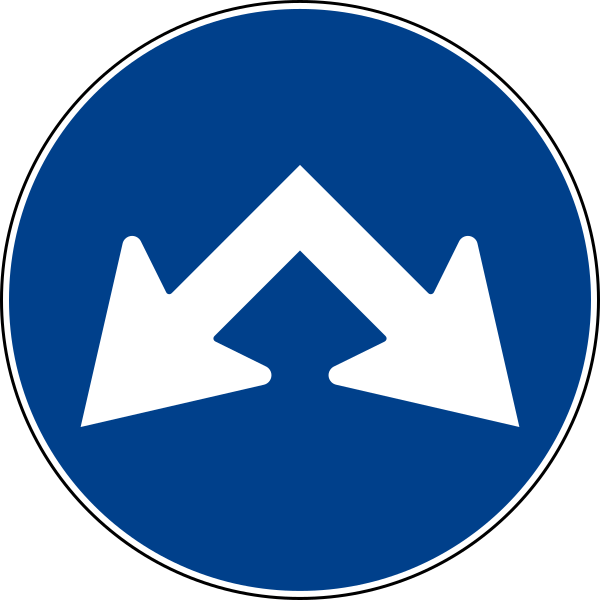
79. What does this traffic sign mean?
This traffic sign indicates that traffic must pass an obstacle on either the left or the right. Use either permitted side while following the road layout and any accompanying signs or markings.
English • Traffic sign II.83 • Passing permitted on either side. Drivers may pass on either side of the obstacle.
Italiano • Figura II.83 • Passaggi consentiti. Consente di passare da uno dei due lati dell’ostacolo.
Sources
🔗 Commons.wikimedia.org (F l a n k e r • CC BY-SA 3.0)
🔗 Normattiva.it • D.P.R. 495/1992 • testo vigente • art. 122, comma 4
🔗 Gazzettaufficiale.it • Gazzetta Ufficiale • Figura II.83 • pagina 271
SVG source: F l a n k e r • CC BY-SA 3.0 • Original revision 2010-07-17. Wikimedia original unmodified.
80. What does this traffic sign mean?
This traffic sign indicates that traffic must pass an obstacle on the right. Keep to the right of the obstacle and follow any accompanying signs or road markings.
English • Traffic sign II.82/b • Pass on the right. Drivers must pass to the right of the obstacle, obstruction, traffic island or central reservation.
Italiano • Figura II.82/b • Passaggio obbligatorio a destra. Obbliga a passare a destra dell’ostacolo, dell’ingombro, dell’isola di traffico o dello spartitraffico.
Sources
🔗 Commons.wikimedia.org (F l a n k e r • CC BY-SA 3.0)
🔗 Normattiva.it • D.P.R. 495/1992 • testo vigente • art. 122, comma 4
🔗 Gazzettaufficiale.it • Gazzetta Ufficiale • Figura II.82/b • pagina 271
Image via Commons.wikimedia.org
F l a n k e r • CC BY-SA 3.0 • Source revision 2015-09-12. Wikimedia original unmodified.
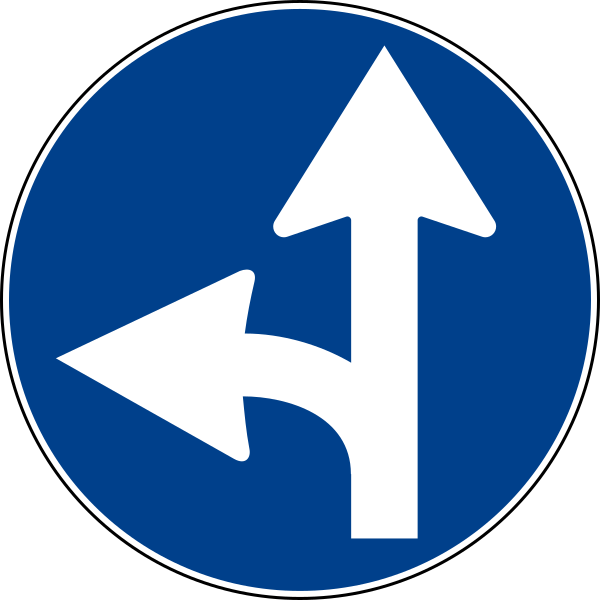
81. What does this traffic sign mean?
This traffic sign indicates that traffic must continue straight ahead or turn left. One of the indicated directions must be followed; turning right is prohibited.
English • Traffic sign II.81/c • Straight ahead or left only. These are the only permitted directions.
Italiano • Figura II.81/c • Direzioni consentite diritto e sinistra. Indica che le sole direzioni consentite sono diritto e sinistra.
Sources
🔗 Commons.wikimedia.org (F l a n k e r • CC BY-SA 3.0)
🔗 Normattiva.it • D.P.R. 495/1992 • testo vigente • art. 122, comma 3
🔗 Gazzettaufficiale.it • Gazzetta Ufficiale • Figura II.81/c • pagina 270
SVG source: F l a n k e r • CC BY-SA 3.0 • Original revision 2010-07-17. Wikimedia original unmodified.
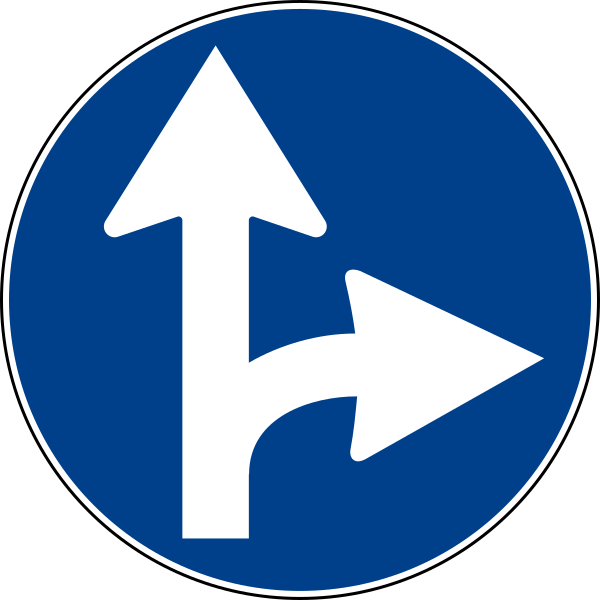
82. What does this traffic sign mean?
This traffic sign indicates that traffic must continue straight ahead or turn right. One of the indicated directions must be followed; turning left is prohibited.
English • Traffic sign II.81/b • Straight ahead or right only. These are the only permitted directions.
Italiano • Figura II.81/b • Direzioni consentite diritto e destra. Indica che le sole direzioni consentite sono diritto e destra.
Sources
🔗 Commons.wikimedia.org (F l a n k e r • CC BY-SA 3.0)
🔗 Normattiva.it • D.P.R. 495/1992 • testo vigente • art. 122, comma 3
🔗 Gazzettaufficiale.it • Gazzetta Ufficiale • Figura II.81/b • pagina 270
SVG source: F l a n k e r • CC BY-SA 3.0 • Original revision 2010-07-17. Wikimedia original unmodified.
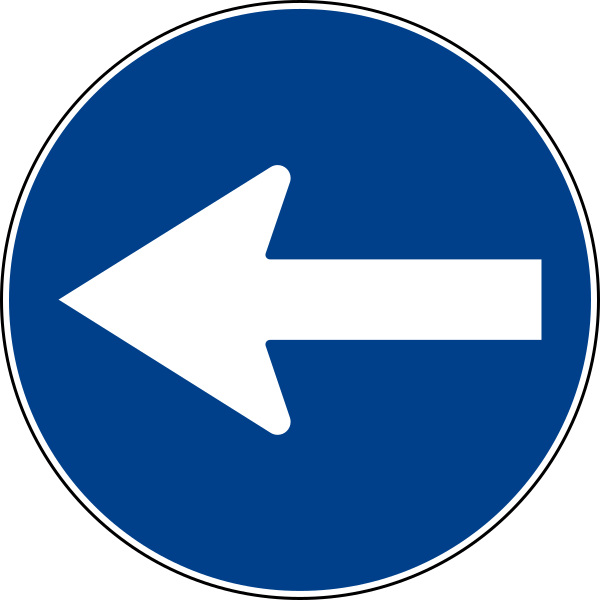
83. What does this traffic sign mean?
This traffic sign indicates a mandatory direction to the left. Traffic must proceed to the left at the sign and may not continue straight ahead or to the right.
English • Traffic sign II.80/b • Left turn only. Left is the only permitted direction.
Italiano • Figura II.80/b • Direzione obbligatoria a sinistra. Indica che l’unica direzione consentita è a sinistra.
Sources
🔗 Commons.wikimedia.org (F l a n k e r • CC BY-SA 3.0)
🔗 Normattiva.it • D.P.R. 495/1992 • testo vigente • art. 122, comma 2
🔗 Gazzettaufficiale.it • Gazzetta Ufficiale • Figura II.80/b • pagina 269
SVG source: F l a n k e r • CC BY-SA 3.0 • Original revision 2010-07-17. Wikimedia original unmodified.
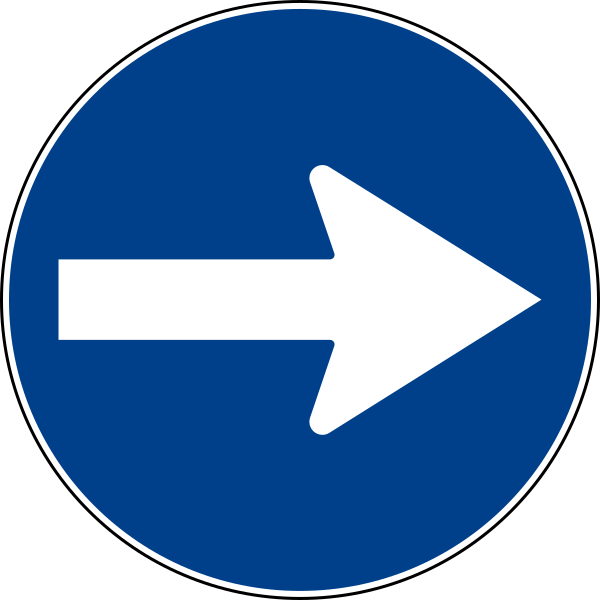
84. What does this traffic sign mean?
This traffic sign indicates a mandatory direction to the right. Traffic must proceed to the right at the sign and may not continue straight ahead or to the left.
English • Traffic sign II.80/c • Right turn only. Right is the only permitted direction.
Italiano • Figura II.80/c • Direzione obbligatoria a destra. Indica che l’unica direzione consentita è a destra.
Sources
🔗 Commons.wikimedia.org (F l a n k e r • CC BY-SA 3.0)
🔗 Normattiva.it • D.P.R. 495/1992 • testo vigente • art. 122, comma 2
🔗 Gazzettaufficiale.it • Gazzetta Ufficiale • Figura II.80/c • pagina 269
SVG source: F l a n k e r • CC BY-SA 3.0 • Original revision 2010-07-17. Wikimedia original unmodified.
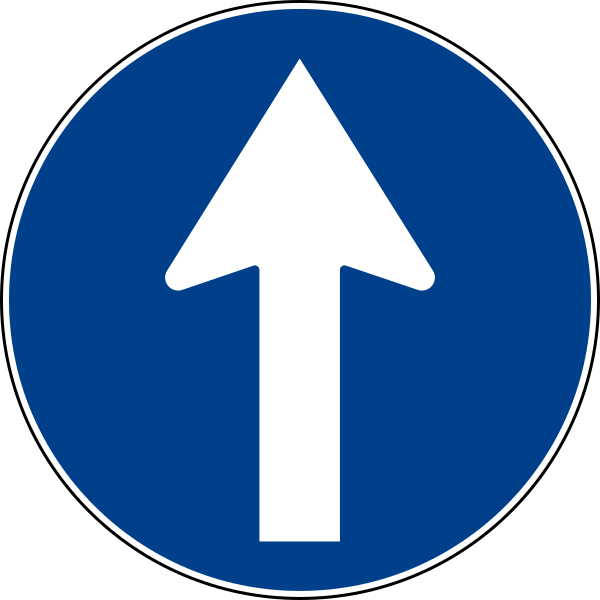
85. What does this traffic sign mean?
This traffic sign indicates that driving straight ahead is mandatory. Traffic must continue straight ahead and may not turn left or right at the location to which the sign applies.
English • Traffic sign II.80/a • Straight ahead only. Straight ahead is the only permitted direction.
Italiano • Figura II.80/a • Direzione obbligatoria diritto. Indica che l’unica direzione consentita è diritto.
Sources
🔗 Commons.wikimedia.org (F l a n k e r • CC BY-SA 3.0)
🔗 Normattiva.it • D.P.R. 495/1992 • testo vigente • art. 122, comma 2
🔗 Gazzettaufficiale.it • Gazzetta Ufficiale • Figura II.80/a • pagina 269
SVG source: F l a n k e r • CC BY-SA 3.0 • Original revision 2010-07-17. Wikimedia original unmodified.
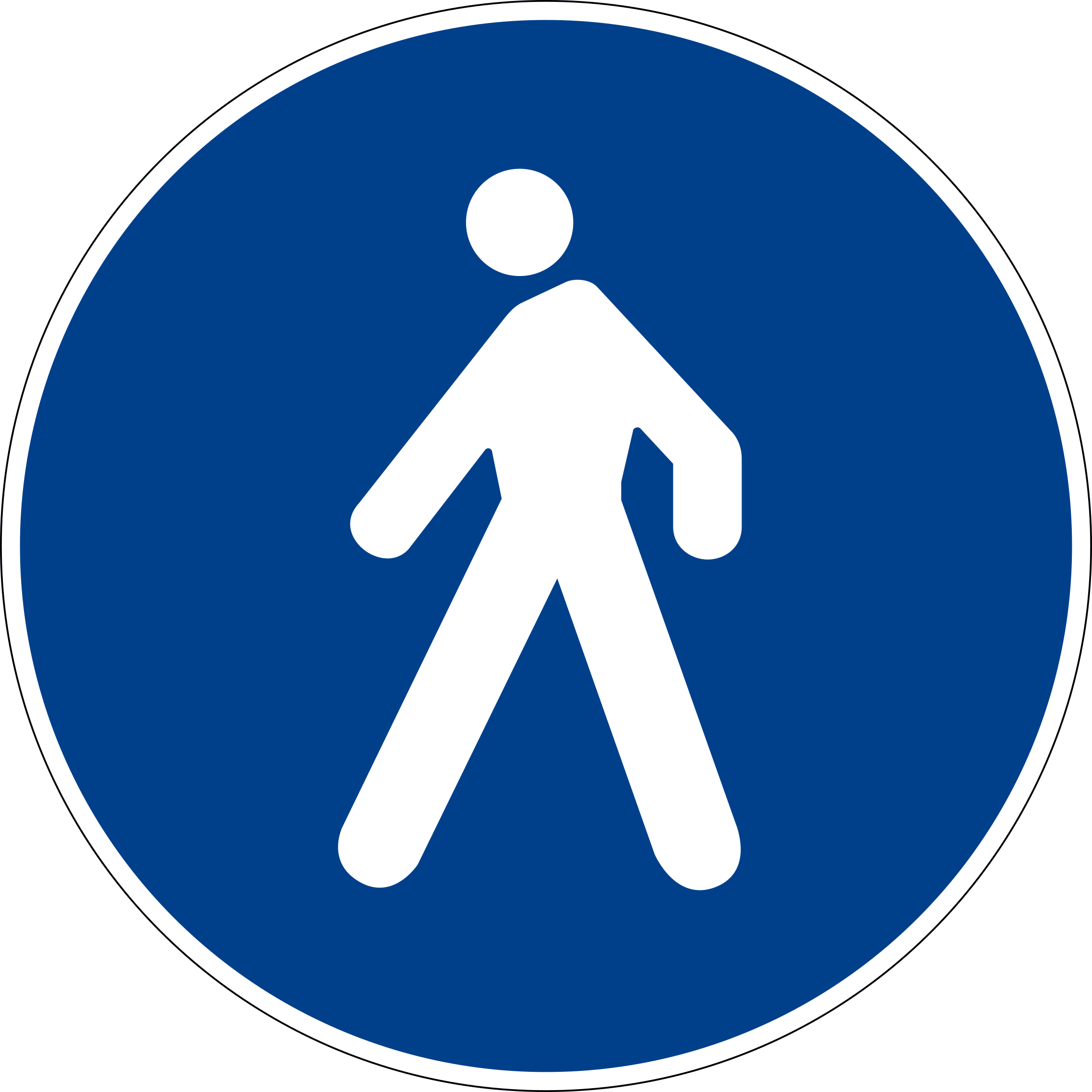
86. What does this traffic sign mean?
This traffic sign indicates the start of a mandatory path for pedestrians. Pedestrians must use the designated path, while other road users may use it only where the applicable signs or local rules permit them to do so.
English • Traffic sign II.88 • Footpath. Marks a route reserved exclusively for pedestrians; other road-user categories are prohibited.
Italiano • Figura II.88 • Percorso pedonale. Indica un percorso riservato ai soli pedoni; è vietato alle altre categorie di utenti.
Sources
🔗 Commons.wikimedia.org
🔗 Normattiva.it • D.P.R. 495/1992 • testo vigente • art. 122, comma 9(a)
🔗 Gazzettaufficiale.it • Gazzetta Ufficiale • Figura II.88 • pagina 273
SVG source: F l a n k e r • Public domain • Original revision 2026-06-15. Wikimedia original unmodified.
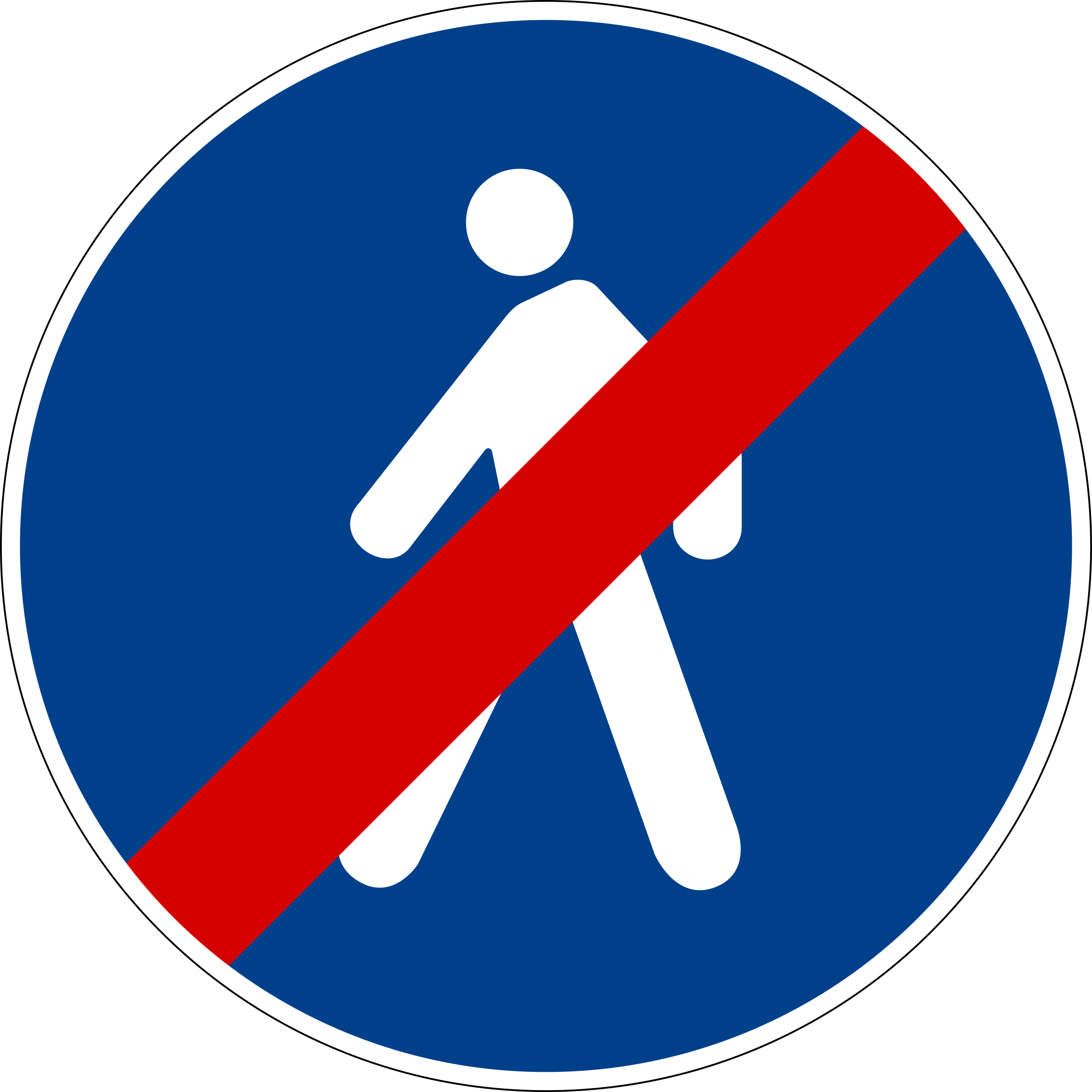
87. What does this traffic sign mean?
This traffic sign indicates the end of the mandatory path for pedestrians. The requirement associated with the designated path ends at this point. Pedestrians must continue according to the subsequent path or road layout and applicable local rules.
English • Traffic sign II.89 • End of footpath. Marks the end of the route reserved for pedestrians.
Italiano • Figura II.89 • Fine percorso pedonale. Indica la fine del percorso riservato ai pedoni.
Sources
🔗 Commons.wikimedia.org
🔗 Normattiva.it • D.P.R. 495/1992 • testo vigente • art. 122, comma 10
🔗 Gazzettaufficiale.it • Gazzetta Ufficiale • Figura II.89 • pagina 273
SVG source: F l a n k e r • Public domain • Original revision 2026-06-15. Wikimedia original unmodified.
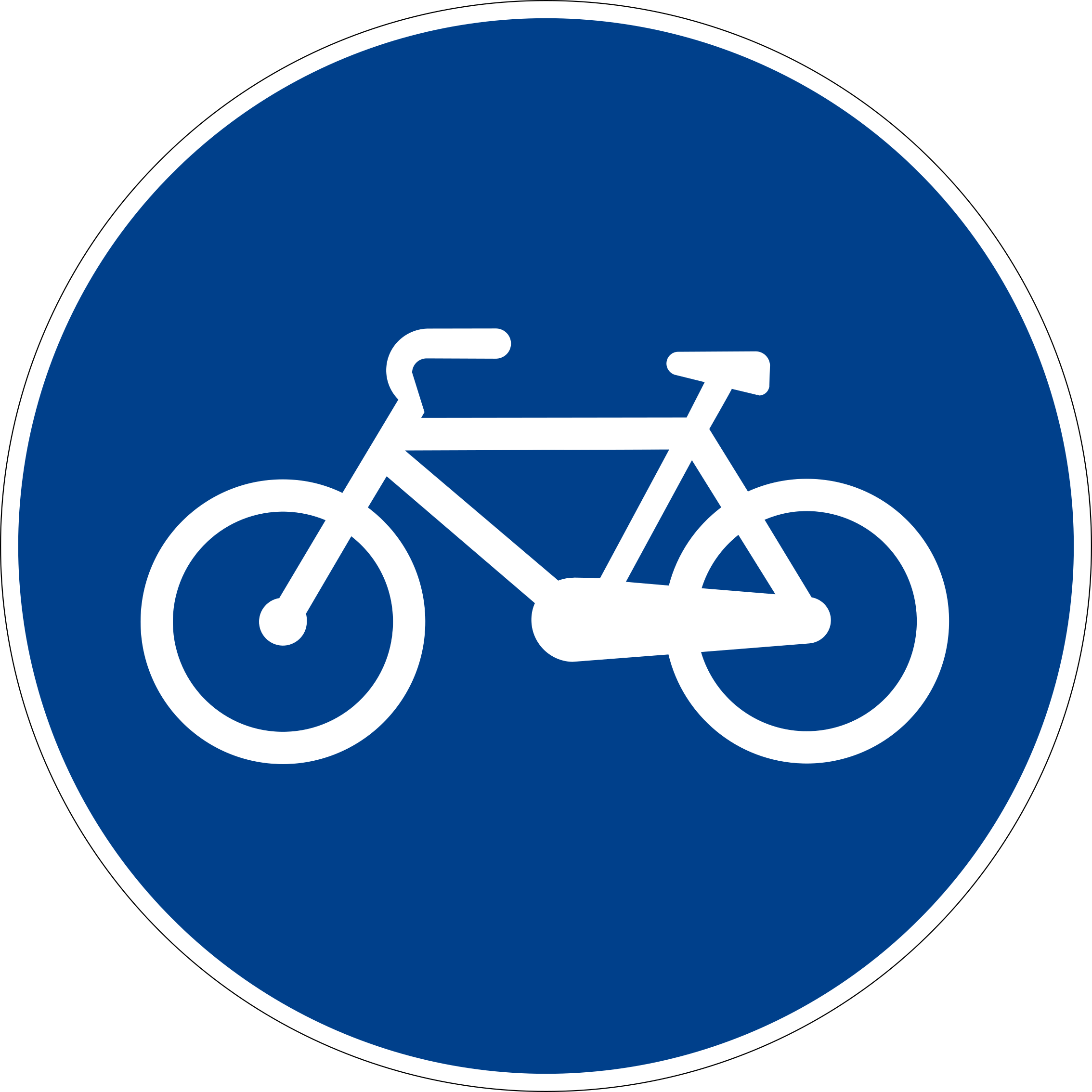
88. What does this traffic sign mean?
This traffic sign indicates a mandatory path for cyclists. Cyclists must use the designated path where the sign applies. Other road users may use the path only where the applicable signs or local rules permit them to do so.
English • Traffic sign II.90 • Cycle path. Marks a track, lane or route reserved for cycles; other road-user categories are prohibited.
Italiano • Figura II.90 • Pista ciclabile. Indica una pista, corsia o itinerario riservato alla circolazione dei velocipedi; è vietato alle altre categorie di utenti.
Sources
🔗 Commons.wikimedia.org (F l a n k e r • CC BY-SA 4.0)
🔗 Normattiva.it • D.P.R. 495/1992 • testo vigente • art. 122, comma 9(b)
🔗 Gazzettaufficiale.it • Gazzetta Ufficiale • Figura II.90 • pagina 273
🔗 Normattiva.it • D.P.R. 495/1992 • allegati e successive modifiche
SVG source: F l a n k e r • CC BY-SA 4.0 • Original revision 2026-05-12. Wikimedia original unmodified.

89. What does this traffic sign mean?
This traffic sign indicates the end of the mandatory path for cyclists. The requirement associated with the designated path ends at this point. Cyclists must continue according to the road layout, other traffic signs and applicable local rules.
English • Traffic sign II.91 • End of cycle path. Marks the end of the track reserved for cycles.
Italiano • Figura II.91 • Fine pista ciclabile. Indica la fine della pista riservata ai velocipedi.
Sources
🔗 Commons.wikimedia.org
🔗 Normattiva.it • D.P.R. 495/1992 • testo vigente • art. 122, comma 10
🔗 Gazzettaufficiale.it • Gazzetta Ufficiale • Figura II.91 • pagina 273
🔗 Normattiva.it • D.P.R. 495/1992 • allegati e successive modifiche
Replacement SVG: Commons.wikimedia.org • Wikimedia Commons original • Gigillo83 • CC BY-SA 3.0 • Original revision 2014-10-02. Wikimedia original unmodified.
Image via Commons.wikimedia.org
Gigillo83 • CC BY-SA 3.0 • Source revision 2014-10-02. Wikimedia original unmodified.
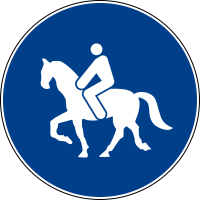
90. What does this traffic sign mean?
This traffic sign indicates a mandatory path for equestrians. Equestrians must use the designated path where the sign applies. Other road users may use it only where the applicable signs or local rules permit them to do so.
English • Traffic sign II.94 • Route reserved for pack or riding animals. Marks a route reserved for four-legged pack or riding animals; other road-user categories are prohibited.
Italiano • Figura II.94 • Percorso riservato ai quadrupedi da soma o da sella. Indica un percorso riservato ai quadrupedi da soma o da sella; è vietato alle altre categorie di utenti.
Sources
🔗 Commons.wikimedia.org
🔗 Normattiva.it • D.P.R. 495/1992 • testo vigente • art. 122, comma 9(d)
🔗 Gazzettaufficiale.it • Gazzetta Ufficiale • Figura II.94 • pagina 275
SVG source: F l a n k e r • Public domain • Original revision 2026-04-03. Wikimedia original unmodified.
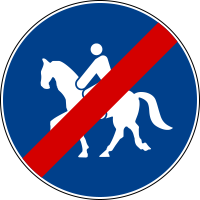
91. What does this traffic sign mean?
This traffic sign indicates the end of the mandatory path for equestrians. The requirement associated with the designated path ends at this point. Equestrians must continue according to the subsequent path or road layout and applicable local rules.
English • Traffic sign II.95 • End of route reserved for pack or riding animals. Marks the end of the route reserved for four-legged pack or riding animals.
Italiano • Figura II.95 • Fine percorso riservato ai quadrupedi da soma o da sella. Indica la fine del percorso riservato ai quadrupedi da soma o da sella.
Sources
🔗 Commons.wikimedia.org
🔗 Normattiva.it • D.P.R. 495/1992 • testo vigente • art. 122, comma 10
🔗 Gazzettaufficiale.it • Gazzetta Ufficiale • Figura II.95 • pagina 275
SVG source: F l a n k e r • Public domain • Original revision 2026-04-03. Wikimedia original unmodified.
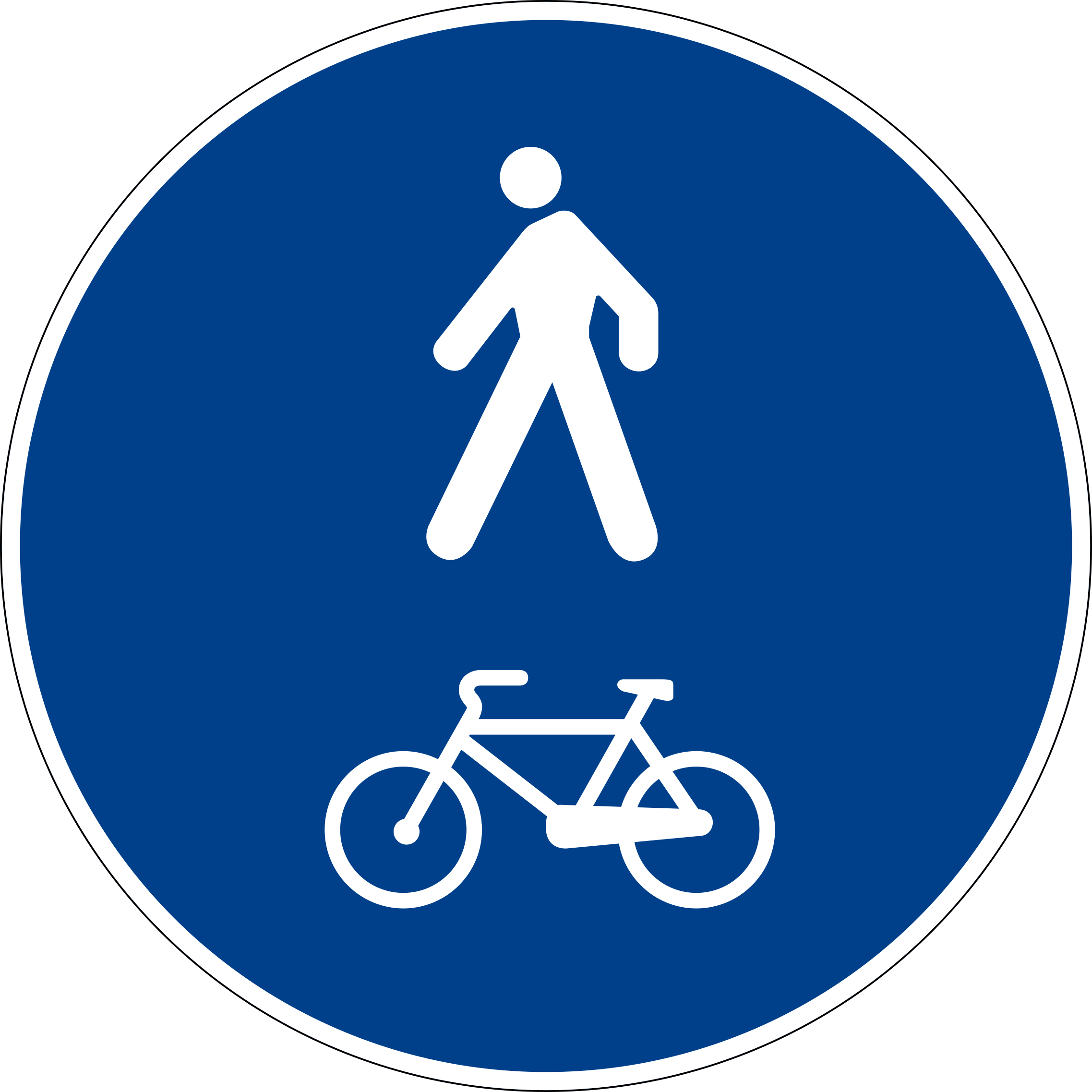
92. What does this traffic sign mean?
This traffic sign indicates a mandatory shared path for pedestrians and cyclists. Pedestrians and cyclists must use the same designated path rather than separate sections. They must share the space safely and follow the applicable local rules.
English • Traffic sign II.92/b • Pedestrian and cycle route. Marks a route reserved for pedestrians and cycles.
Italiano • Figura II.92/b • Percorso pedonale e ciclabile. Indica un percorso riservato ai pedoni e ai velocipedi.
Sources
🔗 Commons.wikimedia.org
🔗 Normattiva.it • D.P.R. 495/1992 • testo vigente • art. 122, comma 9(c)
🔗 Gazzettaufficiale.it • Gazzetta Ufficiale • Figura II.92/b • pagina 274
🔗 Normattiva.it • D.P.R. 495/1992 • allegati e successive modifiche
SVG source: F l a n k e r • Public domain • Original revision 2026-06-15. Wikimedia original unmodified.
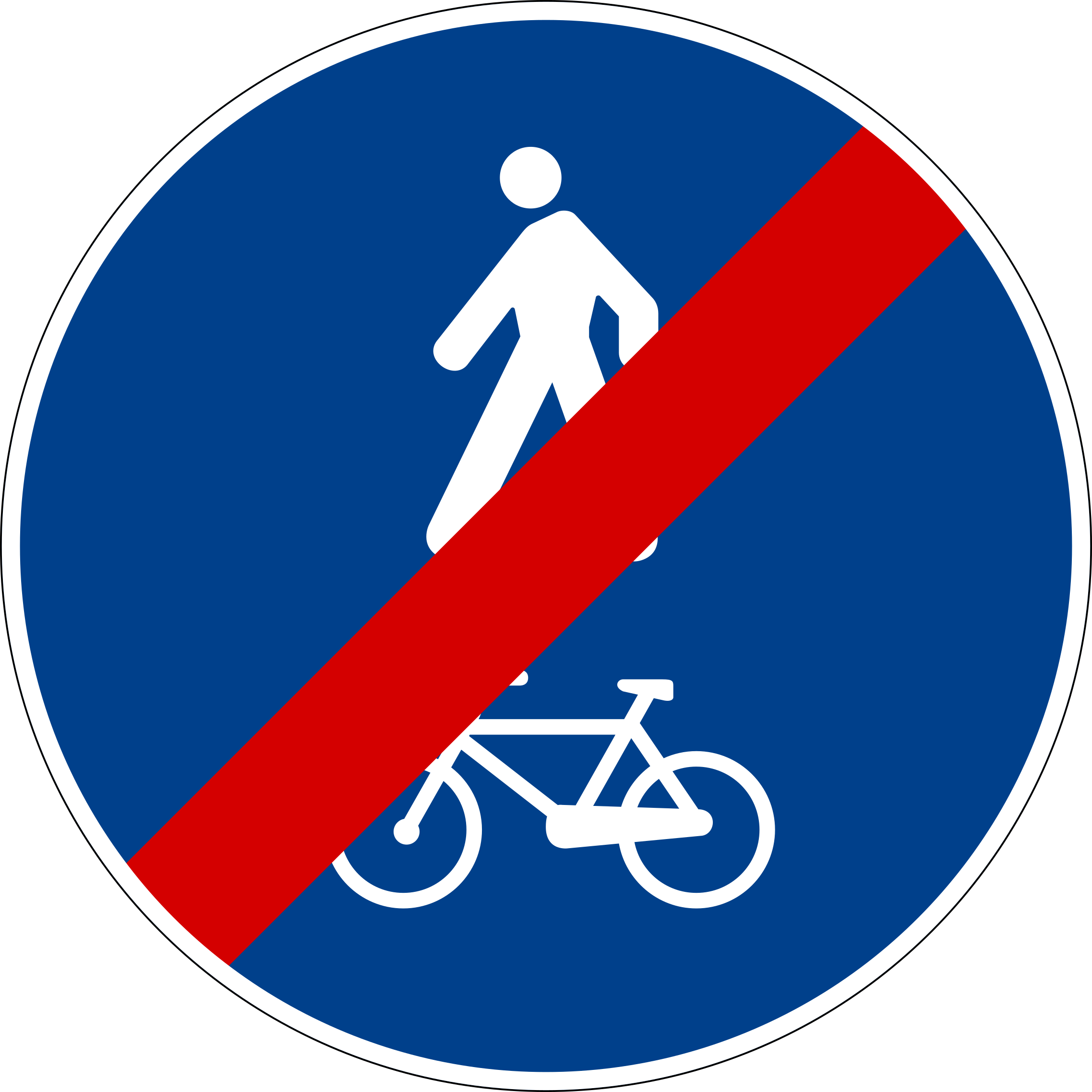
93. What does this traffic sign mean?
This traffic sign indicates the end of the mandatory shared path for pedestrians and cyclists. The shared-path requirement ends at this point. Pedestrians and cyclists must continue according to the subsequent path or road layout and applicable local rules.
English • Traffic sign II.93/b • End of pedestrian and cycle route. Marks the end of the route reserved for pedestrians and cycles.
Italiano • Figura II.93/b • Fine percorso pedonale e ciclabile. Indica la fine del percorso riservato ai pedoni e ai velocipedi.
Sources
🔗 Commons.wikimedia.org
🔗 Normattiva.it • D.P.R. 495/1992 • testo vigente • art. 122, comma 10
🔗 Gazzettaufficiale.it • Gazzetta Ufficiale • Figura II.93/b • pagina 275
🔗 Normattiva.it • D.P.R. 495/1992 • allegati e successive modifiche
SVG source: F l a n k e r • Public domain • Original revision 2026-06-15. Wikimedia original unmodified.
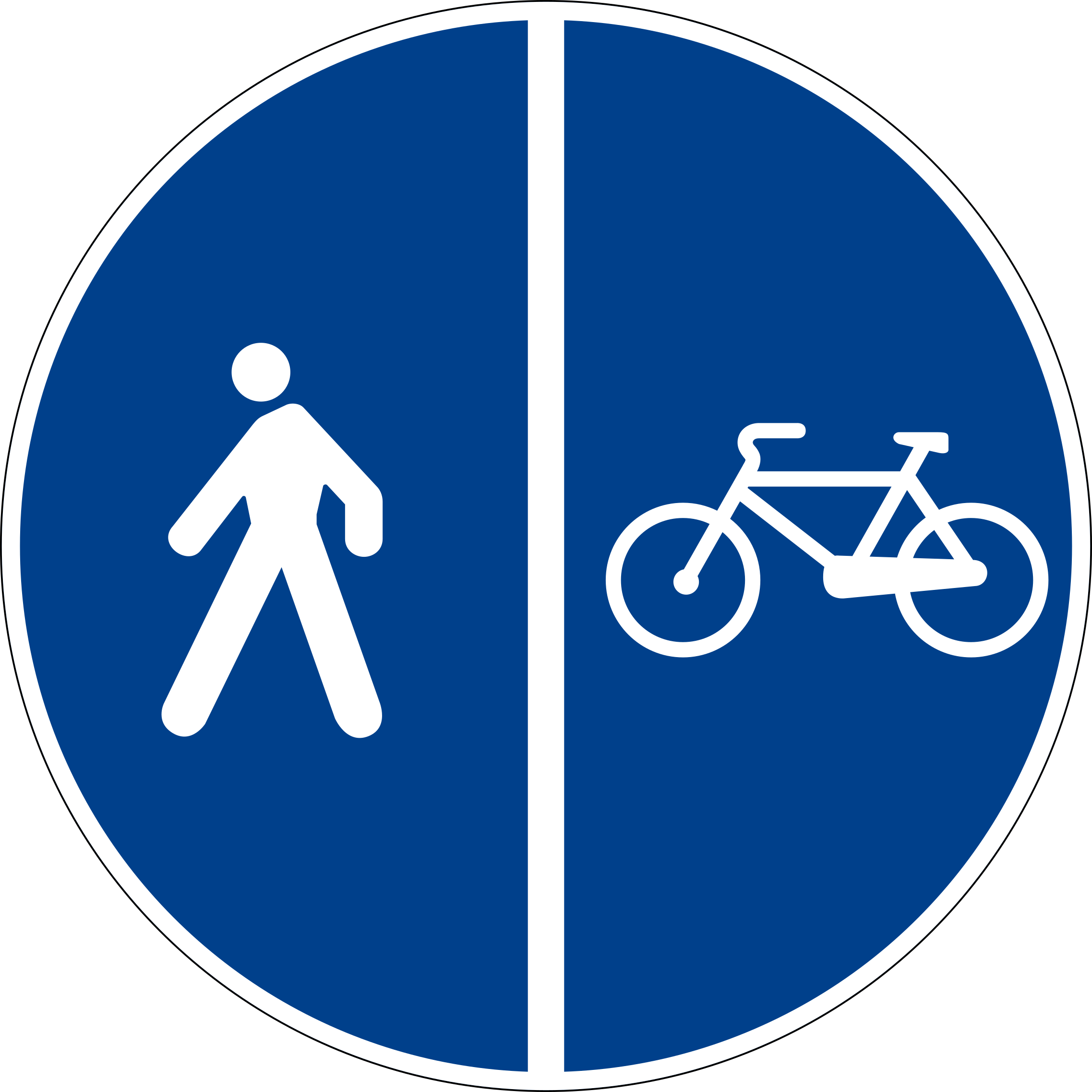
94. What does this traffic sign mean?
This traffic sign indicates a mandatory divided path for pedestrians and cyclists. Pedestrians and cyclists must use the section designated for them. Other road users may use the path only where the applicable signs or local rules permit them to do so.
English • Traffic sign II.92/a • Cycle path alongside a pavement. Marks a reserved cycle path alongside a pavement or pedestrian route.
Italiano • Figura II.92/a • Pista ciclabile contigua al marciapiede. Indica una pista riservata ai velocipedi affiancata a un marciapiede o percorso pedonale.
Sources
🔗 Commons.wikimedia.org
🔗 Normattiva.it • D.P.R. 495/1992 • testo vigente • art. 122, comma 9(c)
🔗 Gazzettaufficiale.it • Gazzetta Ufficiale • Figura II.92/a • pagina 274
🔗 Normattiva.it • D.P.R. 495/1992 • allegati e successive modifiche
SVG source: F l a n k e r • Public domain • Original revision 2026-06-15. Wikimedia original unmodified.
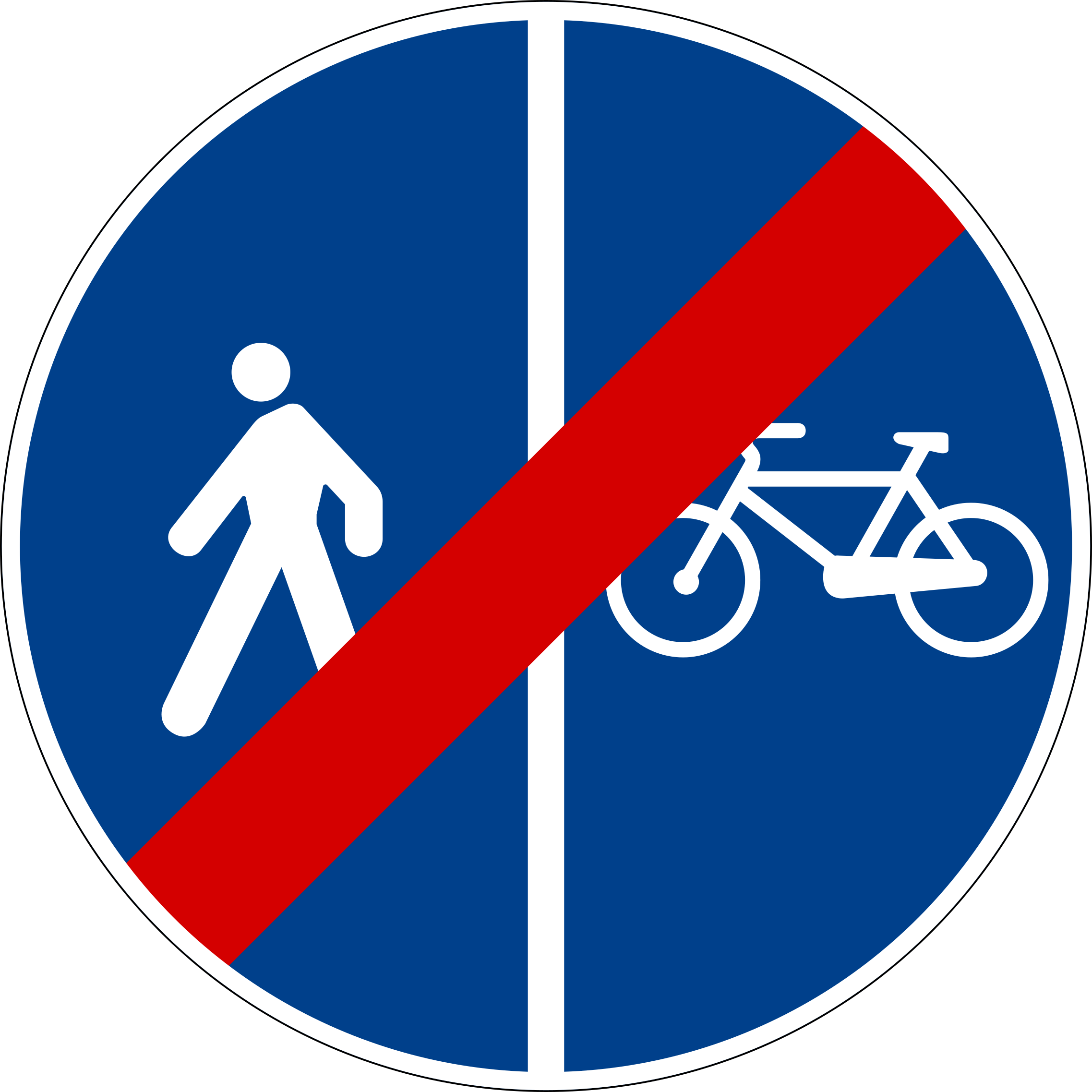
95. What does this traffic sign mean?
This traffic sign indicates the end of the mandatory divided path for pedestrians and cyclists. The requirement to use the separately designated sections ends at this point. Continue according to the subsequent path or road layout and applicable local rules.
English • Traffic sign II.93/a • End of cycle path alongside a pavement. Marks the end of the adjoining cycle path.
Italiano • Figura II.93/a • Fine pista ciclabile contigua al marciapiede. Indica la fine della pista ciclabile contigua al marciapiede.
Sources
🔗 Commons.wikimedia.org
🔗 Normattiva.it • D.P.R. 495/1992 • testo vigente • art. 122, comma 10
🔗 Gazzettaufficiale.it • Gazzetta Ufficiale • Figura II.93/a • pagina 274
🔗 Normattiva.it • D.P.R. 495/1992 • allegati e successive modifiche
SVG source: F l a n k e r • Public domain • Original revision 2026-06-15. Wikimedia original unmodified.

96. What does this traffic sign mean?
This traffic sign indicates that snow chains are mandatory. Vehicles covered by the sign must use snow chains from this point as required by the applicable rules. Follow any supplementary signs or local instructions specifying the affected vehicles, wheels or conditions.
English • Traffic sign II.87 • Snow chains compulsory. From the sign onwards, vehicles must use snow chains or winter tyres.
Italiano • Figura II.87 • Catene per neve obbligatorie. Dal punto in cui il segnale è posto, obbliga a circolare con catene da neve o pneumatici invernali.
Sources
🔗 Commons.wikimedia.org (F l a n k e r • CC BY-SA 3.0)
🔗 Normattiva.it • D.P.R. 495/1992 • testo vigente • art. 122, comma 8
🔗 Gazzettaufficiale.it • Gazzetta Ufficiale • Figura II.87 • pagina 272
🔗 Normattiva.it • D.P.R. 495/1992 • allegati e successive modifiche
SVG source: F l a n k e r • CC BY-SA 3.0 • Original revision 2010-09-01. Wikimedia original unmodified.
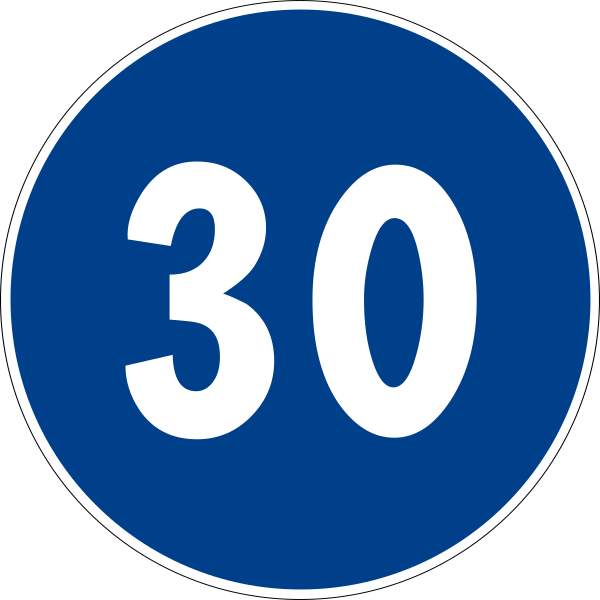
97. What does this traffic sign mean?
This traffic sign indicates the start of a minimum speed. Road users covered by the sign must travel at or above the indicated speed when conditions allow. Driving more slowly may still be necessary because of traffic, weather, road conditions or another safety-related reason.
English • Traffic sign II.85 • Minimum speed limit. Vehicles on the road or lanes concerned must observe the indicated minimum speed. Vehicles unable to reach it must not enter the section covered by the sign.
Italiano • Figura II.85 • Limite minimo di velocità. Obbliga i veicoli sulla strada o sulle corsie interessate a rispettare la velocità minima indicata. I veicoli che non possono raggiungerla non devono impegnare il tratto soggetto al segnale.
Sources
🔗 Commons.wikimedia.org (F l a n k e r • CC BY-SA 3.0)
🔗 Normattiva.it • D.P.R. 495/1992 • testo vigente • art. 122, comma 7
🔗 Gazzettaufficiale.it • Gazzetta Ufficiale • Figura II.85 • pagina 272
SVG source: F l a n k e r • CC BY-SA 3.0 • Original revision 2023-06-07. Wikimedia original unmodified.
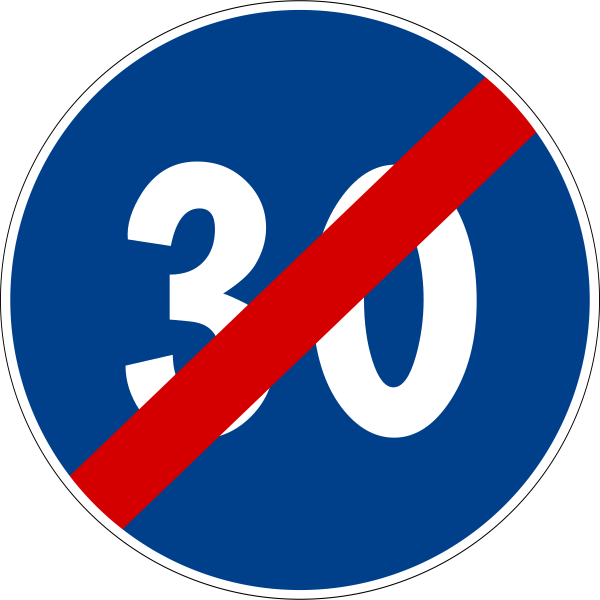
98. What does this traffic sign mean?
This traffic sign indicates the end of the minimum speed. The previously indicated minimum speed no longer applies beyond this point. Continue to follow any other posted speed requirements and the applicable traffic rules.
English • Traffic sign II.86 • End of minimum speed limit. Ends the previously signposted minimum speed requirement.
Italiano • Figura II.86 • Fine limite minimo di velocità. Indica la fine dell’obbligo di velocità minima precedentemente segnalato.
Sources
🔗 Commons.wikimedia.org (F l a n k e r • CC BY-SA 3.0)
🔗 Normattiva.it • D.P.R. 495/1992 • testo vigente • art. 122, comma 7
🔗 Gazzettaufficiale.it • Gazzetta Ufficiale • Figura II.86 • pagina 272
SVG source: F l a n k e r • CC BY-SA 3.0 • Original revision 2023-06-07. Wikimedia original unmodified.
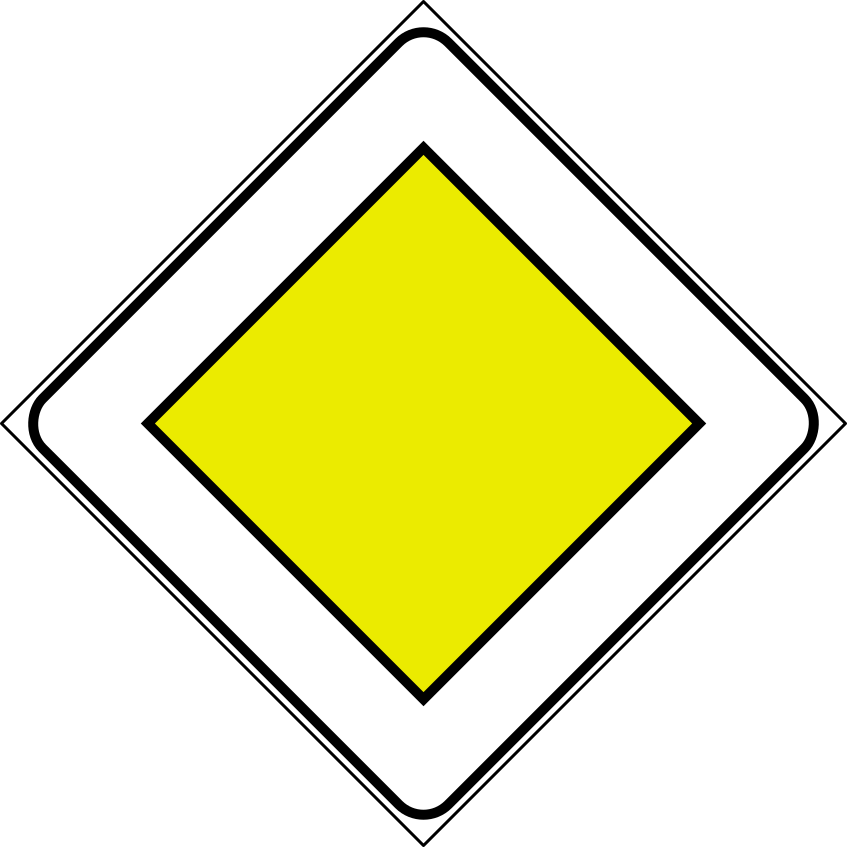
99. What does this traffic sign mean?
This traffic sign indicates the start of a priority road. Drivers on the priority road normally have priority over traffic entering from side roads until the priority road ends, unless traffic lights, other signs or applicable traffic rules indicate otherwise.
English • Traffic sign II.44 • Priority road. Marks a road section with priority.
Italiano • Figura II.44 • Diritto di precedenza. Indica che il tratto di strada gode del diritto di precedenza.
Sources
🔗 Commons.wikimedia.org (F l a n k e r • CC BY-SA 3.0)
🔗 Normattiva.it • D.P.R. 495/1992 • testo vigente • art. 113, comma 1
🔗 Gazzettaufficiale.it • Gazzetta Ufficiale • Figura II.44 • pagina 258
SVG source: F l a n k e r • CC BY-SA 3.0 • Original revision 2011-02-05. Wikimedia original unmodified.
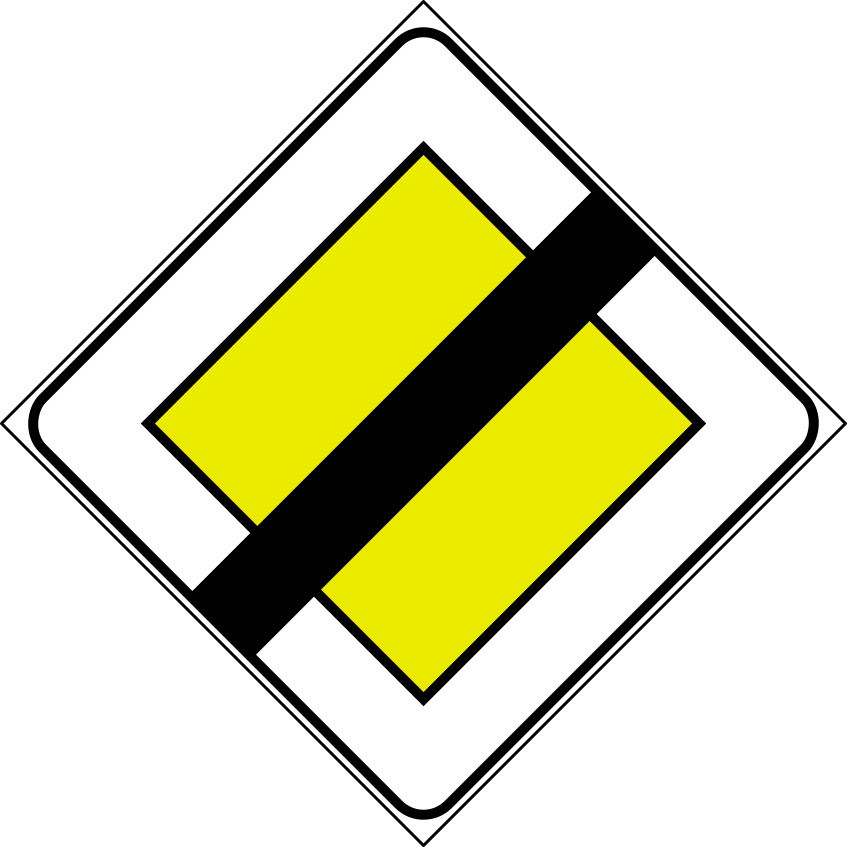
100. What does this traffic sign mean?
This traffic sign indicates the end of the priority road. The road no longer has continuing priority at subsequent intersections. Follow the applicable traffic lights, priority signs and default priority rules.
English • Traffic sign II.42 • End of priority road. The road no longer has priority. If placed in advance, a supplementary plate gives the distance to where priority ends.
Italiano • Figura II.42 • Fine del diritto di precedenza. Indica che la strada non gode più del diritto di precedenza. Se posto in anticipo, un pannello precisa la distanza dal punto in cui la precedenza termina.
Sources
🔗 Commons.wikimedia.org (F l a n k e r • CC BY-SA 3.0)
🔗 Normattiva.it • D.P.R. 495/1992 • testo vigente • art. 111, comma 1–4
🔗 Gazzettaufficiale.it • Gazzetta Ufficiale • Figura II.42 • pagina 257
SVG source: F l a n k e r • CC BY-SA 3.0 • Original revision 2011-02-05. Wikimedia original unmodified.