


Speed limitItaly
 Traffic rules
 Italy
4. Speed limit
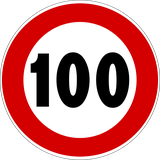
A speed limit is the maximum legal speed permitted on a road, lane or within a designated area. It may be established by general traffic law or indicated by fixed, variable or temporary traffic signs.
A speed limit is a maximum, not a target speed. Drivers must travel more slowly whenever traffic, visibility, weather, road conditions, vulnerable road users or the condition of the vehicle make the maximum permitted speed unsafe.
Wikimedia.org • PROPOLI87 • CC BY-SA
Which general speed limits should car drivers know in Italy?
For an ordinary car without a trailer, the general maxima are 50 km/h in built-up areas, 90 km/h on secondary and local rural roads, 110 km/h on main extra-urban roads and 130 km/h on motorways. Suitable urban roads may be signed up to 70 km/h. Precipitation, novice-driver rules and other signed restrictions can reduce these limits.
🔗 aci.gov.it • Italy, Road Code — articles 3, 6–7, 38–39, 141–142, 157–158
How does precipitation affect Italian motorway and main extra-urban limits?
During precipitation of any kind, the maximum is 110 km/h on motorways and 90 km/h on main extra-urban roads. Lower signed or driver-specific limits still apply. The ordinary dry-weather maximum must not be used in those conditions.
🔗 aci.gov.it • Italy, Road Code — articles 3, 6–7, 38–39, 141–142, 157–158
Do new Italian category B drivers have lower speed ceilings?
Yes. During the first three years after obtaining a category B licence, the maximum is 100 km/h on motorways and 90 km/h on main extra-urban roads. Obey any lower applicable restriction as well.
🔗 aci.gov.it • Italy, Road Code — articles 3, 6–7, 38–39, 141–142, 157–158


