Paso a nivelIndonesia

Aprende normas de tráfico con explicaciones claras y ejemplos visuales en nuestro libro ilustrado, diseñado para que estudiar sea sencillo y ameno.


9. Paso a nivel

Un paso a nivel es un lugar donde una carretera o camino cruza vías férreas al mismo nivel. Puede estar protegido mediante barreras, luces de advertencia, señales acústicas, señales de tráfico o una combinación de estas medidas.

Los usuarios deben aproximarse con cuidado y no entrar nunca cuando se acerque un tren, estén activas las señales de advertencia o la salida esté bloqueada. Deben cruzar sin demora y nunca detenerse, esperar o quedar atrapados sobre las vías.
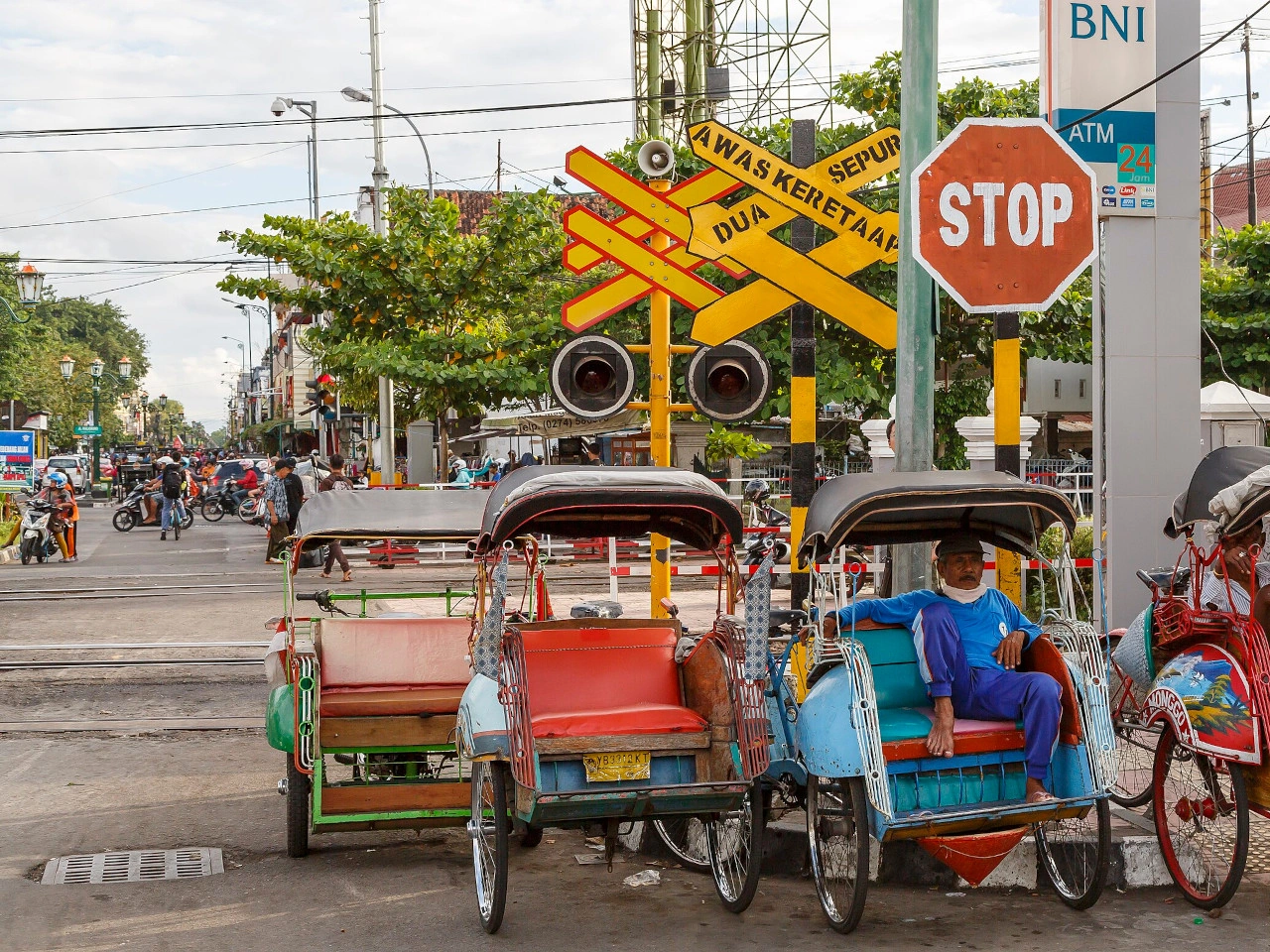
Paso a nivel
What is a railway crossing?

A railway crossing is a place where a road or path crosses railway tracks at the same level.

What is another name for a railway crossing?

It may also be called a level crossing or, particularly in North America, a railroad crossing.

How can you recognise a railway crossing?

It may be indicated by warning signs, crossbuck signs, barriers, flashing lights, bells or road markings. The design differs between countries.

What is the difference between a crossing with and without barriers?

A protected crossing uses full or partial barriers to block road traffic when a train approaches. A crossing without barriers relies on signs, lights, bells or the road user’s own observation.

Must you always stop at a railway crossing?

Not necessarily. You must stop when required by lights, barriers, signs, an approaching train or an authorised person. At an unprotected crossing, slow down and proceed only after checking that no train is approaching.

What do flashing red lights mean?

Flashing red lights mean stop and do not enter the crossing. Remain stopped until the signal permits you to continue.

May you cross while a barrier is moving?

No. Do not enter while a barrier is lowering, rising or closed. Wait until the crossing is fully open and all prohibiting signals have stopped.

May you drive around a closed barrier?

No. Never drive, cycle or walk around or underneath a closed or moving barrier.

What does a warning bell mean?

A warning bell or audible signal normally means that the crossing is closing or that a train is approaching. Do not enter the crossing while it is sounding.

What does a flashing white light mean?

In some countries, a flashing white light indicates that the crossing equipment is operating and road users may pass when the route is clear. Its exact meaning depends on local law.

What should you do at a crossing without lights or barriers?

Reduce speed, look and listen carefully in both directions and cross only after making sure that no train or other rail vehicle is approaching.

May you cross immediately after a train has passed?

Not automatically. Another train may approach on a second track. Wait until all warning signals stop and the crossing is fully open.

What if traffic ahead is blocking the exit?

Do not enter the crossing unless there is enough room beyond the tracks for your entire vehicle. Never rely on traffic moving before a train arrives.

May you wait on the tracks?

No. Railway tracks must always remain clear. Do not stop because of congestion, traffic lights or another obstruction beyond the crossing.

May you overtake at a railway crossing?

Overtaking is often prohibited or restricted because another vehicle can obstruct the view of an approaching train or warning signal. Follow local signs and overtaking rules.

May you stop or park on a railway crossing?

No. Stopping or parking on the tracks creates an immediate and potentially fatal danger.

Do the crossing signals apply to pedestrians and cyclists?

Yes. Pedestrians and cyclists must obey barriers, lights, bells and authorised personnel in the same way as other road users.

Should cyclists ride across the tracks at an angle?

Where possible, cross the rails at an angle close to 90 degrees. Rails can trap a bicycle wheel, especially when they are wet or cross the road diagonally.

What should drivers of long vehicles check?

Make sure the entire vehicle and any trailer can clear the crossing without stopping. Consider the available space, road gradient, turning room and traffic beyond the tracks.

What should drivers of high vehicles check?

Observe all height restrictions and warning signs. Electrified railway lines may have overhead equipment that can be struck by an excessively high vehicle or load.

What should you do if the signals appear defective?

Treat the crossing with extreme caution. Do not assume that no train is approaching merely because the lights or barriers are not operating.

What should you do if your vehicle becomes stuck on the tracks?

Evacuate everyone immediately, move well away from the railway and contact the emergency services or railway operator. Do not remain in the vehicle or return for belongings.

Is a railway crossing the same as tram tracks in the road?

Not always. A railway crossing normally crosses tracks that are separate from the carriageway, while tram or street-running railway tracks may form part of the road itself.

1 Indonesia 2 Autopista 3 Límite de velocidad 4 Puente 5 Carretera de peaje 6 Pendiente 7 Glorieta 8 Paso de peatones 9 Paso a nivel 10 Prohibición de giro 11 Zona escolar 12 Curva 13 Prioridad en la próxima intersección 14 Semáforos 15 Permiso de conducir 16 Estacionamiento 17 Prohibido estacionar 18 Prohibido parar 19 Marcha atrás 20 Cambio de sentido 21 Intersección sin regulación 22 Matrícula 23 Autobús 24 Policía 25 Ambulancia 26 Bache 27 Camino 28 Partículas 29 Contaminación del aire 30 Hora punta 31 Código de circulación 32 Canaleta de la calle 33 Bicicleta de carga 34 Vehículo forestal 35 Vehículo de construcción 36 Camión articulado 37 Trolebús 38 Speed pedelec 39 Vehículo de reparto 40 Motor al ralentí 41 Grúa 42 Tracción a las cuatro ruedas 43 Bicicleta 44 Equipamiento de motocicleta 45 Vía férrea 46 Caravana 47 Remolque 48 Enganche de remolque 49 Camión de bomberos 50 Sirena 51 Convoy 52 Luces de vehículos de emergencia 53 Maquinaria agrícola 54 Bicicleta eléctrica 55 Vehículo eléctrico 56 Pedelec 57 Cuadriciclo 58 Microcoche 59 Vehículo todoterreno 60 Furgoneta 61 Vehículo recreativo 62 Scooter 63 Trikke 64 Vehículo de movilidad personal 65 Monopatín 66 Segway 67 Patinete 68 Patines 69 Cartero 70 Autoestopista 71 Niño pequeño 72 Niño 73 Discapacidad 74 Rickshaw 75 Tren para automóviles 76 km/h 77 mph 78 Velocímetro 79 Altura libre del vehículo 80 Camino de tierra 81 Conducción 82 Sistema start-stop 83 Cambio manual 84 Cambio automático 85 Acelerador 86 Cuentarrevoluciones 87 Volante 88 Dirección asistida 89 Exploración visual 90 Espejo 91 Combustible 92 Indicador de combustible 93 Gasolina 94 Diésel 95 Líquido de escape diésel 96 Seguro de automóvil 97 Botiquín de primeros auxilios 98 Extintor 99 Ropa de alta visibilidad 100 Primeros auxilios ...