

Camión articuladoFilipinas
 Normas de tráfico
 Filipinas
41. Camión articulado
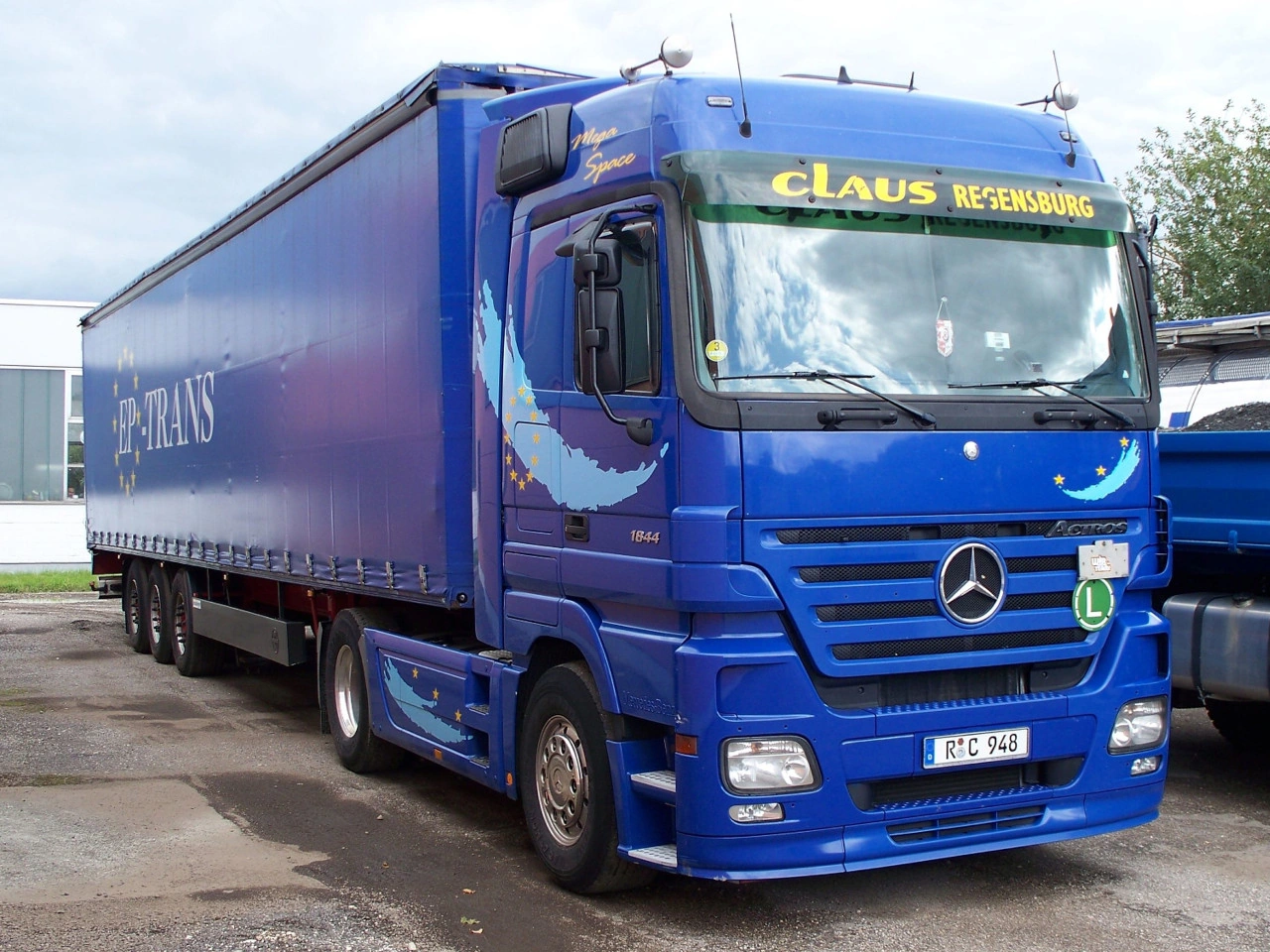
Un camión articulado es un conjunto formado por una cabeza tractora y un semirremolque utilizado principalmente para transportar mercancías. El semirremolque se acopla de modo que una parte importante de su peso es soportada por la tractora en lugar de únicamente por sus propias ruedas.
Se utiliza habitualmente para transporte de larga distancia y puede llevar contenedores, mercancías refrigeradas, líquidos, graneles u otras cargas. Pueden aplicarse normas especiales sobre permisos, dimensiones y masas máximas, velocidad, carriles, adelantamiento, carga y tiempos de conducción y descanso.
What is a semi-trailer truck?
A semi-trailer truck consists of a powered road tractor coupled to a semi-trailer primarily used to transport goods.
What is a semi-trailer?
A semi-trailer is a trailer designed so that part of the trailer and a significant part of its load are supported by the towing tractor.
What is the difference between a semi-trailer and an ordinary trailer?
An ordinary trailer generally supports its own weight through its axles, while a semi-trailer transfers a substantial vertical load to the tractor through its coupling.
How is a semi-trailer connected to the tractor?
The semi-trailer is normally connected through a kingpin and fifth-wheel coupling mounted behind the tractor cab.
Why are semi-trailer trucks called articulated vehicles?
The tractor and semi-trailer are connected by a pivoting coupling, allowing the two parts to turn relative to each other when the combination changes direction.
Do you need a special licence to drive a semi-trailer truck?
Yes. Heavy articulated trucks normally require a heavy-goods-vehicle licence that also authorises the driver to tow a heavy trailer or semi-trailer. The precise licence categories differ between countries.
Do semi-trailer trucks have lower speed limits?
They often do. Many countries impose vehicle-specific maximum speeds on heavy goods vehicles, particularly on motorways and other high-speed roads.
Why do semi-trailer trucks need more space to turn?
The semi-trailer's rear wheels follow a tighter path than the tractor's front wheels. Drivers therefore need additional space when turning, particularly at narrow intersections.
Why should you leave extra distance behind a semi-trailer truck?
Large trucks can restrict your view of traffic ahead and require considerable stopping distance. Keeping an appropriate following distance improves visibility and reaction time.
Why should you take care when driving beside a semi-trailer truck?
Large trucks have substantial blind spots around the cab and trailer. Avoid remaining beside the vehicle unnecessarily and be particularly careful when the truck is turning or changing lane.


