Circulación en sentido contrarioEstados Unidos

Aprende normas de tráfico con explicaciones claras y ejemplos visuales en nuestro libro ilustrado, diseñado para que estudiar sea sencillo y ameno.


33. Circulación en sentido contrario

La circulación en sentido contrario se produce cuando un conductor circula contra el sentido legalmente permitido del tráfico. Puede ocurrir en una calle de sentido único, carretera de calzadas separadas, entrada o salida de autopista u otro tramo reservado al tráfico de una sola dirección.

Circular en sentido contrario genera un riesgo extremo de colisión frontal. Los conductores deben respetar las señales de dirección, las de entrada prohibida, las flechas de carril y las marcas viales. Quien entre accidentalmente en una vía en sentido incorrecto debe reducir la velocidad, advertir al resto del tráfico, detenerse en el lugar más seguro disponible y contactar con los servicios de emergencia.
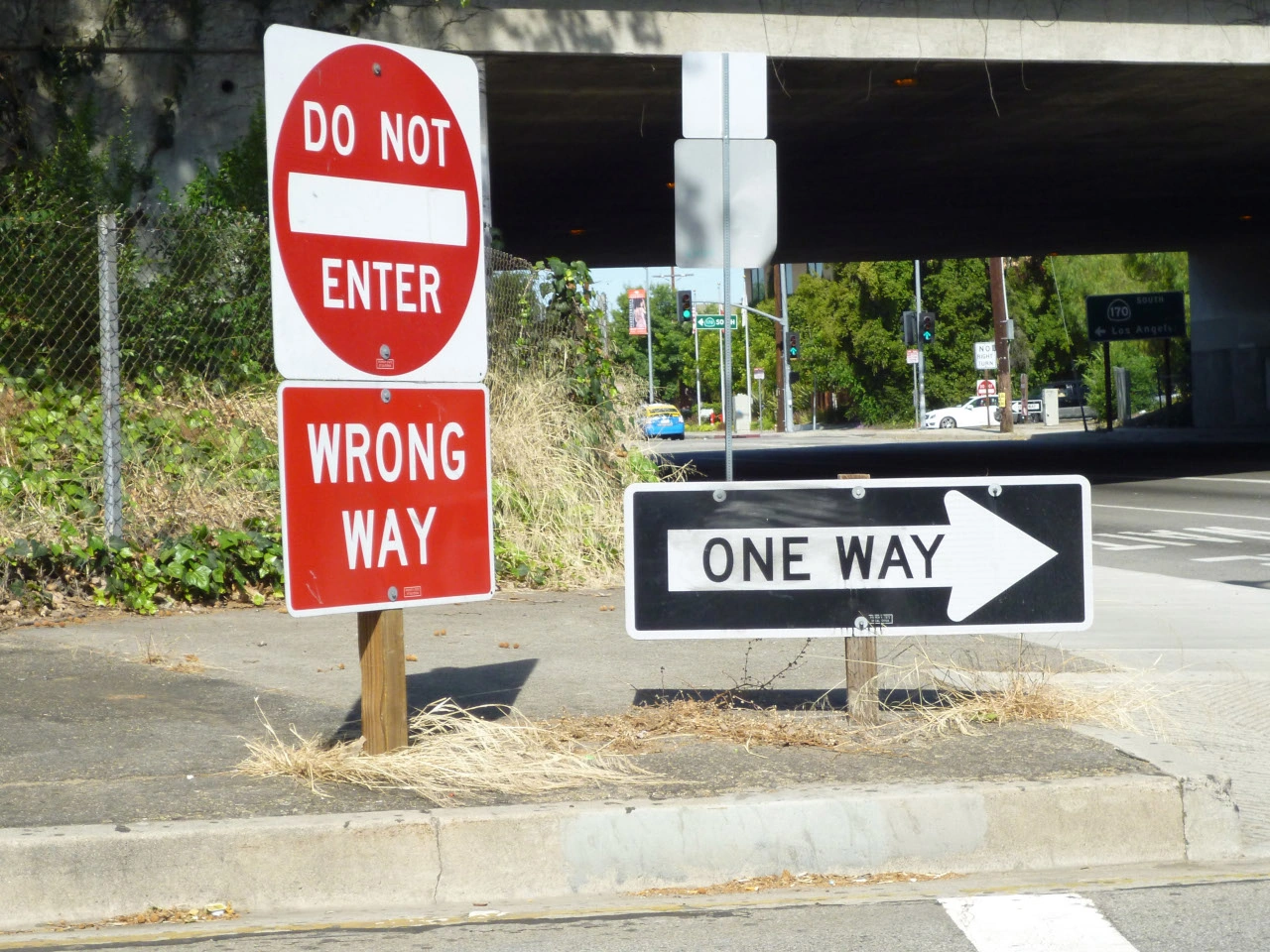
Circulación en sentido contrario
What is wrong-way driving?

Wrong-way driving means travelling against the legally permitted direction of traffic.

Where can wrong-way driving occur?

It can occur on one-way streets, divided roads, motorways, slip roads, tunnels, car parks and temporary traffic arrangements.

Why is wrong-way driving especially dangerous?

Other drivers do not expect approaching traffic in their lane, and the combined speeds can make a head-on collision extremely severe.

How can you recognise a prohibited direction?

Look for no-entry signs, one-way signs, mandatory-direction signs, lane arrows and road markings. Motorway exits may also have repeated signs or warning systems facing the wrong direction.

Is wrong-way driving the same as entering a no-entry road?

Entering past a no-entry sign can cause wrong-way driving, but the term also covers turning around on a divided road or using the wrong carriageway without passing such a sign.

Is driving against a one-way street always prohibited?

Normally, yes. However, signs may expressly permit certain road users, such as cyclists or public transport, to travel in the opposite direction.

Is authorised contraflow traffic wrong-way driving?

No. A cyclist, bus or other road user travelling in an expressly authorised contraflow lane or direction is using the road legally.

Can roadworks temporarily change the normal direction?

Yes. Temporary signs, barriers, lane signals and markings may redirect traffic onto another lane or carriageway. Follow the temporary arrangement rather than the usual road layout.

What should you do when you see a wrong-way driver?

Reduce speed immediately, keep as far as safely possible towards the outer edge of your carriageway and avoid sudden lane changes. Warn the police or emergency services as soon as this can be done safely.

Should you attempt to stop the wrong-way driver?

No. Do not block, chase or turn after the vehicle. Protect yourself and allow trained emergency services to intervene.

Should you flash your headlights?

A brief warning may help the driver recognise the error, but avoid prolonged or aggressive signalling that could cause panic or an unpredictable manoeuvre.

Should you sound the horn?

Use the horn only when reasonably necessary to warn of immediate danger. Your first priority is to reduce speed and create as much safe space as possible.

Should you stop in a live traffic lane?

Normally not. Sudden stopping may cause a rear-end collision. Slow down and move towards a safe shoulder, refuge or other protected location where possible.

What should you do after receiving a wrong-way-driver warning?

Reduce speed, stop overtaking, increase your following distance and remain in the lane or position recommended by the local authorities or warning system.

Should you continue using the overtaking lane?

Avoid unnecessary use of lanes nearest opposing or central traffic when a wrong-way driver has been reported. Follow local emergency guidance and electronic signs.

What should you do if you are driving in the wrong direction?

Slow down immediately, activate the hazard warning lights and use dipped headlights where required. Move to the safest available edge or shoulder and stop.

Should you accelerate to reach the next exit?

No. Increasing speed greatly increases the collision risk. Stop safely and wait for instructions from the police.

Should you make a U-turn across traffic?

No. Do not turn across live lanes, cross a central reservation or attempt to correct the mistake through another dangerous manoeuvre.

Should you reverse back to the entrance?

No. Reversing against traffic or along a motorway slip road creates additional danger. Stop safely and contact the emergency services.

Should you leave the vehicle after stopping?

This depends on the location and immediate danger. Remain protected from moving traffic and follow instructions from the emergency services. Do not stand in a live lane.

How should you contact the emergency services?

Stop safely before using a handheld phone. A passenger may call while the vehicle is moving when local law permits and this can be done without distracting the driver.

What information should you report?

Report the road name or number, direction, nearby exit or landmark, vehicle description and the wrong-way driver’s approximate location and direction.

What commonly causes wrong-way driving?

Possible causes include confusion at junctions, poor visibility, unfamiliar roads, impairment, navigation errors, turning around illegally or deliberately ignoring traffic signs.

How can drivers prevent entering the wrong direction?

Slow down at unfamiliar junctions, read signs before turning, verify the road layout and do not rely exclusively on navigation instructions.

Does a navigation system override traffic signs?

No. Traffic signs, signals, markings and instructions from authorised persons always take precedence over navigation guidance.

1 Estados Unidos 2 Autopista 3 Vía rápida 4 Límite de velocidad 5 Velocidad mínima 6 Velocidad recomendada 7 Carril bici 8 Advertencia de peatones 9 Túnel 10 Puente 11 Resalto 12 Carretera de peaje 13 Sentido único 14 Pendiente 15 Carril bus 16 Parada de autobús 17 Calle sin salida 18 Señal de STOP 19 Ceda el paso 20 Glorieta 21 Estrechamiento de calzada 22 Paso de peatones 23 Paso a nivel 24 Dirección obligatoria 25 Prohibición de giro 26 Zona escolar 27 Cruce de animales 28 Calzada deslizante 29 Desprendimiento de rocas 30 Aeronaves 31 Curva 32 Panel direccional 33 Circulación en sentido contrario 34 Obras 35 Límite de altura 36 Límite de peso 37 Señal de control de velocidad 38 Barreras selectivas 39 Semáforos 40 Advertencia de semáforos 41 Semáforos peatonales 42 Marcas viales 43 Zona avanzada para bicicletas 44 Indicador de velocidad 45 Permiso de conducir 46 Espejo de tráfico 47 Teléfono de emergencia 48 Ruta ciclista 49 Estacionamiento 50 Prohibido estacionar 51 Prohibido parar 52 Estacionamiento en línea 53 Aparcamiento disuasorio 54 Kiss and Ride 55 Estacionamiento para personas con discapacidad 56 Gestión del tráfico 57 Marcha atrás 58 Cambio de sentido 59 Viaje compartido 60 Desvío 61 Intersección sin regulación 62 Ramal 63 Salida 64 Equitación 65 Salida de emergencia 66 Rampa de frenado de emergencia 67 Carga sobredimensionada 68 Límite de población 69 Atracción turística 70 Claxon 71 Límite de carga por eje 72 Matrícula 73 Estación de carga 74 Inundación 75 Depresión 76 Caballo 77 Tráfico local 78 Peatón 79 Ciclista 80 Motocicleta 81 Camión 82 Autobús 83 Policía 84 Ambulancia 85 Señales de la policía 86 Carretera de grava 87 Bache 88 Mediana 89 Propiedad pública 90 Camino 91 Partículas 92 Contaminación del aire 93 Enlace 94 Hora punta 95 Estación de servicio 96 Código de circulación 97 Doble sentido 98 Carril de adelantamiento 99 Canaleta de la calle 100 Residuos en la calzada ...