Vorfahrt an der nächsten KreuzungUngarn

Lerne Verkehrsregeln mit klaren Erklärungen und visuellen Beispielen in unserem illustrierten Buch – einfach, verständlich und anschaulich.


32. Vorfahrt an der nächsten Kreuzung

Vorfahrt an der nächsten Kreuzung bedeutet, dass Fahrer auf einer bestimmten Straße gegenüber Verkehr aus kreuzenden oder einmündenden Straßen an der nächsten Kreuzung bevorrechtigt sind. Die Vorfahrtsregelung wird normalerweise durch Zeichen sowohl für den bevorrechtigten Verkehr als auch für den wartepflichtigen Verkehr angezeigt.

Anders als bei einer durchgehenden Vorfahrtstraße gilt dieser Vorrang nur an der angegebenen Kreuzung. Fahrer müssen sich dennoch vorsichtig nähern und Ampeln, Anweisungen befugter Personen, Überwege, Abbiegevorschriften und andere geltende Zeichen beachten.
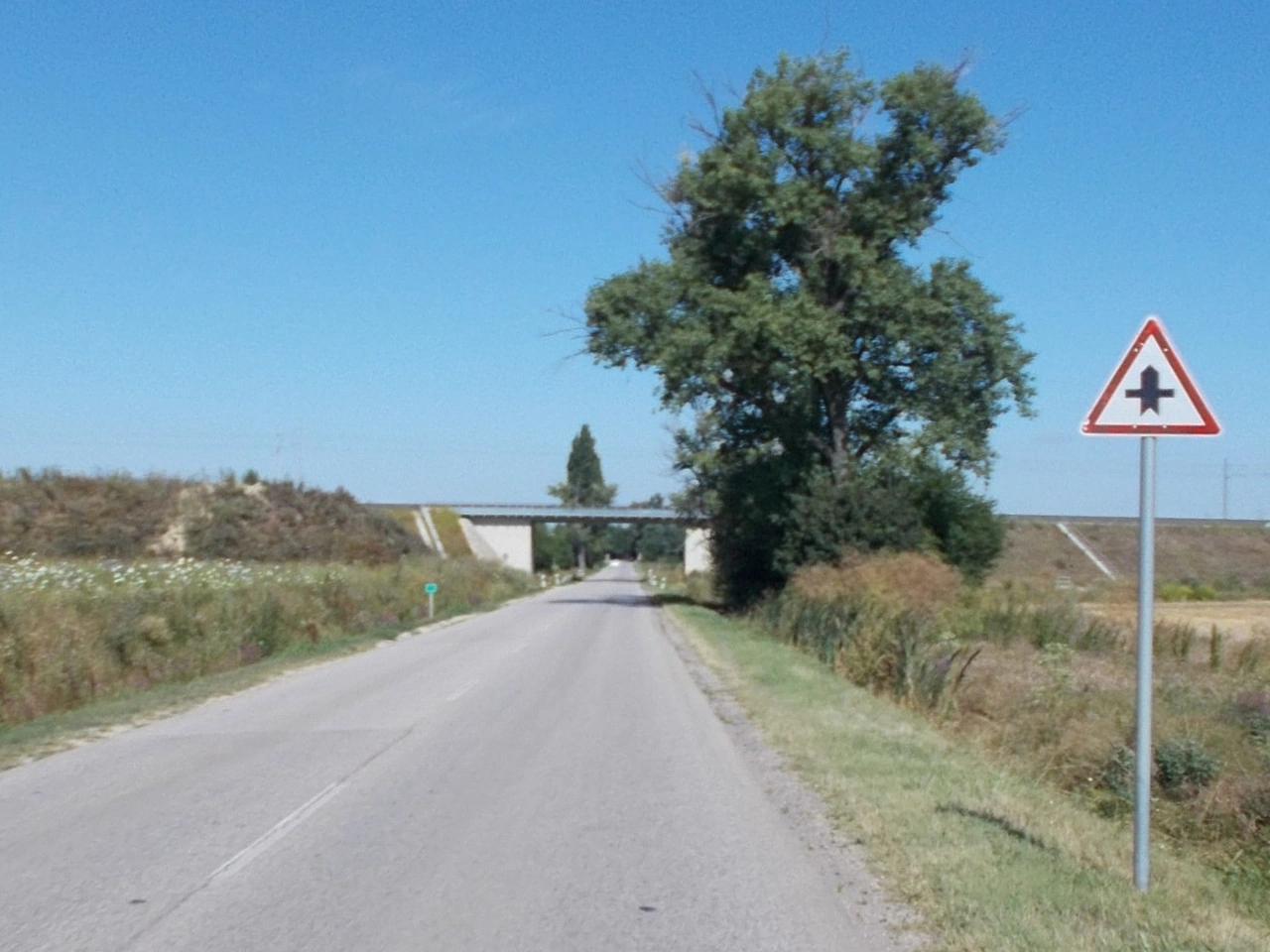
Vorfahrt an der nächsten Kreuzung
What does priority at the next junction mean?

It means that drivers travelling on the indicated road have priority over traffic entering from intersecting roads at the next junction.

Is this the same as a priority road?

No. Priority at the next junction applies to one particular junction. A priority road normally keeps its priority across several junction until its status ends.

Is a main road always a priority road?

No. The term main road may describe a larger, busier or more important road, but legal priority is determined by traffic signs, signals and local rules.

How can you recognise priority at the next junction?

It may be indicated by a priority-junction sign showing a thick line for the priority route and thinner lines for the roads that must give way.

Does the thick line show the priority route?

Yes. On signs using a junction diagram, the thicker line normally represents the road followed by traffic with priority.

Does the priority route always continue straight ahead?

No. The priority route may turn left or right. A diagram or supplementary panel may show which branch retains priority.

What signs do drivers on the side roads normally see?

They commonly face a give-way or stop sign, requiring them to yield to traffic on the priority route.

Does priority from the right still apply?

Not when legally placed signs establish another priority arrangement at that junction. Drivers must follow the actual signs rather than the ordinary default rule.

Does the sign give priority at later junctions?

No. After passing the indicated junction, the priority arrangement at the next junction must be determined separately.

Does having priority mean you may enter without slowing down?

No. Approach at a safe speed and remain prepared for another road user to fail to give way.

Does having priority mean you must proceed first?

No. Priority is not an obligation to continue. Slow down or stop whenever proceeding would create danger.

May you enter a blocked junction?

No. Do not enter when congestion is likely to leave your vehicle stopped inside the junction and obstructing other traffic.

Does the sign impose a speed limit?

No. The applicable general, zonal, posted or vehicle-specific speed limit remains in force.

Does it give priority over pedestrians?

No. Drivers must still yield to pedestrians where crossings, traffic signals or turning rules require it.

Does it give priority over cyclists?

It regulates priority between traffic approaching the junction, but drivers must still respect continuing bike paths, cycle crossings and turning rules.

Must you signal when the priority route turns?

Yes, when following the route involves a change of direction and local law requires signalling. Priority does not remove the obligation to indicate.

Does signalling give you priority?

No. An indicator communicates your intended movement but does not allow you to endanger or obstruct another road user.

Must you yield to oncoming traffic when turning left?

Normally, yes. Priority over side-road traffic does not automatically give a left-turning driver priority over lawful oncoming traffic.

Do functioning traffic lights override the priority signs?

Functioning traffic lights normally control the junction instead of the priority signs. Local rules determine what applies when the lights are switched off or flashing.

Do authorised officers override the signs?

Yes. Instructions from an authorised traffic controller normally take precedence over signs, signals and ordinary priority rules.

Does the sign prohibit overtaking?

No. Overtaking remains subject to the ordinary rules, visibility, road markings and any separate prohibition signs.

Does the sign prohibit stopping or parking?

No. The ordinary stopping and parking rules and any local signs or markings remain applicable.

What applies after you pass the intersection?

The special priority indicated by the sign has been completed. At later junctions, follow the signs, signals or default priority rule applying there.

1 Ungarn 2 Autobahn 3 Wohngebiet 4 Zone 5 Geschwindigkeitsbegrenzung 6 Radweg 7 Warnung vor Fußgängern 8 Fußgängerzone 9 Steigung oder Gefälle 10 Bushaltestelle 11 Stoppschild 12 Vorfahrt gewähren 13 Kreisverkehr 14 Vorfahrtstraße 15 Fahrbahnverengung 16 Vorrang vor dem Gegenverkehr 17 Gegenverkehr Vorrang gewähren 18 Fußgängerüberweg 19 Bahnübergang 20 Vorgeschriebene Fahrtrichtung 21 Schulbereich 22 Überholen 23 Wild- oder Viehwechsel 24 Rutschige Fahrbahn 25 Richtungstafel 26 Falschfahrt 27 Straßenarbeiten 28 Höhenbegrenzung 29 Gewichtsbeschränkung 30 Geschwindigkeitskontrolle 31 Selektive Sperren 32 Vorfahrt an der nächsten Kreuzung 33 Ampeln 34 Warnung vor Ampeln 35 Fahrbahnmarkierungen 36 Entfernungstafeln 37 Verkehrsspiegel 38 Radroute 39 Parken 40 Parkverbot 41 Halteverbot 42 Behindertenparkplatz 43 Rückwärtsfahren 44 Wenden 45 Ungeregelte Kreuzung 46 Fahrbahnschäden 47 Ortsgrenze 48 Kennzeichen 49 Ladestation 50 Allgemeine Gefahr 51 Radfahrer 52 Moped 53 Pkw 54 Bus 55 Polizei 56 Krankenwagen 57 Taxi 58 Europäische Abgasnorm 59 Schlagloch 60 Weg 61 Feinstaub 62 Luftverschmutzung 63 Hauptverkehrszeit 64 Straßenverkehrsordnung 65 Gegenverkehr 66 Straßenrinne 67 Lastenfahrrad 68 Forstfahrzeug 69 Baufahrzeug 70 Sattelzug 71 Oberleitungsbus 72 Speed-Pedelec 73 Lieferfahrzeug 74 Leerlauf 75 Abschleppwagen 76 Allradantrieb 77 Verbot für Fahrzeuge 78 Fahrrad 79 Motorradausrüstung 80 Gleis 81 Wohnwagen 82 Anhänger 83 Anhängerkupplung 84 Feuerwehrfahrzeug 85 Sirene 86 Konvoi 87 Warnbeleuchtung von Einsatzfahrzeugen 88 Landwirtschaftliche Maschinen 89 Elektrofahrrad 90 Elektrofahrzeug 91 Pedelec 92 Leichtkraftfahrzeug 93 Microcar 94 Geländefahrzeug 95 Lieferwagen 96 Freizeitfahrzeug 97 Motorroller 98 Trikke 99 Persönliches Mobilitätsgerät 100 Skateboard ...