

Catalytic converterBrussels
An introduction to the traffic rules and road signs of Brussels. Learn about driving, road safety and much more in our illustrated book, with answers to frequently asked questions.
For informational purposes only. Always follow official regulations. Some content and images were created with AI assistance.
 Traffic rules
 Brussels
208. Catalytic converter
A catalytic converter is an emissions-control device fitted in a vehicle's exhaust system. It uses chemical reactions to convert harmful exhaust pollutants into less harmful substances before the exhaust gases are released into the atmosphere.
Depending on the engine and system, a catalytic converter can reduce pollutants such as carbon monoxide, unburned hydrocarbons and nitrogen oxides. It must reach an appropriate operating temperature to work effectively and can be damaged by contamination, overheating or engine faults.
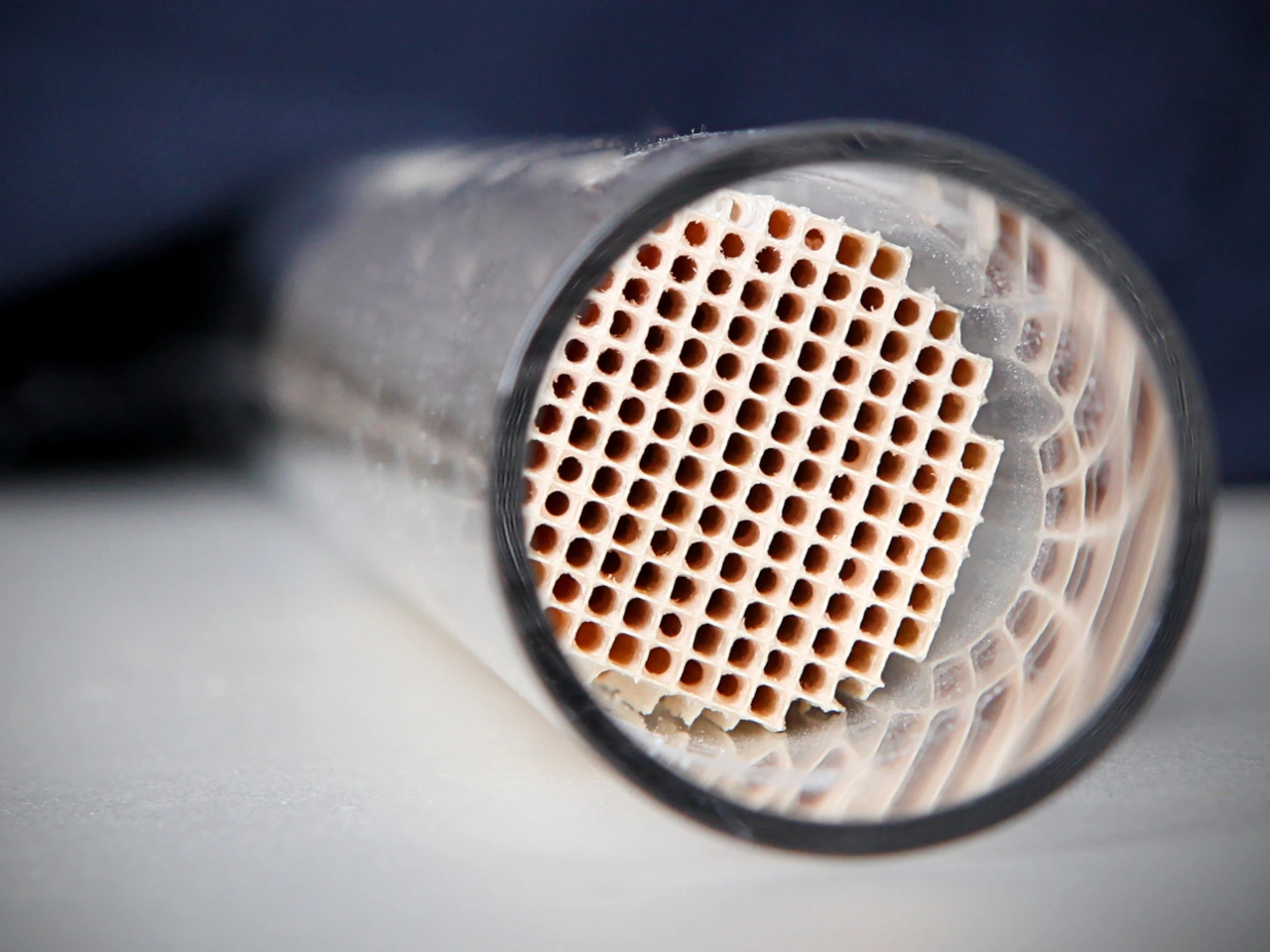
Wikimedia.org • Oak Ridge National Laboratory • CC BY
Is the catalytic converter checked during technical inspection in Belgium?
Yes. The vehicle's emissions-control equipment and exhaust emissions form part of roadworthiness inspection. A catalytic converter that is missing, modified or obviously defective can therefore cause an inspection problem.
Can you remove a catalytic converter from a vehicle in Belgium?
No. Where a catalytic converter forms part of the vehicle's required emissions-control system, it must remain present and functional. Removing or improperly modifying required emissions equipment can make the vehicle non-compliant.
Can a faulty catalytic converter cause excessive emissions?
Yes. A catalytic converter that no longer works correctly may fail to reduce exhaust pollutants sufficiently. This can lead to excessive emissions and an unfavourable result during the applicable emissions test.


