


FootpathJapan
 Traffic rules
 Japan
Japan
7. Footpath
A footpath is a path or part of a road intended primarily for pedestrian traffic. It may run alongside a road, through a park or residential area, or independently from roads used by motor vehicles.
A footpath may be reserved exclusively for pedestrians or may form part of a shared route with cyclists or other permitted users. Access, priority and permitted users depend on the traffic signs and local regulations applying to the path.
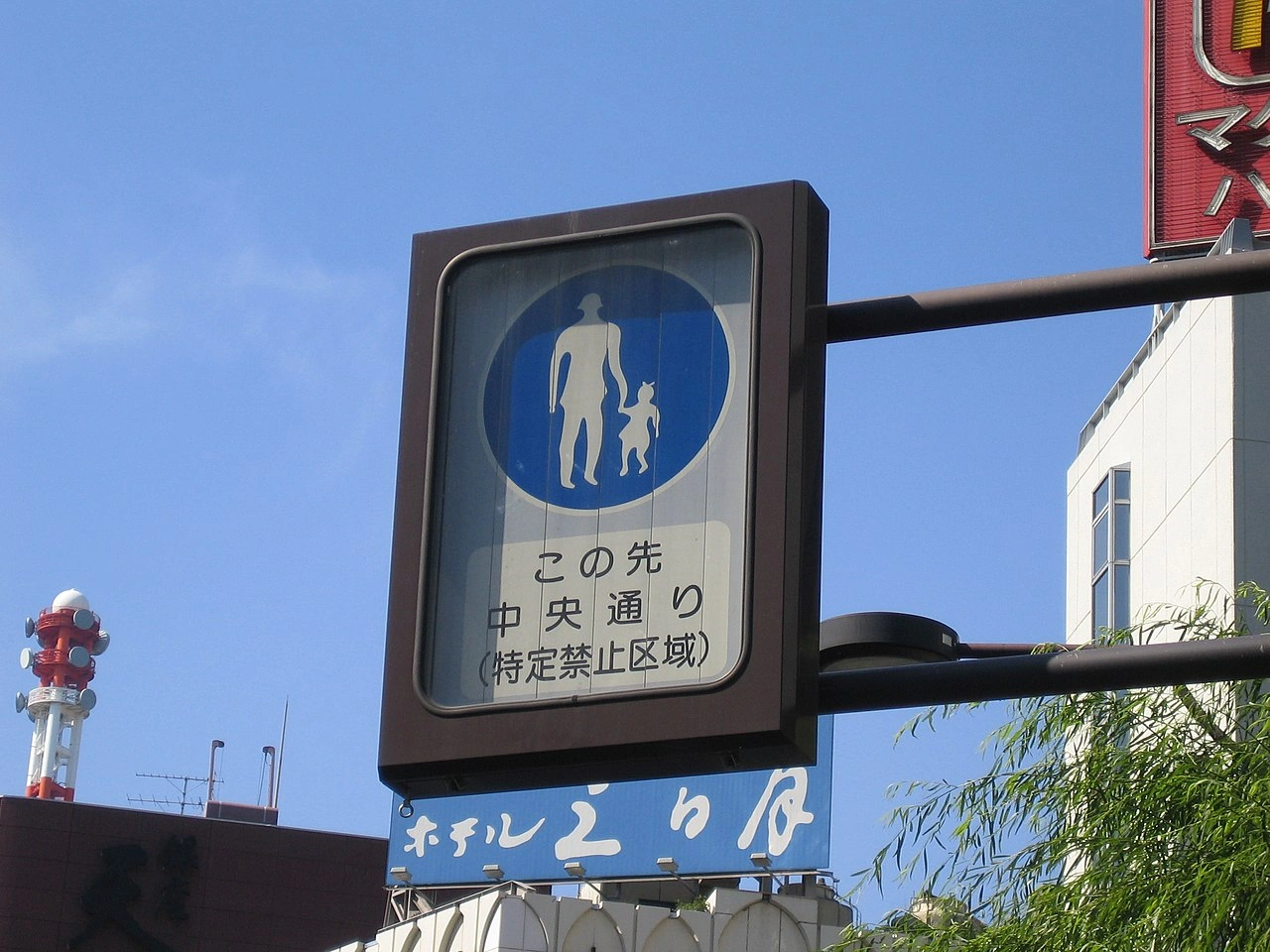
Wikimedia.org • Colin McMillen • CC BY
What is a footpath?
A footpath is a path or part of a road intended primarily for pedestrians.
Is a footpath the same as a pavement?
Not necessarily. A pavement or sidewalk normally runs alongside a roadway, while a footpath may follow an independent route or pass through an area without an adjacent roadway.
Who may use a footpath?
Pedestrians are the primary users. Depending on the signs and local regulations, cyclists or other categories may also be permitted on shared paths.
Can cyclists use a pedestrian-only footpath?
Normally no when the path is specifically reserved for pedestrians. Cyclists may have to dismount unless local rules or signs allow cycling.
Can someone walking a bicycle use a footpath?
In many countries, a person walking a bicycle by hand is treated as a pedestrian and may therefore use pedestrian facilities, subject to local rules.
Can motor vehicles use a footpath?
Normally no when the route is reserved for pedestrians. Limited access may sometimes be authorised for maintenance, emergency or other specific purposes.
Can a footpath be shared with cyclists?
Yes. A route may be designated as a shared pedestrian-and-cycle path. Users must follow any signs indicating how the space should be shared.
Do pedestrians have priority on a shared footpath?
This depends on the local traffic rules and type of shared facility. Cyclists and other permitted users should always avoid endangering pedestrians.
Can a footpath cross a roadway?
Yes. Where a path crosses a roadway, pedestrians must follow the applicable crossing, priority and traffic-light rules.
Can a footpath be part of the public road?
Yes. Pedestrian paths can form part of the wider public-road network even though ordinary motor traffic may not use them.
Can a footpath have its own traffic sign?
Yes. Many countries use a specific pedestrian symbol to indicate a path reserved or compulsory for pedestrians.
What should cyclists do when a footpath is not open to cycling?
Use the appropriate cycle facility or roadway. Where local law permits it, a cyclist may also dismount and continue as a pedestrian.


