


Intersection direction signJapan
 Traffic rules
 Japan
Japan
39. Intersection direction sign
An intersection direction sign shows the destinations and routes available at an approaching or current intersection. Arrows, road numbers, symbols and place names help drivers choose the correct direction and, where indicated, the correct traffic lane.
The sign provides route guidance but does not normally establish priority, permission to turn or a speed limit. Drivers must still obey traffic lights, regulatory signs, lane arrows, road markings and local traffic rules.
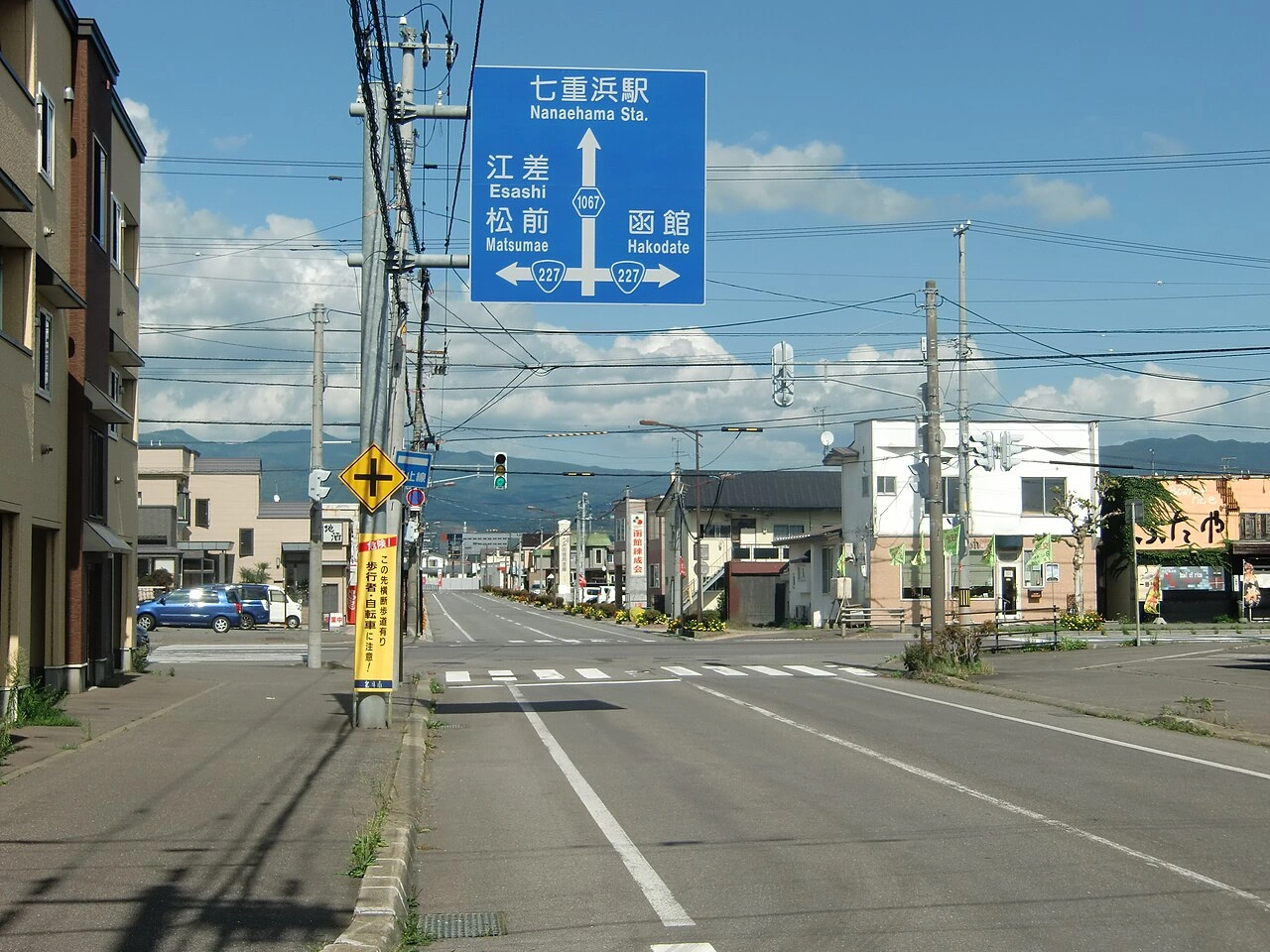
Wikimedia.org • Bord de rivière gratuit • CC BY-SA
What is an intersection direction sign?
It is a sign that shows the destinations and routes available at an intersection.
What is an advance direction sign?
An advance direction sign is placed before an intersection so drivers can identify their route and choose the correct lane in good time.
What is a direction sign?
A direction sign is normally placed at or close to the intersection and points towards a particular destination or route.
How can you recognise an intersection direction sign?
It commonly displays place names, arrows, road numbers, route symbols or diagrams of the intersection.
What do the arrows mean?
The arrows show which direction drivers should follow to reach the displayed destinations.
Does an upward arrow always mean straight ahead?
Usually, yes. Arrow design and orientation can vary, especially on signs positioned above traffic lanes.
What does a schematic intersection diagram show?
It shows the approximate arrangement of the roads and exits at the approaching intersection without necessarily reproducing every island, verge or road detail.
Does the diagram show the exact shape of the intersection?
No. It simplifies the layout to make the available directions easier to understand.
Can the sign show road numbers?
Yes. Road numbers help drivers follow a numbered national, regional, international or motorway route.
Can the sign show motorway or expressway symbols?
Yes. A symbol may indicate that the displayed route leads to or continues over a motorway, expressway or another particular road category.
Can the sign show local facilities?
Yes. Separate direction signs may indicate hospitals, railway stations, airports, parking areas, ports, tourist attractions and other destinations.
Does the sign require you to follow the displayed route?
No, unless another regulatory sign or lane marking makes that direction mandatory. A route-guidance sign normally provides information rather than imposing a movement.
Does the sign give you permission to turn?
No. A displayed destination does not override a no-turn sign, mandatory direction, traffic light or lane arrow.
Does the sign determine priority?
No. Priority is determined by traffic lights, priority signs and the applicable intersection rules.
Does it impose a speed limit?
No. Drivers must follow the applicable general, zonal, posted or vehicle-specific speed limit.
When should you choose your lane?
Choose the appropriate lane as early as reasonably possible after reading the sign and checking the lane arrows and road markings.
May you change lanes after reading the sign?
Yes, when the movement is legal and safe. Check mirrors and blind spots, signal where required and give way to traffic already using the target lane.
What if the destination appears above one lane?
The indication normally relates to that lane or group of lanes. Follow the lane arrows and overhead signs carefully.
What if the route sign conflicts with a regulatory sign?
Follow the regulatory sign, traffic light or authorised officer. Route guidance does not override a prohibition or obligation.
What if temporary roadworks signs show another route?
Follow the temporary diversion and traffic arrangement that is legally in force, even when permanent direction signs still show the usual route.
What should you do after missing the indicated turn?
Continue safely and find another legal route. Do not reverse, stop suddenly or cut across traffic lanes.
Should you rely only on navigation software?
No. Navigation instructions may be outdated or unsuitable for the vehicle. Traffic signs and current road conditions take precedence.
Can a route be unsuitable for certain vehicles?
Yes. A route may include height, width, weight, access or dangerous-goods restrictions. Drivers must observe every applicable sign.
Can destinations be written in more than one language?
Yes. The language or languages used depend on the country, region and local signing rules.
Does the order of destinations have a meaning?
Often, yes. Destinations may be grouped or ordered according to direction, importance or distance, but the exact convention differs between countries.


