Traffic signsGermany
 Traffic rules
 Germany
 Priority signs
 Warning signs
 Prohibitory signs
 Mandatory signs
 Information signs
 Additional signs
Traffic signs
A traffic sign is a standardised visual symbol placed along roads to guide, warn, or regulate drivers, cyclists, and pedestrians. These signs provide essential information about road conditions, rules, directions, and potential hazards, helping to ensure safety and smooth traffic flow. They come in various shapes and colours—such as triangular warning signs, circular prohibitory or mandatory signs, and rectangular information signs—each designed for quick recognition and clear understanding.

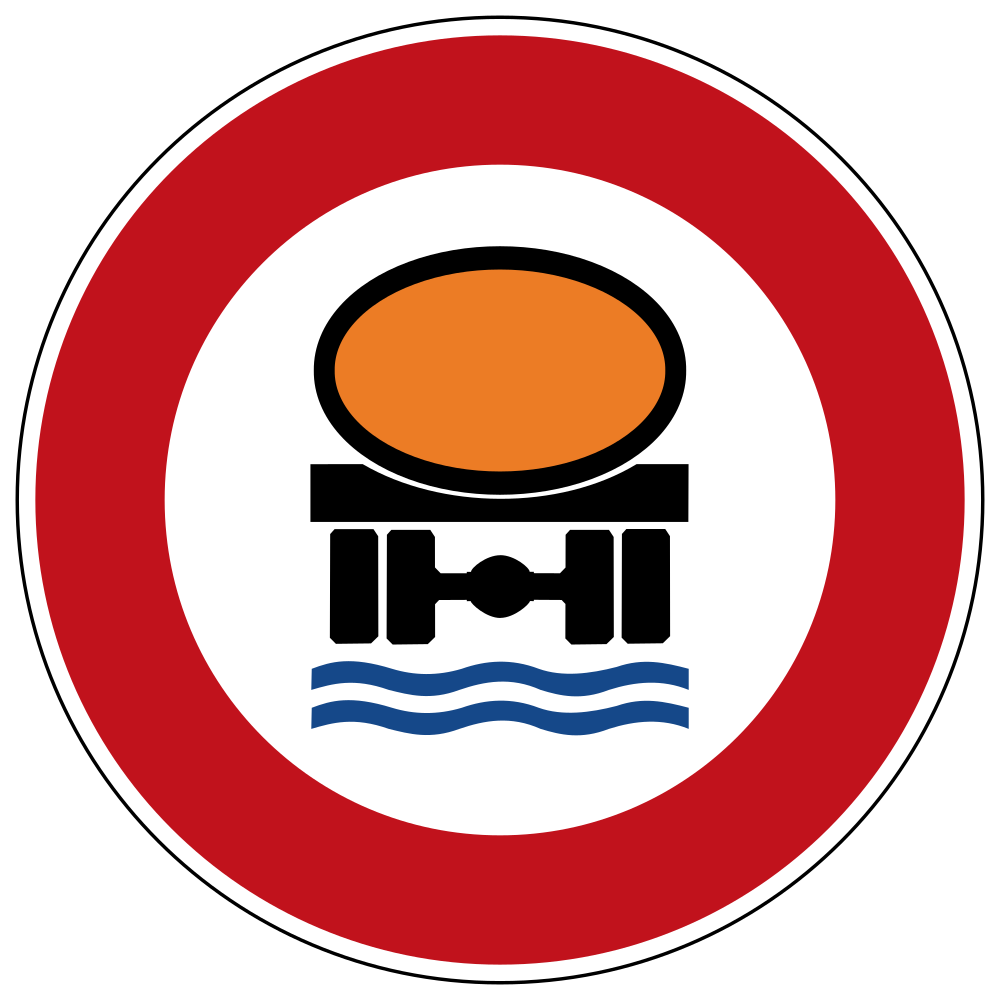
51. Vehicles carrying water-polluting substances prohibited
This traffic sign indicates that vehicles carrying water-polluting substances are prohibited. Vehicles carrying the substances covered by the sign may not enter or continue beyond it.
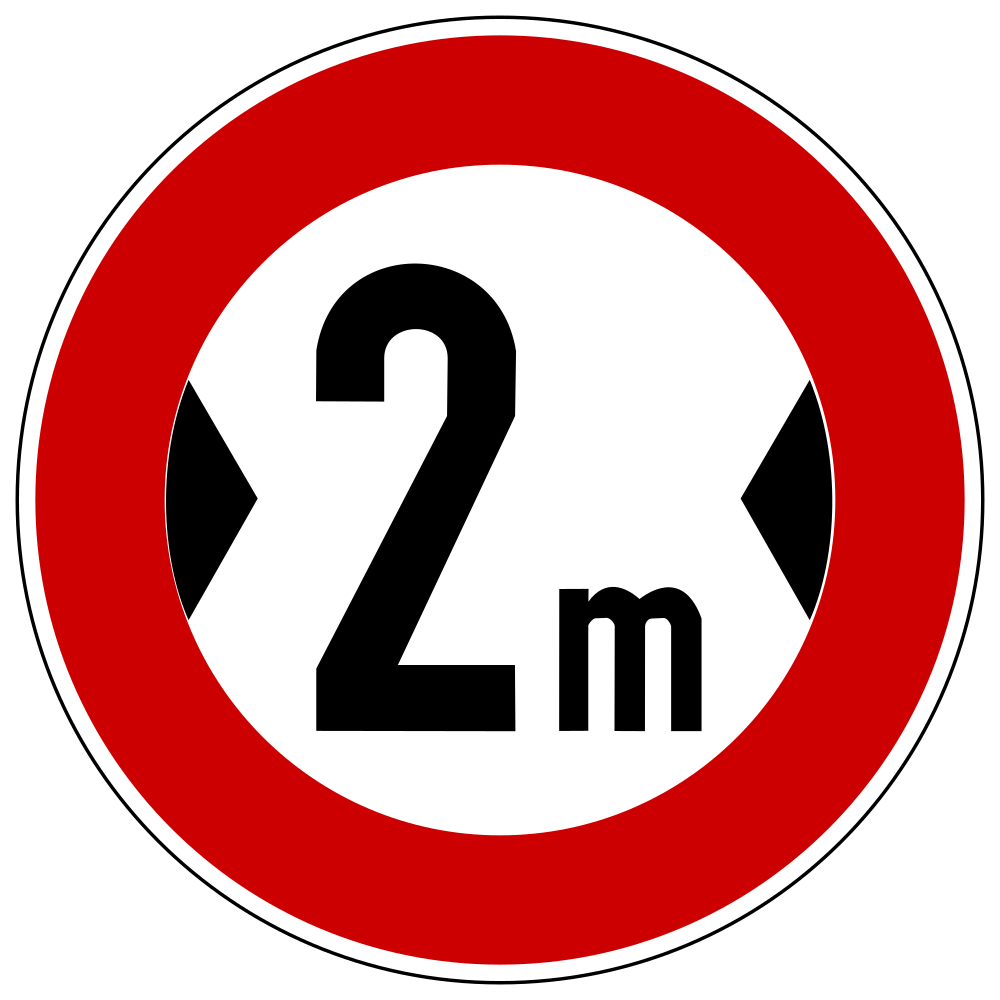
52. Vehicles wider than indicated prohibited
This traffic sign indicates that vehicles wider than indicated are prohibited. A vehicle or vehicle combination whose overall width, including its load, exceeds the displayed limit may not continue beyond the sign.
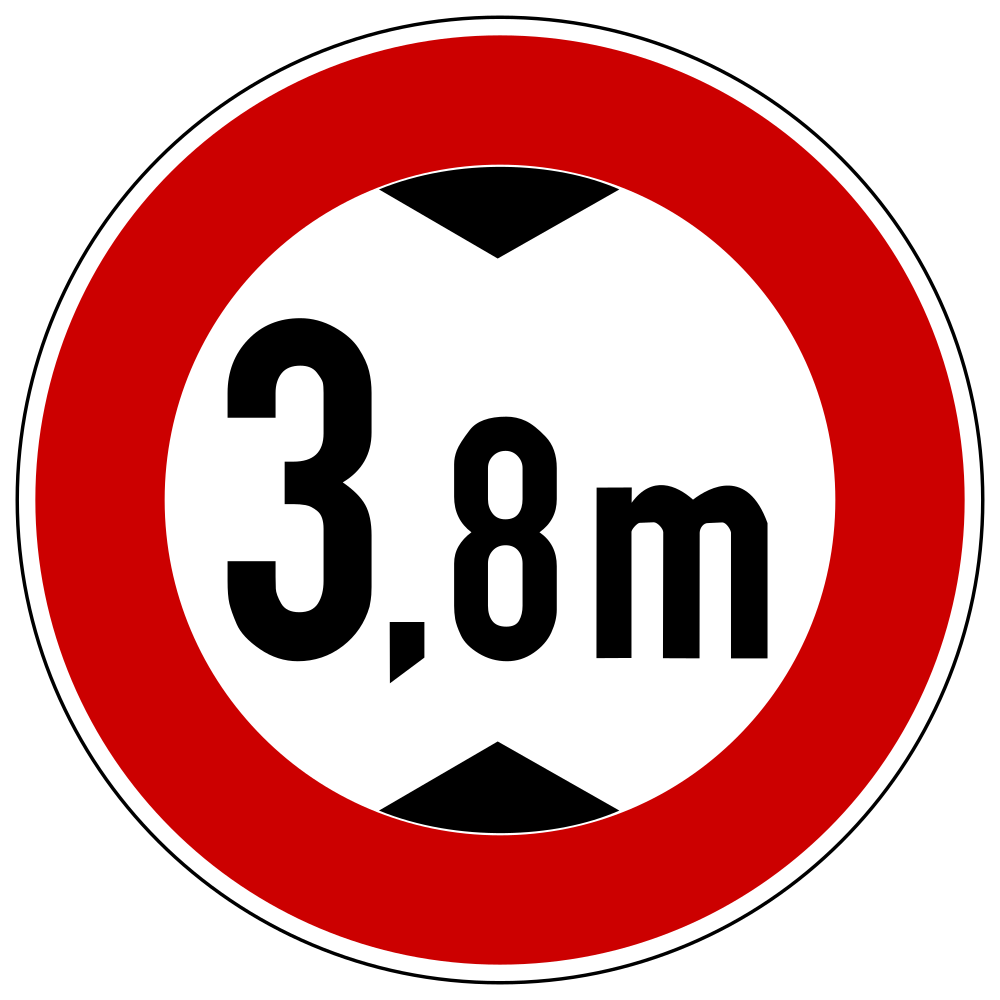
53. Vehicles higher than indicated prohibited
This traffic sign indicates that vehicles higher than indicated are prohibited. A vehicle or vehicle combination whose overall height, including its load, exceeds the displayed limit may not continue beyond the sign.
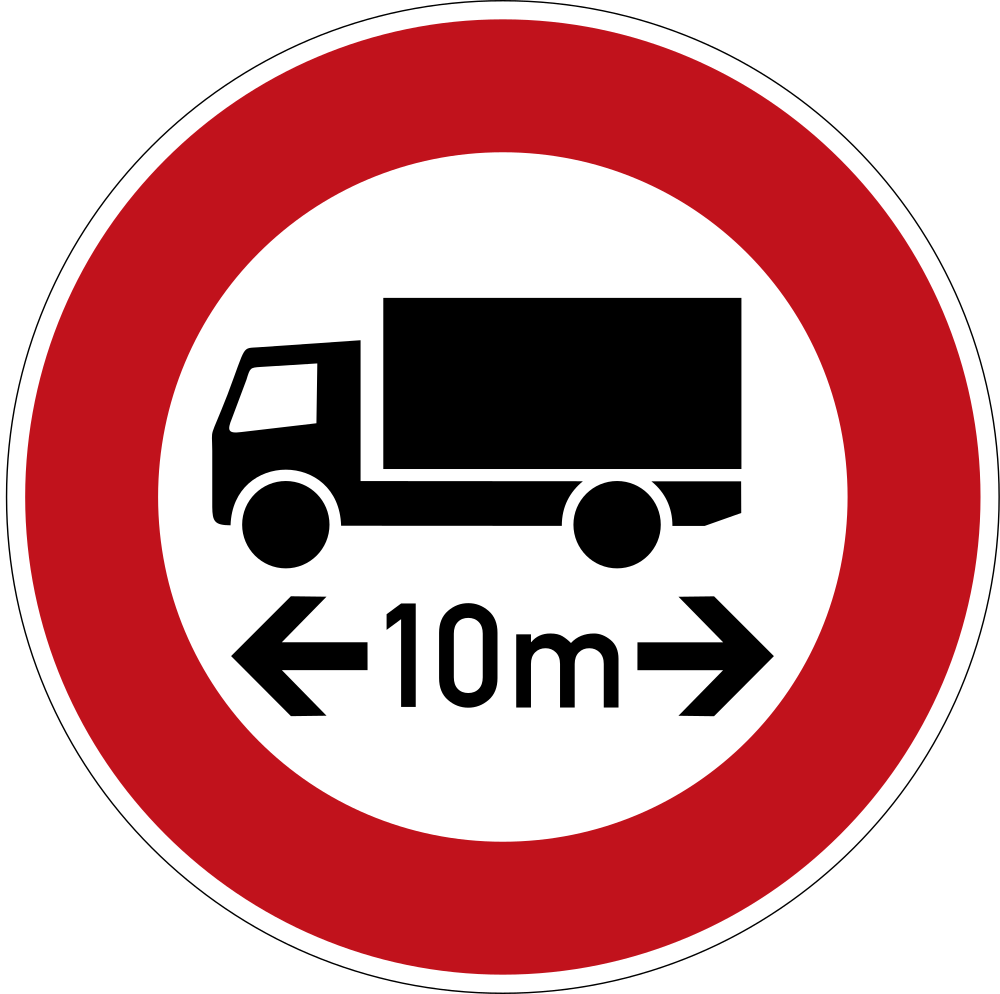
54. Vehicles longer than indicated prohibited
This traffic sign indicates that vehicles longer than indicated are prohibited. A vehicle or vehicle combination whose overall length, including its load, exceeds the displayed limit may not continue beyond the sign.
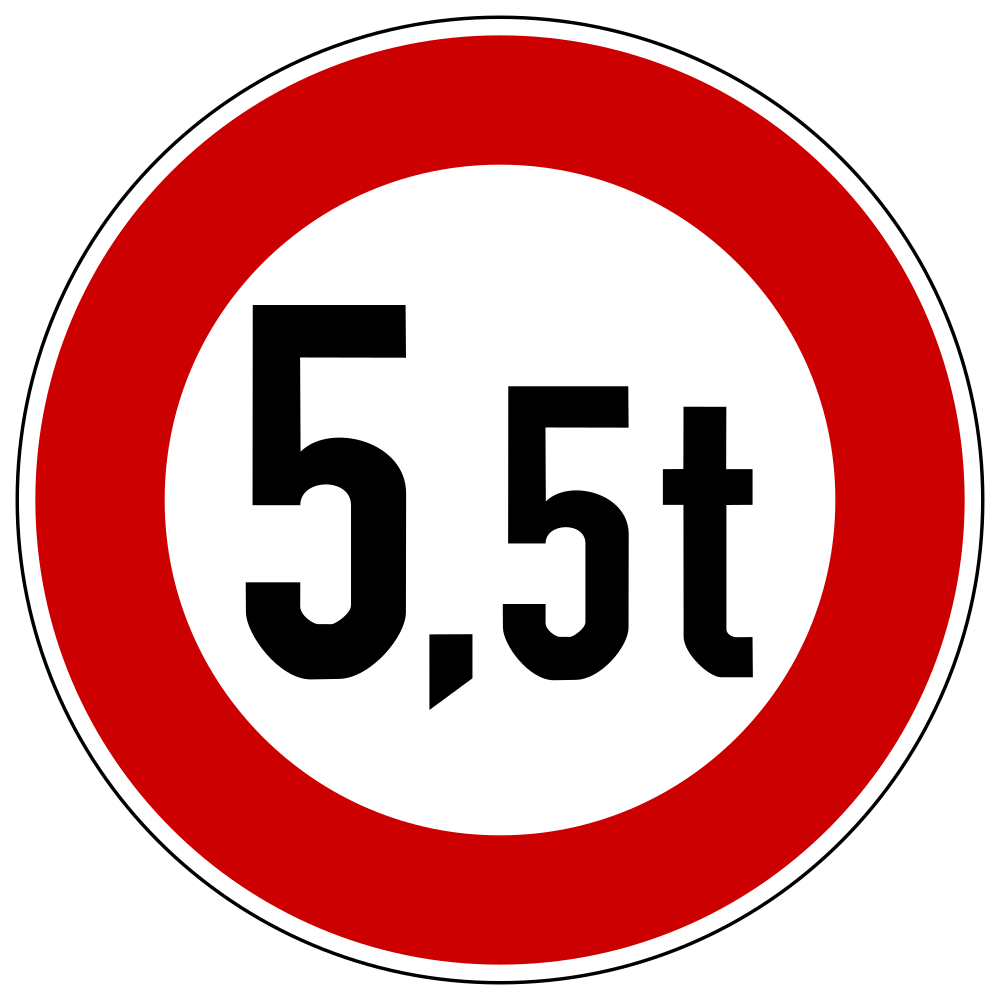
55. Vehicles heavier than indicated prohibited
This traffic sign indicates that vehicles heavier than indicated are prohibited. Vehicles or vehicle combinations exceeding the displayed mass limit may not continue beyond the sign. The legally relevant mass is determined by the applicable local rules.
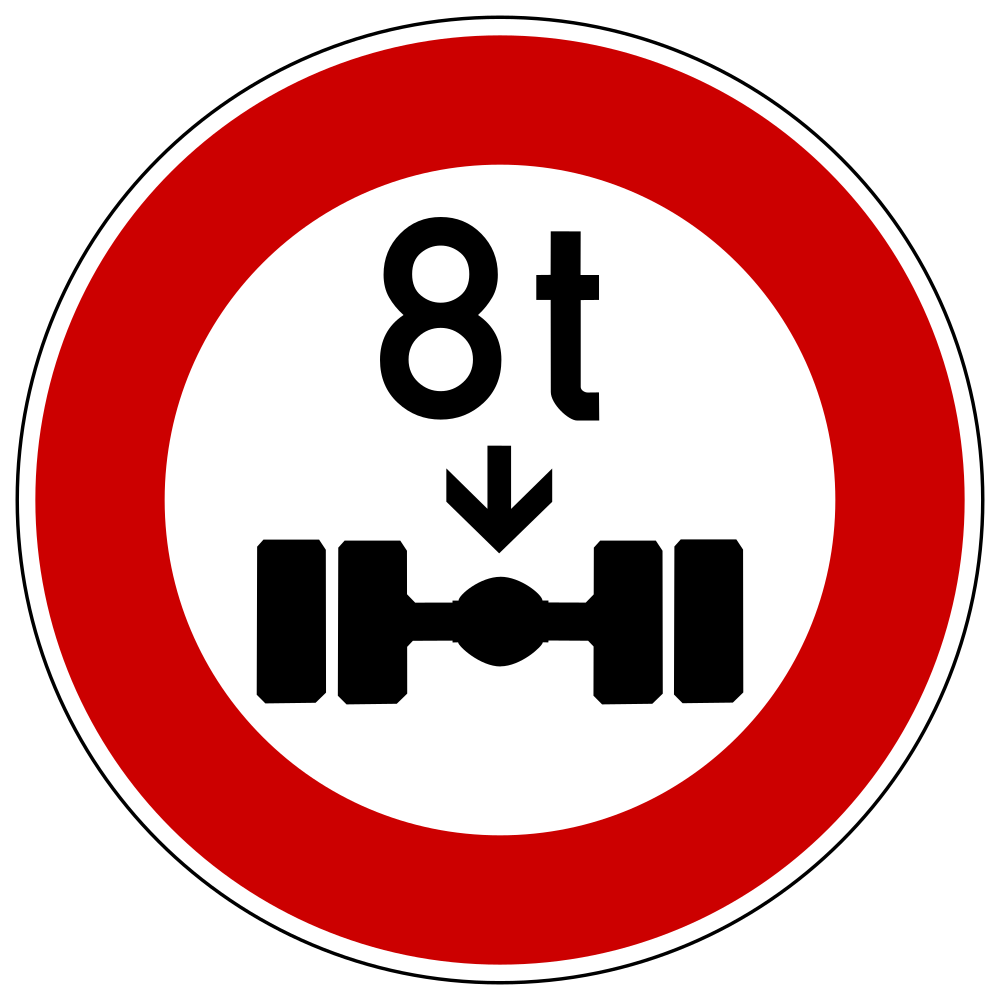
56. Vehicles exceeding the axle-load limit prohibited
This traffic sign indicates that vehicles exceeding the indicated axle-load limit are prohibited. A vehicle whose load on an axle exceeds the displayed limit may not continue beyond the sign.
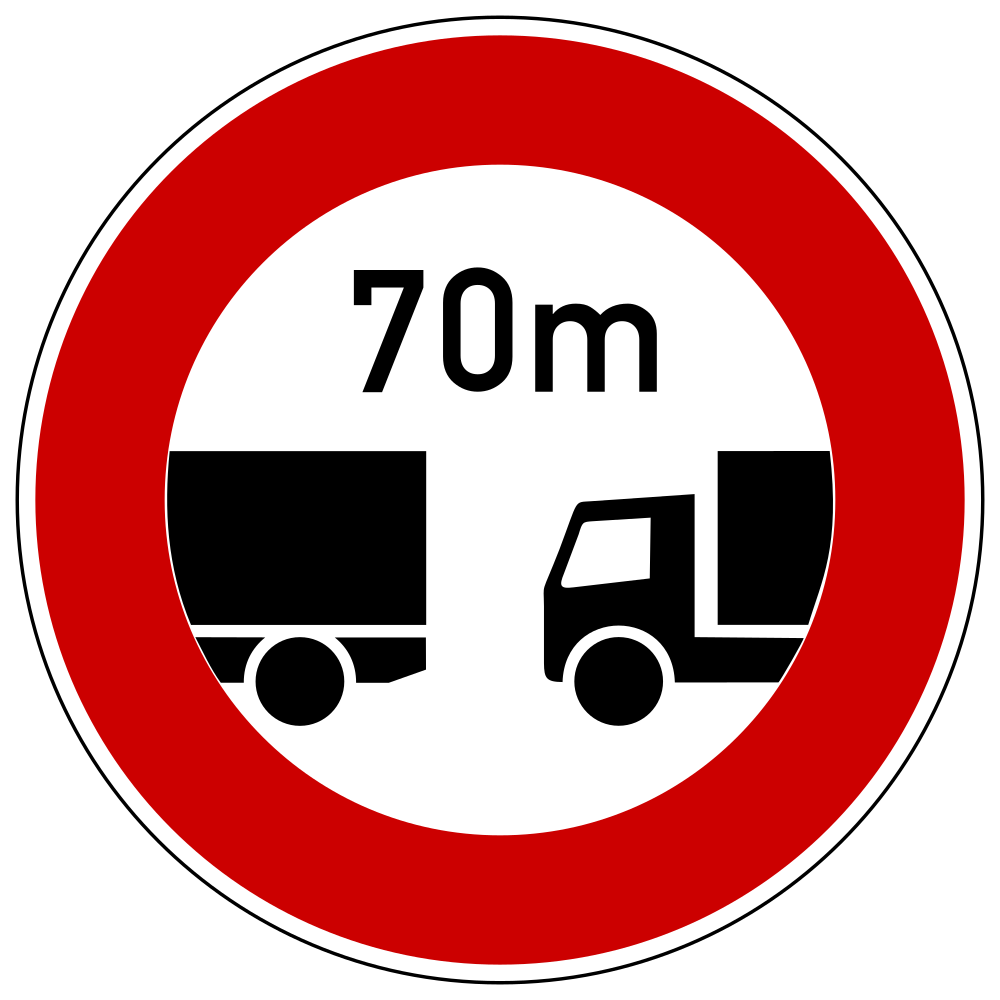
57. Minimum following distance
This traffic sign indicates the minimum distance that must be maintained from the vehicle ahead. Drivers must keep at least the distance shown.
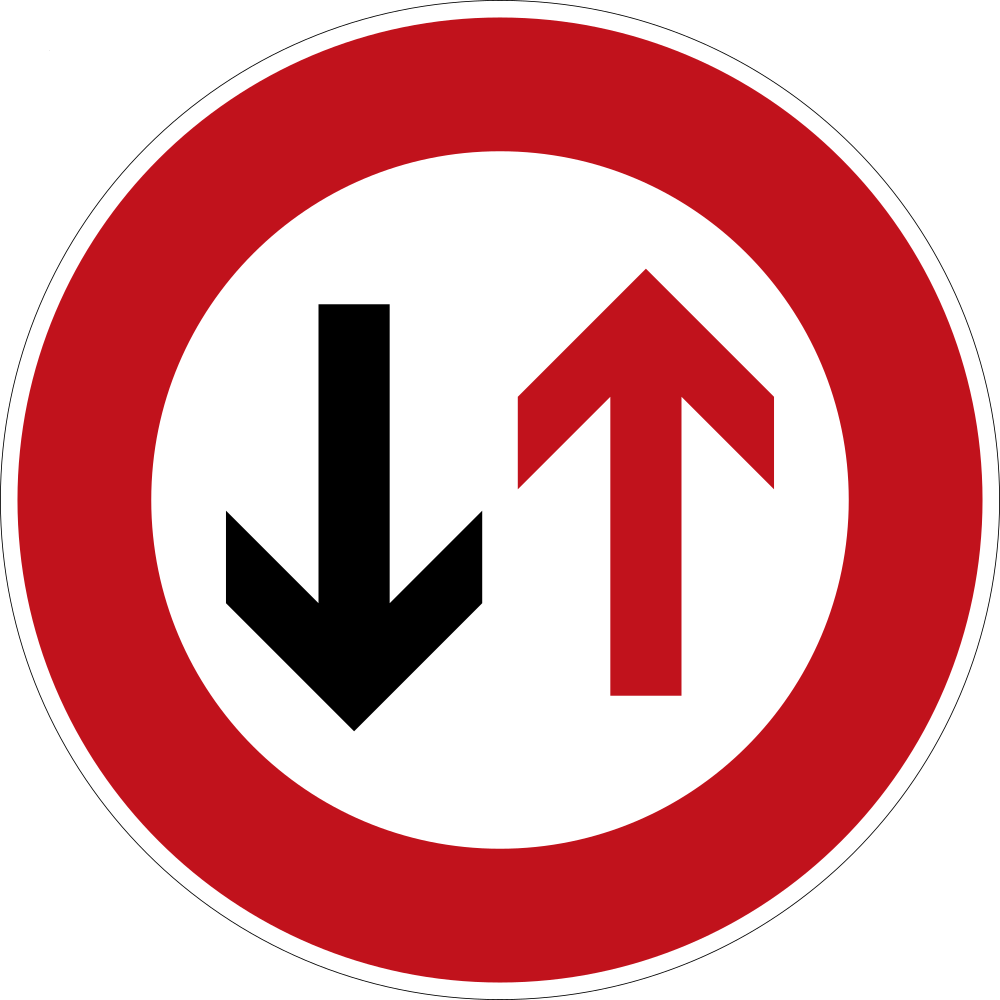
58. Road narrowing, give way to oncoming drivers
This traffic sign indicates a road narrowing where you must give way to oncoming traffic. Allow approaching traffic to pass before entering or continuing through the narrow section when required.
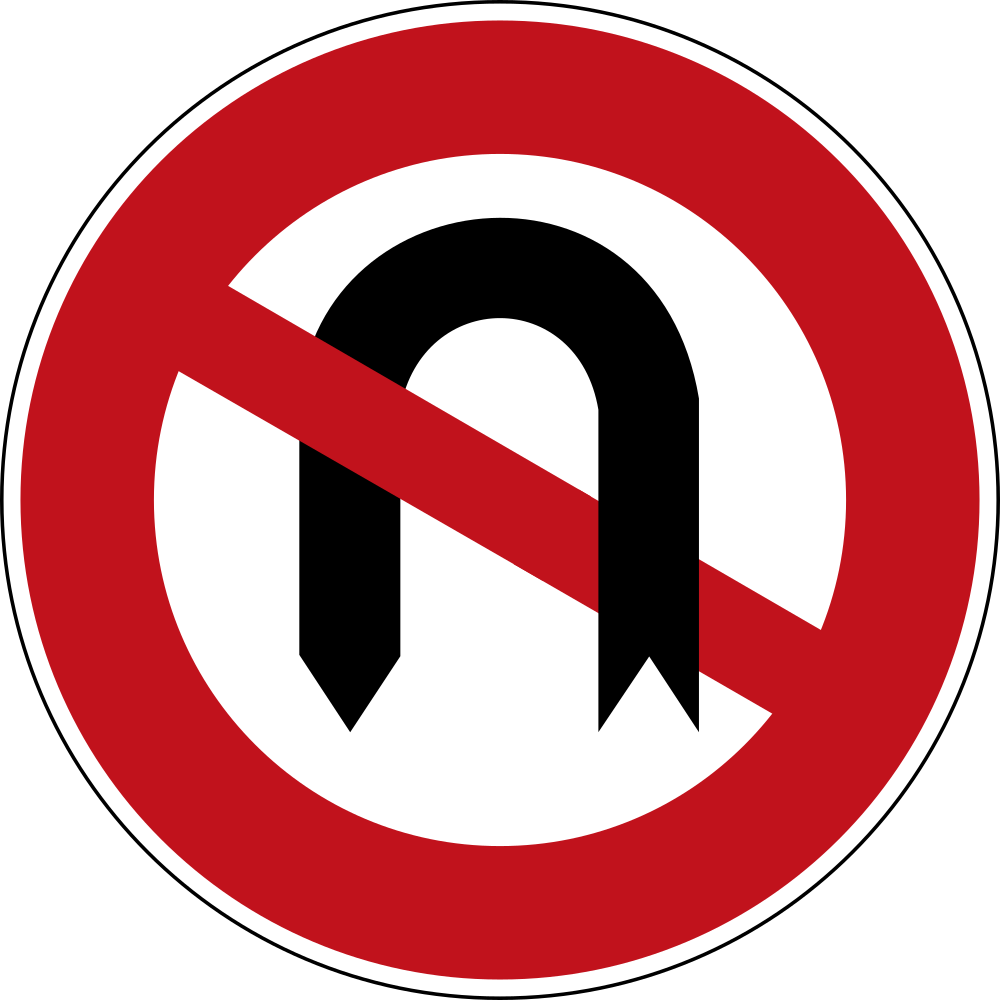
59. Turning around prohibited (U-turn)
This traffic sign indicates that turning around (making a U-turn) is prohibited. A U-turn may not be made where the prohibition applies. Other movements may still be permitted unless another restriction applies.
60. End of local restrictions
This traffic sign indicates the end of certain local restrictions. Restrictions that are ended by this sign no longer apply from this point, while other traffic rules or separately indicated restrictions may remain in force.
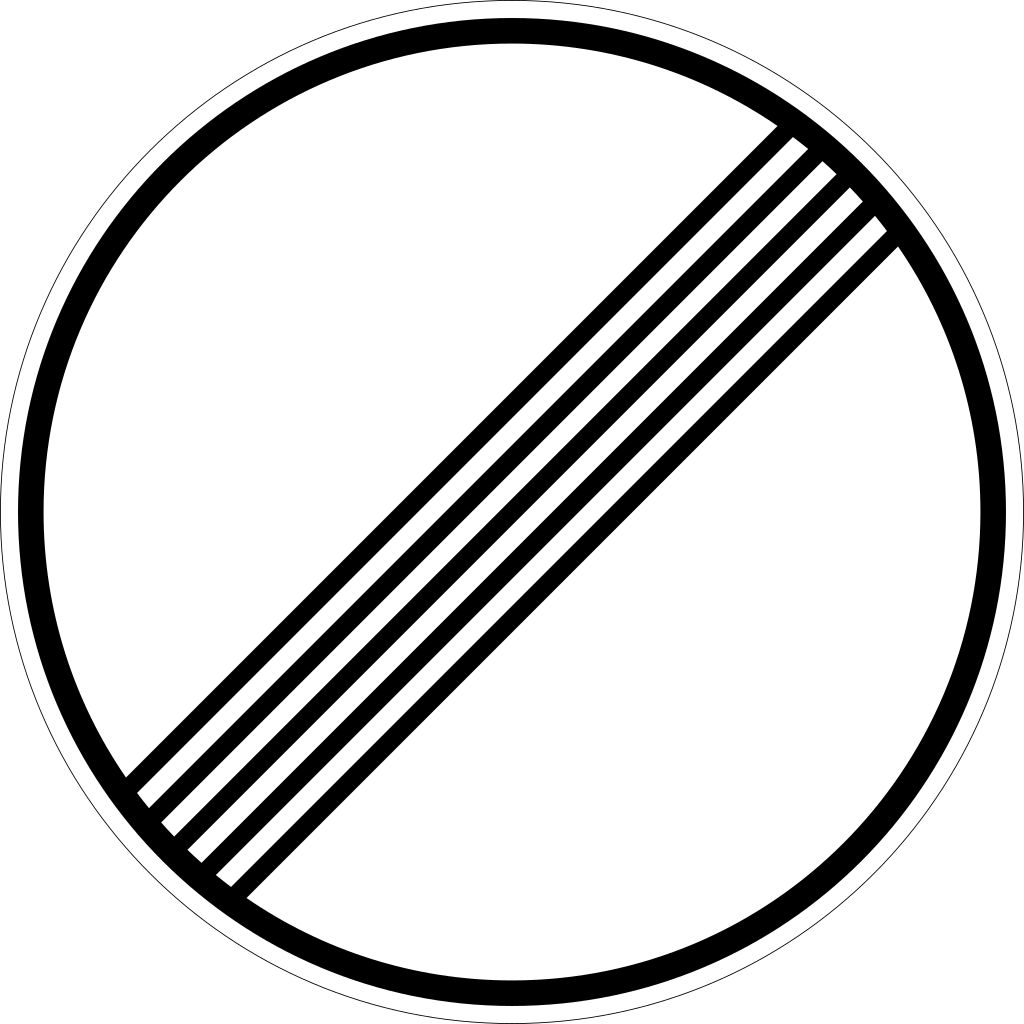
61. Overtaking prohibited
This traffic sign indicates that overtaking is prohibited. The vehicles covered by the prohibition and any categories that may still be overtaken depend on the applicable local rules.
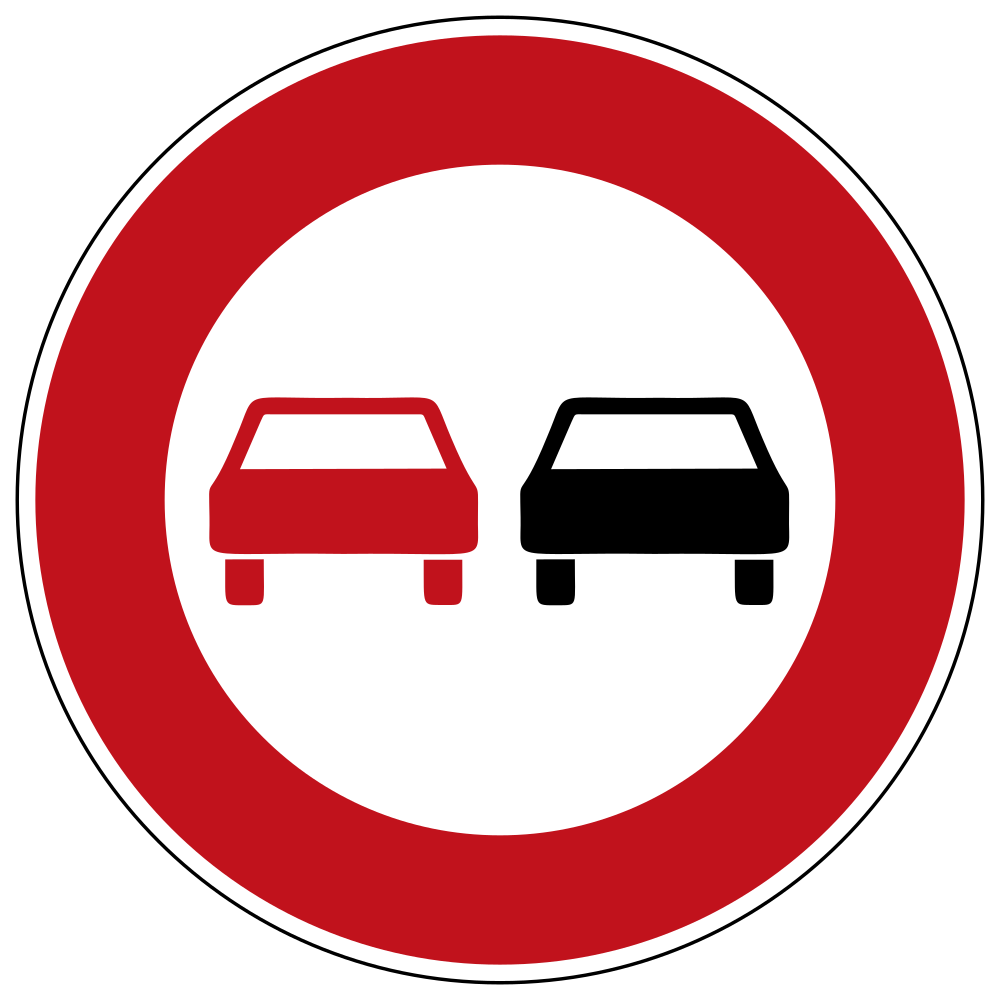
62. End of the overtaking prohibition
This traffic sign indicates the end of the overtaking prohibition. The preceding overtaking restriction ends at this point. Overtaking remains subject to the applicable traffic rules and any other restrictions.
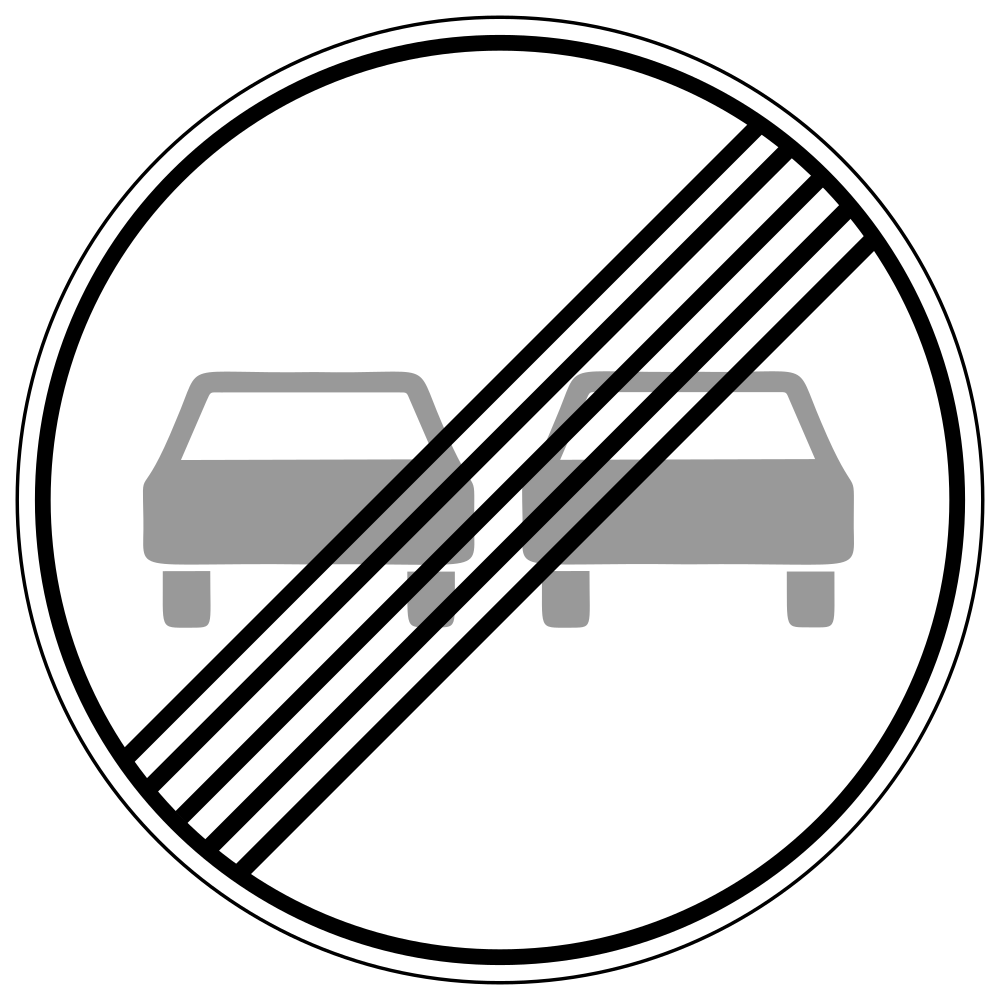
63. Overtaking prohibited for trucks
This traffic sign indicates that overtaking is prohibited for trucks. Trucks covered by the sign may not overtake where the prohibition applies. The affected truck categories and any exceptions depend on the applicable local rules.
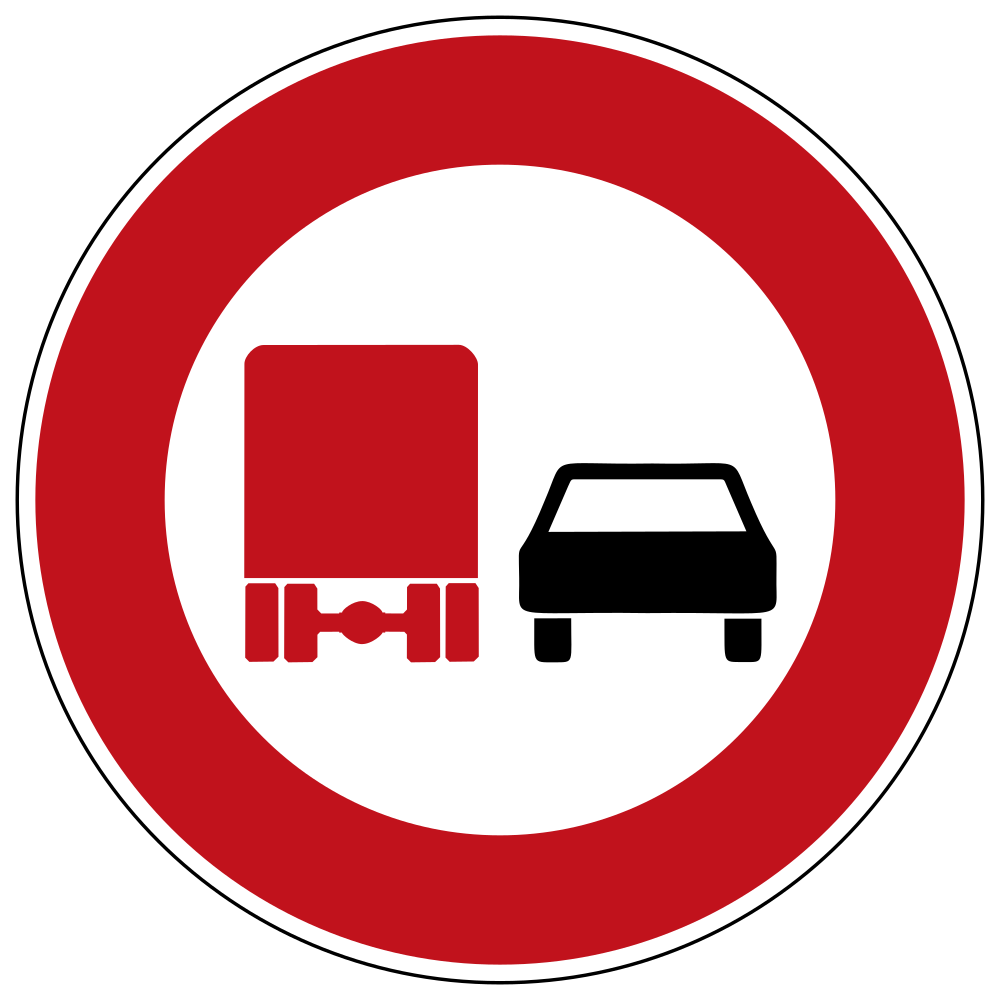
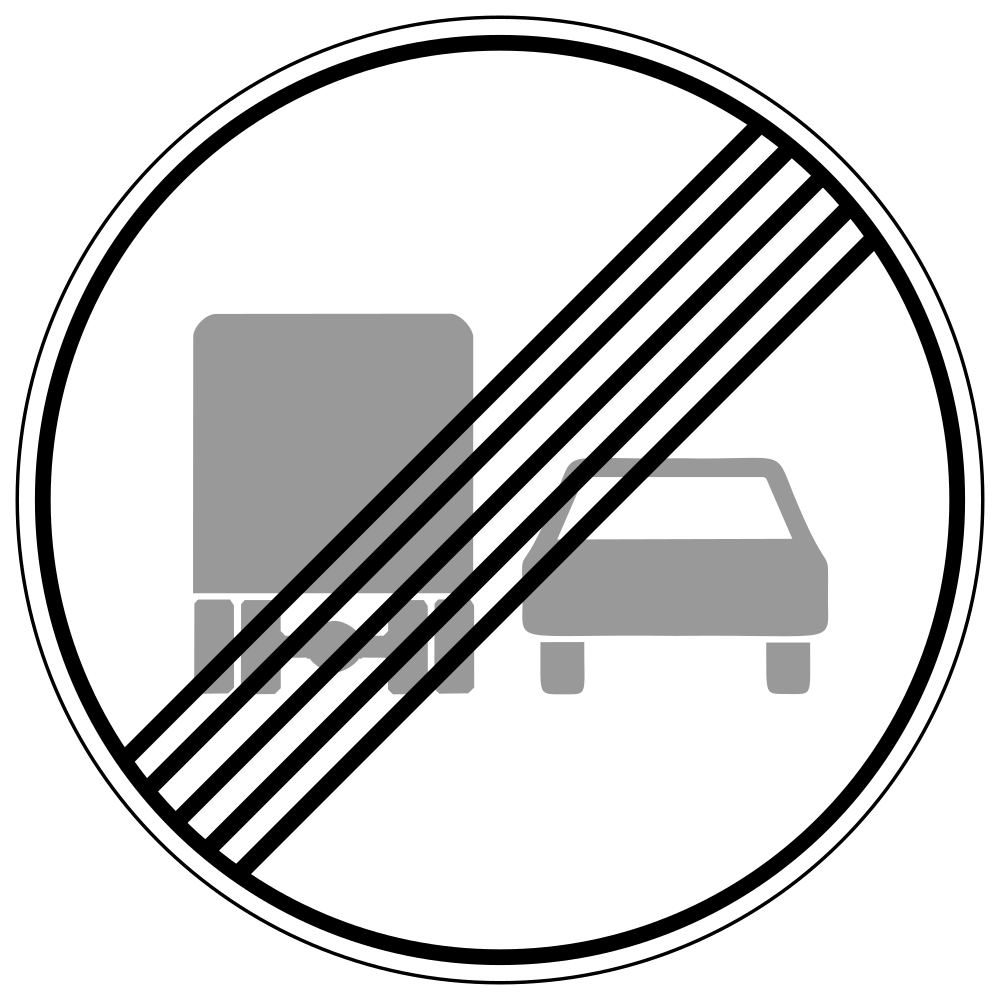
64. End of the overtaking prohibition for trucks
This traffic sign indicates the end of the overtaking prohibition for trucks. The preceding truck overtaking restriction ends at this point. Other overtaking rules and restrictions may still apply.
65. Start of a speed limit
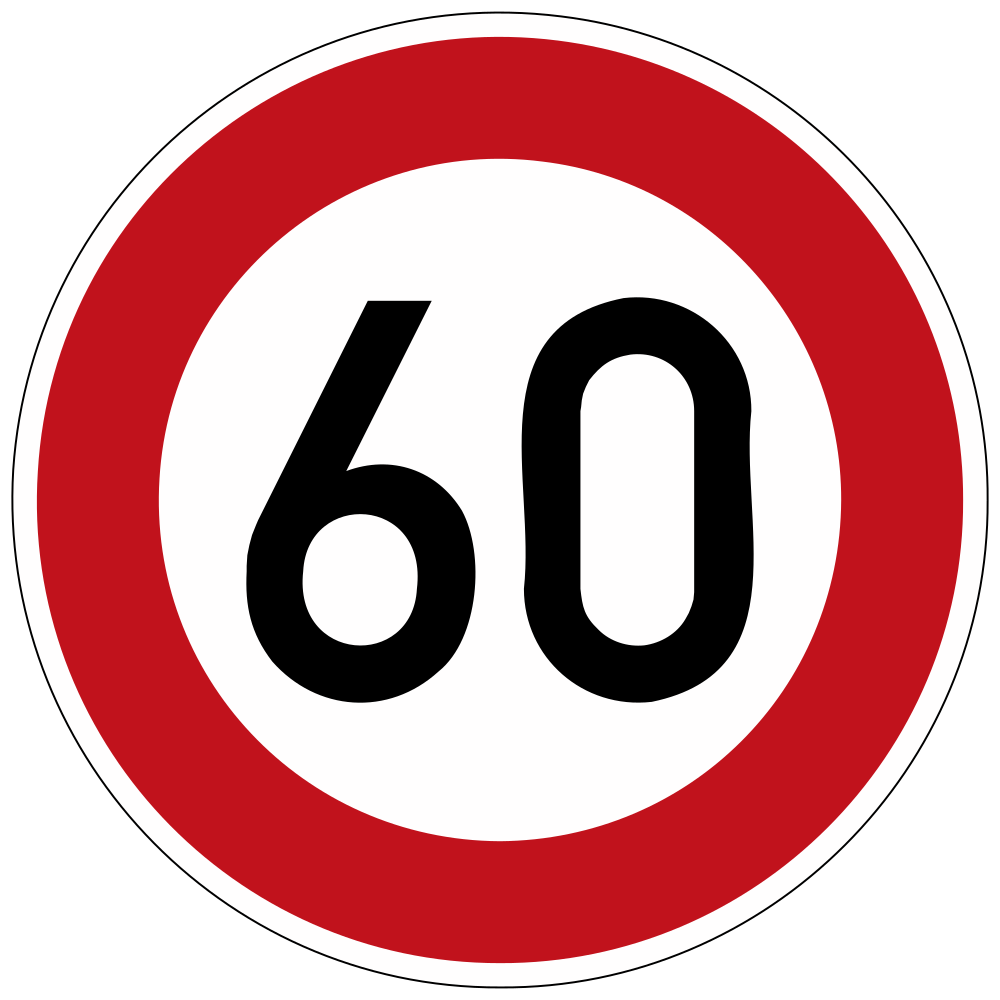
This traffic sign indicates the start of a speed limit. The displayed value is the maximum permitted speed from this point. The limit remains in force until it ends or is replaced according to the applicable traffic signs and local rules.
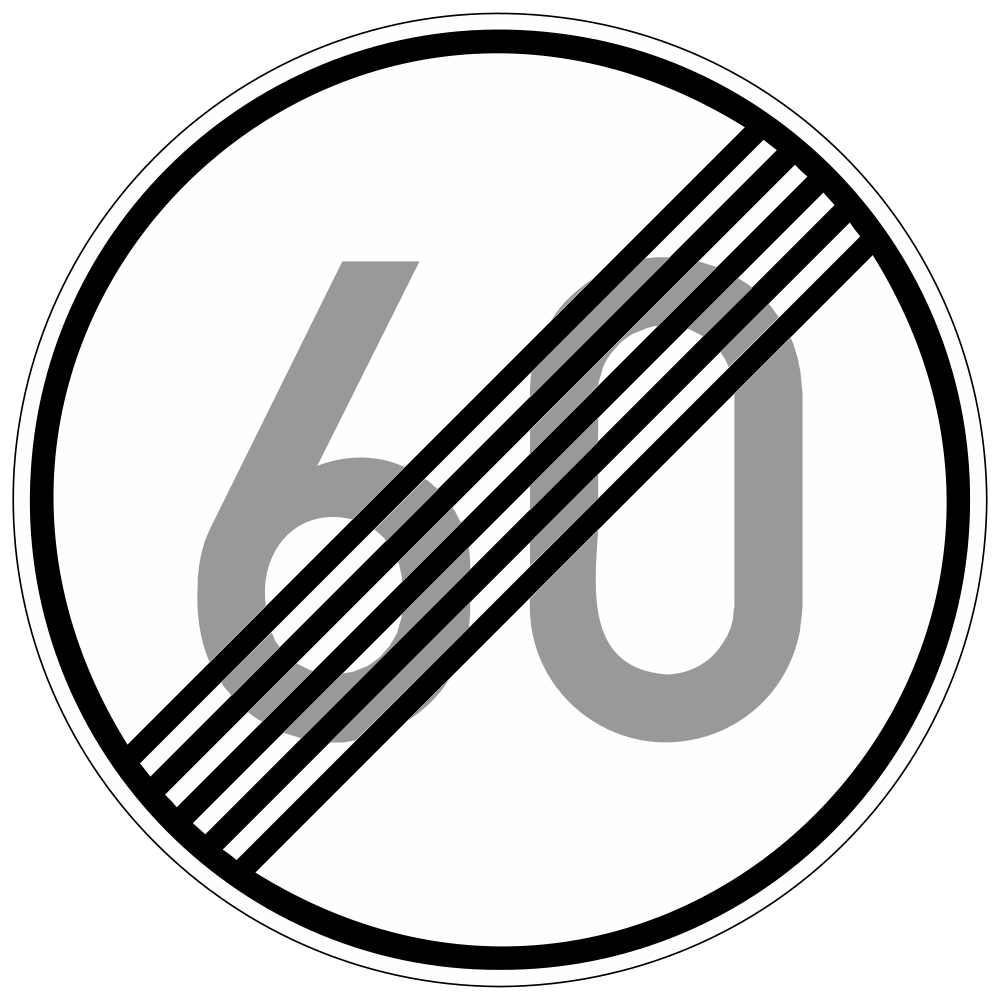
66. End of the speed limit
This traffic sign indicates the end of the previously indicated speed limit. From this point, follow any newly posted limit or the applicable default speed rules for the road and vehicle category.
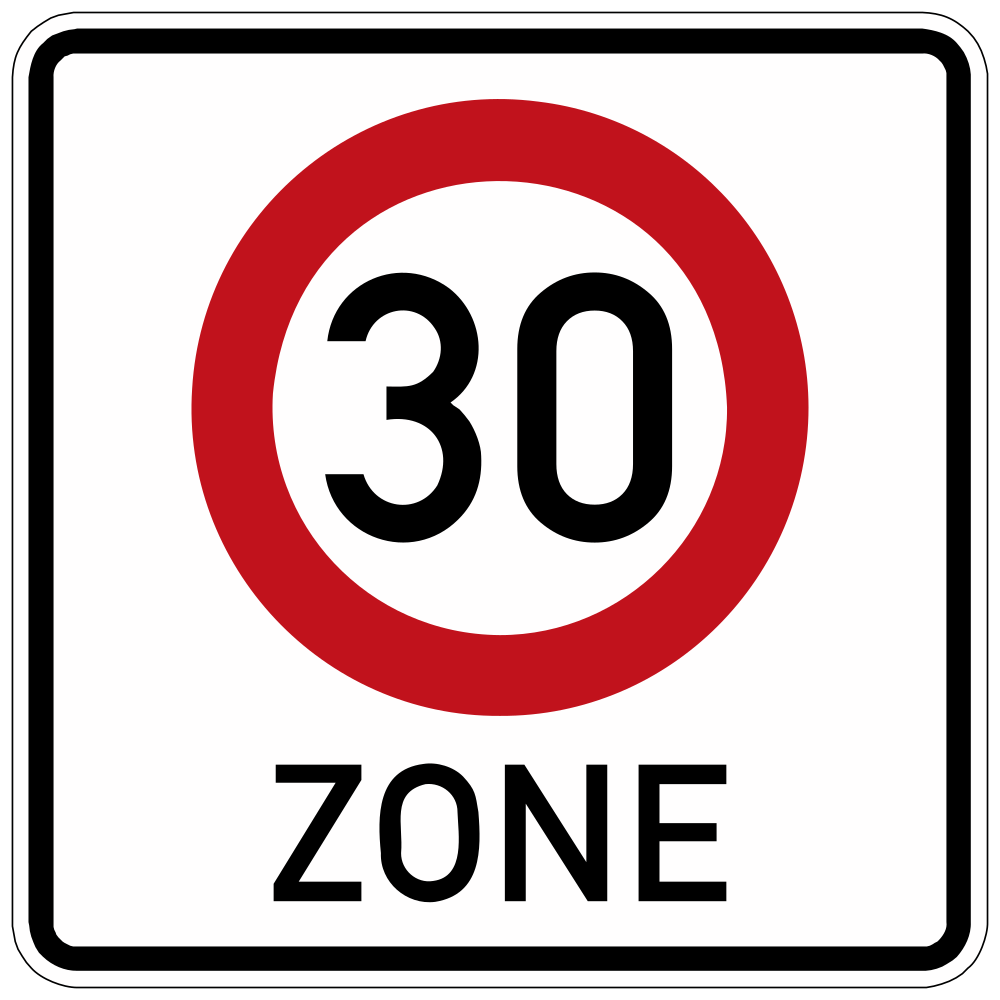
67. Start of a zone with speed limit
This traffic sign indicates the start of a zone with a speed limit. The displayed speed limit applies throughout the zone according to the applicable zonal rules, until the zone is ended or another rule replaces it.
68. End of the zone with speed limit
This traffic sign indicates the end of the zone with a speed limit. The zonal speed limit ends at this point. Follow any newly posted limit or the applicable default speed rules.
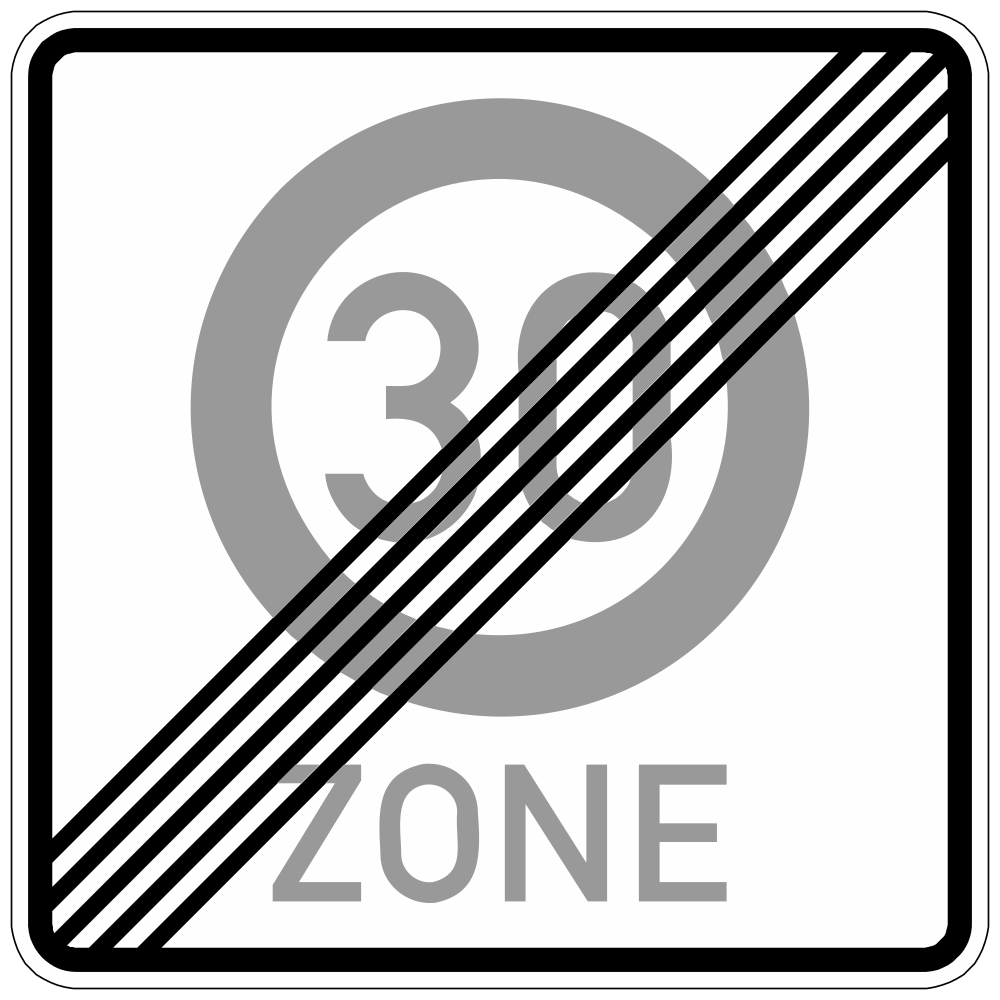
69. Start of a low-emission zone
This traffic sign indicates the start of a low-emission zone. Vehicle access is subject to the emission requirements and exemptions that apply within the zone. The affected vehicle categories and access conditions depend on the local rules.
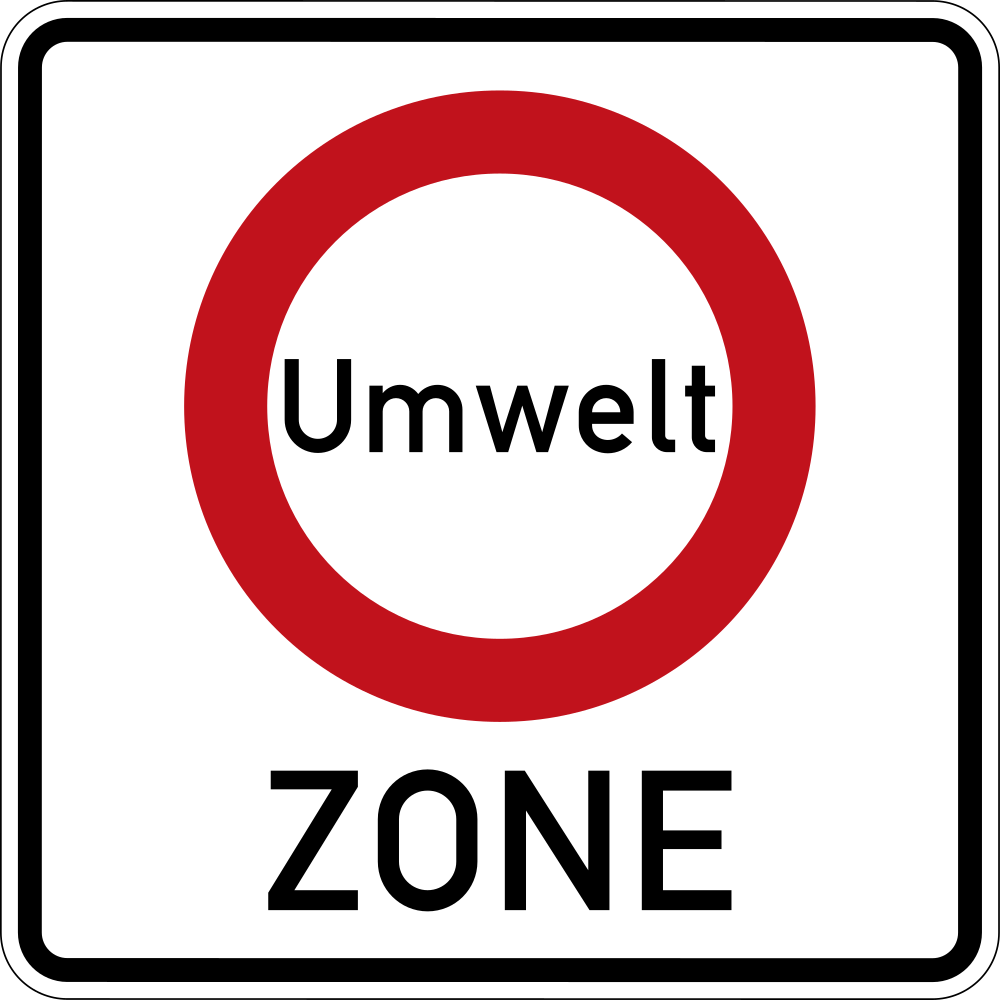
70. End of the low-emission zone
This traffic sign indicates the end of the low-emission zone. The emission-related access requirements associated with the zone end at this point. Other access or environmental restrictions may still apply.
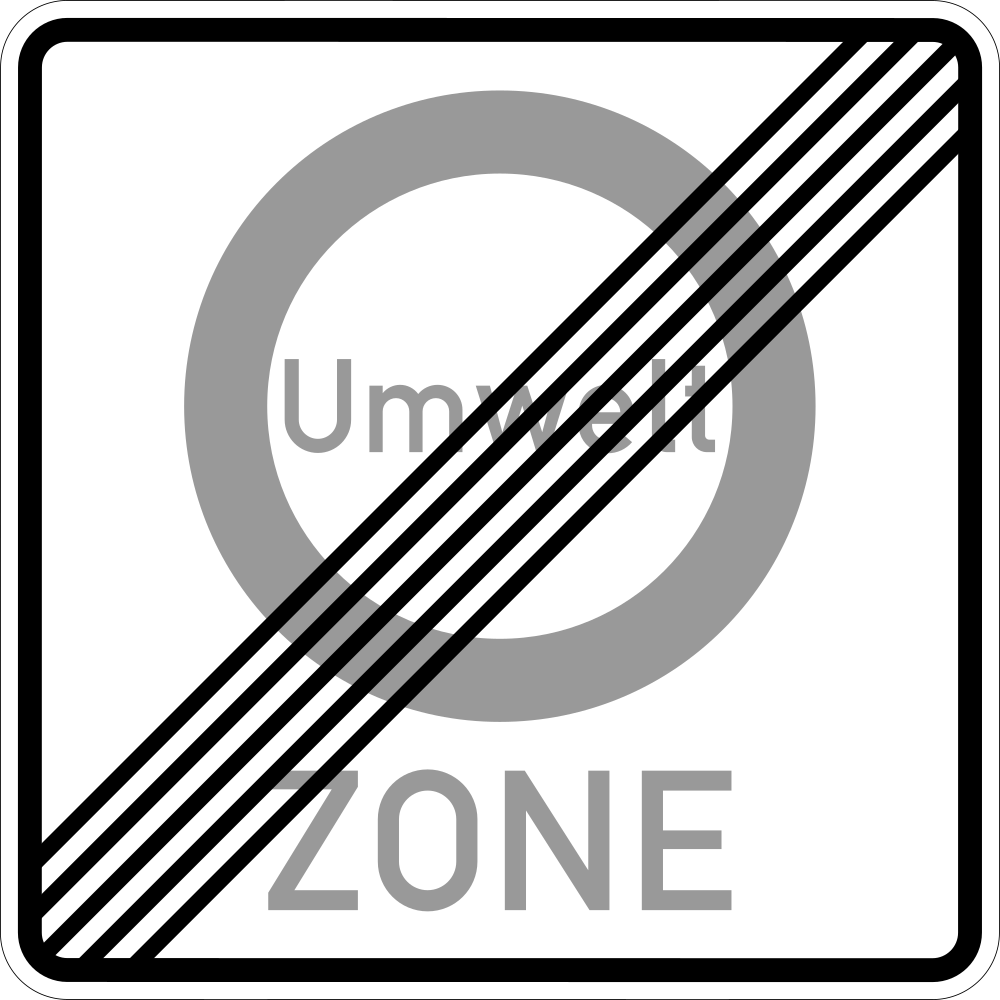
71. Passing customs without stopping prohibited
This traffic sign indicates that passing customs without stopping is prohibited. Drivers covered by the sign must stop at the checkpoint and follow any applicable instructions before continuing.
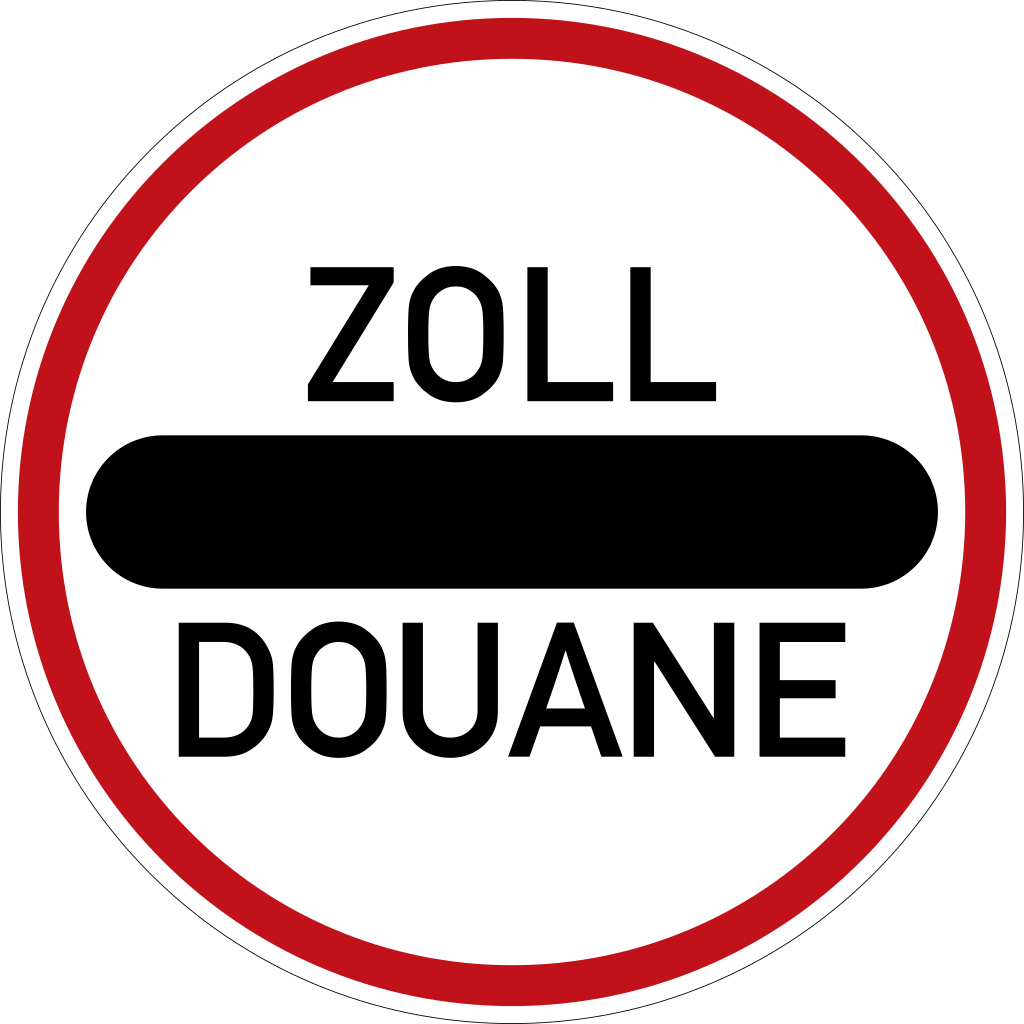
72. Passing without payment prohibited
This traffic sign indicates that passing without payment is prohibited. A toll or other required road-use charge must be paid or otherwise validly arranged according to the applicable payment system.
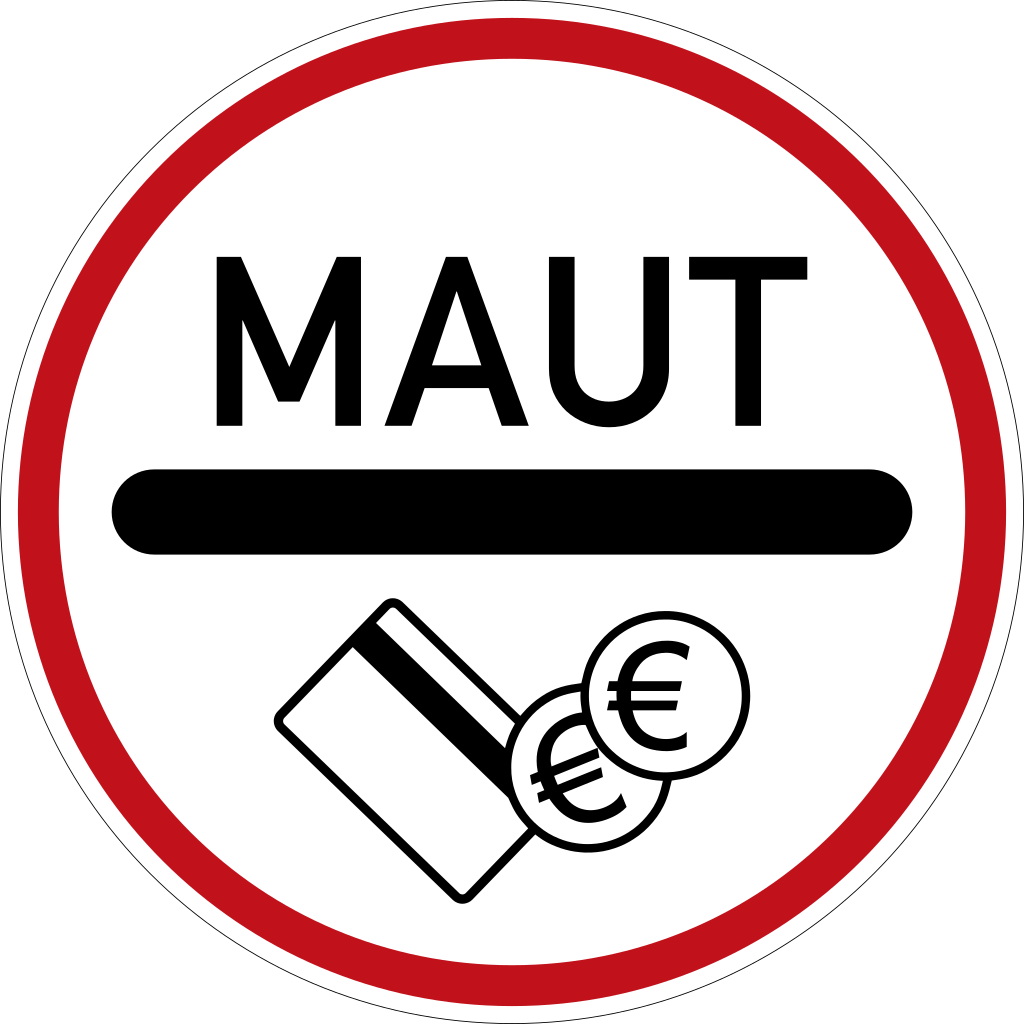
73. Trucks prohibited without toll payment
This traffic sign indicates that trucks are prohibited without the required toll payment. Trucks covered by the sign may proceed only when the applicable toll or road-use charge has been paid or otherwise validly arranged.
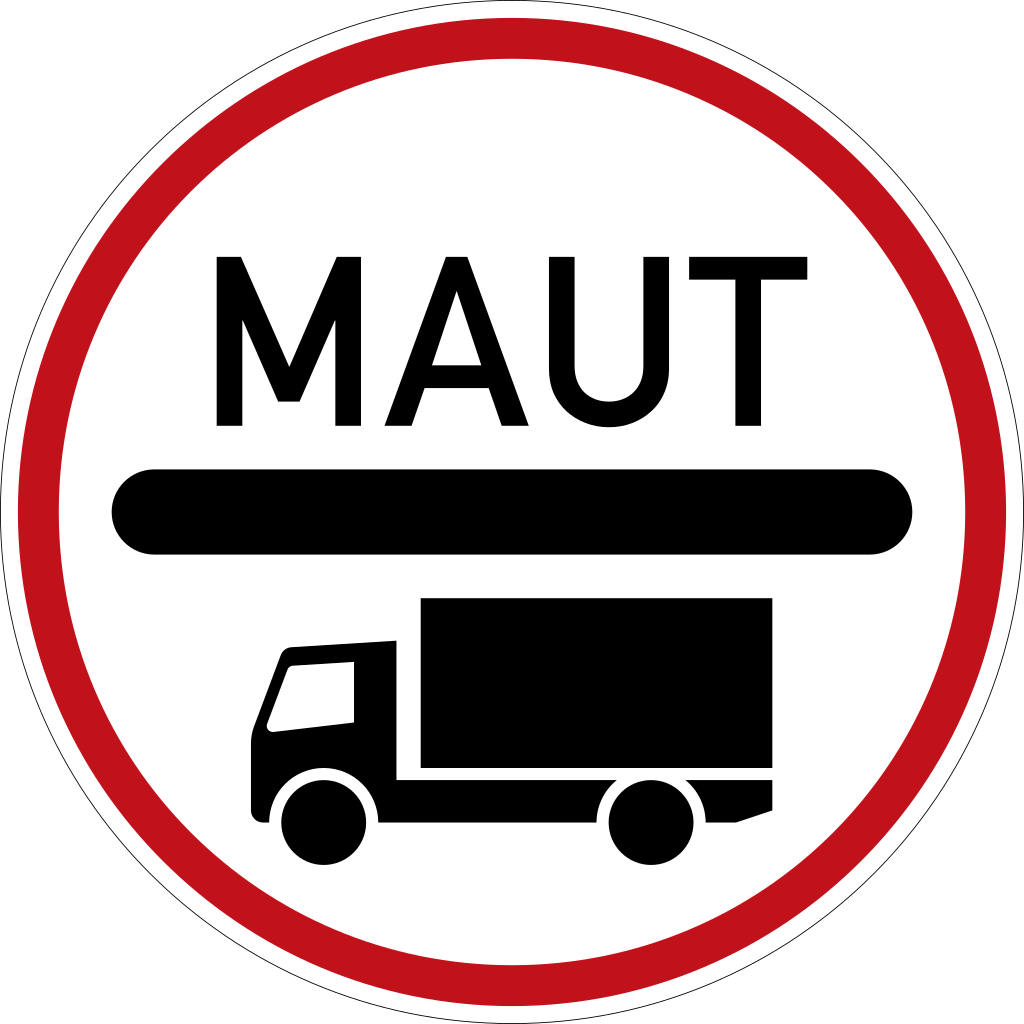
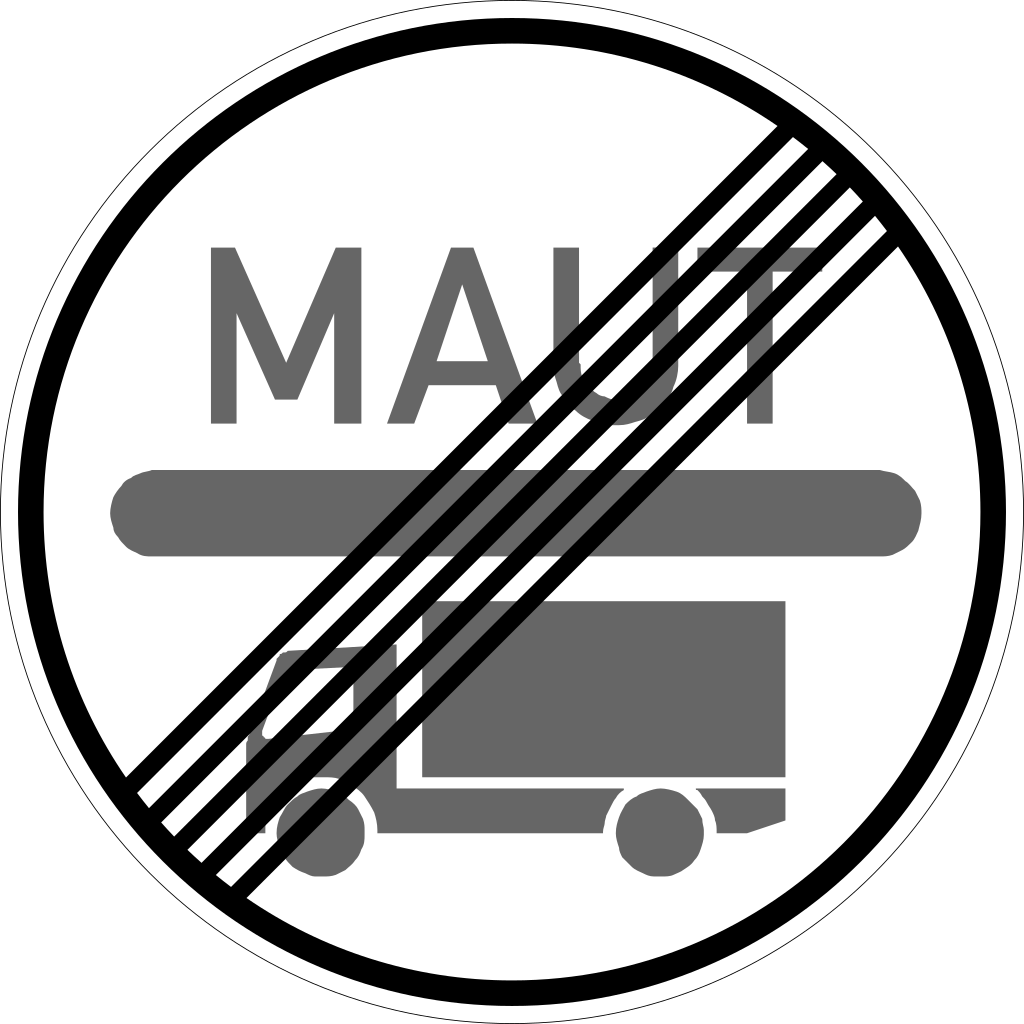
74. End of toll road for trucks
This traffic sign indicates the end of the toll section for trucks. The truck-specific toll requirement associated with the preceding signs ends at this point. Other tolls or road-use charges may still apply.
75. Parking prohibited
This traffic sign indicates that parking is prohibited. Vehicles may not be parked in the area covered by the sign unless an exception applies. Brief stopping to pick up or drop off passengers or to load or unload goods may still be permitted where local rules allow it.
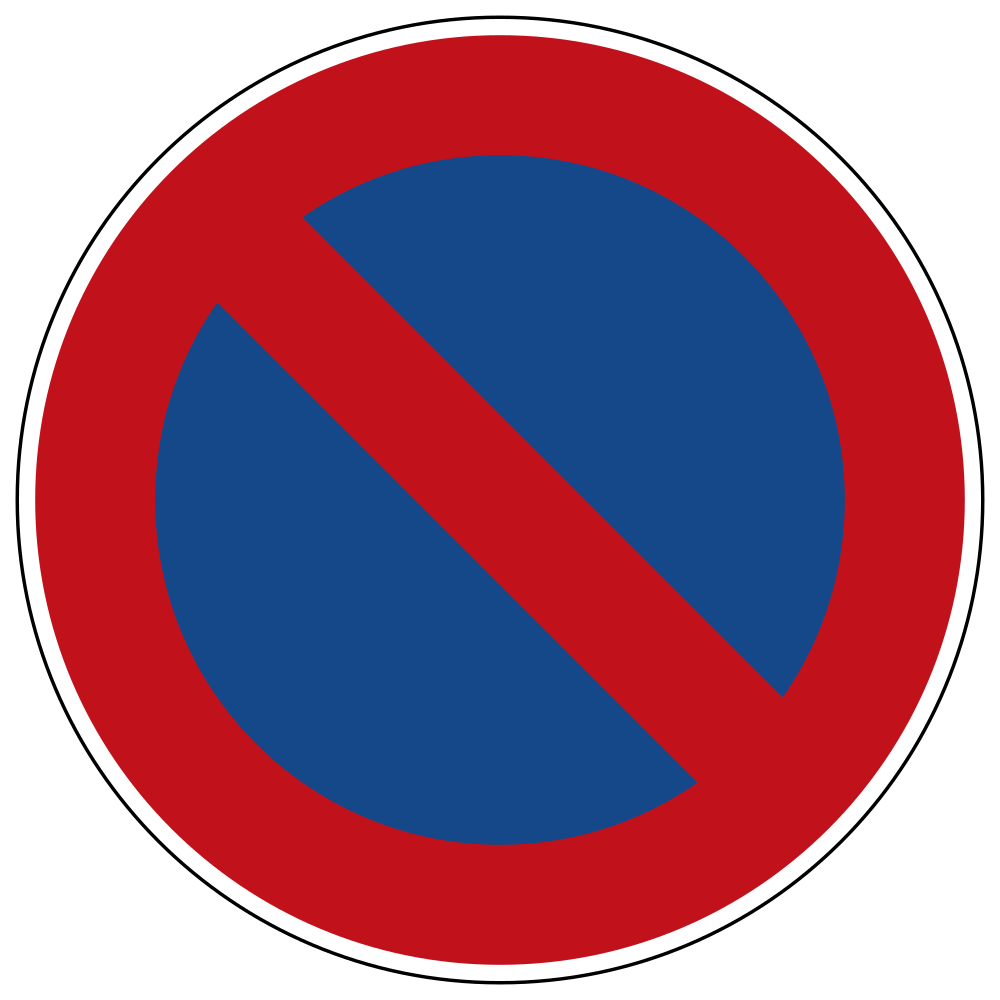
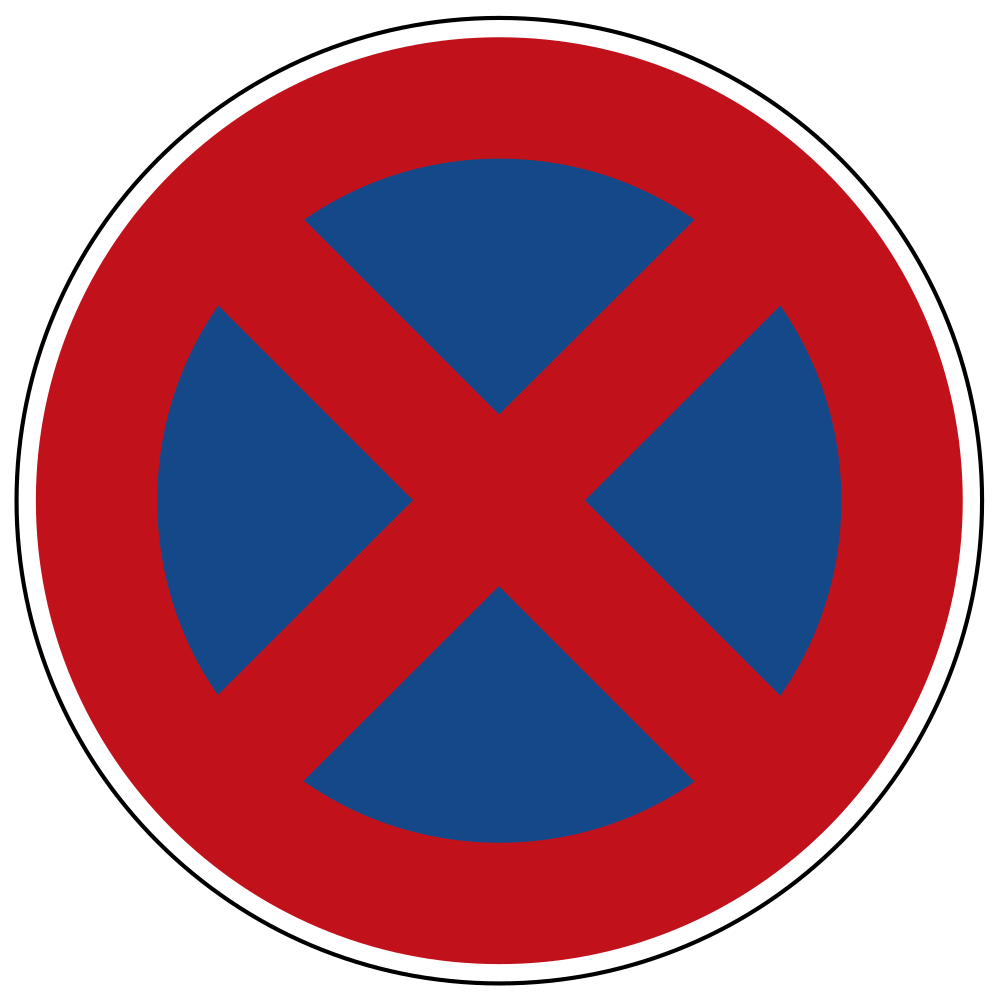
76. Parking and stopping prohibited
This traffic sign indicates that parking and stopping are prohibited. Vehicles may not stop or park voluntarily where the restriction applies, except where an applicable rule provides an exemption or stopping is required by traffic conditions.
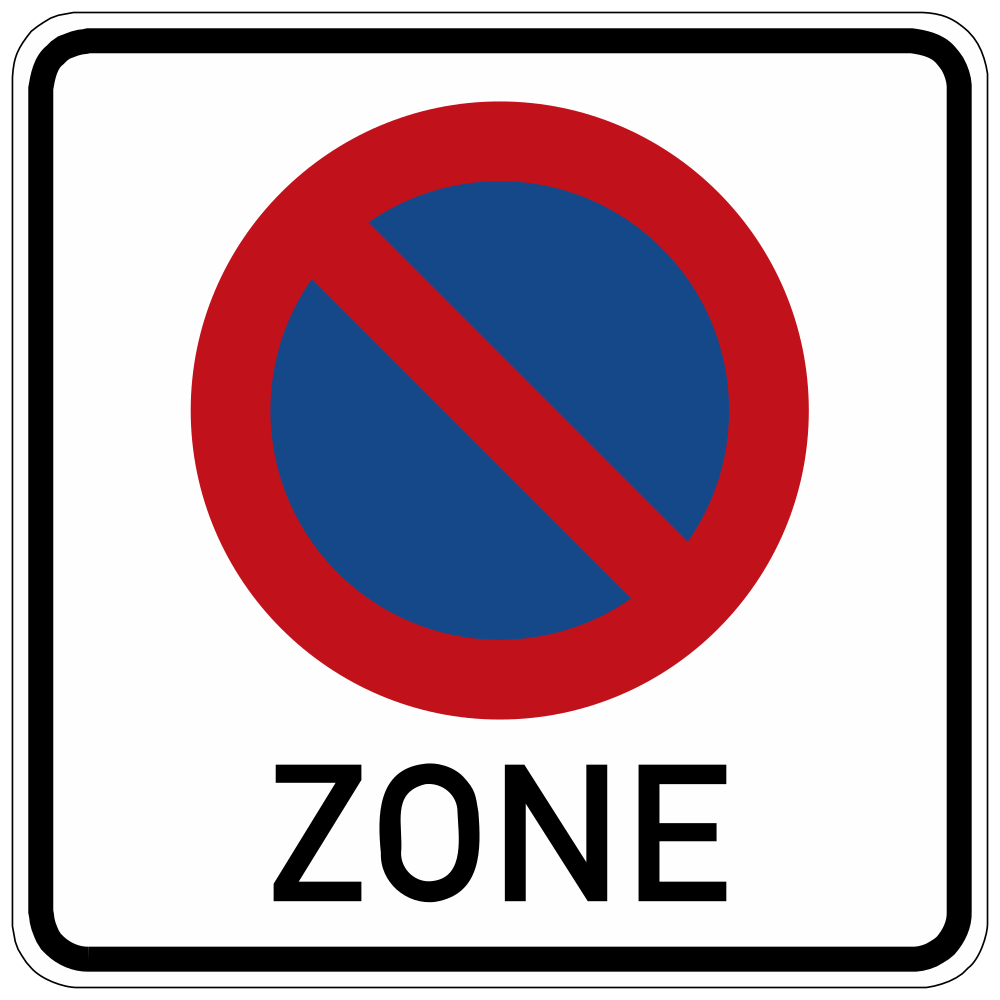
77. Start of no-parking zone
This traffic sign indicates the start of a no-parking zone. The parking prohibition applies throughout the zone according to the applicable zonal rules until the zone is ended or another rule replaces it.
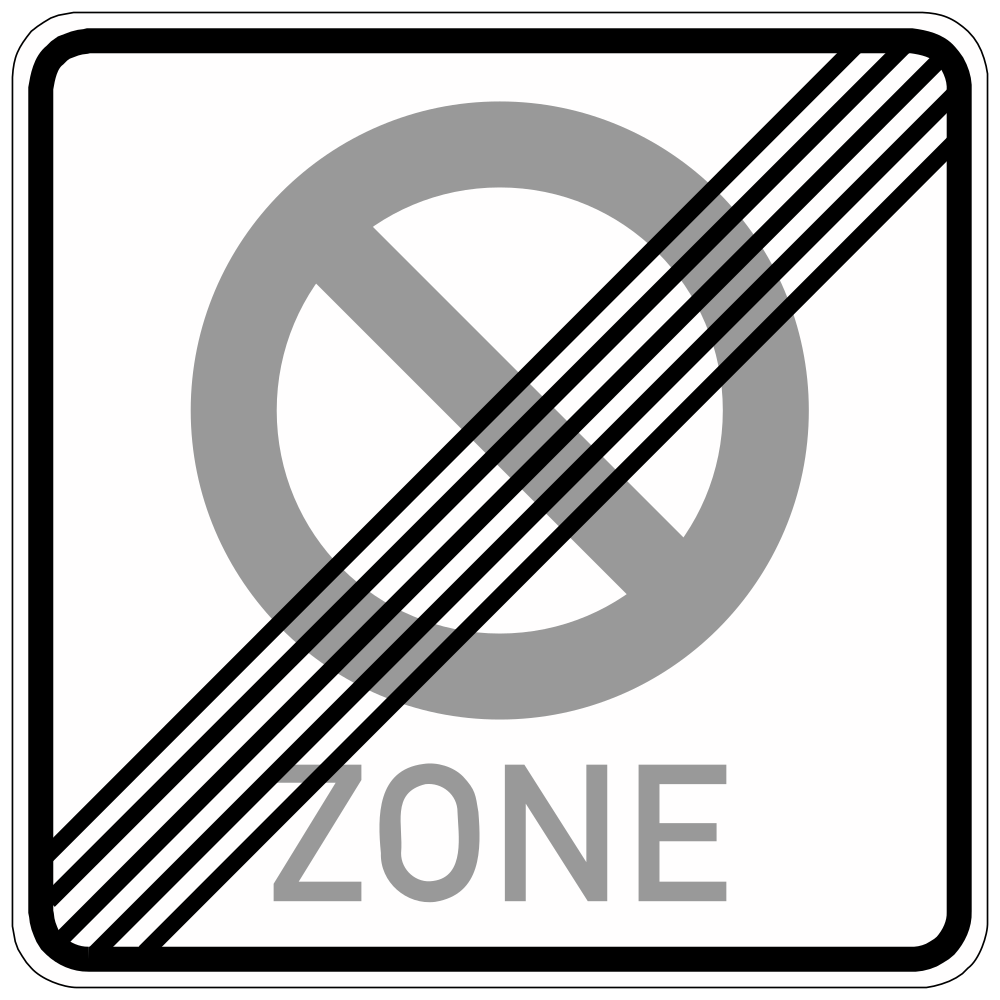
78. End of no-parking zone
This traffic sign indicates the end of the no-parking zone. The zonal parking prohibition ends at this point. Other parking restrictions or conditions may still apply.
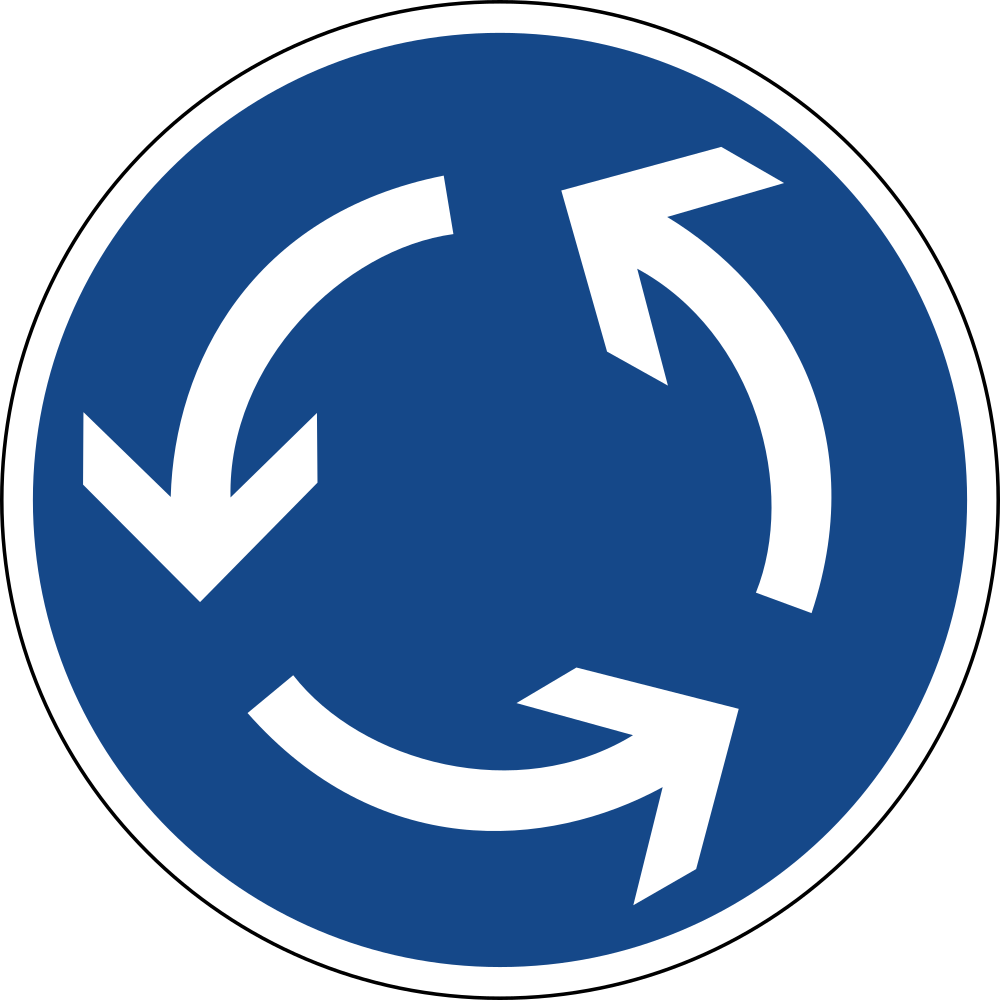
79. Mandatory roundabout direction
This traffic sign indicates the mandatory direction around a roundabout. Traffic must circulate in the direction shown by the arrows. The sign does not itself determine priority; follow the applicable priority signs, traffic signals and local rules.
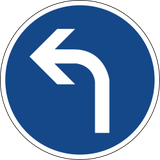
80. Turning left mandatory
This traffic sign indicates that turning left is mandatory at the junction ahead. Traffic must turn left and may not continue straight ahead or turn right.
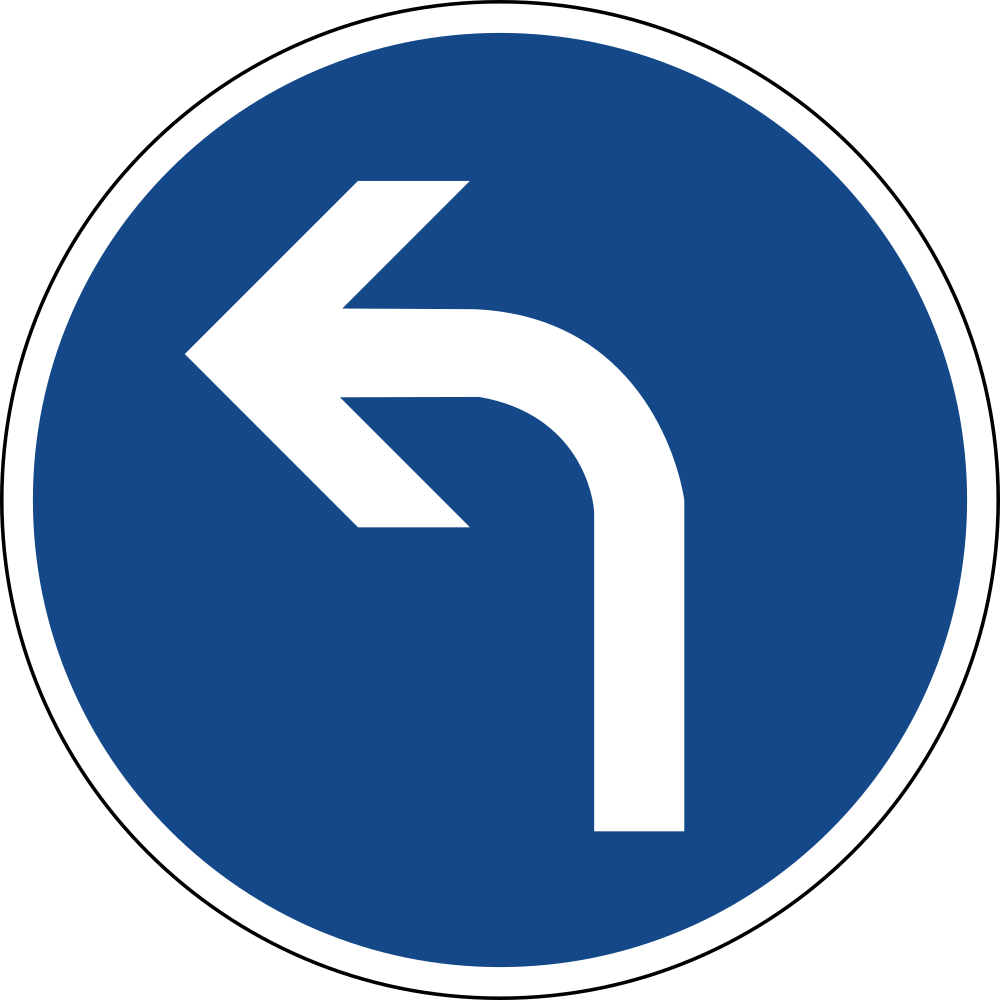
81. Turning left or right mandatory
This traffic sign indicates that turning left or right is mandatory at the junction ahead. Traffic may turn either left or right but may not continue straight ahead.
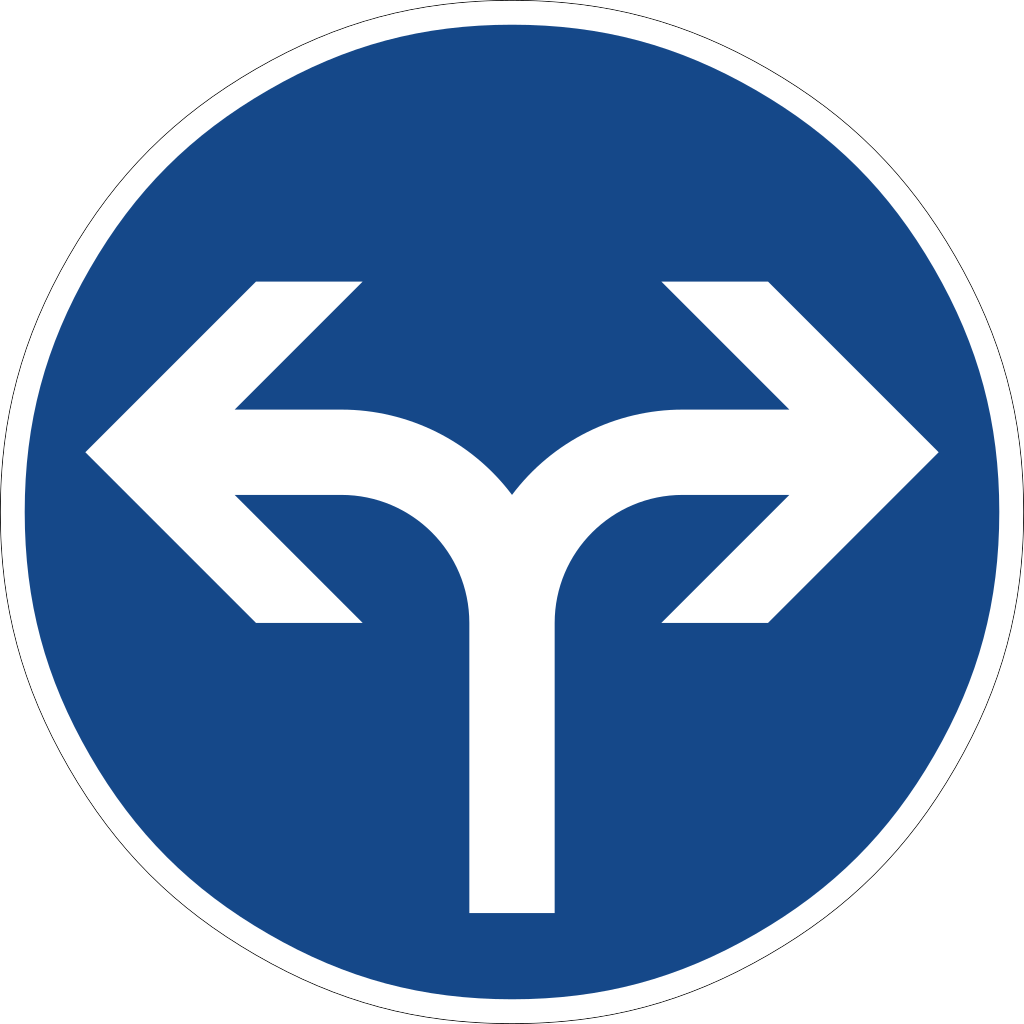
82. Turning right mandatory
This traffic sign indicates that turning right is mandatory at the junction ahead. Traffic must turn right and may not continue straight ahead or turn left.
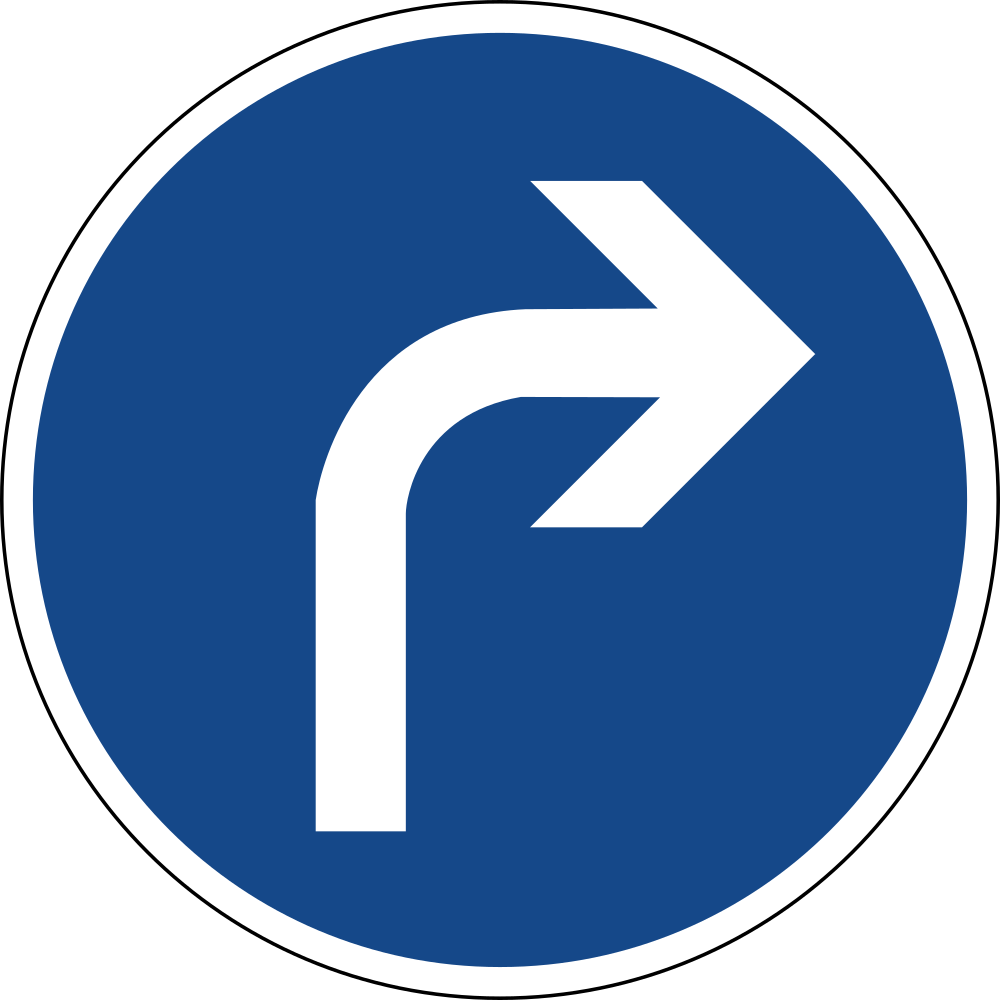
83. Pass obstacle on the left
This traffic sign indicates that traffic must pass an obstacle on the left. Keep to the left of the obstacle and follow any accompanying signs or road markings.
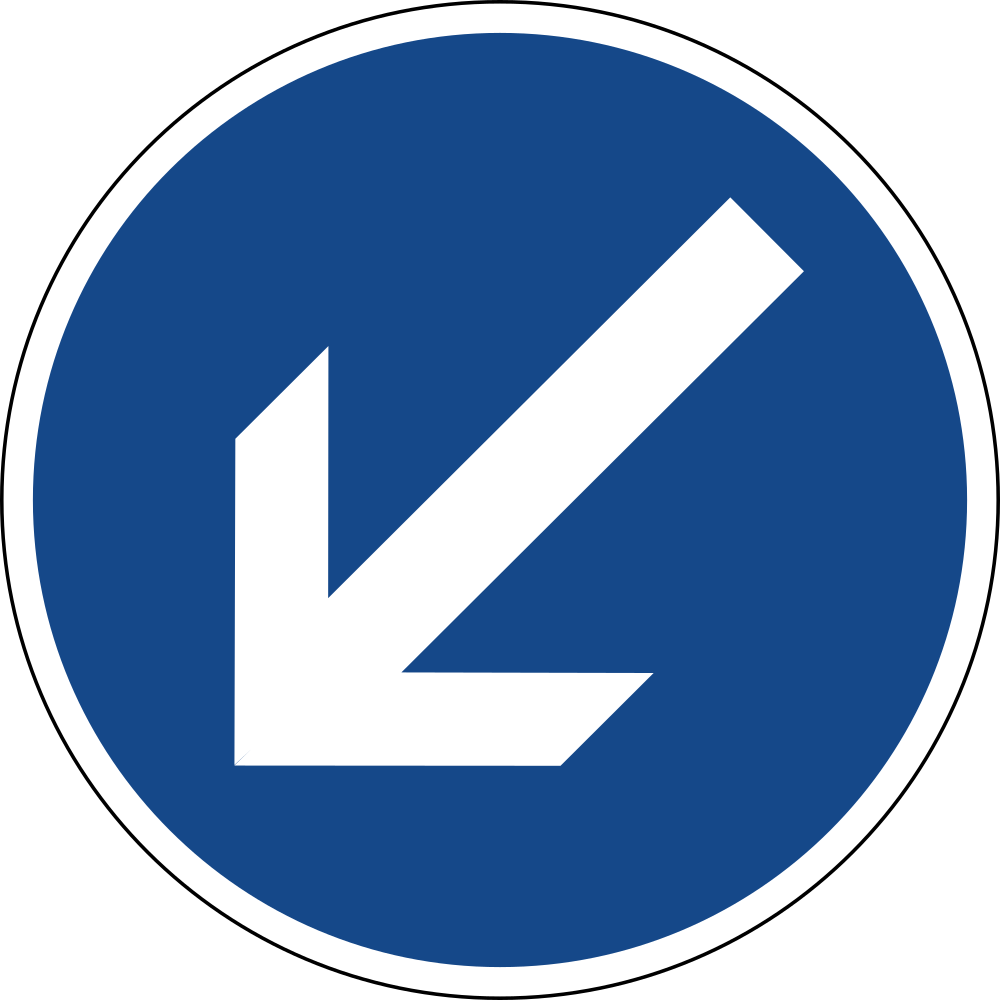
84. Pass obstacle on the right
This traffic sign indicates that traffic must pass an obstacle on the right. Keep to the right of the obstacle and follow any accompanying signs or road markings.
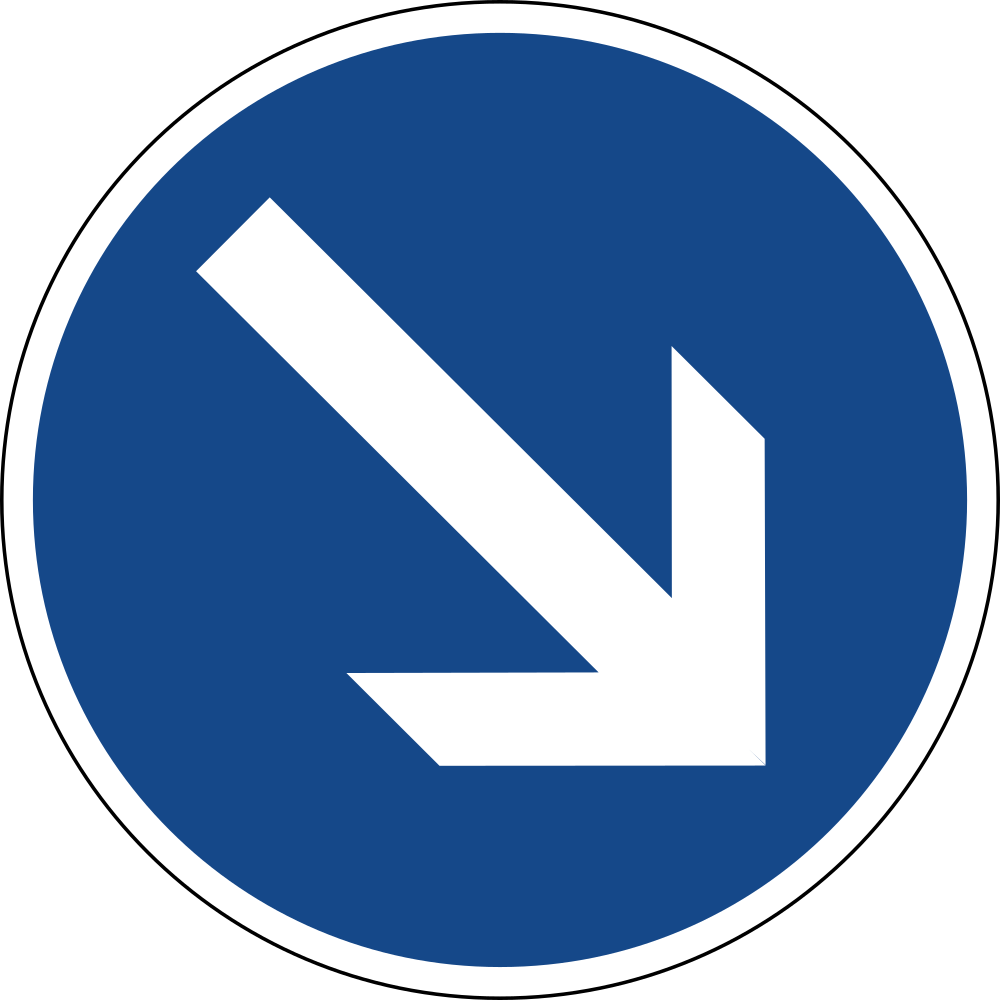
85. Driving straight ahead or turning left mandatory
This traffic sign indicates that traffic must continue straight ahead or turn left. One of the indicated directions must be followed; turning right is prohibited.
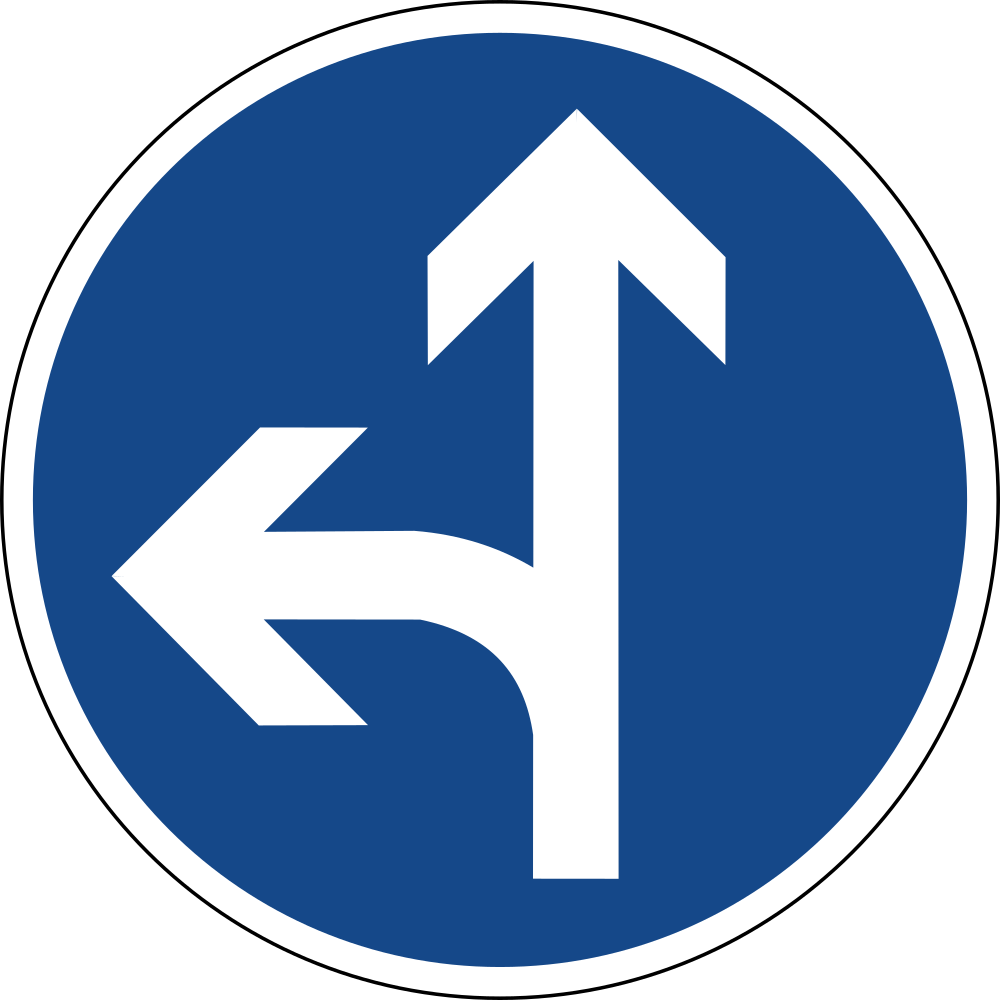
86. Driving straight ahead or turning right mandatory
This traffic sign indicates that traffic must continue straight ahead or turn right. One of the indicated directions must be followed; turning left is prohibited.
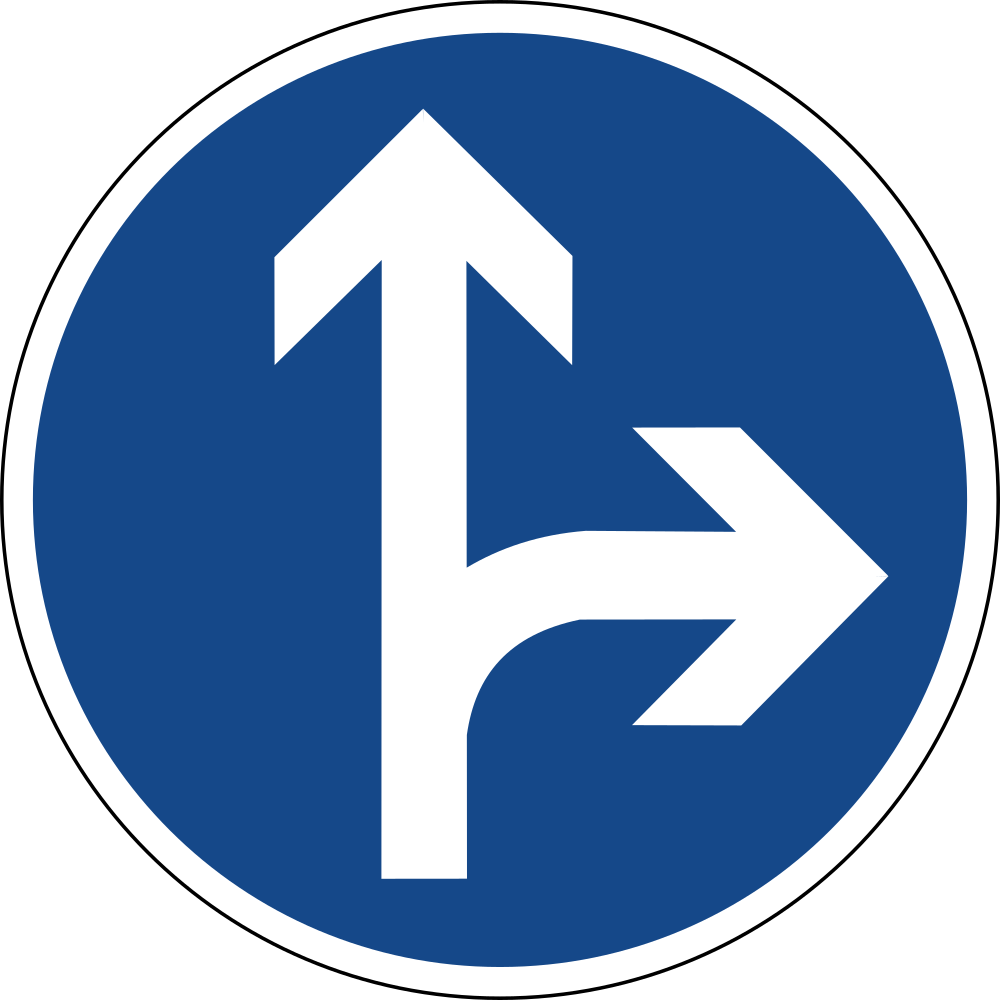
87. Mandatory left
This traffic sign indicates a mandatory direction to the left. Traffic must proceed to the left at the sign and may not continue straight ahead or to the right.
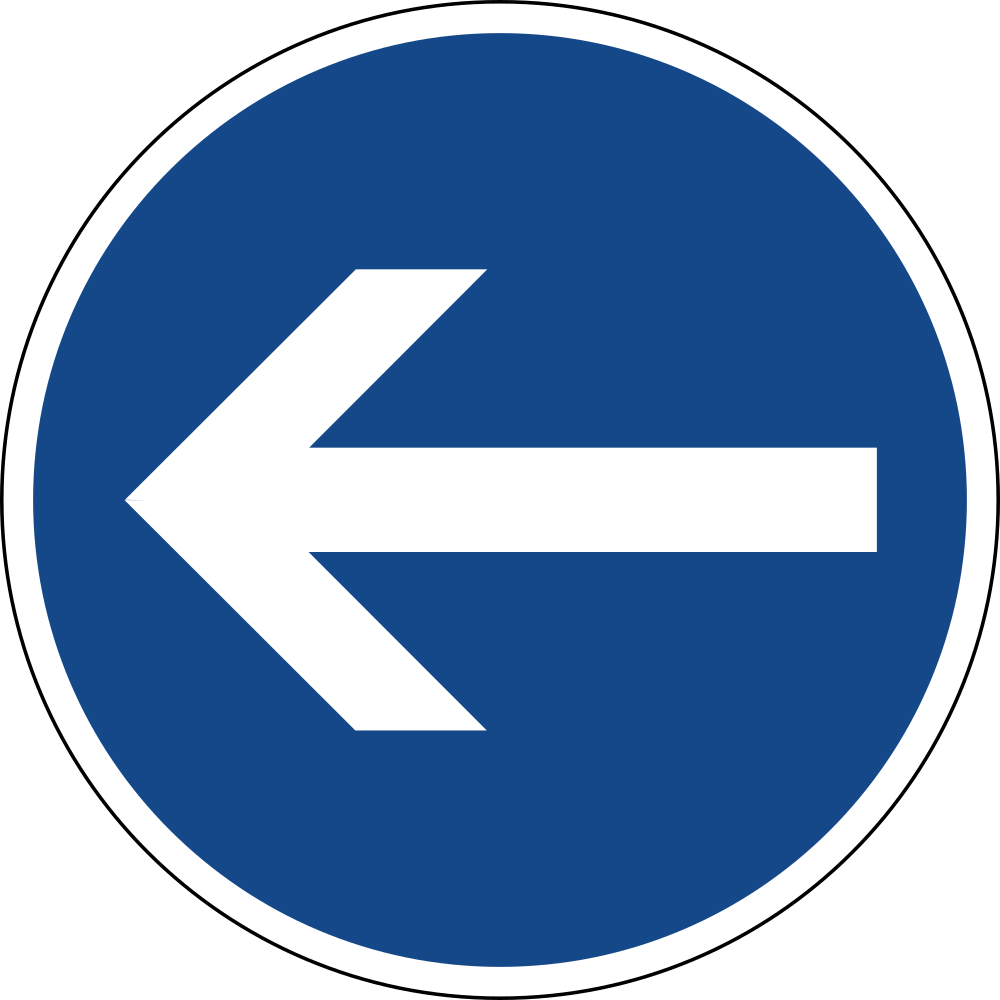
88. Mandatory right
This traffic sign indicates a mandatory direction to the right. Traffic must proceed to the right at the sign and may not continue straight ahead or to the left.
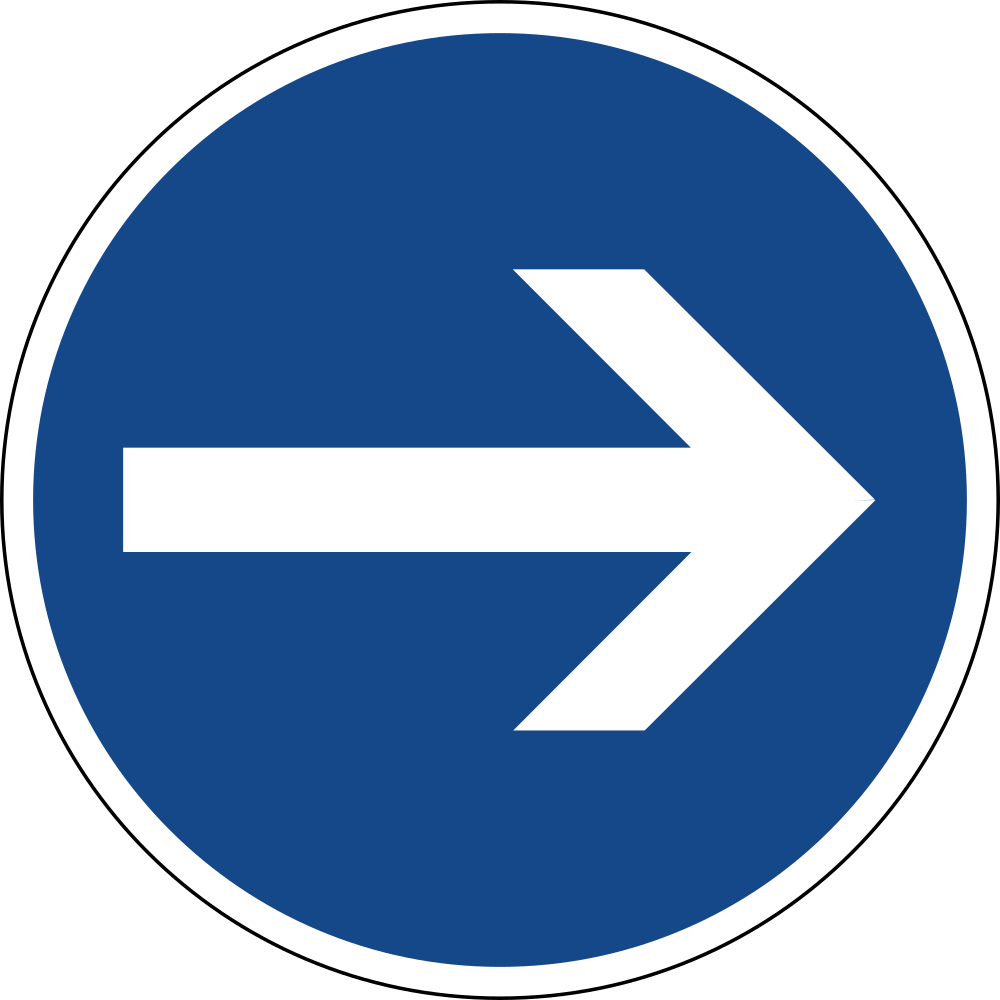
89. Driving straight ahead mandatory
This traffic sign indicates that driving straight ahead is mandatory. Traffic must continue straight ahead and may not turn left or right at the location to which the sign applies.
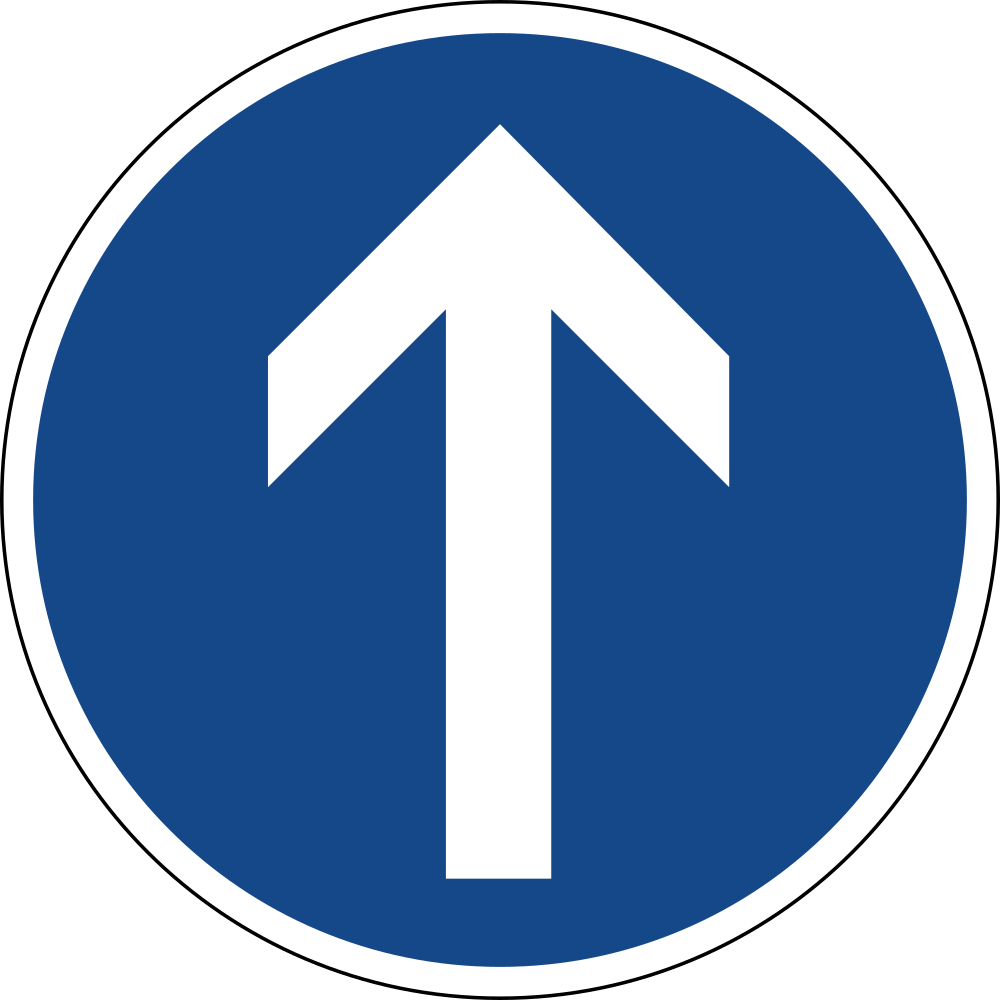
90. Mandatory path for pedestrians
This traffic sign indicates the start of a mandatory path for pedestrians. Pedestrians must use the designated path, while other road users may use it only where the applicable signs or local rules permit them to do so.
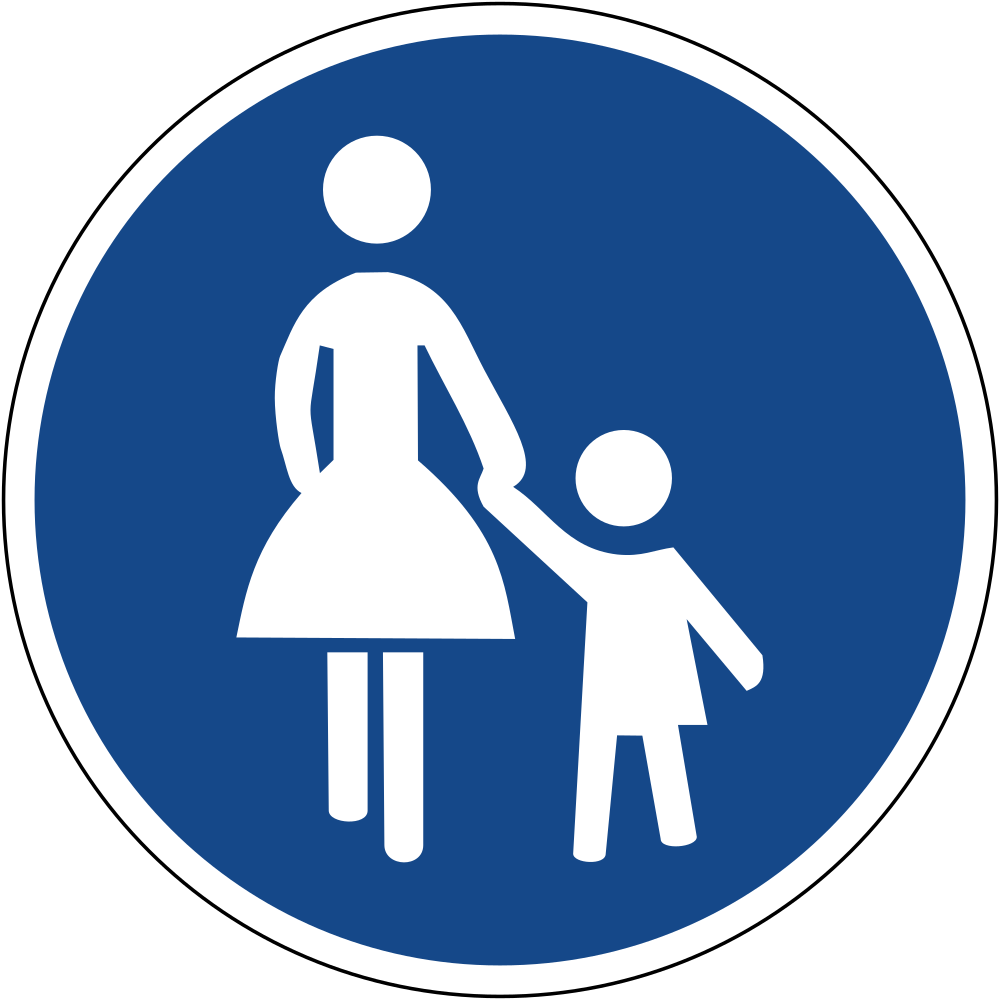
91. Mandatory path for cyclists
This traffic sign indicates a mandatory path for cyclists. Cyclists must use the designated path where the sign applies. Other road users may use the path only where the applicable signs or local rules permit them to do so.
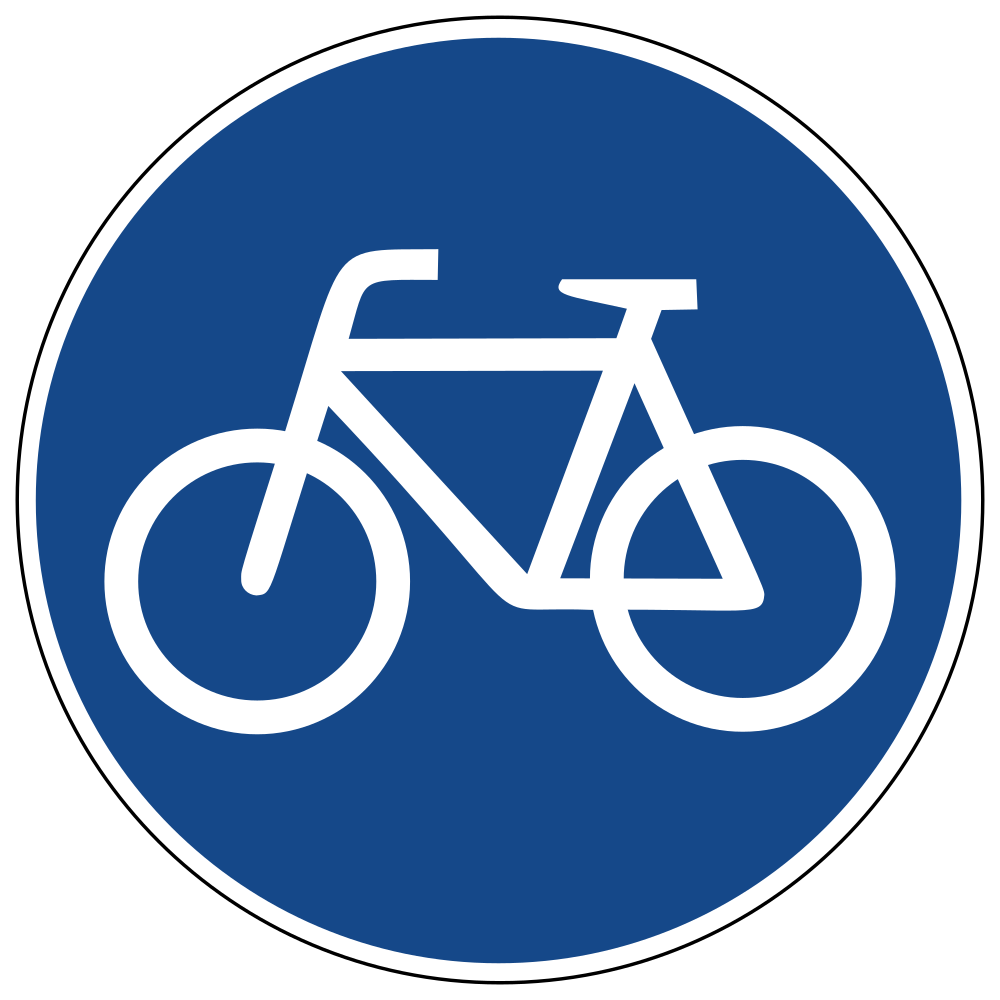
92. Mandatory path for equestrians
This traffic sign indicates a mandatory path for equestrians. Equestrians must use the designated path where the sign applies. Other road users may use it only where the applicable signs or local rules permit them to do so.
93. Mandatory lane for buses
This traffic sign indicates a mandatory lane for buses. Buses must use the designated lane where the sign applies. Other road users may use the lane only where the applicable signs or local rules permit them to do so.
94. Mandatory shared pedestrian and cycle path
This traffic sign indicates a mandatory shared path for pedestrians and cyclists. Pedestrians and cyclists must use the same designated path rather than separate sections. They must share the space safely and follow the applicable local rules.
95. Mandatory divided pedestrian and cycle path
This traffic sign indicates a mandatory divided path for pedestrians and cyclists. Pedestrians and cyclists must use the section designated for them. Other road users may use the path only where the applicable signs or local rules permit them to do so.
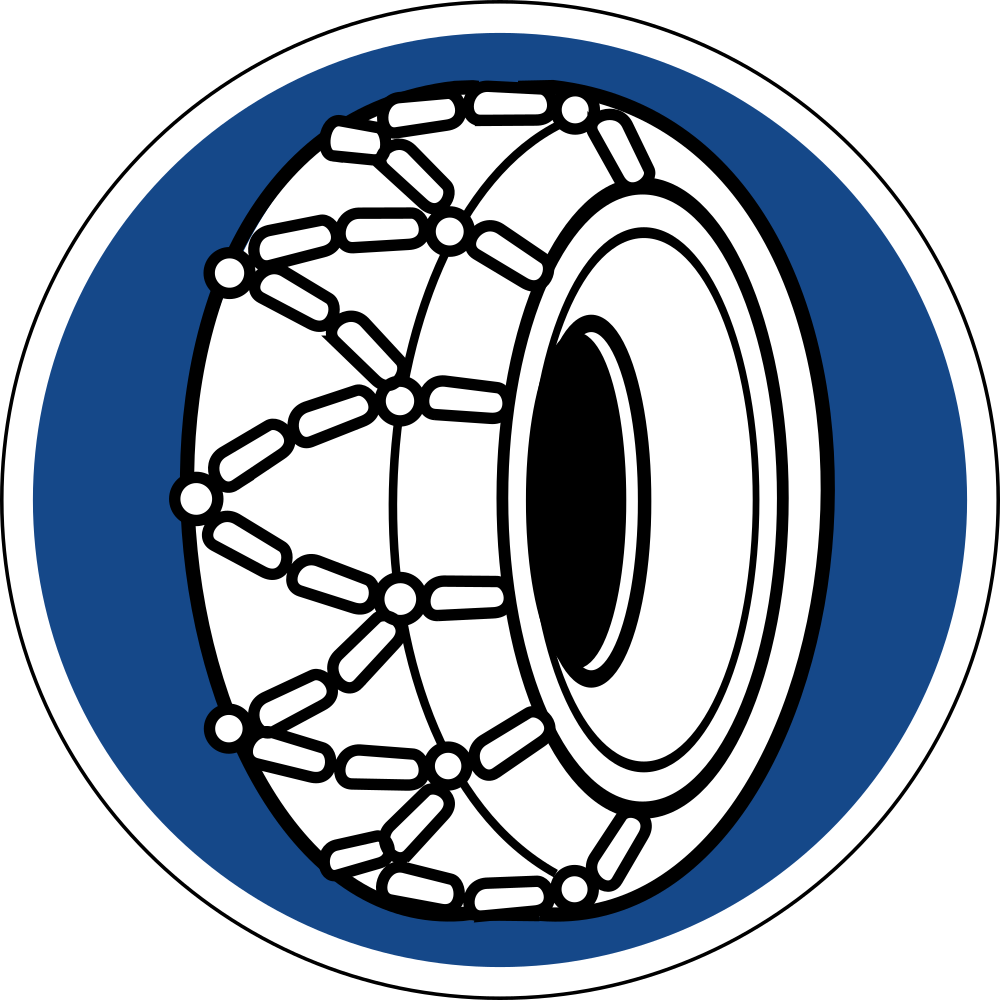
96. Snow chains mandatory
This traffic sign indicates that snow chains are mandatory. Vehicles covered by the sign must use snow chains from this point as required by the applicable rules. Follow any supplementary signs or local instructions specifying the affected vehicles, wheels or conditions.
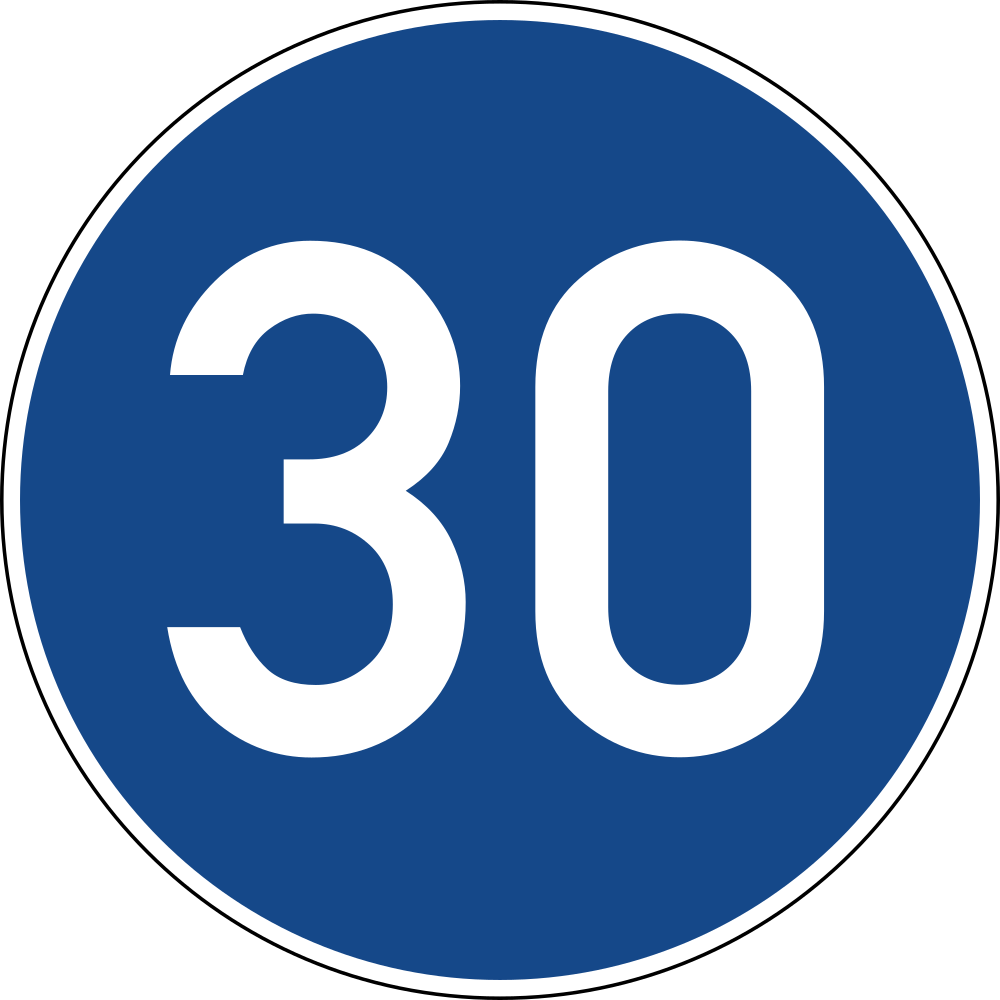
97. Start of a minimum speed
This traffic sign indicates the start of a minimum speed. Road users covered by the sign must travel at or above the indicated speed when conditions allow. Driving more slowly may still be necessary because of traffic, weather, road conditions or another safety-related reason.
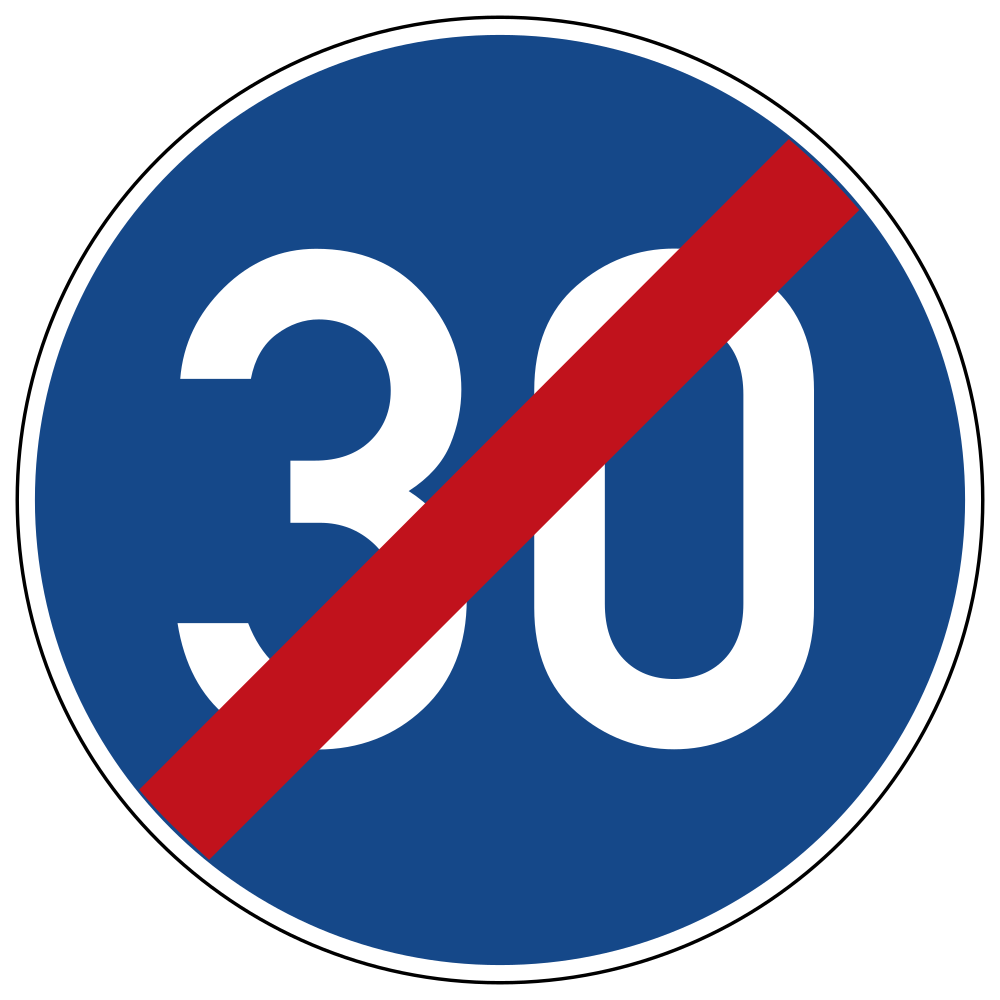
98. End of the minimum speed
This traffic sign indicates the end of the minimum speed. The previously indicated minimum speed no longer applies beyond this point. Continue to follow any other posted speed requirements and the applicable traffic rules.
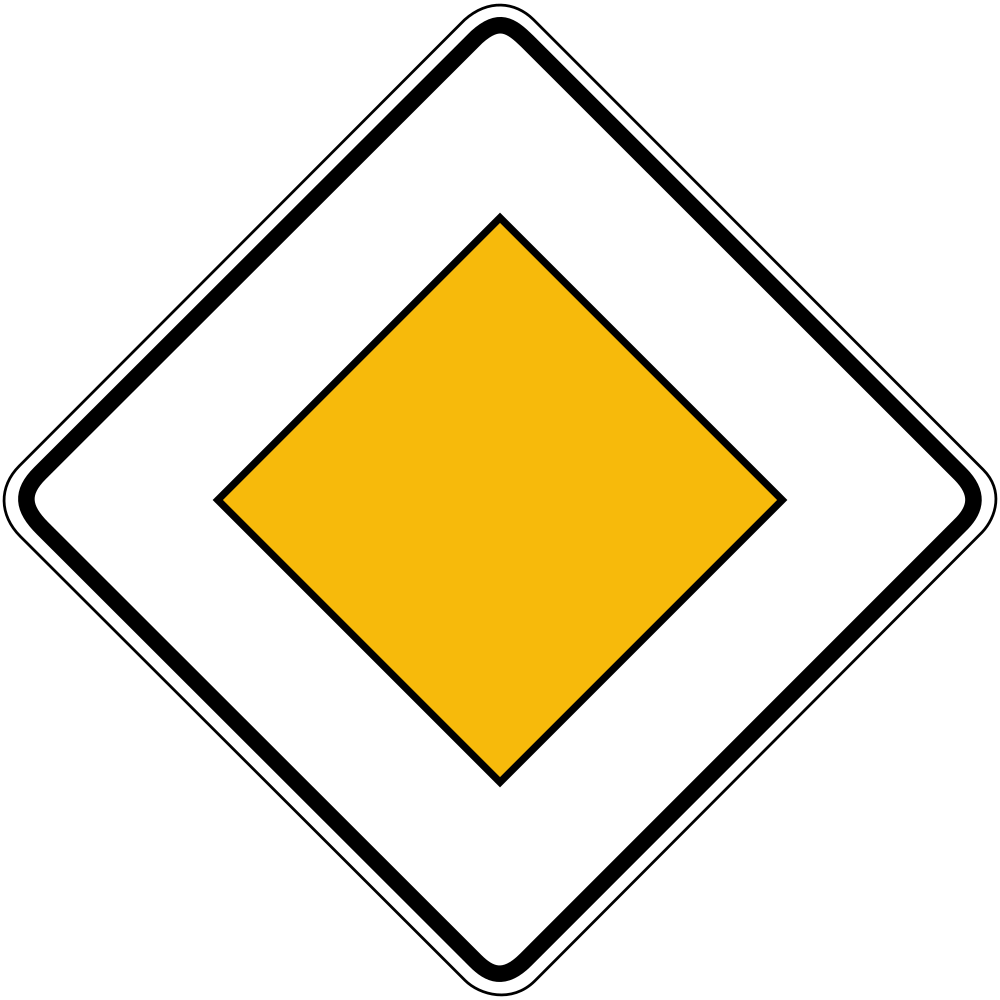
99. Start of a priority road
This traffic sign indicates the start of a priority road. Drivers on the priority road normally have priority over traffic entering from side roads until the priority road ends, unless traffic lights, other signs or applicable traffic rules indicate otherwise.
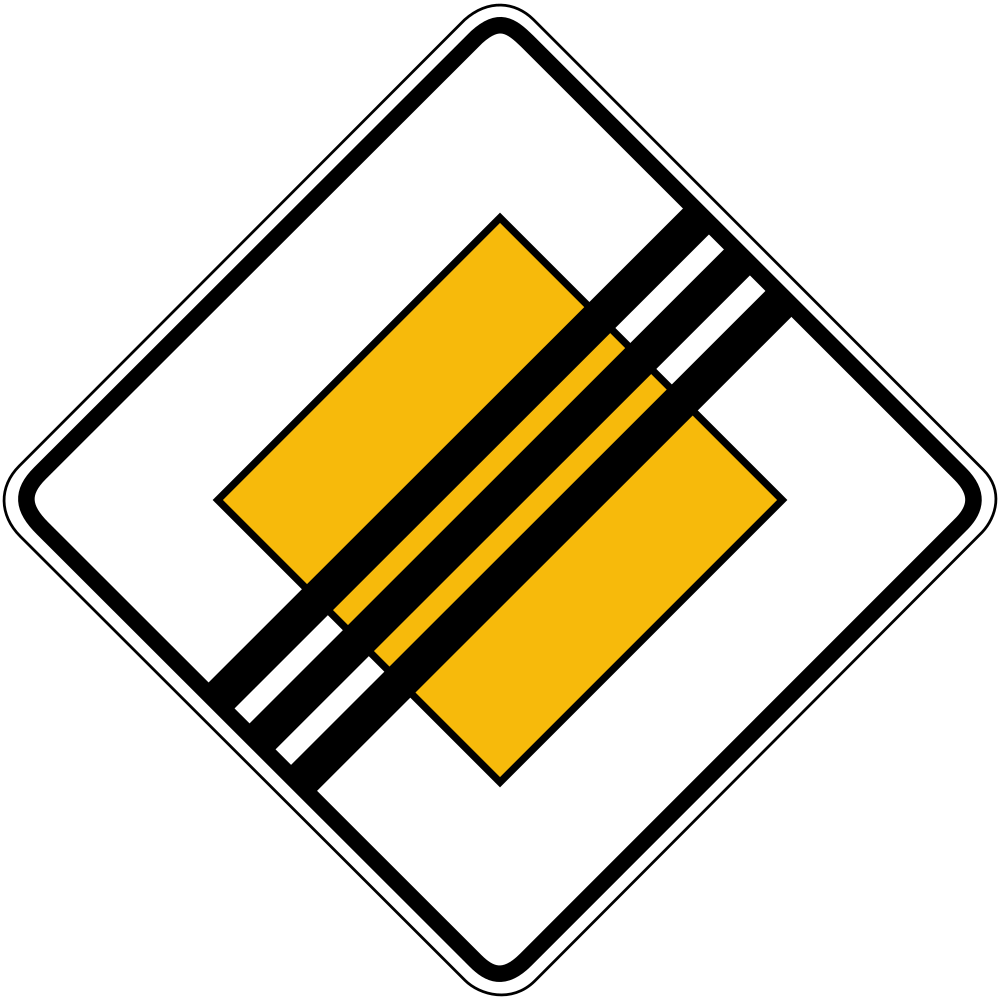
100. End of the priority road
This traffic sign indicates the end of the priority road. The road no longer has continuing priority at subsequent intersections. Follow the applicable traffic lights, priority signs and default priority rules.