


Additional signsItaly
 Traffic rules
 Italy
 Priority signs
 Warning signs
 Prohibitory signs
 Mandatory signs
 Information signs
 Additional signs
An additional sign is a traffic sign placed directly below another sign to provide extra information or clarify how the main sign should be understood. It can specify conditions such as distance, time periods, road users affected, directions, or special circumstances. Additional signs do not create new rules by themselves but modify, limit, or explain the meaning of the sign above them so drivers can apply the rule correctly in that specific situation.

















Why must I read a supplementary plate?
It can qualify the main sign by identifying an exception, a time period or the distance to a restriction. Read the complete assembly rather than applying only the main symbol.

1. For cleaning service vehicles
This supplementary sign indicates that the main traffic sign applies specifically to cleaning service vehicles. The vehicles covered depend on the applicable local definitions.
English • Model II.6/q1 • Mechanical street cleaning. Indicates mechanical carriageway cleaning on the signposted section. Used with the no-parking sign. The plate supplements the main sign and must be read together with it.
Italiano • Modello II.6/q1 • Pulizia meccanica della strada. Indica operazioni di pulizia meccanica della carreggiata sul tratto segnalato. È abbinato al segnale di divieto di sosta. Il pannello integra il segnale principale e deve essere interpretato insieme a esso.
Sources
🔗 Commons.wikimedia.org
🔗 Normattiva.it • D.P.R. 495/1992 • testo vigente • art. 83, comma 10
🔗 Gazzettaufficiale.it • Gazzetta Ufficiale • Modello II.6/q1 • pagina 242
Image via Commons.wikimedia.org
Gigillo83 • Public domain • Source revision 2011-06-23. Wikimedia original unmodified.
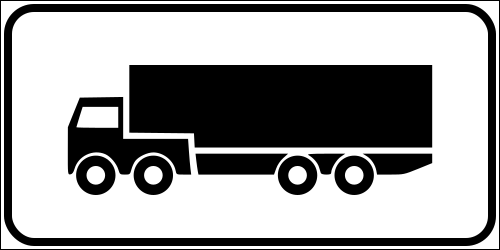
2. For articulated trucks
This supplementary sign indicates that the main traffic sign applies specifically to articulated trucks. The vehicle combinations covered depend on the applicable local definitions.
English • Model II.4/a • Restriction — articulated lorries. Limits the main sign’s requirement to the vehicle category shown, in this case articulated lorries. The plate supplements the main sign and must be read together with it.
Italiano • Modello II.4/a • Limitazione — autoarticolati. Limita la prescrizione del segnale principale alla categoria di veicoli rappresentata, in questo caso gli autoarticolati. Il pannello integra il segnale principale e deve essere interpretato insieme a esso.
Sources
🔗 Commons.wikimedia.org
🔗 Normattiva.it • D.P.R. 495/1992 • testo vigente • art. 83, comma 7
🔗 Gazzettaufficiale.it • Gazzetta Ufficiale • Modello II.4/a • pagina 238
SVG source: Gigillo83 • Public domain • Original revision 2024-01-07. Wikimedia original unmodified.
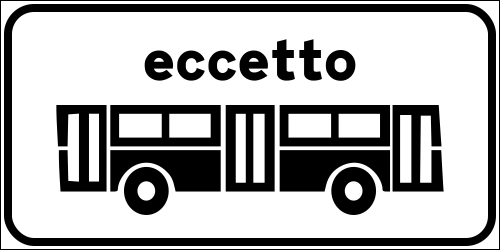
3. Buses allowed
This supplementary sign indicates that buses are allowed where the main traffic sign would otherwise restrict their access or use. The bus categories covered depend on the applicable local definitions.
English • Model II.4/b • Exception — buses or coaches. The word ‘except’ exempts the buses or coaches shown from the main sign's requirement. The plate supplements the main sign and must be read together with it.
Italiano • Modello II.4/b • Eccezione — autobus. La parola «eccetto» concede agli autobus rappresentati una deroga alla prescrizione del segnale principale. Il pannello integra il segnale principale e deve essere interpretato insieme a esso.
Sources
🔗 Commons.wikimedia.org
🔗 Normattiva.it • D.P.R. 495/1992 • testo vigente • art. 83, comma 7
🔗 Gazzettaufficiale.it • Gazzetta Ufficiale • Modello II.4/b • pagina 238
SVG source: Gigillo83 • Public domain • Original revision 2024-01-07. Wikimedia original unmodified.
4. To the left
This supplementary sign indicates that the main traffic sign applies in the direction shown by the arrow, to the left.
English • Model II.5/b1 • Beginning. Marks the beginning of the requirement, danger or information in the arrow's direction. The plate supplements the main sign and must be read together with it.
Italiano • Modello II.5/b1 • Inizio. Indica l’inizio della prescrizione, del pericolo o dell’indicazione nel senso mostrato dalla freccia. Il pannello integra il segnale principale e deve essere interpretato insieme a esso.
Sources
🔗 Commons.wikimedia.org
🔗 Normattiva.it • D.P.R. 495/1992 • testo vigente • art. 83, comma 8
🔗 Gazzettaufficiale.it • Gazzetta Ufficiale • Modello II.5/b1 • pagina 238
Image via Commons.wikimedia.org
Original: Ministero dei Lavori Pubblici Vectorization: Arbalete • CC BY-SA 4.0 • Source revision 2024-01-10. Wikimedia original unmodified.
5. To the left or right
This supplementary sign indicates that the main traffic sign applies in both directions shown by the arrows, to the left and right.
English • Model II.5/b2 • Continuation. Indicates continuation of the requirement, danger or information. The plate supplements the main sign and must be read together with it.
Italiano • Modello II.5/b2 • Continuazione. Indica la continuazione della prescrizione, del pericolo o dell’indicazione. Il pannello integra il segnale principale e deve essere interpretato insieme a esso.
Sources
🔗 Commons.wikimedia.org
🔗 Normattiva.it • D.P.R. 495/1992 • testo vigente • art. 83, comma 8
🔗 Gazzettaufficiale.it • Gazzetta Ufficiale • Modello II.5/b2 • pagina 238
Image via Commons.wikimedia.org
Original: Ministero dei Lavori Pubblici Vectorization: Arbalete • CC BY-SA 4.0 • Source revision 2024-01-10. Wikimedia original unmodified.
6. To the right
This supplementary sign indicates that the main traffic sign applies in the direction shown by the arrow, to the right.
English • Model II.5/b3 • End. Marks where the requirement, danger or information ends. The plate supplements the main sign and must be read together with it.
Italiano • Modello II.5/b3 • Fine. Indica il punto in cui termina la prescrizione, il pericolo o l’indicazione. Il pannello integra il segnale principale e deve essere interpretato insieme a esso.
Sources
🔗 Commons.wikimedia.org
🔗 Normattiva.it • D.P.R. 495/1992 • testo vigente • art. 83, comma 8
🔗 Gazzettaufficiale.it • Gazzetta Ufficiale • Modello II.5/b3 • pagina 238
Image via Commons.wikimedia.org
Original: Ministero dei Lavori Pubblici Vectorization: Arbalete • CC BY-SA 4.0 • Source revision 2024-01-10. Wikimedia original unmodified.
7. Start of regulation
This supplementary sign indicates the start of the regulation shown by the main traffic sign. The regulation begins at this point.
English • Model II.5/a1 • Beginning. Marks the beginning of the requirement, danger or information. The plate supplements the main sign and must be read together with it.
Italiano • Modello II.5/a1 • Inizio. Indica l’inizio della prescrizione, del pericolo o dell’indicazione. Il pannello integra il segnale principale e deve essere interpretato insieme a esso.
Sources
🔗 Commons.wikimedia.org
🔗 Normattiva.it • D.P.R. 495/1992 • testo vigente • art. 83, comma 8
🔗 Gazzettaufficiale.it • Gazzetta Ufficiale • Modello II.5/a1 • pagina 238
SVG source: Original: Ministero dei Lavori Pubblici Vectorization: Arbalete • Public domain • Original revision 2024-01-10. Wikimedia original unmodified.
8. Continuation of regulation
This supplementary sign indicates the continuation or reminder of the regulation shown by the main traffic sign.
English • Model II.5/a2 • Continuation. Indicates continuation of the requirement, danger or information. The plate supplements the main sign and must be read together with it.
Italiano • Modello II.5/a2 • Continuazione. Indica la continuazione della prescrizione, del pericolo o dell’indicazione. Il pannello integra il segnale principale e deve essere interpretato insieme a esso.
Sources
🔗 Commons.wikimedia.org
🔗 Normattiva.it • D.P.R. 495/1992 • testo vigente • art. 83, comma 8
🔗 Gazzettaufficiale.it • Gazzetta Ufficiale • Modello II.5/a2 • pagina 238
SVG source: Original: Ministero dei Lavori Pubblici Vectorization: Arbalete • Public domain • Original revision 2024-01-10. Wikimedia original unmodified.
9. End of regulation
This supplementary sign indicates the end of the regulation shown by the main traffic sign. The regulation ends at this point.
English • Model II.5/a3 • End. Marks where the requirement, danger or information ends. The plate supplements the main sign and must be read together with it.
Italiano • Modello II.5/a3 • Fine. Indica il punto in cui termina la prescrizione, il pericolo o l’indicazione. Il pannello integra il segnale principale e deve essere interpretato insieme a esso.
Sources
🔗 Commons.wikimedia.org
🔗 Normattiva.it • D.P.R. 495/1992 • testo vigente • art. 83, comma 8
🔗 Gazzettaufficiale.it • Gazzetta Ufficiale • Modello II.5/a3 • pagina 238
SVG source: Original: Ministero dei Lavori Pubblici Vectorization: Arbalete • Public domain • Original revision 2024-01-10. Wikimedia original unmodified.
10. Applies to the indicated lane
This supplementary sign indicates that the main traffic sign applies specifically to the indicated traffic lane.
English • Model II.6/n • Lane sign. The downward arrow identifies the lane to which the sign above applies. The plate supplements the main sign and must be read together with it.
Italiano • Modello II.6/n • Segnale di corsia. La freccia rivolta verso il basso indica la corsia alla quale si riferisce il segnale sovrastante. Il pannello integra il segnale principale e deve essere interpretato insieme a esso.
Sources
🔗 Commons.wikimedia.org
🔗 Normattiva.it • D.P.R. 495/1992 • testo vigente • art. 83, comma 10
🔗 Gazzettaufficiale.it • Gazzetta Ufficiale • Modello II.6/n • pagina 241
Image via Commons.wikimedia.org
Original: Ministero dei Lavori Pubblici Vectorization: Arbalete • CC BY-SA 4.0 • Source revision 2024-07-12. Wikimedia original unmodified.
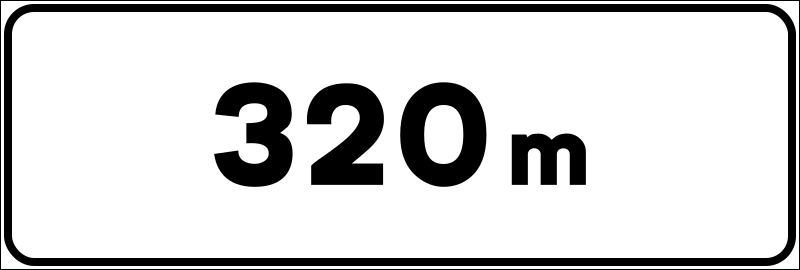
11. metres ahead
This supplementary sign indicates the distance from the main traffic sign to the point where the indicated danger, regulation or information begins. The distance is shown in metres.
English • Model II.1/a • Distance. Shows the distance in metres from the sign to the danger point, the beginning of the requirement or the indicated point. Example: 320 m. The plate supplements the main sign and must be read together with it.
Italiano • Modello II.1/a • Distanza. Indica la distanza in metri tra il segnale e il punto pericoloso, l’inizio della prescrizione o il punto indicato. Nell’esempio: 320 m. Il pannello integra il segnale principale e deve essere interpretato insieme a esso.
Sources
🔗 Commons.wikimedia.org (F l a n k e r • CC BY-SA 3.0)
🔗 Normattiva.it • D.P.R. 495/1992 • testo vigente • art. 83, comma 4
🔗 Gazzettaufficiale.it • Gazzetta Ufficiale • Modello II.1/a • pagina 237
Image via Commons.wikimedia.org
F l a n k e r • CC BY-SA 3.0 • Source revision 2024-01-07. Wikimedia original unmodified.
12. kilometres ahead
This supplementary sign indicates the distance from the main traffic sign to the point where the indicated danger, regulation or information begins. The distance is shown in kilometres.
English • Model II.1/b • Distance. Shows the distance in kilometres from the sign to the danger point, the beginning of the requirement or the indicated point. Example: 3.8 km. The plate supplements the main sign and must be read together with it.
Italiano • Modello II.1/b • Distanza. Indica la distanza in chilometri tra il segnale e il punto pericoloso, l’inizio della prescrizione o il punto indicato. Nell’esempio: 3,8 km. Il pannello integra il segnale principale e deve essere interpretato insieme a esso.
Sources
🔗 Commons.wikimedia.org
🔗 Normattiva.it • D.P.R. 495/1992 • testo vigente • art. 83, comma 4
🔗 Gazzettaufficiale.it • Gazzetta Ufficiale • Modello II.1/b • pagina 237
Image via Commons.wikimedia.org
Gigillo83 • Public domain • Source revision 2024-01-07. Wikimedia original unmodified.
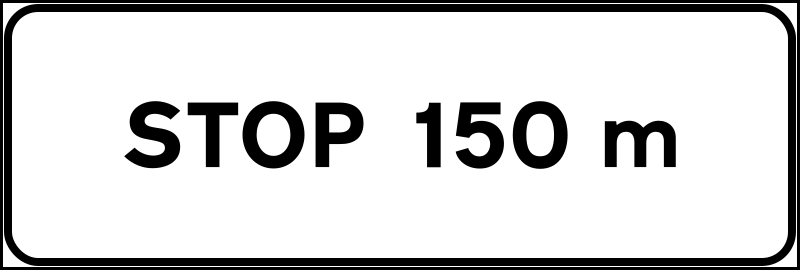
13. Stop metres ahead
This supplementary sign announces a STOP sign at the indicated distance ahead. The displayed value shows the distance to the upcoming STOP sign.
English • Traffic sign II.39 / Model II.1 • Advance warning to stop and give way. Used with a give-way sign to warn of a STOP sign and show the distance to its stop line; example: 150 m. The plate supplements the main sign and must be read together with it.
Italiano • Figura II.39 / Modello II.1 • Preavviso di fermarsi e dare precedenza. Abbinato al segnale di dare precedenza, preavvisa un segnale STOP e indica la distanza dalla sua striscia di arresto; nell’esempio 150 m. Il pannello integra il segnale principale e deve essere interpretato insieme a esso.
Sources
🔗 Commons.wikimedia.org (F l a n k e r • CC BY-SA 3.0)
🔗 Normattiva.it • D.P.R. 495/1992 • testo vigente • art. 108, comma 1, 3
🔗 Gazzettaufficiale.it • Gazzetta Ufficiale • Figura II.39 / Modello II.1 • pagina 256
Image via Commons.wikimedia.org
F l a n k e r • CC BY-SA 3.0 • Source revision 2013-07-28. Wikimedia original unmodified.
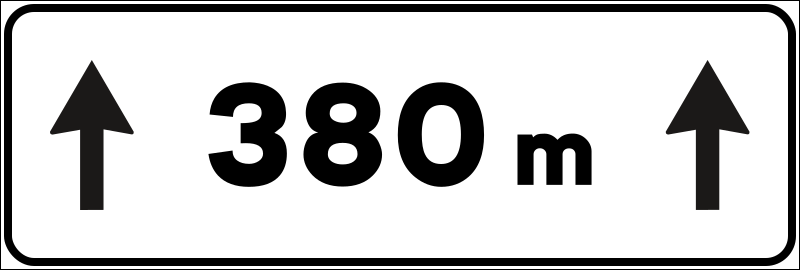
14. For metres
This supplementary sign indicates the length of the section to which the main traffic sign applies. The length is shown in metres.
English • Model II.2/a • Length. Shows in metres the length of the hazardous or regulated section. Example: 380 m. The plate supplements the main sign and must be read together with it.
Italiano • Modello II.2/a • Estesa. Indica in metri la lunghezza del tratto pericoloso o soggetto alla prescrizione. Nell’esempio: 380 m. Il pannello integra il segnale principale e deve essere interpretato insieme a esso.
Sources
🔗 Commons.wikimedia.org (F l a n k e r • CC BY-SA 3.0)
🔗 Normattiva.it • D.P.R. 495/1992 • testo vigente • art. 83, comma 5
🔗 Gazzettaufficiale.it • Gazzetta Ufficiale • Modello II.2/a • pagina 237
Image via Commons.wikimedia.org
F l a n k e r • CC BY-SA 3.0 • Source revision 2024-01-07. Wikimedia original unmodified.
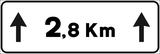
15. For kilometres
This supplementary sign indicates the length of the section to which the main traffic sign applies. The length is shown in kilometres.
English • Model II.2/b • Length. Shows in kilometres the length of the hazardous or regulated section. Example: 2.8 km. The plate supplements the main sign and must be read together with it.
Italiano • Modello II.2/b • Estesa. Indica in chilometri la lunghezza del tratto pericoloso o soggetto alla prescrizione. Nell’esempio: 2,8 km. Il pannello integra il segnale principale e deve essere interpretato insieme a esso.
Sources
🔗 Commons.wikimedia.org
🔗 Normattiva.it • D.P.R. 495/1992 • testo vigente • art. 83, comma 5
🔗 Gazzettaufficiale.it • Gazzetta Ufficiale • Modello II.2/b • pagina 237
Image via Commons.wikimedia.org
Gigillo83 • Public domain • Source revision 2024-01-07. Wikimedia original unmodified.
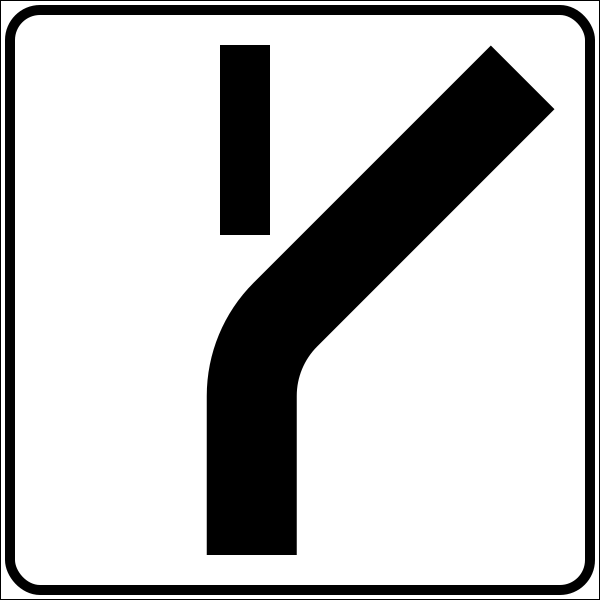
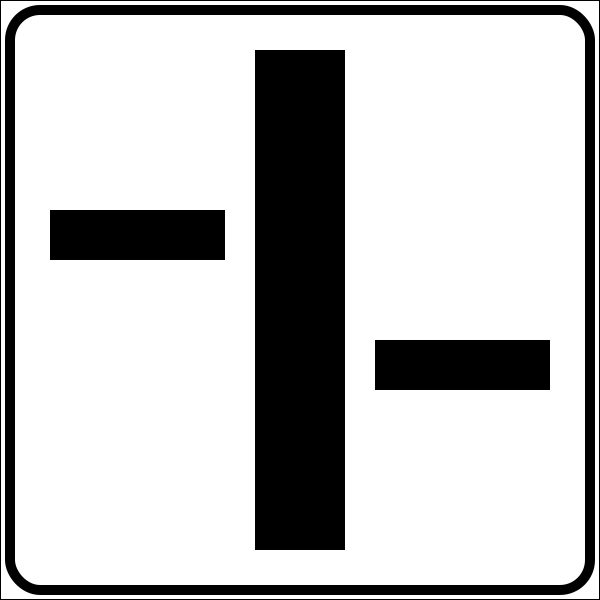
16. Junction shape
This supplementary sign shows the shape or layout of the upcoming junction.
English • Model II.7 • Course of the priority road. The thicker line represents the priority road; narrower branches represent non-priority roads. Read it together with the priority sign. The plate supplements the main sign and must be read together with it.
Italiano • Modello II.7 • Andamento della strada principale. La striscia più larga rappresenta la strada con precedenza; i rami più stretti rappresentano le strade subordinate. Va interpretato insieme al segnale di precedenza. Il pannello integra il segnale principale e deve essere interpretato insieme a esso.
Sources
🔗 Commons.wikimedia.org
🔗 Normattiva.it • D.P.R. 495/1992 • testo vigente • art. 83, comma 11
🔗 Gazzettaufficiale.it • Gazzetta Ufficiale • Modello II.7 • pagina 243
SVG source: Original: Ministero dei Lavori Pubblici Vectorization: Arbalete • Public domain • Original revision 2024-07-12. Wikimedia original unmodified.
17. Junction shape
This supplementary sign shows the shape or layout of the upcoming junction.
English • Model II.7 • Course of the priority road. The thicker line represents the priority road; narrower branches represent non-priority roads. Read it together with the priority sign. The plate supplements the main sign and must be read together with it.
Italiano • Modello II.7 • Andamento della strada principale. La striscia più larga rappresenta la strada con precedenza; i rami più stretti rappresentano le strade subordinate. Va interpretato insieme al segnale di precedenza. Il pannello integra il segnale principale e deve essere interpretato insieme a esso.
Sources
🔗 Commons.wikimedia.org
🔗 Normattiva.it • D.P.R. 495/1992 • testo vigente • art. 83, comma 11
🔗 Gazzettaufficiale.it • Gazzetta Ufficiale • Modello II.7 • pagina 243
SVG source: Original: Ministero dei Lavori Pubblici Vectorization: Arbalete • Public domain • Original revision 2024-07-12. Wikimedia original unmodified.
18. Junction shape
This supplementary sign shows the shape or layout of the upcoming junction.
English • Model II.7 • Course of the priority road. The thicker line represents the priority road; narrower branches represent non-priority roads. Read it together with the priority sign. The plate supplements the main sign and must be read together with it.
Italiano • Modello II.7 • Andamento della strada principale. La striscia più larga rappresenta la strada con precedenza; i rami più stretti rappresentano le strade subordinate. Va interpretato insieme al segnale di precedenza. Il pannello integra il segnale principale e deve essere interpretato insieme a esso.
Sources
🔗 Commons.wikimedia.org
🔗 Normattiva.it • D.P.R. 495/1992 • testo vigente • art. 83, comma 11
🔗 Gazzettaufficiale.it • Gazzetta Ufficiale • Modello II.7 • pagina 243
SVG source: Original: Ministero dei Lavori Pubblici Vectorization: Arbalete • Public domain • Original revision 2024-07-12. Wikimedia original unmodified.
19. Junction shape
This supplementary sign shows the shape or layout of the upcoming junction.
English • Model II.7 • Course of the priority road. The thicker line represents the priority road; narrower branches represent non-priority roads. Read it together with the priority sign. The plate supplements the main sign and must be read together with it.
Italiano • Modello II.7 • Andamento della strada principale. La striscia più larga rappresenta la strada con precedenza; i rami più stretti rappresentano le strade subordinate. Va interpretato insieme al segnale di precedenza. Il pannello integra il segnale principale e deve essere interpretato insieme a esso.
Sources
🔗 Commons.wikimedia.org
🔗 Normattiva.it • D.P.R. 495/1992 • testo vigente • art. 83, comma 11
🔗 Gazzettaufficiale.it • Gazzetta Ufficiale • Modello II.7 • pagina 243
SVG source: Original: Ministero dei Lavori Pubblici Vectorization: Arbalete • Public domain • Original revision 2024-07-12. Wikimedia original unmodified.
20. Junction shape
This supplementary sign shows the shape or layout of the upcoming junction.
English • Model II.7 • Course of the priority road. The thicker line represents the priority road; narrower branches represent non-priority roads. Read it together with the priority sign. The plate supplements the main sign and must be read together with it.
Italiano • Modello II.7 • Andamento della strada principale. La striscia più larga rappresenta la strada con precedenza; i rami più stretti rappresentano le strade subordinate. Va interpretato insieme al segnale di precedenza. Il pannello integra il segnale principale e deve essere interpretato insieme a esso.
Sources
🔗 Commons.wikimedia.org
🔗 Normattiva.it • D.P.R. 495/1992 • testo vigente • art. 83, comma 11
🔗 Gazzettaufficiale.it • Gazzetta Ufficiale • Modello II.7 • pagina 243
SVG source: Original: Ministero dei Lavori Pubblici Vectorization: Arbalete • Public domain • Original revision 2024-07-12. Wikimedia original unmodified.
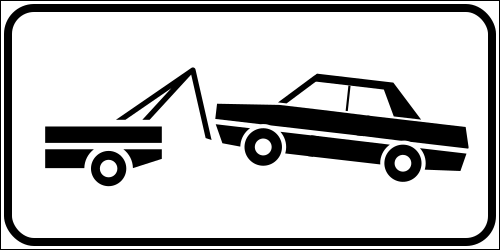
21. Illegally parked vehicles may be towed
This supplementary sign warns that illegally parked vehicles may be towed away.
English • Model II.6/m • Tow-away zone. Indicates that parking causes a serious obstruction or danger and the vehicle may be removed. Applies during the same hours as the prohibition sign. The plate supplements the main sign and must be read together with it.
Italiano • Modello II.6/m • Zona rimozione coatta. Indica che la sosta costituisce grave intralcio o pericolo e che il veicolo può essere rimosso. Ha la stessa validità oraria del segnale di divieto. Il pannello integra il segnale principale e deve essere interpretato insieme a esso.
Sources
🔗 Commons.wikimedia.org
🔗 Normattiva.it • D.P.R. 495/1992 • testo vigente • art. 83, comma 10
🔗 Gazzettaufficiale.it • Gazzetta Ufficiale • Modello II.6/m • pagina 241
Image via Commons.wikimedia.org
Original: Ministero dei Lavori Pubblici Vectorization: Arbalete • CC BY-SA 4.0 • Source revision 2024-07-12. Wikimedia original unmodified.
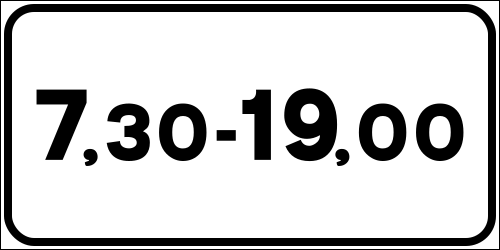
22. During the time shown
This supplementary sign indicates that the main traffic sign applies during the time shown.
English • Model II.3/b • Daily hours of application. Shows the hours when the requirement or danger applies each day; example: 7:30 to 19:00. The plate supplements the main sign and must be read together with it.
Italiano • Modello II.3/b • Validità oraria. Indica le ore in cui vale la prescrizione o il pericolo ogni giorno; nell’esempio dalle 7:30 alle 19:00. Il pannello integra il segnale principale e deve essere interpretato insieme a esso.
Sources
🔗 Commons.wikimedia.org
🔗 Normattiva.it • D.P.R. 495/1992 • testo vigente • art. 83, comma 6
🔗 Gazzettaufficiale.it • Gazzetta Ufficiale • Modello II.3/b • pagina 237
SVG source: Gigillo83 • Public domain • Original revision 2024-01-07. Wikimedia original unmodified.
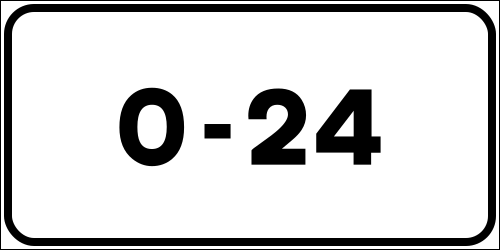
23. For the number of hours shown
This supplementary sign indicates that the main traffic sign applies for the number of hours shown.
English • Model II.3/a • Applies at all times. The indication 0–24 means that the requirement or danger applies throughout the day. The plate supplements the main sign and must be read together with it.
Italiano • Modello II.3/a • Validità permanente. L’indicazione 0–24 significa che la prescrizione o il pericolo vale durante l’intera giornata. Il pannello integra il segnale principale e deve essere interpretato insieme a esso.
Sources
🔗 Commons.wikimedia.org
🔗 Normattiva.it • D.P.R. 495/1992 • testo vigente • art. 83, comma 6
🔗 Gazzettaufficiale.it • Gazzetta Ufficiale • Modello II.3/a • pagina 237
SVG source: Gigillo83 • Public domain • Original revision 2024-01-07. Wikimedia original unmodified.
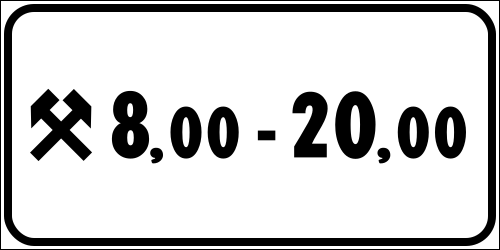
24. On working days during the time shown
This supplementary sign indicates that the main traffic sign applies on working days during the time shown.
English • Model II.3/d • Applies on working days. The hammer symbol limits application to working days during the hours shown; example: 8:00 to 20:00. The plate supplements the main sign and must be read together with it.
Italiano • Modello II.3/d • Validità nei giorni lavorativi. Il simbolo dei martelli limita la validità ai giorni lavorativi, nelle ore indicate; nell’esempio dalle 8:00 alle 20:00. Il pannello integra il segnale principale e deve essere interpretato insieme a esso.
Sources
🔗 Commons.wikimedia.org
🔗 Normattiva.it • D.P.R. 495/1992 • testo vigente • art. 83, comma 6
🔗 Gazzettaufficiale.it • Gazzetta Ufficiale • Modello II.3/d • pagina 237
SVG source: Gigillo83 • Public domain • Original revision 2024-01-07. Wikimedia original unmodified.
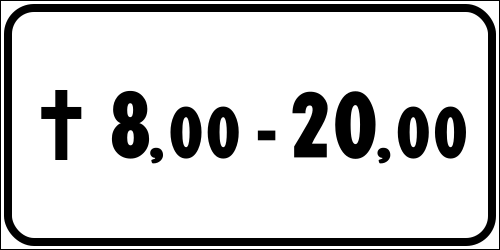
25. Public holidays during the time shown
This supplementary sign indicates that the main traffic sign applies on public holidays during the time shown.
English • Model II.3/c • Applies on public holidays. The cross limits application to public holidays during the hours shown; example: 8:00 to 20:00. The plate supplements the main sign and must be read together with it.
Italiano • Modello II.3/c • Validità nei giorni festivi. La croce limita la validità ai giorni festivi, nelle ore indicate; nell’esempio dalle 8:00 alle 20:00. Il pannello integra il segnale principale e deve essere interpretato insieme a esso.
Sources
🔗 Commons.wikimedia.org
🔗 Normattiva.it • D.P.R. 495/1992 • testo vigente • art. 83, comma 6
🔗 Gazzettaufficiale.it • Gazzetta Ufficiale • Modello II.3/c • pagina 237
SVG source: Gigillo83 • Public domain • Original revision 2024-01-07. Wikimedia original unmodified.
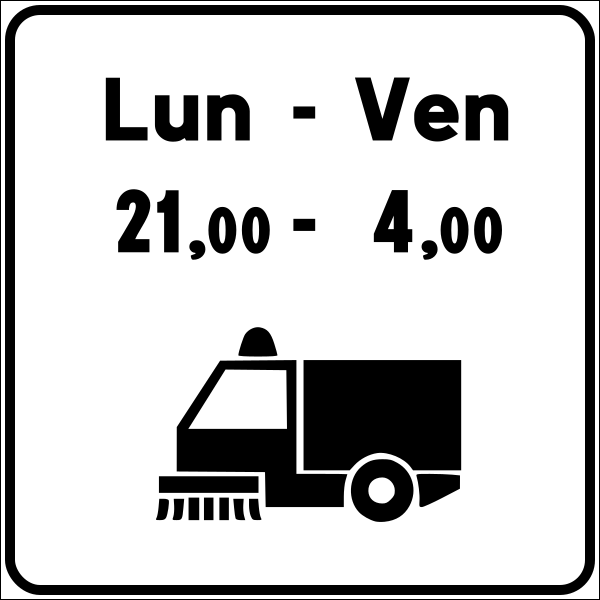
26. Street cleaning on the date and time shown
This supplementary sign indicates that the main traffic sign applies for street cleaning on the date and during the time shown.
English • Model II.6/q2 • Mechanical street cleaning. Used with the no-parking sign to show street-cleaning days and hours. Example: Monday to Friday, 21:00 to 4:00. The plate supplements the main sign and must be read together with it.
Italiano • Modello II.6/q2 • Pulizia meccanica della strada. Abbinato al divieto di sosta, indica i giorni e gli orari delle operazioni di pulizia della strada. Nell’esempio: dal lunedì al venerdì, dalle 21:00 alle 4:00. Il pannello integra il segnale principale e deve essere interpretato insieme a esso.
Sources
🔗 Commons.wikimedia.org
🔗 Normattiva.it • D.P.R. 495/1992 • testo vigente • art. 83, comma 10
🔗 Gazzettaufficiale.it • Gazzetta Ufficiale • Modello II.6/q2 • pagina 242
SVG source: This vector image includes elements that have been taken or adapted from this file: • Public domain • Original revision 2024-08-25. Wikimedia original unmodified.
27. Steep ascent
This supplementary sign indicates that the main traffic sign relates to a steep ascent.
English • Model II.6/l • Slow-moving lorries. Indicates a section where slow-moving lorries are likely. The gradient shown may be adapted for downhill sections. The plate supplements the main sign and must be read together with it.
Italiano • Modello II.6/l • Autocarri in rallentamento. Indica un tratto con probabili autocarri in lento movimento. La pendenza raffigurata può essere adattata per i tratti in discesa. Il pannello integra il segnale principale e deve essere interpretato insieme a esso.
Sources
🔗 Commons.wikimedia.org
🔗 Normattiva.it • D.P.R. 495/1992 • testo vigente • art. 83, comma 10
🔗 Gazzettaufficiale.it • Gazzetta Ufficiale • Modello II.6/l • pagina 241
Image via Commons.wikimedia.org
Original: Ministero dei Lavori Pubblici Vectorization: Arbalete • CC BY-SA 4.0 • Source revision 2024-08-25. Wikimedia original unmodified.
28. Narrow roadway
This supplementary sign warns that the roadway ahead is narrow.
English • Model II.6 — inscription • Reduced-width lanes. The inscription specifies that lanes on the signposted section are narrower. The plate supplements the main sign and must be read together with it.
Italiano • Modello II.6 — iscrizione • Corsie a larghezza ridotta. L’iscrizione precisa che le corsie del tratto segnalato hanno larghezza ridotta. Il pannello integra il segnale principale e deve essere interpretato insieme a esso.
Sources
🔗 Commons.wikimedia.org
🔗 Normattiva.it • D.P.R. 495/1992 • testo vigente • art. 83, comma 9
Image via Commons.wikimedia.org
Original: Ministero delle Infrastrutture e dei Trasporti Vector: Pav03 • Public domain • Source revision 2025-05-09. Wikimedia original unmodified.
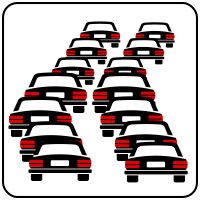
29. Queues
This supplementary sign warns that queues or slow-moving traffic may be encountered ahead.
English • Model II.6/f • Traffic queue. Indicates the possibility of slow-moving or stationary queuing traffic. The plate supplements the main sign and must be read together with it.
Italiano • Modello II.6/f • Coda. Indica la possibilità di incontrare traffico in lento movimento o fermo in colonna. Il pannello integra il segnale principale e deve essere interpretato insieme a esso.
Sources
🔗 Commons.wikimedia.org
🔗 Normattiva.it • D.P.R. 495/1992 • testo vigente • art. 83, comma 10
🔗 Gazzettaufficiale.it • Gazzetta Ufficiale • Modello II.6/f • pagina 240
SVG source: Samuele on English Wikipedia Samuele nella Wikipedia Italiana • Public domain • Original revision 2023-11-20. Wikimedia original unmodified.
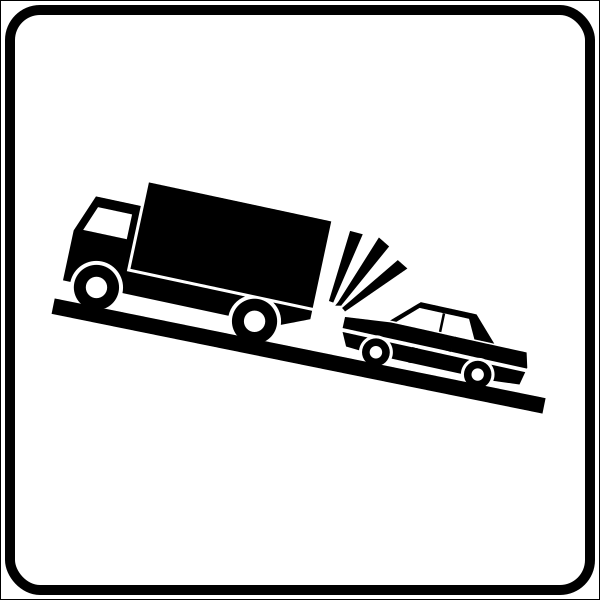
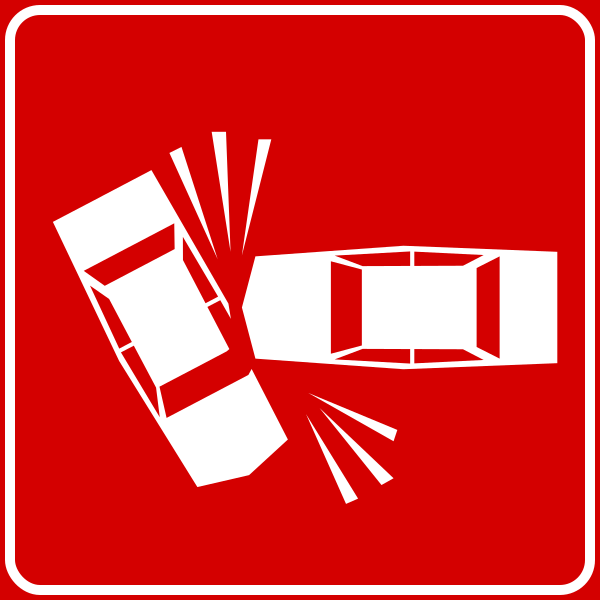
30. Accident risk
This supplementary sign warns of an increased risk of accidents on the road section concerned.
English • Model II.6/b • Accident. Indicates that vehicles involved in a collision obstruct the carriageway. The plate supplements the main sign and must be read together with it.
Italiano • Modello II.6/b • Incidente. Indica l’ingombro della carreggiata da parte di veicoli coinvolti in una collisione. Il pannello integra il segnale principale e deve essere interpretato insieme a esso.
Sources
🔗 Commons.wikimedia.org
🔗 Normattiva.it • D.P.R. 495/1992 • testo vigente • art. 83, comma 10
🔗 Gazzettaufficiale.it • Gazzetta Ufficiale • Modello II.6/b • pagina 239
SVG source: Original: Ministero dei Lavori Pubblici Vectorization: Arbalete • Public domain • Original revision 2024-08-25. Wikimedia original unmodified.
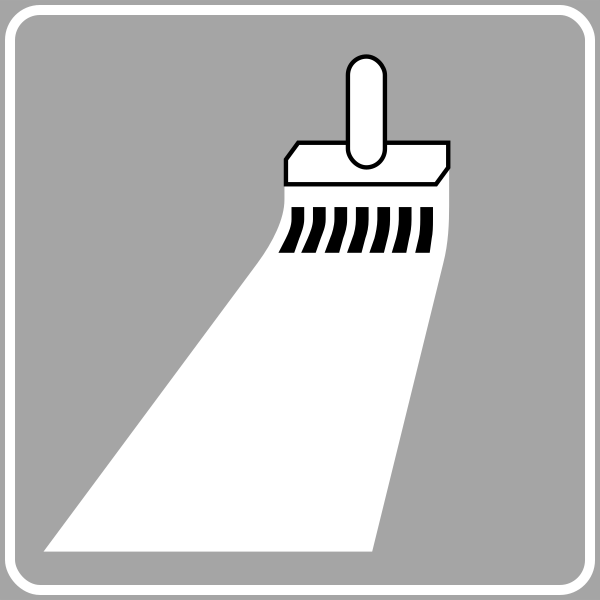
31. Line painting
This supplementary sign warns that road markings are being painted or renewed ahead.
English • Model II.6/a • Road markings being renewed. Indicates temporarily missing road markings or marking work in progress on the signposted section. The plate supplements the main sign and must be read together with it.
Italiano • Modello II.6/a • Segni orizzontali in rifacimento. Indica la temporanea mancanza della segnaletica orizzontale oppure lavori di tracciamento in corso sul tratto segnalato. Il pannello integra il segnale principale e deve essere interpretato insieme a esso.
Sources
🔗 Commons.wikimedia.org
🔗 Normattiva.it • D.P.R. 495/1992 • testo vigente • art. 83, comma 10
🔗 Gazzettaufficiale.it • Gazzetta Ufficiale • Modello II.6/a • pagina 239
Image via Commons.wikimedia.org
Original: Ministero dei Lavori Pubblici Vectorization: Arbalete • CC BY-SA 4.0 • Source revision 2024-08-25. Wikimedia original unmodified.
32. Mandatory exit
This supplementary sign indicates that drivers must take the indicated exit and may not continue along the current route.
English • Model II.6 — inscription • Compulsory exit. The inscription specifies the obligation to exit in accordance with the accompanying main sign. The plate supplements the main sign and must be read together with it.
Italiano • Modello II.6 — iscrizione • Uscita obbligatoria. L’iscrizione precisa l’obbligo di uscire secondo la segnalazione principale cui è abbinata. Il pannello integra il segnale principale e deve essere interpretato insieme a esso.
Sources
🔗 Commons.wikimedia.org
🔗 Normattiva.it • D.P.R. 495/1992 • testo vigente • art. 83, comma 9
Image via Commons.wikimedia.org
Original: Ministero delle Infrastrutture e dei Trasporti Vector: Pav03 • Public domain • Source revision 2025-05-09. Wikimedia original unmodified.
33. Ice
This supplementary sign warns that the road surface may be icy.
English • Model II.6/h • Slippery road due to ice. Indicates that ice may form on the surface under particular weather conditions. The plate supplements the main sign and must be read together with it.
Italiano • Modello II.6/h • Strada sdrucciolevole per ghiaccio. Indica la possibilità di formazione di ghiaccio sulla pavimentazione in particolari condizioni atmosferiche. Il pannello integra il segnale principale e deve essere interpretato insieme a esso.
Sources
🔗 Commons.wikimedia.org
🔗 Normattiva.it • D.P.R. 495/1992 • testo vigente • art. 83, comma 10
🔗 Gazzettaufficiale.it • Gazzetta Ufficiale • Modello II.6/h • pagina 240
Image via Commons.wikimedia.org
F l a n k e r • Public domain • Source revision 2023-11-30. Wikimedia original unmodified.
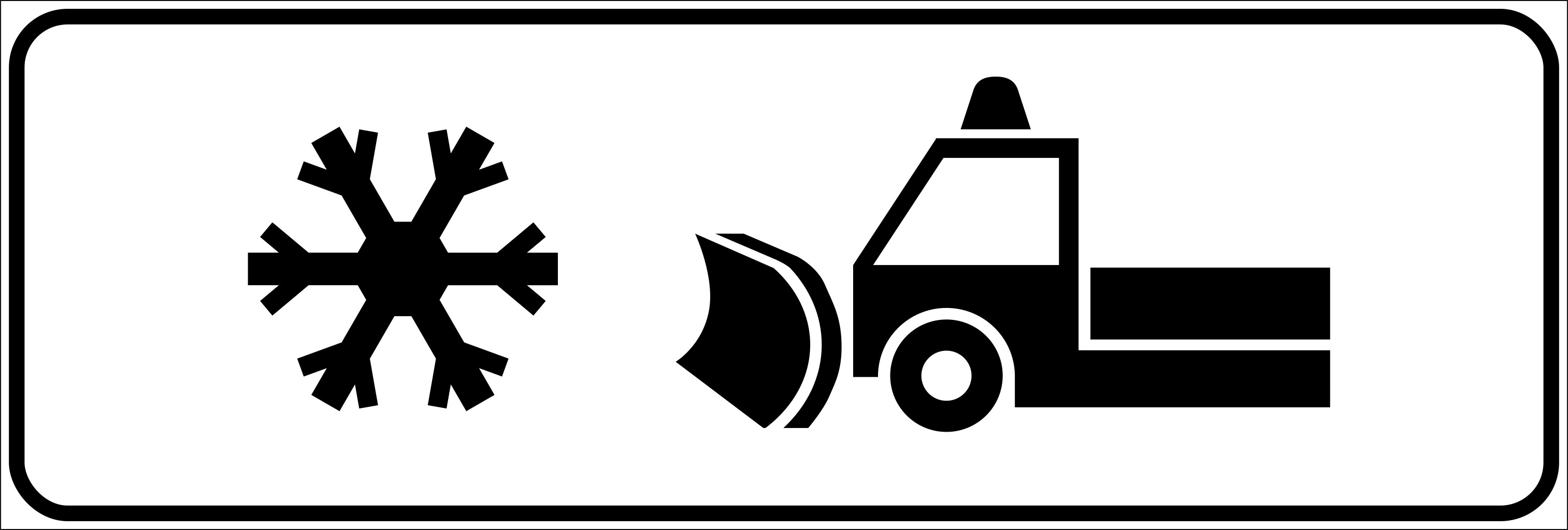
34. Snowplough
This supplementary sign warns that snowploughs may be operating on the road ahead.
English • Model II.6/d • Snow clearance in progress. Indicates snow-clearing machinery working on the road. The plate supplements the main sign and must be read together with it.
Italiano • Modello II.6/d • Sgombraneve in azione. Indica la presenza di macchine sgombraneve al lavoro sulla strada. Il pannello integra il segnale principale e deve essere interpretato insieme a esso.
Sources
🔗 Commons.wikimedia.org
🔗 Normattiva.it • D.P.R. 495/1992 • testo vigente • art. 83, comma 10
🔗 Gazzettaufficiale.it • Gazzetta Ufficiale • Modello II.6/d • pagina 239
Image via Commons.wikimedia.org
Gigillo83 • Public domain • Source revision 2025-05-24. Wikimedia original unmodified.
35. Wet
This supplementary sign warns that the road surface may be wet and slippery.
English • Model II.6/i • Slippery road in rain. Indicates a section whose surface becomes dangerously slippery when it rains. The plate supplements the main sign and must be read together with it.
Italiano • Modello II.6/i • Strada sdrucciolevole per pioggia. Indica un tratto con pavimentazione pericolosamente sdrucciolevole in caso di pioggia. Il pannello integra il segnale principale e deve essere interpretato insieme a esso.
Sources
🔗 Commons.wikimedia.org (Gigillo83 • CC BY-SA 3.0)
🔗 Normattiva.it • D.P.R. 495/1992 • testo vigente • art. 83, comma 10
🔗 Gazzettaufficiale.it • Gazzetta Ufficiale • Modello II.6/i • pagina 241
Image via Commons.wikimedia.org
Gigillo83 • CC BY-SA 3.0 • Source revision 2010-06-29. Wikimedia original unmodified.
36. High tide or flooding
This supplementary sign warns that the road may be flooded or submerged during high tide or high water.
English • Model II.6/e • Area liable to flooding. Indicates a section that may flood under particular weather conditions. The plate supplements the main sign and must be read together with it.
Italiano • Modello II.6/e • Zona soggetta ad allagamento. Indica un tratto che, in particolari condizioni atmosferiche, può essere soggetto ad allagamento. Il pannello integra il segnale principale e deve essere interpretato insieme a esso.
Sources
🔗 Commons.wikimedia.org
🔗 Normattiva.it • D.P.R. 495/1992 • testo vigente • art. 83, comma 10
🔗 Gazzettaufficiale.it • Gazzetta Ufficiale • Modello II.6/e • pagina 240
Image via Commons.wikimedia.org
F l a n k e r • Public domain • Source revision 2023-11-30. Wikimedia original unmodified.
37. Construction traffic
This supplementary sign warns that construction vehicles may enter, leave or travel along the road.
English • Model II.6/g • Work vehicles operating. Indicates machinery, mechanical shovels, excavators or lorries that may interfere with ordinary traffic. The plate supplements the main sign and must be read together with it.
Italiano • Modello II.6/g • Mezzi di lavoro in azione. Indica macchine operatrici, pale meccaniche, escavatori o autocarri che possono interferire con il traffico ordinario. Il pannello integra il segnale principale e deve essere interpretato insieme a esso.
Sources
🔗 Commons.wikimedia.org
🔗 Normattiva.it • D.P.R. 495/1992 • testo vigente • art. 83, comma 10
🔗 Gazzettaufficiale.it • Gazzetta Ufficiale • Modello II.6/g • pagina 240
Image via Commons.wikimedia.org
F l a n k e r • Public domain • Source revision 2006-12-07. Wikimedia original unmodified.
