


Warning signsItaly
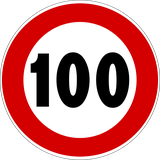 Traffic rules
 Italy
 Priority signs
 Warning signs
 Prohibitory signs
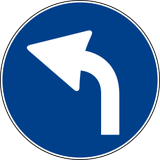 Mandatory signs
 Information signs
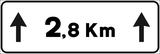 Additional signs
Warning signs
A warning sign is a traffic sign that alerts drivers to a potential danger or change in road conditions ahead, giving them enough time to slow down and react safely. These signs warn about hazards such as sharp bends, pedestrian crossings, slippery surfaces, merging traffic, animals on the road, or upcoming intersections. Their purpose is not to forbid or command anything, but simply to prepare drivers for situations that require extra attention.

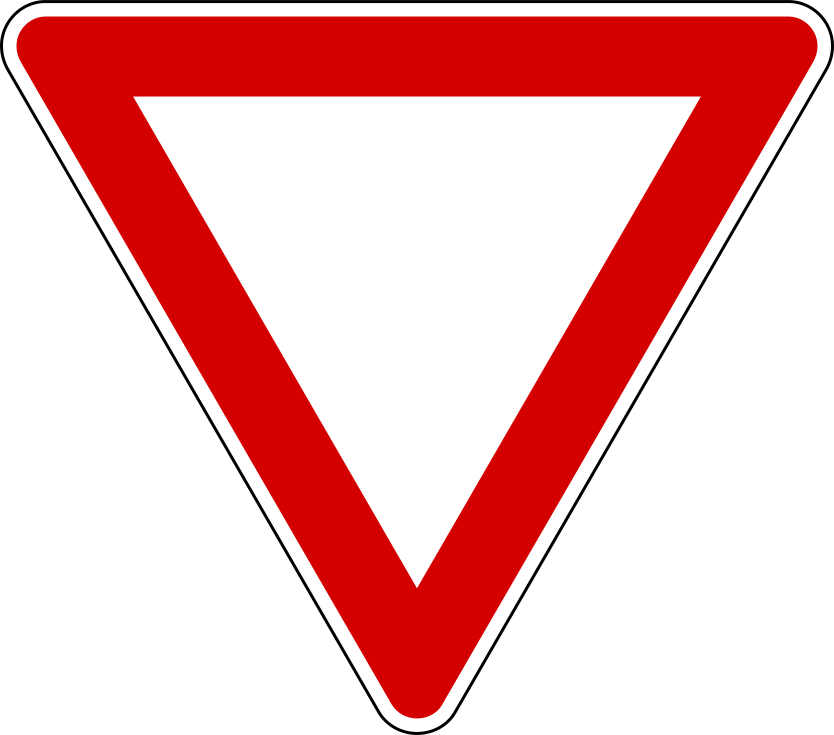
How should I recognise hazard warnings in Italy?
Danger signs announce hazards and require drivers to behave prudently for the indicated situation.
🔗 aci.gov.it • Italy, Road Code — articles 6–7, 38–43, 140–142, 146
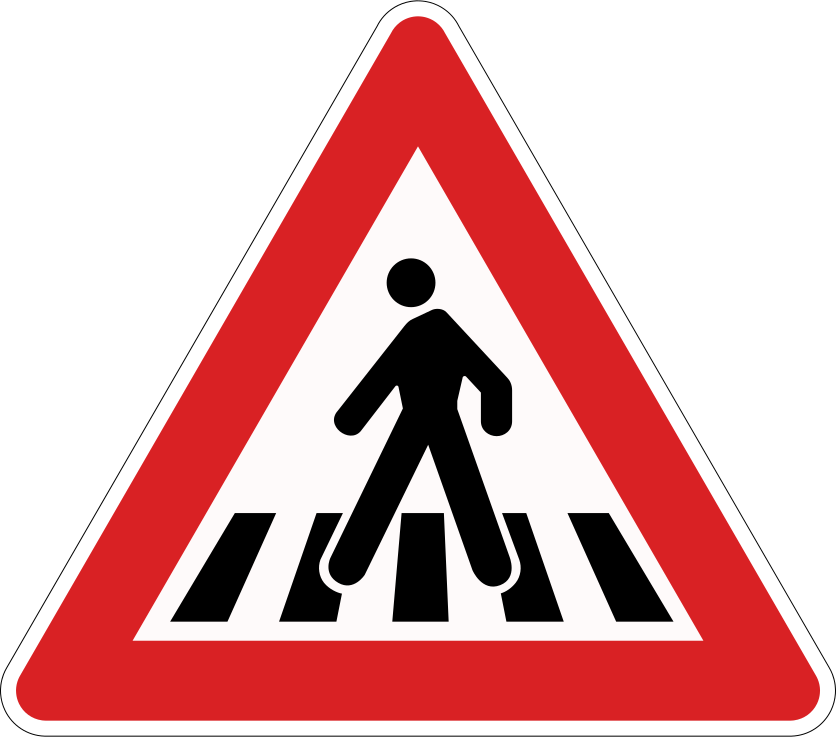
How should I react to a pedestrian warning in Italy?
Reduce speed, look along both sides of the road and be ready to stop. The warning identifies a pedestrian hazard ahead; children, people with limited mobility or others may enter the road unexpectedly.
🔗 aci.gov.it • Italy, Road Code — articles 6–7, 38–43, 140–142, 146
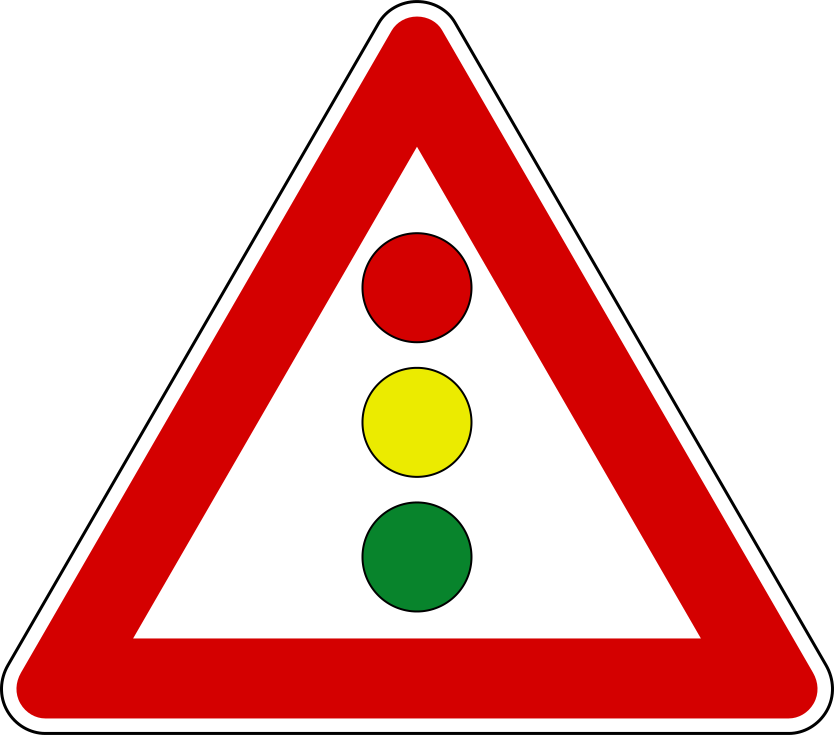
Does a traffic-lights-ahead warning require an immediate stop in Italy?
No. A warning sign is not an automatic STOP instruction and does not create a new numerical speed limit. Reduce speed when necessary, look for a queue or a concealed signal, and obey the traffic lights and any separate speed or stop signs.
🔗 aci.gov.it • Italy, Road Code — articles 6–7, 38–43, 140–142, 146

1. Stop and give way
This traffic sign means stop and give way. You must come to a complete stop before entering the intersection and give way to traffic that has priority. Proceed only when it is safe.
English • Traffic sign II.37 • Stop and give way. Drivers must stop at the stop line and give way before entering the junction or joining the traffic flow.
Italiano • Figura II.37 • Fermarsi e dare precedenza. Obbliga a fermarsi in corrispondenza della striscia di arresto e a dare la precedenza prima di entrare nell’intersezione o di immettersi nel flusso della circolazione.
Sources
🔗 Commons.wikimedia.org (F l a n k e r • CC BY-SA 3.0)
🔗 Normattiva.it • D.P.R. 495/1992 • testo vigente • art. 107, comma 1
🔗 Gazzettaufficiale.it • Gazzetta Ufficiale • Figura II.37 • pagina 255
Image via Commons.wikimedia.org
F l a n k e r • CC BY-SA 3.0 • Source revision 2025-08-24. Wikimedia original unmodified.
2. Give way
This traffic sign means give way. Slow down and give way to traffic that has priority. Stop if necessary and proceed only when it is safe.
English • Traffic sign II.36 • Give way. Drivers must give way to vehicles travelling in either direction on the road they are about to enter or cross.
Italiano • Figura II.36 • Dare precedenza. Obbliga a dare la precedenza ai veicoli che circolano nei due sensi sulla strada nella quale ci si sta per immettere o che si sta per attraversare.
Sources
🔗 Commons.wikimedia.org
🔗 Normattiva.it • D.P.R. 495/1992 • testo vigente • art. 106, comma 1
🔗 Gazzettaufficiale.it • Gazzetta Ufficiale • Figura II.36 • pagina 255
SVG source: F l a n k e r • Public domain • Original revision 2011-02-05. Wikimedia original unmodified.
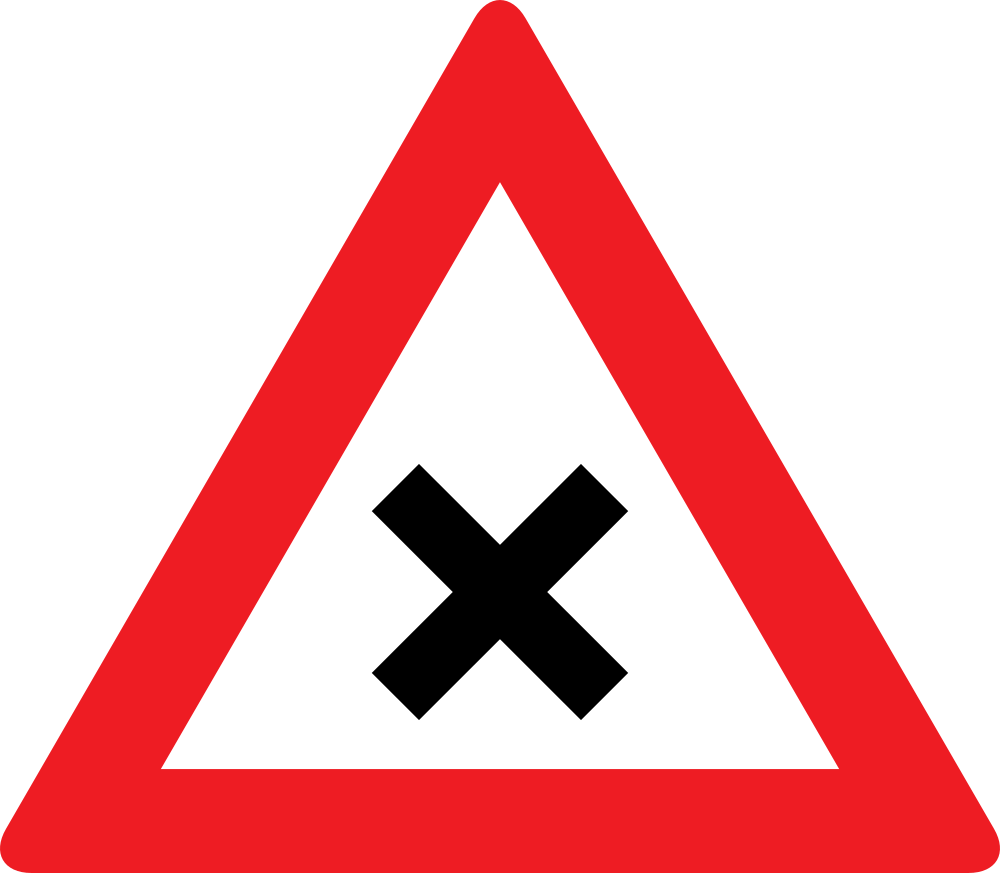
3. Warning for an uncontrolled crossroad
This traffic sign indicates a warning for an uncontrolled crossroad. An intersection without traffic signals or signs assigning priority lies ahead. Reduce speed, watch for traffic approaching from other directions and follow the applicable local priority rules.
English • Traffic sign II.40 • Junction with priority to the right. Warns of a junction where the general rule of priority to the right applies.
Italiano • Figura II.40 • Intersezione con precedenza a destra. Presegnala un’intersezione nella quale vige la regola generale della precedenza a destra.
Sources
🔗 Commons.wikimedia.org (F l a n k e r • CC BY-SA 3.0)
🔗 Normattiva.it • D.P.R. 495/1992 • testo vigente • art. 109, comma 1
🔗 Gazzettaufficiale.it • Gazzetta Ufficiale • Figura II.40 • pagina 256
Replacement SVG: Commons.wikimedia.org • Wikimedia Commons original • 3247 • Public domain • Original revision 2006-08-27. Wikimedia original unmodified.
Image via Commons.wikimedia.org
3247 • Public domain • Source revision 2006-08-27. Wikimedia original unmodified.
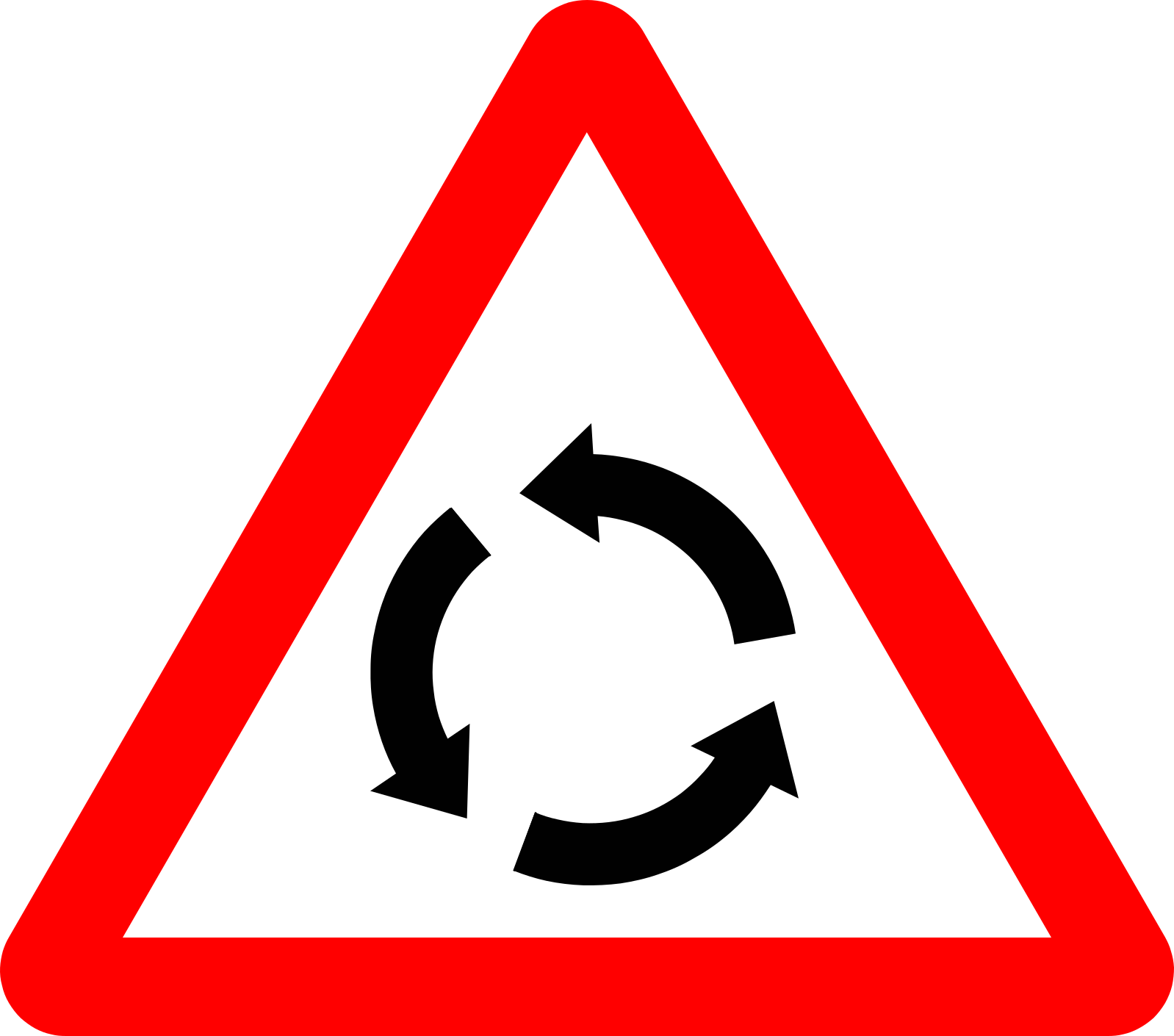
4. Warning for a roundabout
This traffic sign indicates a warning for a roundabout. A roundabout lies ahead. Reduce speed and follow the applicable priority signs, traffic signals and local roundabout rules when approaching and entering it.
English • Traffic sign II.27 • Roundabout ahead. Warns of a junction with roundabout circulation.
Italiano • Figura II.27 • Circolazione rotatoria. Presegnala un’intersezione regolata con circolazione rotatoria.
Sources
🔗 Commons.wikimedia.org (F l a n k e r • CC BY-SA 3.0)
🔗 Normattiva.it • D.P.R. 495/1992 • testo vigente • art. 96, comma 6
🔗 Gazzettaufficiale.it • Gazzetta Ufficiale • Figura II.27 • pagina 252
Replacement SVG: Commons.wikimedia.org • Wikimedia Commons original • No machine-readable author provided. Benedicto16 assumed (based on copyright claims). • Public domain • Original revision 2026-09-10. Wikimedia original unmodified.
Image via Commons.wikimedia.org
No machine-readable author provided. Benedicto16 assumed (based on copyright claims). • Public domain • Source revision 2026-09-10. Wikimedia original unmodified.
5. Priority at the junction
This traffic sign indicates that you have priority at the next intersection. A side road joins from the left, and traffic entering from that side road must give way.
English • Traffic sign II.43/c • T-junction with priority. Warns of a non-priority road joining from the left. Vehicles from that road must give way.
Italiano • Figura II.43/c • Intersezione a T con diritto di precedenza. Presegnala un’intersezione con una strada subordinata che si immette da sinistra. I veicoli provenienti dalla strada subordinata devono dare precedenza.
Sources
🔗 Commons.wikimedia.org (F l a n k e r • CC BY-SA 3.0)
🔗 Normattiva.it • D.P.R. 495/1992 • testo vigente • art. 112, comma 2
🔗 Gazzettaufficiale.it • Gazzetta Ufficiale • Figura II.43/c • pagina 257
SVG source: F l a n k e r • CC BY-SA 3.0 • Original revision 2011-02-05. Wikimedia original unmodified.
Current figure reference verified in Normattiva.it • Normattiva, current article 112.
6. Warning for merging traffic from the left
This traffic sign indicates a warning for merging traffic from the left. Traffic travelling in the same general direction may join your traffic stream from the left. Stay alert and adjust your speed or position when necessary to allow traffic to merge safely.
English • Traffic sign II.43/e • Merging traffic from the left. Warns of a non-priority road joining via an acceleration lane from the left.
Italiano • Figura II.43/e • Confluenza a sinistra. Presegnala l’immissione di una strada subordinata con corsia di accelerazione da sinistra.
Sources
🔗 Commons.wikimedia.org (F l a n k e r • CC BY-SA 3.0)
🔗 Normattiva.it • D.P.R. 495/1992 • testo vigente • art. 112, comma 2
🔗 Gazzettaufficiale.it • Gazzetta Ufficiale • Figura II.43/e • pagina 258
SVG source: F l a n k e r • CC BY-SA 3.0 • Original revision 2011-02-05. Wikimedia original unmodified.
Current figure reference verified in Normattiva.it • Normattiva, current article 112.
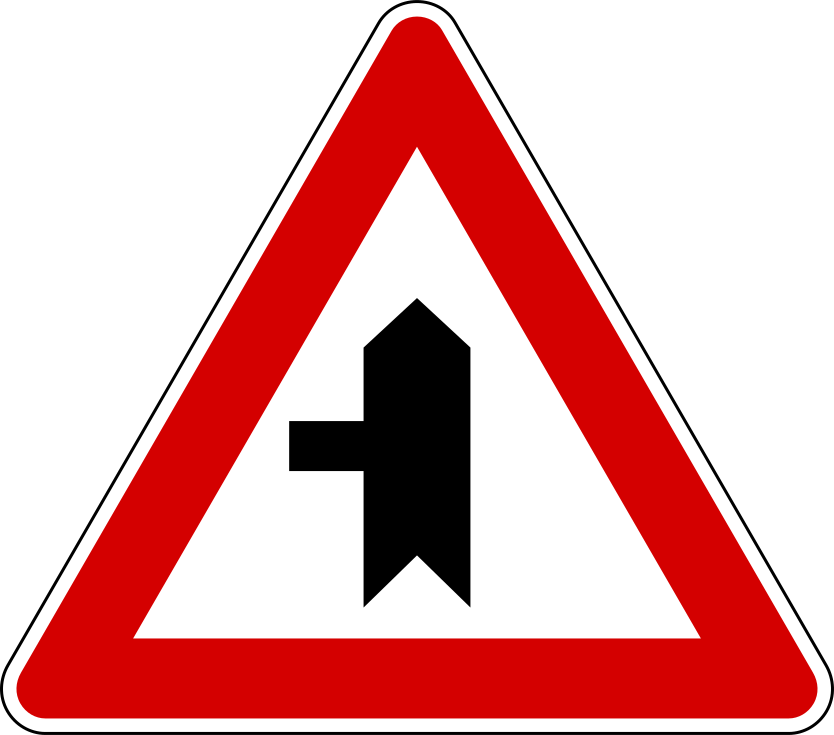
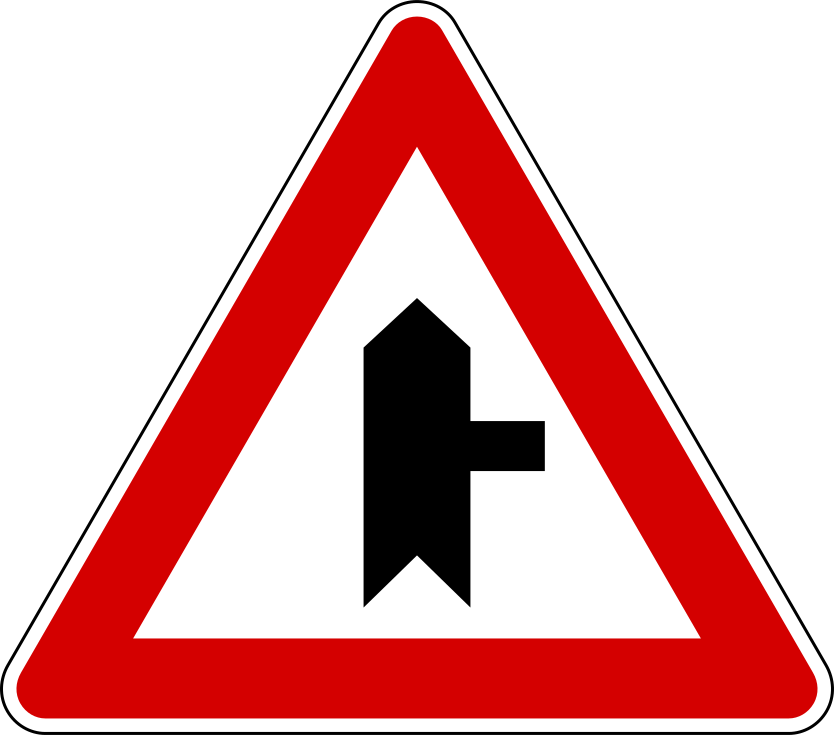
7. Priority at the junction
This traffic sign indicates that you have priority at the next intersection. A side road joins from the right, and traffic entering from that side road must give way.
English • Traffic sign II.43/b • T-junction with priority. Warns of a non-priority road joining from the right. Vehicles from that road must give way.
Italiano • Figura II.43/b • Intersezione a T con diritto di precedenza. Presegnala un’intersezione con una strada subordinata che si immette da destra. I veicoli provenienti dalla strada subordinata devono dare precedenza.
Sources
🔗 Commons.wikimedia.org (F l a n k e r • CC BY-SA 3.0)
🔗 Normattiva.it • D.P.R. 495/1992 • testo vigente • art. 112, comma 2
🔗 Gazzettaufficiale.it • Gazzetta Ufficiale • Figura II.43/b • pagina 257
SVG source: F l a n k e r • CC BY-SA 3.0 • Original revision 2011-02-05. Wikimedia original unmodified.
Current figure reference verified in Normattiva.it • Normattiva, current article 112.
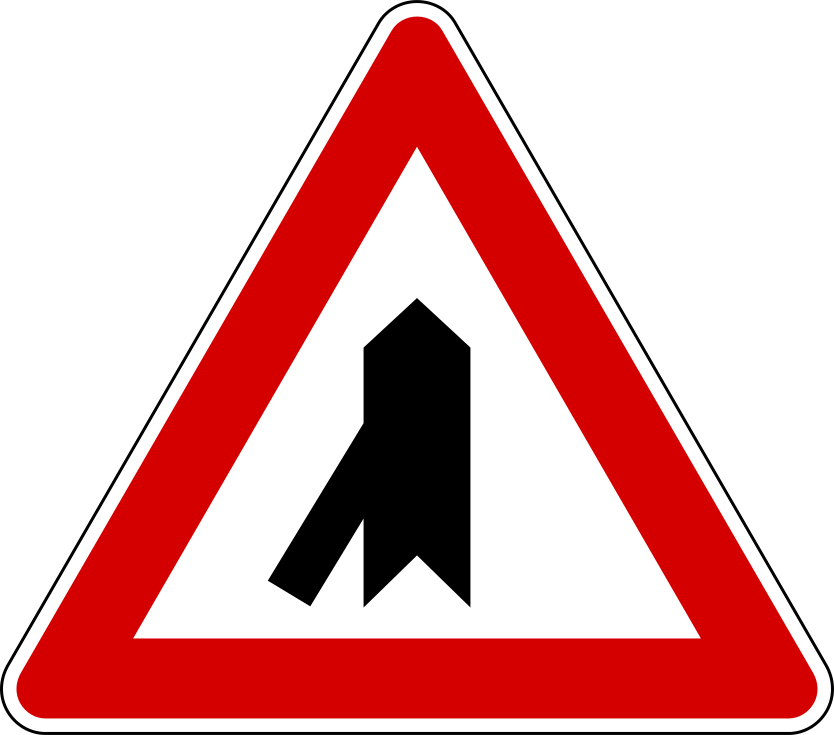
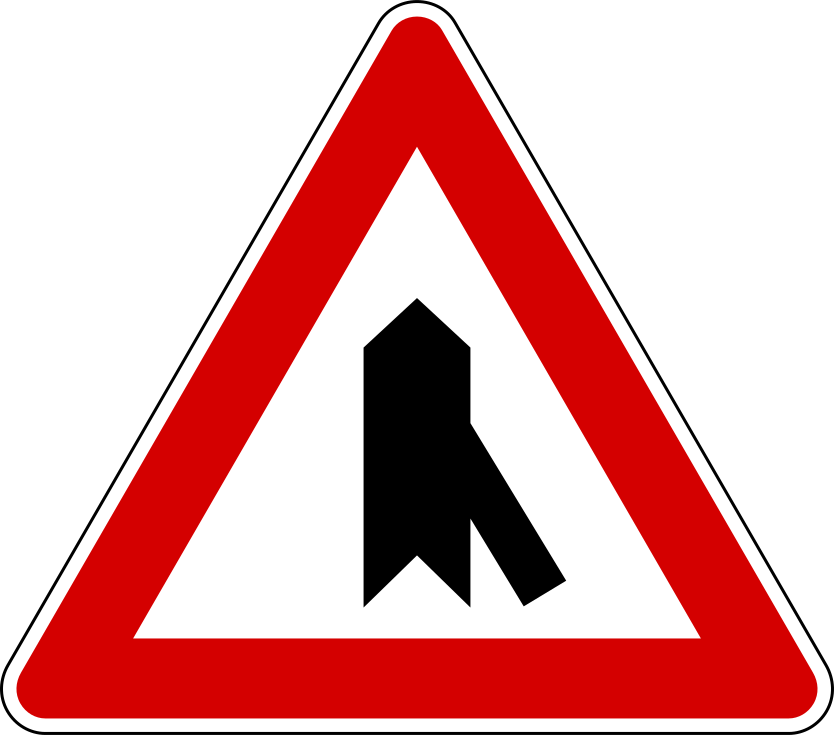
8. Warning for merging traffic from the right
This traffic sign indicates a warning for merging traffic from the right. Traffic travelling in the same general direction may join your traffic stream from the right. Stay alert and adjust your speed or position when necessary to allow traffic to merge safely.
English • Traffic sign II.43/d • Merging traffic from the right. Warns of a non-priority road joining via an acceleration lane from the right.
Italiano • Figura II.43/d • Confluenza a destra. Presegnala l’immissione di una strada subordinata con corsia di accelerazione da destra.
Sources
🔗 Commons.wikimedia.org (F l a n k e r • CC BY-SA 3.0)
🔗 Normattiva.it • D.P.R. 495/1992 • testo vigente • art. 112, comma 2
🔗 Gazzettaufficiale.it • Gazzetta Ufficiale • Figura II.43/d • pagina 258
SVG source: F l a n k e r • CC BY-SA 3.0 • Original revision 2011-02-05. Wikimedia original unmodified.
Current figure reference verified in Normattiva.it • Normattiva, current article 112.
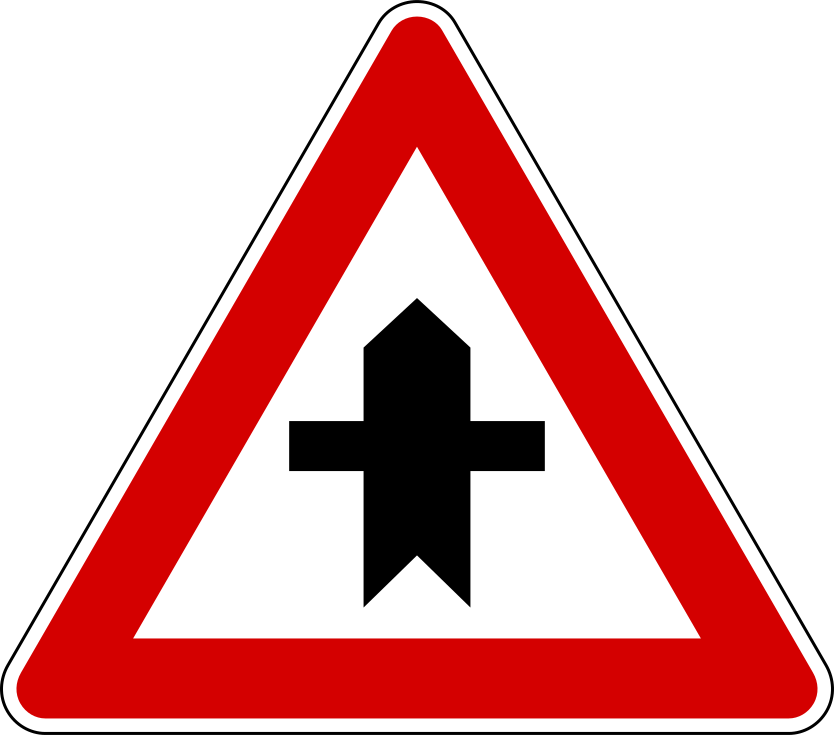
9. Priority at the junction
This traffic sign indicates that you have priority at the next intersection. Side roads join from the left and right, and traffic entering from those side roads must give way.
English • Traffic sign II.43/a • Junction with priority. Warns of a junction with non-priority roads. The driver has priority over vehicles from those roads.
Italiano • Figura II.43/a • Intersezione con diritto di precedenza. Presegnala un’intersezione con strade subordinate. Il conducente ha precedenza sui veicoli provenienti da tali strade.
Sources
🔗 Commons.wikimedia.org (F l a n k e r • CC BY-SA 3.0)
🔗 Normattiva.it • D.P.R. 495/1992 • testo vigente • art. 112, comma 1
🔗 Gazzettaufficiale.it • Gazzetta Ufficiale • Figura II.43/a • pagina 257
SVG source: F l a n k e r • CC BY-SA 3.0 • Original revision 2011-02-05. Wikimedia original unmodified.
Current figure reference verified in Normattiva.it • Normattiva, current article 112.
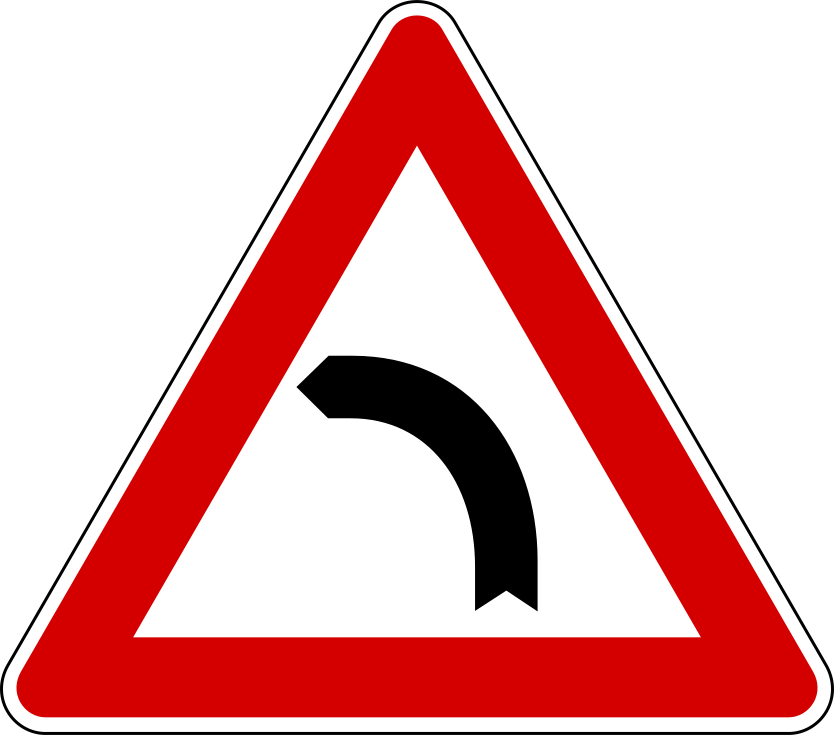
10. Warning for a curve to the left
This traffic sign indicates a warning for a curve to the left. A left-hand bend lies ahead. Reduce speed before entering the curve, maintain your lane position and use smooth steering.
English • Traffic sign II.5 • Bend to the left. Warns of a left-hand bend that is dangerous because of its characteristics or limited visibility.
Italiano • Figura II.5 • Curva a sinistra. Presegnala una curva pericolosa a sinistra per le sue caratteristiche o per l’insufficiente visibilità.
Sources
🔗 Commons.wikimedia.org (F l a n k e r • CC BY-SA 3.0)
🔗 Normattiva.it • D.P.R. 495/1992 • testo vigente • art. 86, comma 1
🔗 Gazzettaufficiale.it • Gazzetta Ufficiale • Figura II.5 • pagina 246
SVG source: F l a n k e r • CC BY-SA 3.0 • Original revision 2011-02-05. Wikimedia original unmodified.
Current figure reference verified in Normattiva.it • Normattiva, current article 86.
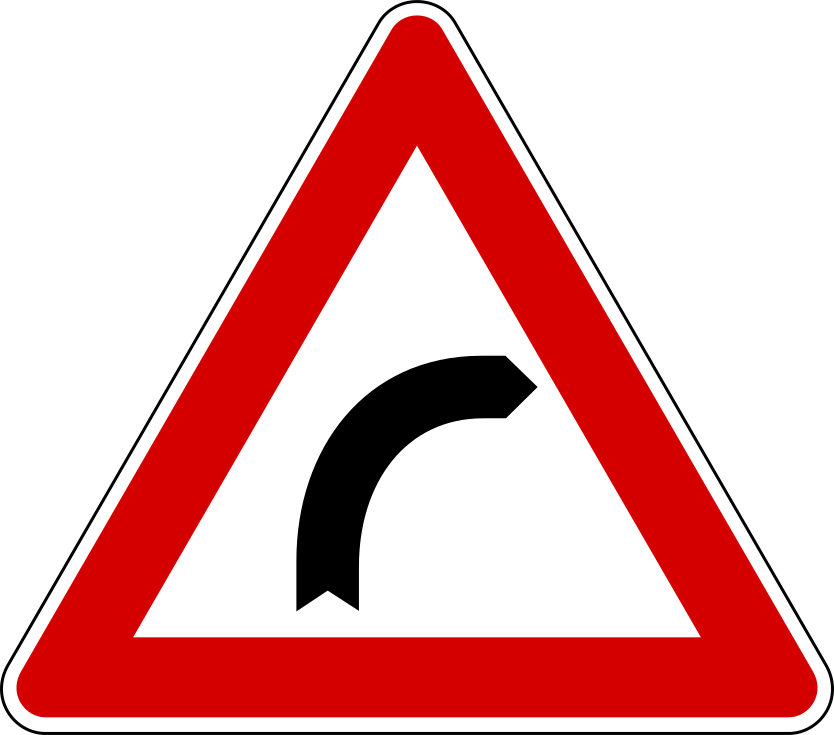
11. Warning for a curve to the right
This traffic sign indicates a warning for a curve to the right. A right-hand bend lies ahead. Reduce speed before entering the curve, maintain your lane position and use smooth steering.
English • Traffic sign II.4 • Bend to the right. Warns of a right-hand bend that is dangerous because of its characteristics or limited visibility.
Italiano • Figura II.4 • Curva a destra. Presegnala una curva pericolosa a destra per le sue caratteristiche o per l’insufficiente visibilità.
Sources
🔗 Commons.wikimedia.org (F l a n k e r • CC BY-SA 3.0)
🔗 Normattiva.it • D.P.R. 495/1992 • testo vigente • art. 86, comma 1
🔗 Gazzettaufficiale.it • Gazzetta Ufficiale • Figura II.4 • pagina 246
SVG source: F l a n k e r • CC BY-SA 3.0 • Original revision 2011-02-05. Wikimedia original unmodified.
Current figure reference verified in Normattiva.it • Normattiva, current article 86.
12. Warning for a double curve, first left then right
This traffic sign indicates a warning for successive curves, with the first curve to the left. Reduce speed before entering the winding section, maintain your lane position and be prepared for further changes in direction.
English • Traffic sign II.7 • Double bend, first to the left. Warns of a dangerous double bend, first to the left. A supplementary plate may show the length of a series of bends.
Italiano • Figura II.7 • Doppia curva, la prima a sinistra. Presegnala una doppia curva pericolosa, la prima a sinistra. Una serie di curve può essere indicata con un pannello che riporta la lunghezza del tratto.
Sources
🔗 Commons.wikimedia.org
🔗 Normattiva.it • D.P.R. 495/1992 • testo vigente • art. 86, comma 1–2
🔗 Gazzettaufficiale.it • Gazzetta Ufficiale • Figura II.7 • pagina 246
SVG source: F l a n k e r • Public domain • Original revision 2011-02-05. Wikimedia original unmodified.
13. Warning for a double curve, first right then left
This traffic sign indicates a warning for successive curves, with the first curve to the right. Reduce speed before entering the winding section, maintain your lane position and be prepared for further changes in direction.
English • Traffic sign II.6 • Double bend, first to the right. Warns of a dangerous double bend, first to the right. A supplementary plate may show the length of a series of bends.
Italiano • Figura II.6 • Doppia curva, la prima a destra. Presegnala una doppia curva pericolosa, la prima a destra. Una serie di curve può essere indicata con un pannello che riporta la lunghezza del tratto.
Sources
🔗 Commons.wikimedia.org
🔗 Normattiva.it • D.P.R. 495/1992 • testo vigente • art. 86, comma 1–2
🔗 Gazzettaufficiale.it • Gazzetta Ufficiale • Figura II.6 • pagina 246
SVG source: F l a n k e r • Public domain • Original revision 2011-02-05. Wikimedia original unmodified.
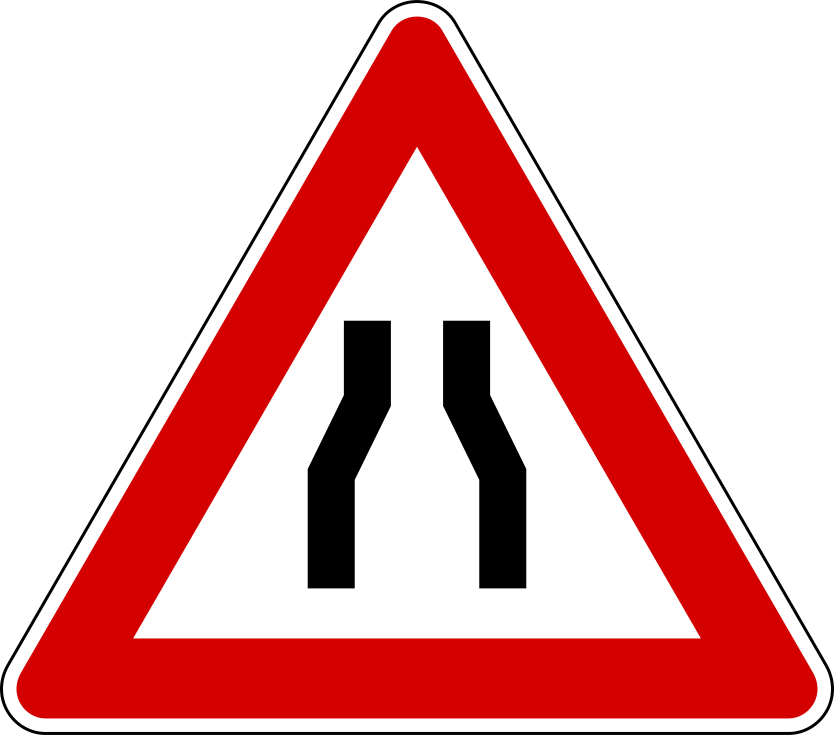
14. Warning for a road narrowing
This traffic sign indicates a warning for a road narrowing. The available width of the road or carriageway decreases ahead. Reduce speed, maintain sufficient lateral clearance and watch carefully for approaching or adjacent traffic.
English • Traffic sign II.17 • Road narrows on both sides. Warns of a symmetrical narrowing of the carriageway that is dangerous for traffic.
Italiano • Figura II.17 • Strettoia simmetrica. Presegnala un restringimento simmetrico della carreggiata pericoloso per la circolazione.
Sources
🔗 Commons.wikimedia.org (F l a n k e r • CC BY-SA 3.0)
🔗 Normattiva.it • D.P.R. 495/1992 • testo vigente • art. 90, comma 1–2
🔗 Gazzettaufficiale.it • Gazzetta Ufficiale • Figura II.17 • pagina 249
SVG source: F l a n k e r • CC BY-SA 3.0 • Original revision 2012-06-11. Wikimedia original unmodified.
Artwork verified against Gazzettaufficiale.it • official published diagram II.17.
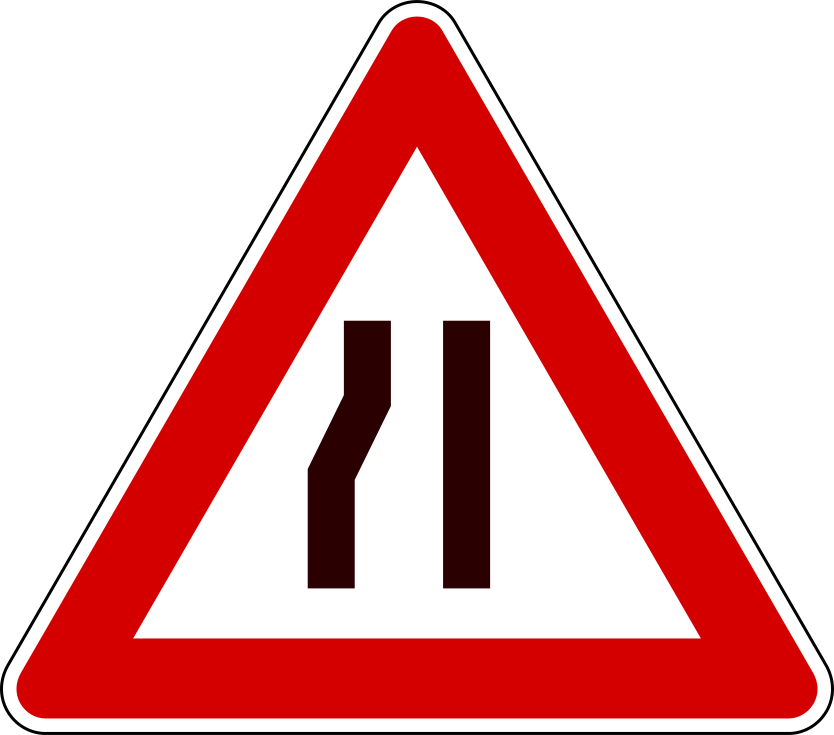
15. Warning for a road narrowing on the left
This traffic sign indicates a warning for a road narrowing on the left. The available road width decreases from the left side ahead. Reduce speed, follow the lane markings and maintain sufficient clearance from other traffic and the road edge.
English • Traffic sign II.18 • Road narrows on the left. Warns of a narrowing on the left side of the carriageway that is dangerous for traffic.
Italiano • Figura II.18 • Strettoia asimmetrica a sinistra. Presegnala un restringimento sul lato sinistro della carreggiata pericoloso per la circolazione.
Sources
🔗 Commons.wikimedia.org (F l a n k e r • CC BY-SA 3.0)
🔗 Normattiva.it • D.P.R. 495/1992 • testo vigente • art. 90, comma 1–2
🔗 Gazzettaufficiale.it • Gazzetta Ufficiale • Figura II.18 • pagina 250
SVG source: F l a n k e r • CC BY-SA 3.0 • Original revision 2011-02-05. Wikimedia original unmodified.
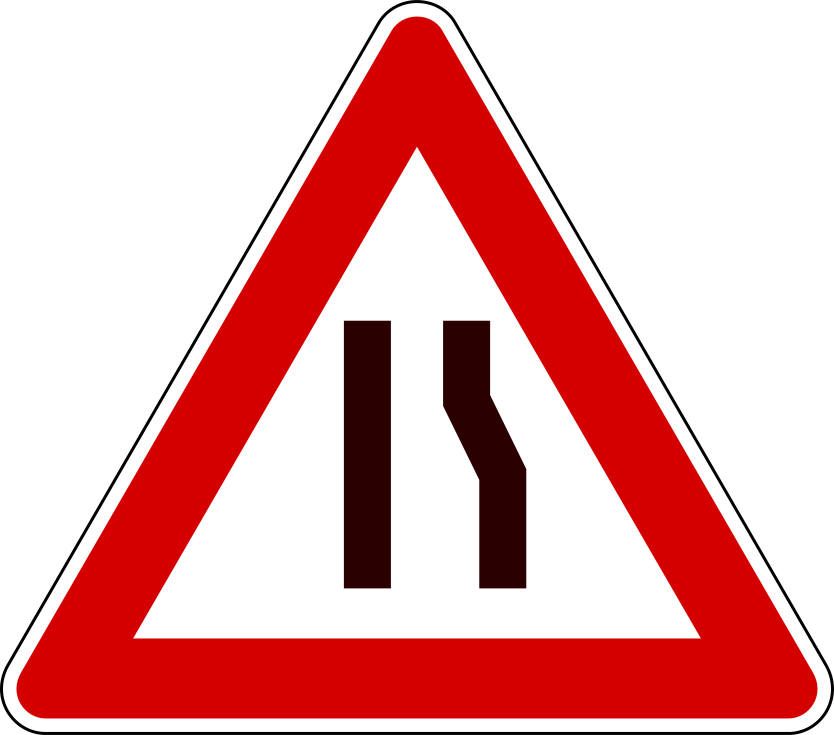
16. Warning for a road narrowing on the right
This traffic sign indicates a warning for a road narrowing on the right. The available road width decreases from the right side ahead. Reduce speed, follow the lane markings and maintain sufficient clearance from other traffic and the road edge.
English • Traffic sign II.19 • Road narrows on the right. Warns of a narrowing on the right side of the carriageway that is dangerous for traffic.
Italiano • Figura II.19 • Strettoia asimmetrica a destra. Presegnala un restringimento sul lato destro della carreggiata pericoloso per la circolazione.
Sources
🔗 Commons.wikimedia.org (F l a n k e r • CC BY-SA 3.0)
🔗 Normattiva.it • D.P.R. 495/1992 • testo vigente • art. 90, comma 1–2
🔗 Gazzettaufficiale.it • Gazzetta Ufficiale • Figura II.19 • pagina 250
SVG source: F l a n k e r • CC BY-SA 3.0 • Original revision 2011-02-05. Wikimedia original unmodified.
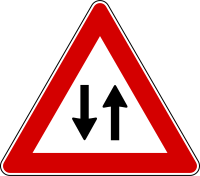
17. Warning for a road with two-way traffic
This traffic sign indicates a warning for two-way traffic. Oncoming traffic will use the same road or carriageway ahead. Keep to the correct side of the road and overtake only where it is permitted and clearly safe.
English • Traffic sign II.26 • Two-way traffic. Warns of traffic in both directions on the same carriageway after a one-way section.
Italiano • Figura II.26 • Doppio senso di circolazione. Presegnala un tratto di strada con circolazione nei due sensi sulla stessa carreggiata, dopo un tratto a senso unico.
Sources
🔗 Commons.wikimedia.org
🔗 Normattiva.it • D.P.R. 495/1992 • testo vigente • art. 96, comma 1
🔗 Gazzettaufficiale.it • Gazzetta Ufficiale • Figura II.26 • pagina 252
SVG source: F l a n k e r • Public domain • Original revision 2011-02-05. Wikimedia original unmodified.
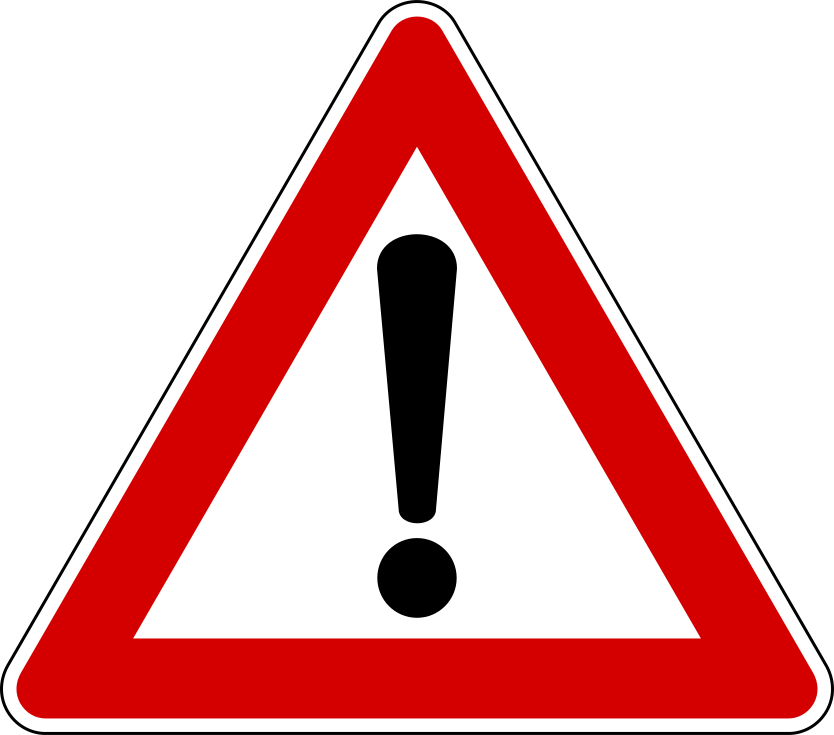
18. Warning for a danger with no specific traffic sign
This traffic sign indicates a warning for a danger with no specific traffic sign. It's a general warning sign used when there is a hazard ahead that does not have its own dedicated warning sign. For example: road accidents, flooded roads and roads blocked by fallen trees. It usually has a supplementary sign attached that tells drivers of what hazard to expect.
English • Traffic sign II.35 • Other dangers. Warns of a danger not represented by other signs. A supplementary plate specifying the danger is required; in emergencies the sign may temporarily be used without a plate.
Italiano • Figura II.35 • Altri pericoli. Presegnala un pericolo diverso da quelli rappresentati dagli altri segnali. Deve essere corredato da un pannello integrativo che precisa il pericolo; può essere impiegato temporaneamente senza pannello in situazioni di emergenza.
Sources
🔗 Commons.wikimedia.org
🔗 Normattiva.it • D.P.R. 495/1992 • testo vigente • art. 103, comma 1–2
🔗 Gazzettaufficiale.it • Gazzetta Ufficiale • Figura II.35 • pagina 255
SVG source: F l a n k e r • Public domain • Original revision 2011-02-05. Wikimedia original unmodified.
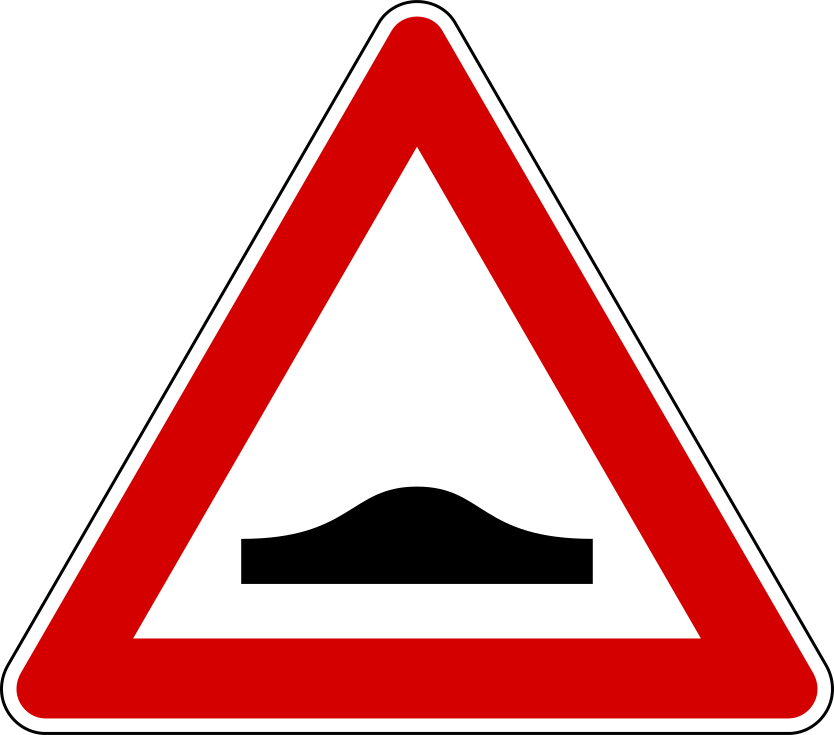
19. Warning for a speed bump
This traffic sign indicates a warning for a speed bump. A raised traffic-calming feature lies ahead. Reduce speed before reaching it to maintain vehicle control and avoid damage or discomfort.
English • Traffic sign II.2 • Hump. Warns of a convex change in the road's gradient that limits visibility.
Italiano • Figura II.2 • Dosso. Presegnala un’anomalia altimetrica convessa della strada che limita la visibilità.
Sources
🔗 Commons.wikimedia.org
🔗 Normattiva.it • D.P.R. 495/1992 • testo vigente • art. 85, comma 2
🔗 Gazzettaufficiale.it • Gazzetta Ufficiale • Figura II.2 • pagina 245
Image via Commons.wikimedia.org
F l a n k e r • Public domain • Source revision 2011-04-07. Wikimedia original unmodified.
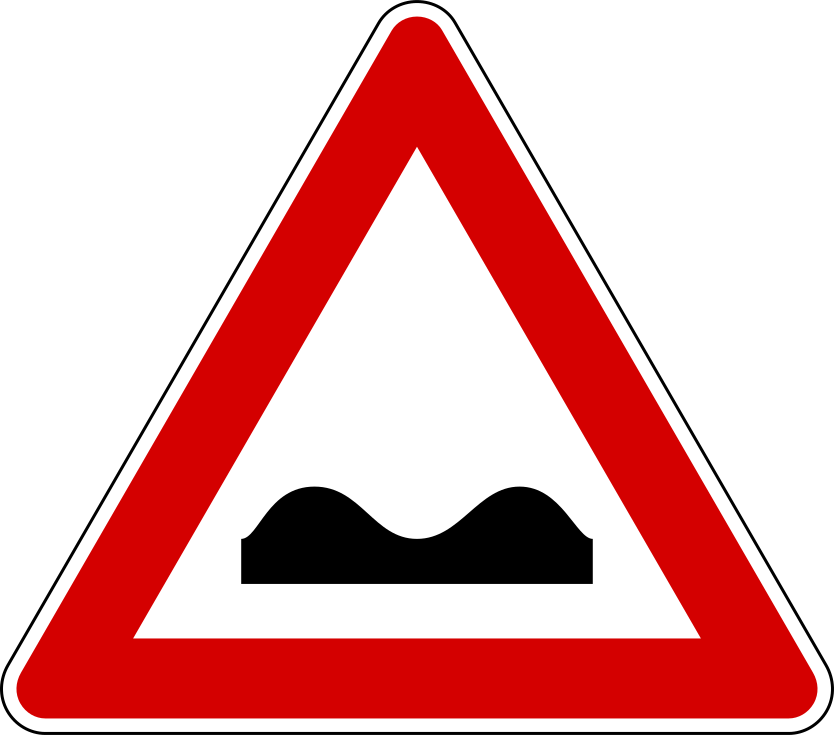
20. Warning for a bad road surface
This traffic sign indicates a warning for a bad or uneven road surface. Potholes, bumps, depressions or other surface irregularities may affect vehicle stability and braking. Reduce speed and avoid sudden manoeuvres.
English • Traffic sign II.1 • Uneven road. Warns of a road section in poor condition or with an uneven surface.
Italiano • Figura II.1 • Strada deformata. Presegnala un tratto di strada in cattivo stato o con pavimentazione irregolare.
Sources
🔗 Commons.wikimedia.org
🔗 Normattiva.it • D.P.R. 495/1992 • testo vigente • art. 85, comma 1
🔗 Gazzettaufficiale.it • Gazzetta Ufficiale • Figura II.1 • pagina 245
Image via Commons.wikimedia.org
F l a n k e r • Public domain • Source revision 2011-04-07. Wikimedia original unmodified.
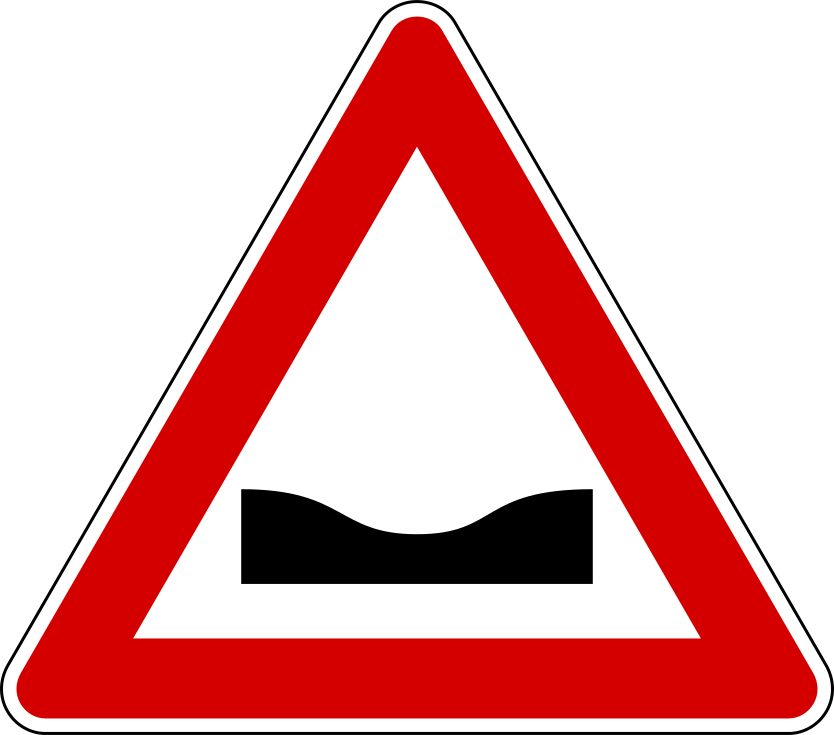
21. Warning for a dip in the road
This traffic sign indicates a warning for a dip in the road. A sudden depression in the road surface lies ahead and may affect vehicle stability or visibility. Reduce speed before reaching the dip and be prepared for water or other hazards that may collect in the lowered section.
English • Traffic sign II.3 • Dip. Warns of a concave change in the road's gradient.
Italiano • Figura II.3 • Cunetta. Presegnala un’anomalia altimetrica concava della strada.
Sources
🔗 Commons.wikimedia.org
🔗 Normattiva.it • D.P.R. 495/1992 • testo vigente • art. 85, comma 3
🔗 Gazzettaufficiale.it • Gazzetta Ufficiale • Figura II.3 • pagina 245
Image via Commons.wikimedia.org
F l a n k e r • Public domain • Source revision 2011-02-05. Wikimedia original unmodified.
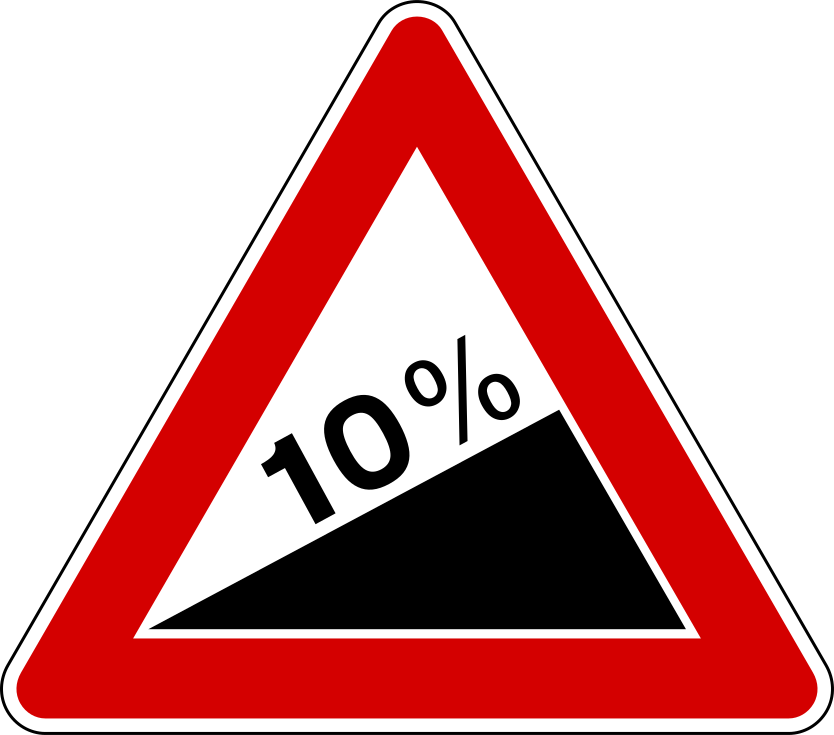
22. Warning for a steep ascent
This traffic sign indicates a warning for a steep ascent. A steep uphill gradient lies ahead and may cause heavy or low-powered vehicles to lose speed. Select a suitable gear, maintain a safe following distance and be prepared for slower traffic.
English • Traffic sign II.16 • Steep ascent. Warns of a dangerous uphill gradient. The figure gives the gradient as a percentage.
Italiano • Figura II.16 • Salita ripida. Presegnala un tratto con pendenza ascendente pericolosa. La cifra esprime la pendenza in percentuale.
Sources
🔗 Commons.wikimedia.org
🔗 Normattiva.it • D.P.R. 495/1992 • testo vigente • art. 89, comma 1–2
🔗 Gazzettaufficiale.it • Gazzetta Ufficiale • Figura II.16 • pagina 249
SVG source: F l a n k e r • Public domain • Original revision 2011-02-05. Wikimedia original unmodified.
Artwork verified against Gazzettaufficiale.it • official published diagram II.16.
Current figure reference verified in Normattiva.it • Normattiva, current article 89.
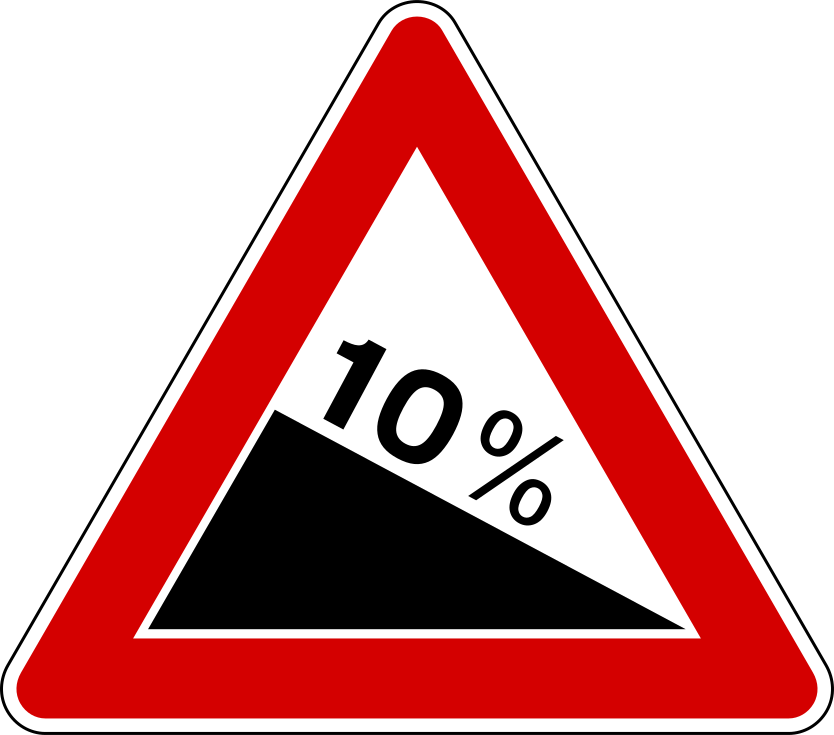
23. Warning for a steep descent
This traffic sign indicates a warning for a steep descent. A steep downhill gradient lies ahead and the vehicle may gain speed quickly. Reduce speed before the descent, select a suitable gear and use engine braking where appropriate. Allow extra distance for heavy or towing vehicles.
English • Traffic sign II.15 • Dangerous descent. Warns of a dangerous downhill gradient. The figure gives the gradient as a percentage.
Italiano • Figura II.15 • Discesa pericolosa. Presegnala un tratto con pendenza discendente pericolosa. La cifra esprime la pendenza in percentuale.
Sources
🔗 Commons.wikimedia.org
🔗 Normattiva.it • D.P.R. 495/1992 • testo vigente • art. 89, comma 1–2
🔗 Gazzettaufficiale.it • Gazzetta Ufficiale • Figura II.15 • pagina 249
SVG source: F l a n k e r • Public domain • Original revision 2011-02-05. Wikimedia original unmodified.
Current figure reference verified in Normattiva.it • Normattiva, current article 89.
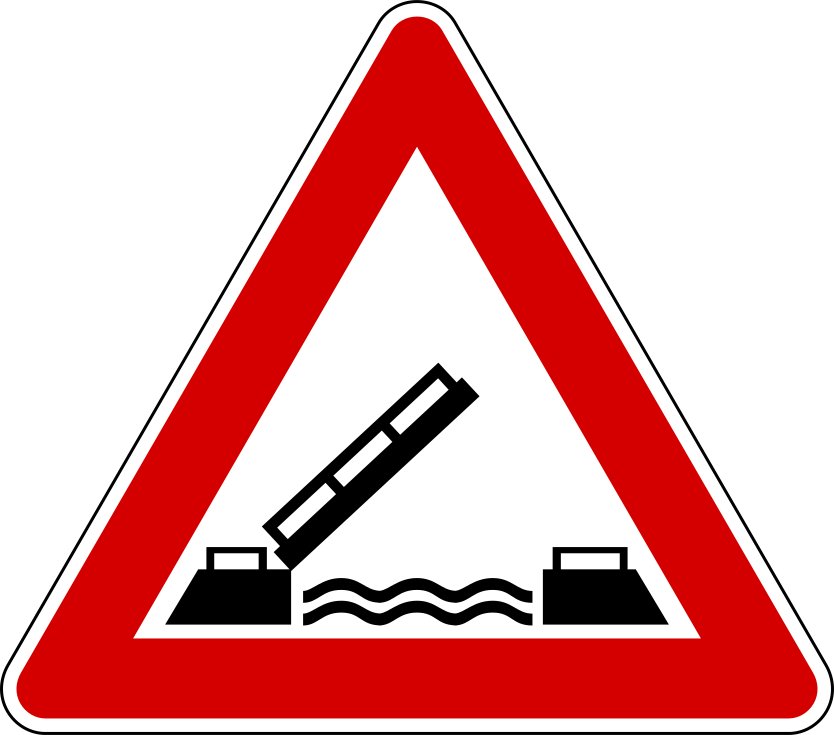
24. Warning for a movable bridge
This traffic sign indicates a warning for a movable bridge. The bridge ahead can open, lift or move to allow water traffic to pass. Reduce speed and be prepared to stop when required by barriers, traffic lights or other signals.
English • Traffic sign II.20 • Opening bridge. Warns of a movable road structure. Supplementary plates may specify the distance and operating times.
Italiano • Figura II.20 • Ponte mobile. Presegnala una struttura stradale mobile o manovrabile. Eventuali pannelli precisano la distanza e gli orari di funzionamento.
Sources
🔗 Commons.wikimedia.org (F l a n k e r • CC BY-SA 3.0)
🔗 Normattiva.it • D.P.R. 495/1992 • testo vigente • art. 91, comma 1
🔗 Gazzettaufficiale.it • Gazzetta Ufficiale • Figura II.20 • pagina 250
Image via Commons.wikimedia.org
F l a n k e r • CC BY-SA 3.0 • Source revision 2011-02-05. Wikimedia original unmodified.
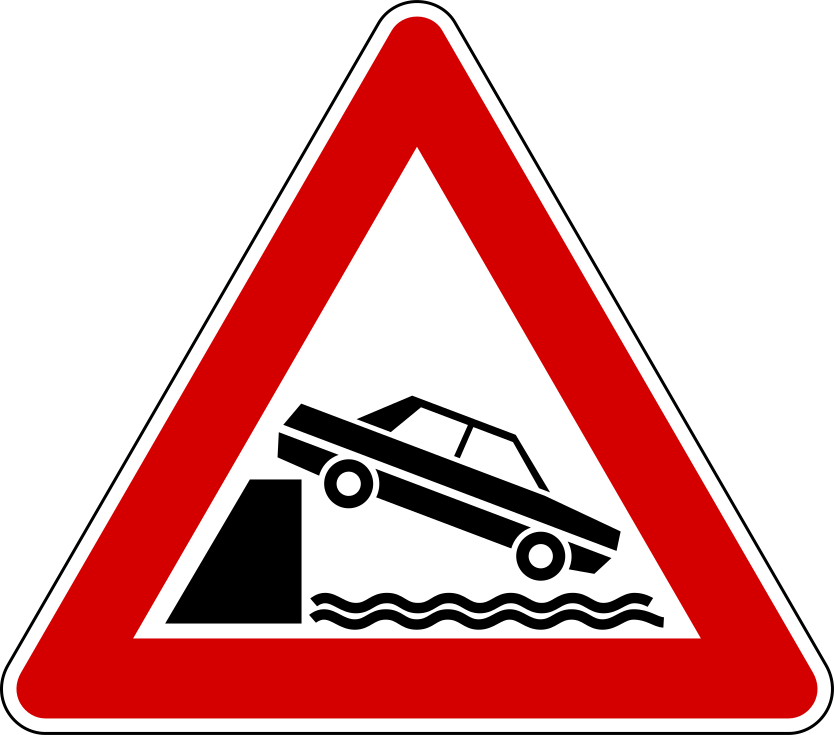
25. Warning for a quayside or riverbank
This traffic sign indicates a warning for a quayside or riverbank. The road approaches or runs close to an edge beside water, where a vehicle could leave the roadway and enter the water. Reduce speed, identify the road edge carefully and take extra care in darkness or poor visibility.
English • Traffic sign II.28 • Road ends at a quay or embankment. Warns that the road ends at a quay or the bank of a river or canal, with a risk of falling into water.
Italiano • Figura II.28 • Sbocco su molo o su argine. Presegnala che la strada sbocca su un molo o su un argine di fiume o canale, con pericolo di caduta in acqua.
Sources
🔗 Commons.wikimedia.org (F l a n k e r • CC BY-SA 3.0)
🔗 Normattiva.it • D.P.R. 495/1992 • testo vigente • art. 97, comma 1
🔗 Gazzettaufficiale.it • Gazzetta Ufficiale • Figura II.28 • pagina 253
SVG source: F l a n k e r • CC BY-SA 3.0 • Original revision 2026-03-13. Wikimedia original unmodified.
Current figure reference verified in Normattiva.it • Normattiva, current article 97.
26. Warning for traffic lights ahead
This traffic sign indicates a warning for traffic lights ahead. Traffic signals are located ahead and may not be visible early enough without advance warning. Reduce speed and be prepared to stop if the signal requires it.
English • Traffic sign II.31/a • Traffic signals. Warns of signals with the lights arranged vertically.
Italiano • Figura II.31/a • Semaforo. Presegnala un impianto semaforico con le luci disposte verticalmente.
Sources
🔗 Commons.wikimedia.org
🔗 Normattiva.it • D.P.R. 495/1992 • testo vigente • art. 99, comma 1–3
🔗 Gazzettaufficiale.it • Gazzetta Ufficiale • Figura II.31/a • pagina 254
Image via Commons.wikimedia.org
F l a n k e r • Public domain • Source revision 2011-02-05. Wikimedia original unmodified.
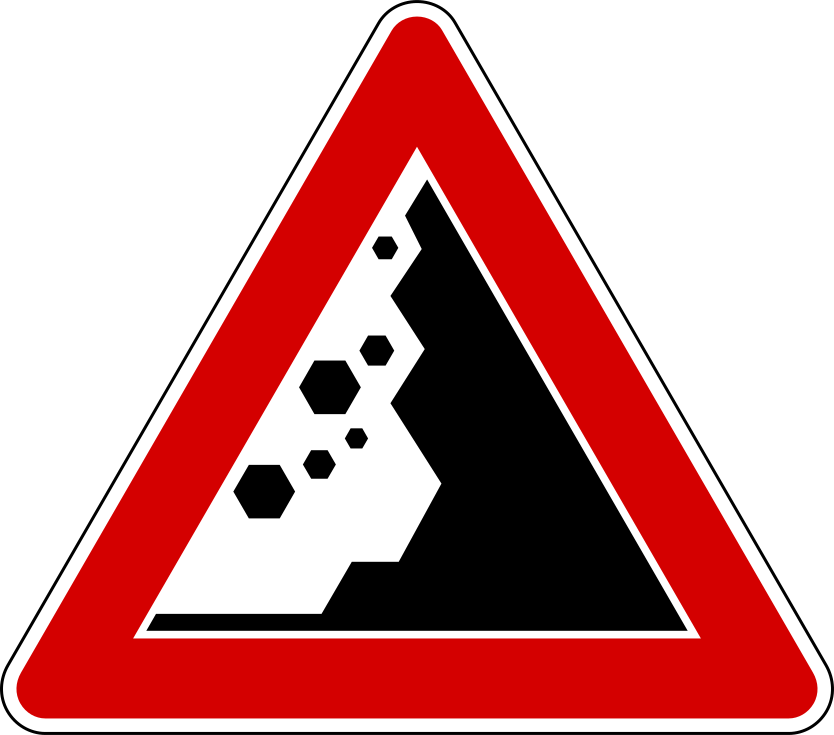
27. Warning for falling rocks
This traffic sign indicates a warning for falling rocks. Rocks or stones may fall from nearby slopes or may already be lying on the road. Reduce speed, scan the road ahead and be prepared to avoid or stop for fallen material.
English • Traffic sign II.30/b • Falling rocks. Warns of falling stones or rocks, or their possible presence on the carriageway. The slope shown is on the right.
Italiano • Figura II.30/b • Caduta massi. Presegnala un tratto con pericolo di caduta di pietre o massi, oppure con possibile presenza di questi sulla carreggiata. La scarpata rappresentata è a destra.
Sources
🔗 Commons.wikimedia.org
🔗 Normattiva.it • D.P.R. 495/1992 • testo vigente • art. 98, comma 2
🔗 Gazzettaufficiale.it • Gazzetta Ufficiale • Figura II.30/b • pagina 253
SVG source: F l a n k e r • Public domain • Original revision 2011-02-05. Wikimedia original unmodified.
Current figure reference verified in Normattiva.it • Normattiva, current article 98.
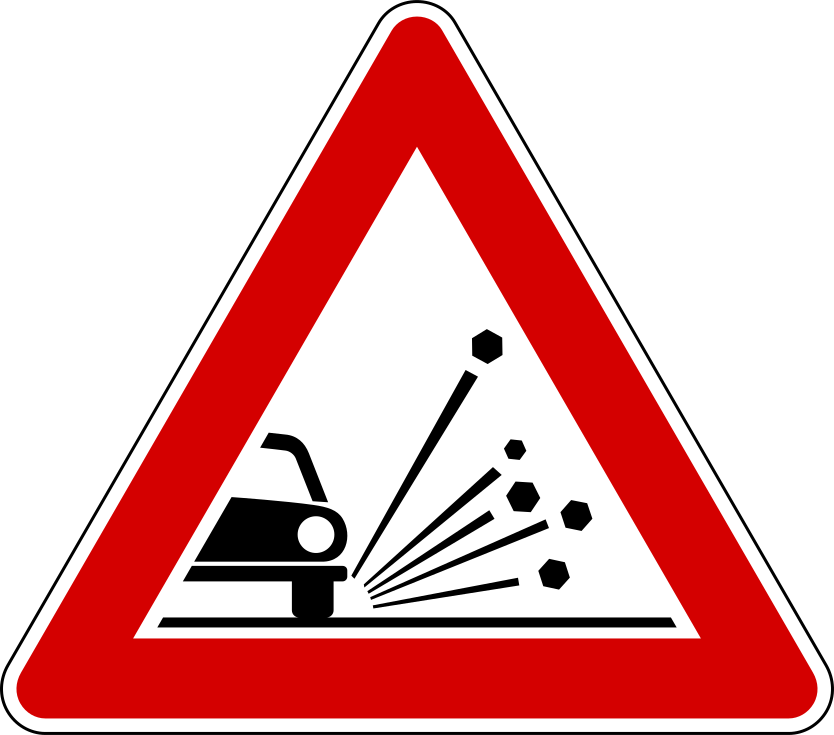
28. Warning for loose chippings on the road surface
This traffic sign indicates a warning for loose chippings. Loose stones or gravel may reduce tyre grip and can be thrown up by passing vehicles. Reduce speed, increase your following distance and avoid sudden braking, acceleration or steering movements.
English • Traffic sign II.29 • Loose material on the road. Warns of gravel, crushed stone, chippings or other material that vehicles may throw up or that may reduce grip.
Italiano • Figura II.29 • Materiale instabile sulla strada. Presegnala ghiaia, pietrisco, graniglia o altro materiale sulla pavimentazione che può essere proiettato dai veicoli o ridurre l’aderenza.
Sources
🔗 Commons.wikimedia.org (F l a n k e r • CC BY-SA 3.0)
🔗 Normattiva.it • D.P.R. 495/1992 • testo vigente • art. 98, comma 1
🔗 Gazzettaufficiale.it • Gazzetta Ufficiale • Figura II.29 • pagina 253
SVG source: F l a n k e r • CC BY-SA 3.0 • Original revision 2011-02-05. Wikimedia original unmodified.
Current figure reference verified in Normattiva.it • Normattiva, current article 98.
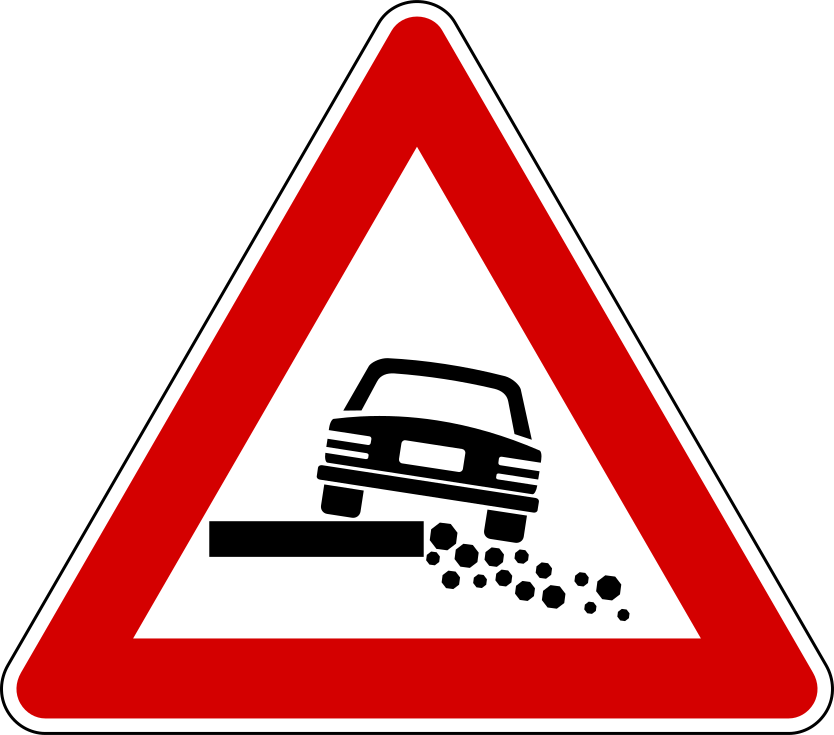
29. Warning for a soft verge
This traffic sign indicates a warning for a soft or unstable verge. The edge of the road may provide less grip or support than the roadway and can affect steering or vehicle stability. Avoid driving onto the verge unless necessary and reduce speed if you must use it.
English • Traffic sign II.21 • Dangerous shoulder. Warns of a soft or unusable shoulder, or a risk of falling into a deep gutter or ditch when approaching the edge.
Italiano • Figura II.21 • Banchina pericolosa. Presegnala una banchina cedevole o non praticabile, oppure il pericolo di cadere in una cunetta profonda o in un fosso accostandosi al margine.
Sources
🔗 Commons.wikimedia.org (F l a n k e r • CC BY-SA 3.0)
🔗 Normattiva.it • D.P.R. 495/1992 • testo vigente • art. 92, comma 1
🔗 Gazzettaufficiale.it • Gazzetta Ufficiale • Figura II.21 • pagina 250
SVG source: F l a n k e r • CC BY-SA 3.0 • Original revision 2011-02-05. Wikimedia original unmodified.
Artwork verified against Gazzettaufficiale.it • official published diagram II.21.
Current figure reference verified in Normattiva.it • Normattiva, current article 92.
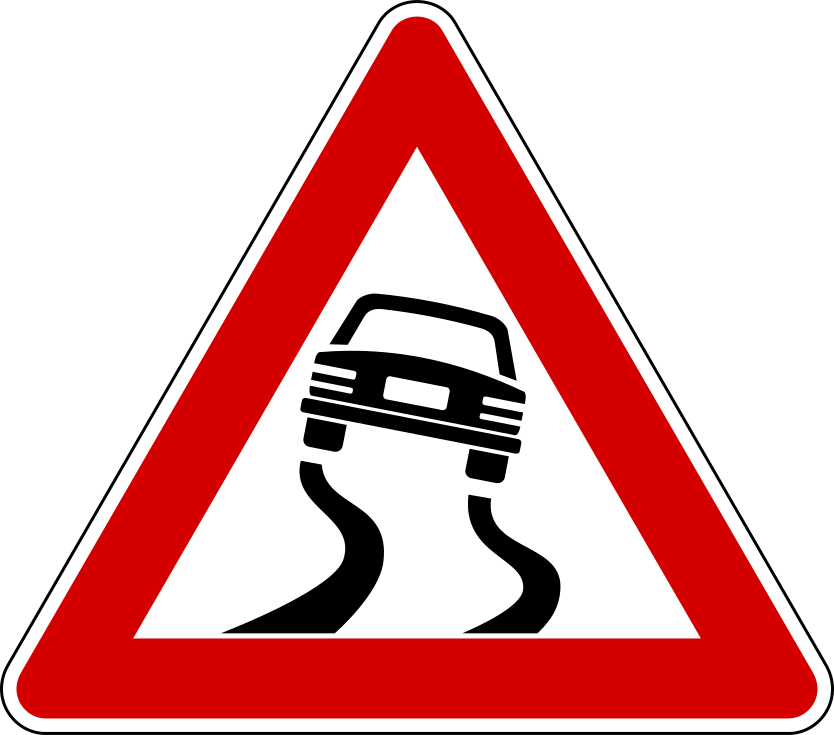
30. Warning for a slippery road surface
This traffic sign indicates a warning for a slippery road surface. The road ahead may provide reduced tyre grip because of water, ice, mud, oil or another surface condition. Reduce speed and avoid sudden braking, acceleration or steering movements.
English • Traffic sign II.22 • Slippery road. Warns of a section that may be more slippery than normal under particular conditions. Supplementary plates specify rain, ice or other causes.
Italiano • Figura II.22 • Strada sdrucciolevole. Presegnala un tratto che, in particolari condizioni, può essere più sdrucciolevole del normale. Le condizioni di pioggia, gelo o altre cause sono precisate dai pannelli integrativi.
Sources
🔗 Commons.wikimedia.org (F l a n k e r • CC BY-SA 3.0)
🔗 Normattiva.it • D.P.R. 495/1992 • testo vigente • art. 93, comma 1–2
🔗 Gazzettaufficiale.it • Gazzetta Ufficiale • Figura II.22 • pagina 251
SVG source: F l a n k e r • CC BY-SA 3.0 • Original revision 2011-02-05. Wikimedia original unmodified.
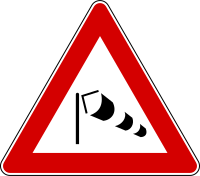
31. Warning for strong crosswinds
This traffic sign indicates a warning for strong crosswinds. Side winds may suddenly affect vehicle stability and steering. Reduce speed, keep a firm but controlled grip on the steering wheel and take extra care with high-sided vehicles, motorcycles and trailers.
English • Traffic sign II.33 • Strong crosswinds. Warns of a section where strong lateral gusts may occur.
Italiano • Figura II.33 • Forte vento laterale. Presegnala un tratto nel quale possono verificarsi forti raffiche di vento laterale.
Sources
🔗 Commons.wikimedia.org
🔗 Normattiva.it • D.P.R. 495/1992 • testo vigente • art. 101, comma 1
🔗 Gazzettaufficiale.it • Gazzetta Ufficiale • Figura II.33 • pagina 254
SVG source: F l a n k e r • Public domain • Original revision 2011-02-05. Wikimedia original unmodified.
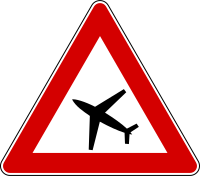
32. Warning for low-flying aircraft
This traffic sign indicates a warning for low-flying aircraft. Aircraft may pass over the road at low altitude and can create sudden noise or visual distraction. Keep your attention on the road and maintain control of the vehicle.
English • Traffic sign II.32 • Aircraft. Warns of possible sudden loud noises or dazzling from low-flying aircraft near airfields or landing grounds.
Italiano • Figura II.32 • Aeromobili. Presegnala la possibilità di rumori improvvisi e forti o di abbagliamenti causati da aeromobili a bassa quota, in prossimità di aerodromi o aviosuperfici.
Sources
🔗 Commons.wikimedia.org
🔗 Normattiva.it • D.P.R. 495/1992 • testo vigente • art. 100, comma 1
🔗 Gazzettaufficiale.it • Gazzetta Ufficiale • Figura II.32 • pagina 254
SVG source: F l a n k e r • Public domain • Original revision 2011-02-05. Wikimedia original unmodified.
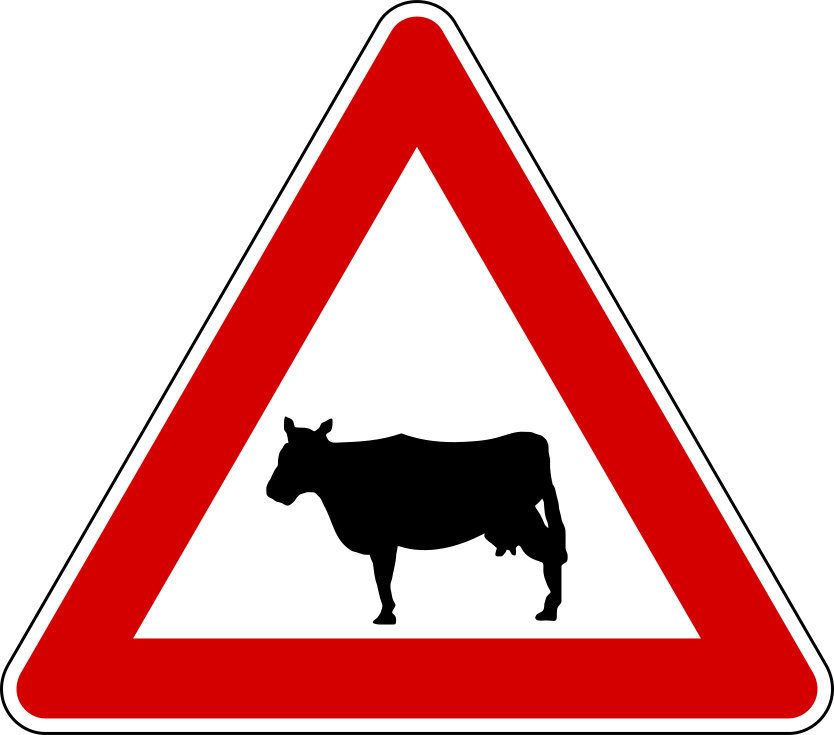
33. Warning for cattle on the road
This traffic sign indicates a warning for cattle. Cattle or other livestock may be crossing, walking along or standing near the road. Reduce speed, be prepared to stop and avoid sudden movements or unnecessary use of the horn that could startle the animals.
English • Traffic sign II.24 • Domestic animals. Warns of a road section where domestic animals are likely to cross.
Italiano • Figura II.24 • Animali domestici. Presegnala un tratto di strada con probabile attraversamento di animali domestici.
Sources
🔗 Commons.wikimedia.org (F l a n k e r • CC BY-SA 3.0)
🔗 Normattiva.it • D.P.R. 495/1992 • testo vigente • art. 95, comma 1
🔗 Gazzettaufficiale.it • Gazzetta Ufficiale • Figura II.24 • pagina 251
SVG source: F l a n k e r • CC BY-SA 3.0 • Original revision 2011-02-05. Wikimedia original unmodified.
Artwork verified against Gazzettaufficiale.it • official published diagram II.24.
Current figure reference verified in Normattiva.it • Normattiva, current article 95.
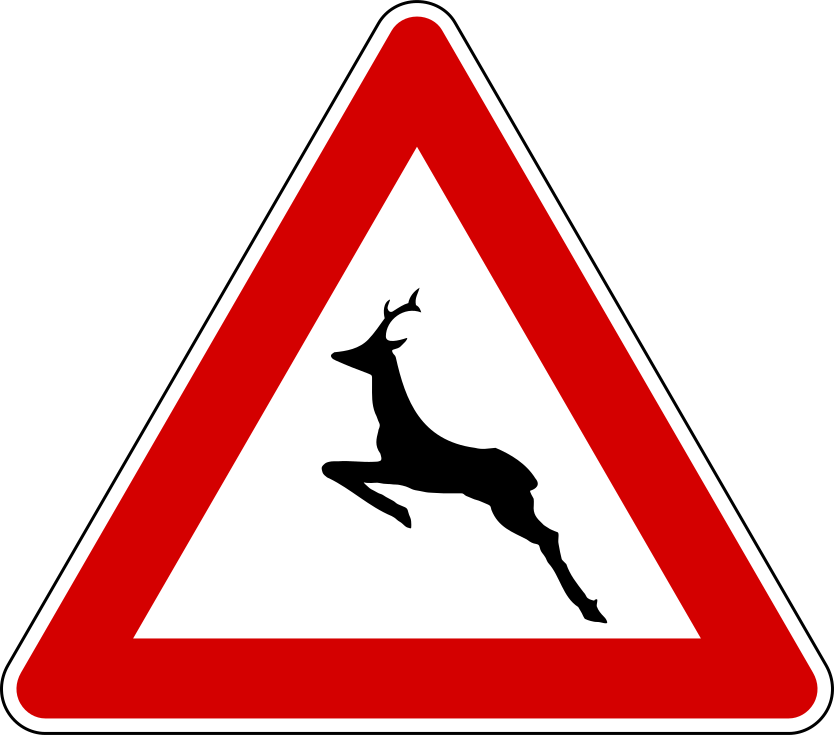
34. Warning for crossing deer
This traffic sign indicates a warning for crossing deer. Deer or other wild animals may enter the road unexpectedly, especially around dawn or dusk. Reduce speed, watch the roadside carefully and be prepared for more than one animal to cross.
English • Traffic sign II.25 • Wild animals. Warns of a road section where wild animals are likely to cross.
Italiano • Figura II.25 • Animali selvatici. Presegnala un tratto di strada con probabile attraversamento di animali selvatici.
Sources
🔗 Commons.wikimedia.org (F l a n k e r • CC BY-SA 3.0)
🔗 Normattiva.it • D.P.R. 495/1992 • testo vigente • art. 95, comma 1
🔗 Gazzettaufficiale.it • Gazzetta Ufficiale • Figura II.25 • pagina 251
SVG source: F l a n k e r • CC BY-SA 3.0 • Original revision 2011-02-05. Wikimedia original unmodified.
Artwork verified against Gazzettaufficiale.it • official published diagram II.25.
Current figure reference verified in Normattiva.it • Normattiva, current article 95.
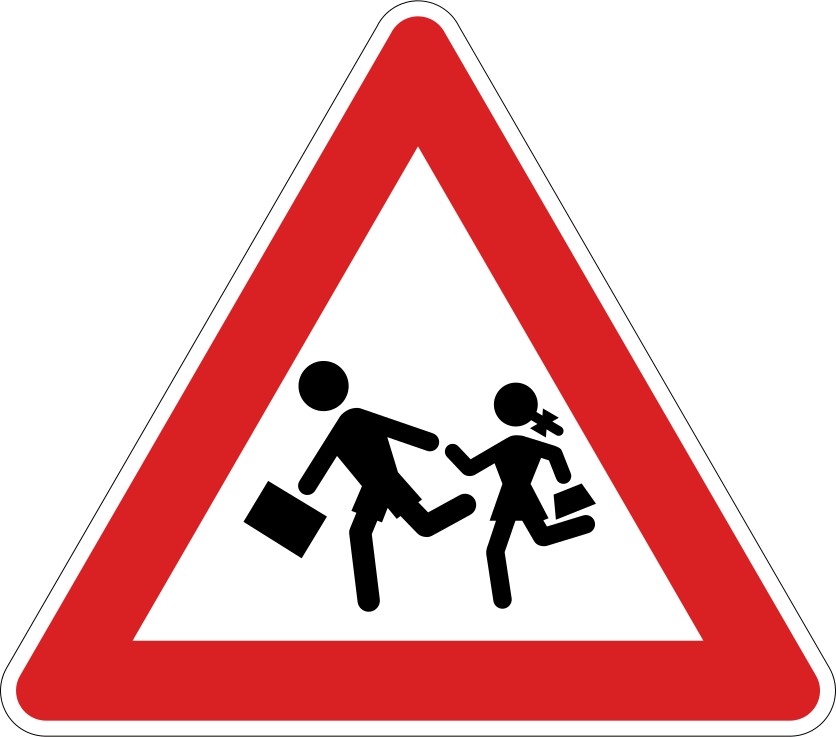
35. Warning for children
This traffic sign indicates a warning for children. Children may be present on or near the road and may cross unexpectedly. Reduce speed, scan both sides of the road carefully and be prepared to stop.
English • Traffic sign II.23 • Children. Warns of places frequented by children, such as schools, public gardens and playgrounds.
Italiano • Figura II.23 • Bambini. Presegnala luoghi frequentati da bambini, come scuole, giardini pubblici e campi di gioco.
Sources
🔗 Commons.wikimedia.org (F l a n k e r • CC BY-SA 3.0)
🔗 Normattiva.it • D.P.R. 495/1992 • testo vigente • art. 94, comma 1
🔗 Gazzettaufficiale.it • Gazzetta Ufficiale • Figura II.23 • pagina 251
Image via Commons.wikimedia.org
F l a n k e r • CC BY-SA 3.0 • Source revision 2025-02-23. Wikimedia original unmodified.
36. Warning for a pedestrian crossing
This traffic sign indicates a warning for a pedestrian crossing. A designated pedestrian crossing lies ahead. Reduce speed when necessary, watch carefully for pedestrians and be prepared to give way or stop according to the applicable local priority rules.
English • Traffic sign II.13 • Pedestrian crossing. Warns of a crossing identified by the appropriate carriageway markings.
Italiano • Figura II.13 • Attraversamento pedonale. Presegnala un attraversamento pedonale contraddistinto dagli appositi segni sulla carreggiata.
Sources
🔗 Commons.wikimedia.org (F l a n k e r • CC BY-SA 3.0)
🔗 Normattiva.it • D.P.R. 495/1992 • testo vigente • art. 88, comma 2
🔗 Gazzettaufficiale.it • Gazzetta Ufficiale • Figura II.13 • pagina 248
Image via Commons.wikimedia.org
F l a n k e r • CC BY-SA 3.0 • Source revision 2025-02-23. Wikimedia original unmodified.
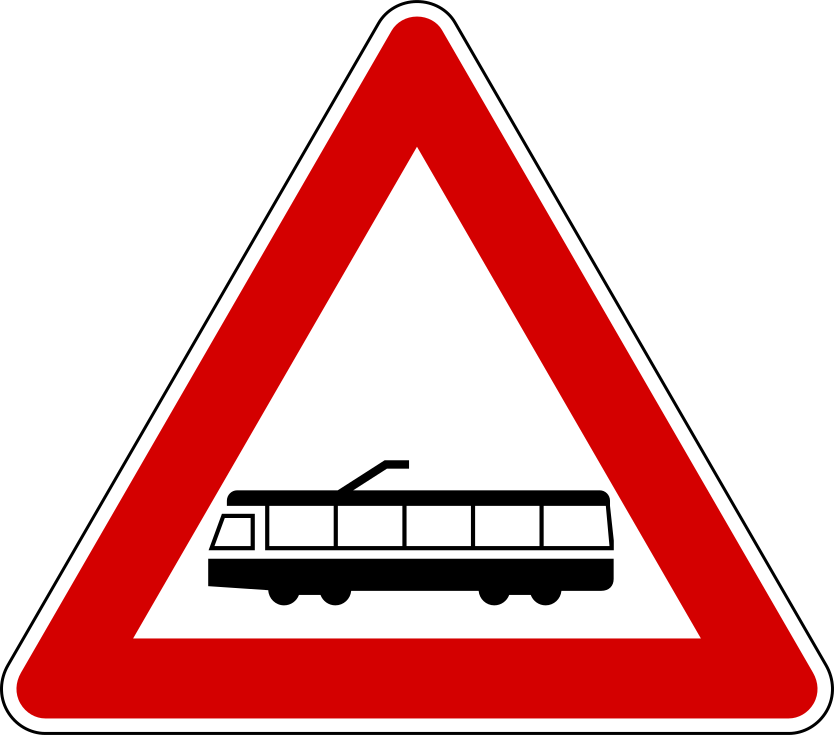
37. Warning for trams
This traffic sign indicates a warning for trams. Tram tracks cross or run along the road ahead, and trams may enter the traffic path. Reduce speed, watch carefully for approaching trams and follow the applicable traffic signals, priority signs and local rules.
English • Traffic sign II.12 • Tram crossing. Warns of a tram line without traffic signals that crosses, interferes with or narrows the carriageway available to vehicles.
Italiano • Figura II.12 • Attraversamento tranviario. Presegnala una linea tranviaria non regolata da semaforo che interseca, interferisce con o riduce la carreggiata destinata ai veicoli.
Sources
🔗 Commons.wikimedia.org
🔗 Normattiva.it • D.P.R. 495/1992 • testo vigente • art. 88, comma 1
🔗 Gazzettaufficiale.it • Gazzetta Ufficiale • Figura II.12 • pagina 248
SVG source: F l a n k e r • Public domain • Original revision 2011-02-05. Wikimedia original unmodified.
Artwork verified against Gazzettaufficiale.it • official published diagram II.12.
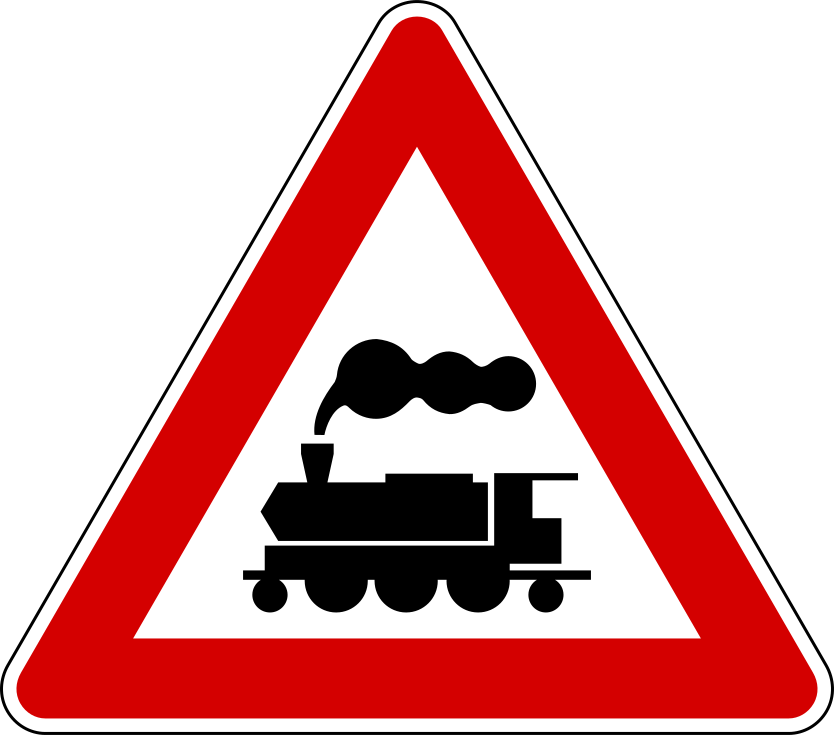
38. Warning for a railway crossing without barriers
This traffic sign indicates a warning for a railway crossing without barriers. It alerts drivers to an upcoming level crossing where railway tracks cross the road and no barriers or gates are present to stop traffic. Drivers should slow down and look both ways for trains.
English • Traffic sign II.9 • Level crossing without barriers. Warns of a railway crossing with no barriers.
Italiano • Figura II.9 • Passaggio a livello senza barriere. Presegnala un attraversamento ferroviario privo di barriere.
Sources
🔗 Commons.wikimedia.org
🔗 Normattiva.it • D.P.R. 495/1992 • testo vigente • art. 87, comma 2
🔗 Gazzettaufficiale.it • Gazzetta Ufficiale • Figura II.9 • pagina 247
SVG source: F l a n k e r • Public domain • Original revision 2011-07-24. Wikimedia original unmodified.
Current figure reference verified in Normattiva.it • Normattiva, current article 87.
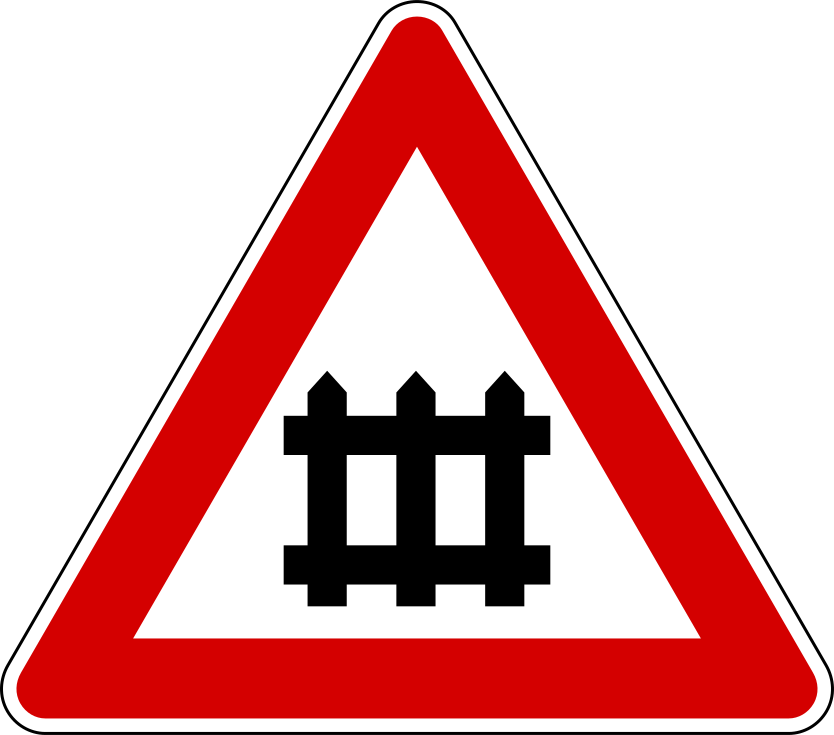
39. Warning for a railway crossing with barriers
This traffic sign indicates a warning for a railway crossing with barriers. It alerts drivers to an upcoming level crossing with gates or barriers that close when a train approaches. Drivers should be ready to stop when the barriers are down or flashing lights activate. Never attempt to cross when gates are closing or closed.
English • Traffic sign II.8 • Level crossing with barriers. Warns of a railway crossing with barriers or half-barriers.
Italiano • Figura II.8 • Passaggio a livello con barriere. Presegnala un attraversamento ferroviario munito di barriere o semibarriere.
Sources
🔗 Commons.wikimedia.org
🔗 Normattiva.it • D.P.R. 495/1992 • testo vigente • art. 87, comma 1
🔗 Gazzettaufficiale.it • Gazzetta Ufficiale • Figura II.8 • pagina 247
SVG source: F l a n k e r • Public domain • Original revision 2011-02-05. Wikimedia original unmodified.
Current figure reference verified in Normattiva.it • Normattiva, current article 87.
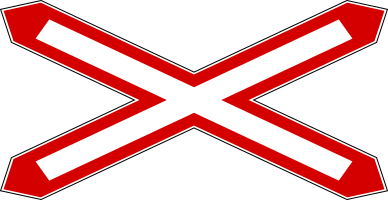
40. Warning for a railway crossing with one track
This traffic sign indicates a warning for a railway crossing with one track. It alerts drivers to a level crossing where a single railway track crosses the road. Drivers should approach with caution and be prepared to stop, even if no barriers or warning lights are active.
English • Traffic sign II.10/a • Crossbuck. Marks a nearby level crossing without barriers and the obligation to stop at the stop line.
Italiano • Figura II.10/a • Croce di S. Andrea. Segnala nelle immediate vicinanze un passaggio a livello senza barriere e l’obbligo di fermarsi in corrispondenza della striscia di arresto.
Sources
🔗 Commons.wikimedia.org
🔗 Normattiva.it • D.P.R. 495/1992 • testo vigente • art. 87, comma 2
🔗 Gazzettaufficiale.it • Gazzetta Ufficiale • Figura II.10/a • pagina 247
SVG source: F l a n k e r • Public domain • Original revision 2012-12-27. Wikimedia original unmodified.
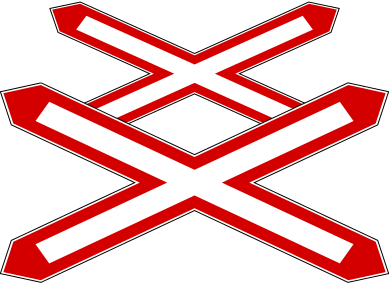
41. Warning for a railway crossing with two or more tracks
This traffic sign indicates a warning for a railway crossing with two or more tracks. It alerts drivers to a level crossing where more than one railway track crosses the road. More than one train may pass in succession or from different directions, so drivers should check carefully before crossing and never proceed until all tracks are clear.
English • Traffic sign II.10/b • Double crossbuck. Marks a nearby level crossing without barriers with two or more tracks.
Italiano • Figura II.10/b • Doppia croce di S. Andrea. Segnala nelle immediate vicinanze un passaggio a livello senza barriere con due o più binari.
Sources
🔗 Commons.wikimedia.org (Gigillo83 • CC BY-SA 3.0)
🔗 Normattiva.it • D.P.R. 495/1992 • testo vigente • art. 87, comma 2
🔗 Gazzettaufficiale.it • Gazzetta Ufficiale • Figura II.10/b • pagina 247
SVG source: Gigillo83 • CC BY-SA 3.0 • Original revision 2022-05-12. Wikimedia original unmodified.
