


Mandatory signsItaly
 Traffic rules
 Italy
 Priority signs
 Warning signs
 Prohibitory signs
 Mandatory signs
 Information signs
 Additional signs
Mandatory signs
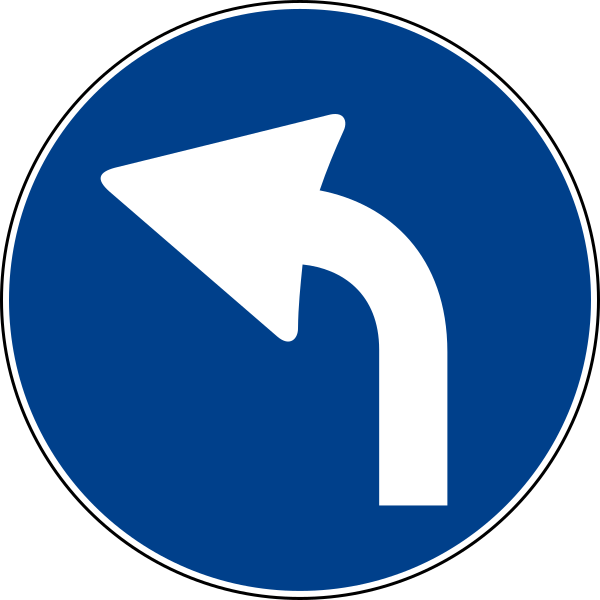
A mandatory sign is a traffic sign that tells drivers what they must do. Instead of prohibiting actions, these signs impose obligations such as following a specific direction, using a particular lane, or keeping a minimum speed. Their purpose is to guide traffic safely and efficiently by ensuring that all road users follow the same required behaviour in places where it is necessary for order and safety.









How are compulsory instructions shown in Italy?
Obligation signs are another prescription subdivision. They prescribe the action or route to follow.
What does a mandatory-direction sign require in Italy?
Where a compulsory-direction sign is installed in Italy, follow only the arrow direction or permitted combination of directions. The restriction applies at the location or movement it regulates; it is not an instruction to ignore other traffic controls.
Does a mandatory-direction sign give me priority over pedestrians in Italy?
No. It tells you which way to move, not who goes first. Check traffic lights, other priority signs, pedestrians and cyclists, and give way when required before completing the manoeuvre.

1. Mandatory roundabout direction
This traffic sign indicates the mandatory direction around a roundabout. Traffic must circulate in the direction shown by the arrows. The sign does not itself determine priority; follow the applicable priority signs, traffic signals and local rules.
English • Traffic sign II.84 • Roundabout. Drivers must circulate in the direction shown by the arrows within the roundabout area.
Italiano • Figura II.84 • Rotatoria. Obbliga a circolare nel verso indicato dalle frecce, in corrispondenza dell’area con circolazione rotatoria.
Sources
🔗 Commons.wikimedia.org (F l a n k e r • CC BY-SA 3.0)
🔗 Normattiva.it • D.P.R. 495/1992 • testo vigente • art. 122, comma 6
🔗 Gazzettaufficiale.it • Gazzetta Ufficiale • Figura II.84 • pagina 271
SVG source: F l a n k e r • CC BY-SA 3.0 • Original revision 2010-07-17. Wikimedia original unmodified.
2. Turning left mandatory
This traffic sign indicates that turning left is mandatory at the junction ahead. Traffic must turn left and may not continue straight ahead or turn right.
English • Traffic sign II.80/e • Advance indication of compulsory left turn. Warns that turning left is compulsory.
Italiano • Figura II.80/e • Preavviso di direzione obbligatoria a sinistra. Preavvisa l’obbligo di svoltare a sinistra.
Sources
🔗 Commons.wikimedia.org (F l a n k e r • CC BY-SA 3.0)
🔗 Normattiva.it • D.P.R. 495/1992 • testo vigente • art. 122, comma 2
🔗 Gazzettaufficiale.it • Gazzetta Ufficiale • Figura II.80/e • pagina 270
SVG source: F l a n k e r • CC BY-SA 3.0 • Original revision 2010-07-17. Wikimedia original unmodified.
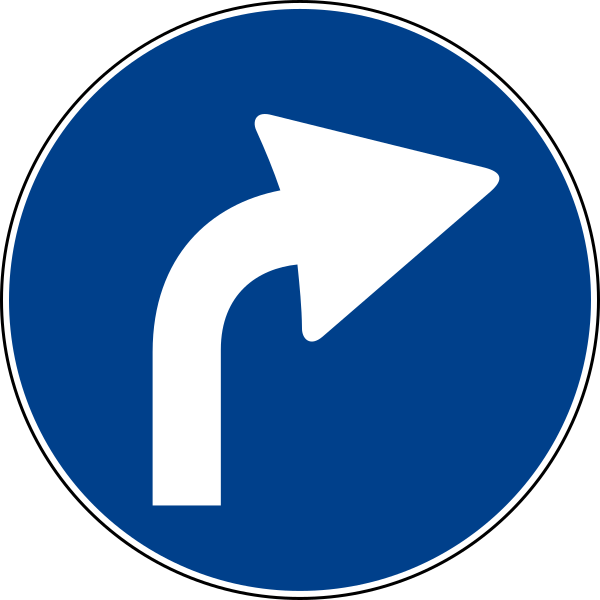
3. Turning right mandatory
This traffic sign indicates that turning right is mandatory at the junction ahead. Traffic must turn right and may not continue straight ahead or turn left.
English • Traffic sign II.80/d • Advance indication of compulsory right turn. Warns that turning right is compulsory.
Italiano • Figura II.80/d • Preavviso di direzione obbligatoria a destra. Preavvisa l’obbligo di svoltare a destra.
Sources
🔗 Commons.wikimedia.org (F l a n k e r • CC BY-SA 3.0)
🔗 Normattiva.it • D.P.R. 495/1992 • testo vigente • art. 122, comma 2
🔗 Gazzettaufficiale.it • Gazzetta Ufficiale • Figura II.80/d • pagina 269
SVG source: F l a n k e r • CC BY-SA 3.0 • Original revision 2010-07-17. Wikimedia original unmodified.
4. Pass obstacle on the left
This traffic sign indicates that traffic must pass an obstacle on the left. Keep to the left of the obstacle and follow any accompanying signs or road markings.
English • Traffic sign II.82/a • Pass on the left. Drivers must pass to the left of the obstacle, obstruction, traffic island or central reservation.
Italiano • Figura II.82/a • Passaggio obbligatorio a sinistra. Obbliga a passare a sinistra dell’ostacolo, dell’ingombro, dell’isola di traffico o dello spartitraffico.
Sources
🔗 Commons.wikimedia.org (F l a n k e r • CC BY-SA 3.0)
🔗 Normattiva.it • D.P.R. 495/1992 • testo vigente • art. 122, comma 4
🔗 Gazzettaufficiale.it • Gazzetta Ufficiale • Figura II.82/a • pagina 271
Replacement SVG: Commons.wikimedia.org • Wikimedia Commons original • 3247 • Public domain • Original revision 2023-05-28. Wikimedia original unmodified.
Image via Commons.wikimedia.org
3247 • Public domain • Source revision 2023-05-28. Wikimedia original unmodified.
5. Pass obstacle on either side
This traffic sign indicates that traffic must pass an obstacle on either the left or the right. Use either permitted side while following the road layout and any accompanying signs or markings.
English • Traffic sign II.83 • Passing permitted on either side. Drivers may pass on either side of the obstacle.
Italiano • Figura II.83 • Passaggi consentiti. Consente di passare da uno dei due lati dell’ostacolo.
Sources
🔗 Commons.wikimedia.org (F l a n k e r • CC BY-SA 3.0)
🔗 Normattiva.it • D.P.R. 495/1992 • testo vigente • art. 122, comma 4
🔗 Gazzettaufficiale.it • Gazzetta Ufficiale • Figura II.83 • pagina 271
SVG source: F l a n k e r • CC BY-SA 3.0 • Original revision 2010-07-17. Wikimedia original unmodified.
6. Pass obstacle on the right
This traffic sign indicates that traffic must pass an obstacle on the right. Keep to the right of the obstacle and follow any accompanying signs or road markings.
English • Traffic sign II.82/b • Pass on the right. Drivers must pass to the right of the obstacle, obstruction, traffic island or central reservation.
Italiano • Figura II.82/b • Passaggio obbligatorio a destra. Obbliga a passare a destra dell’ostacolo, dell’ingombro, dell’isola di traffico o dello spartitraffico.
Sources
🔗 Commons.wikimedia.org (F l a n k e r • CC BY-SA 3.0)
🔗 Normattiva.it • D.P.R. 495/1992 • testo vigente • art. 122, comma 4
🔗 Gazzettaufficiale.it • Gazzetta Ufficiale • Figura II.82/b • pagina 271
Image via Commons.wikimedia.org
F l a n k e r • CC BY-SA 3.0 • Source revision 2015-09-12. Wikimedia original unmodified.
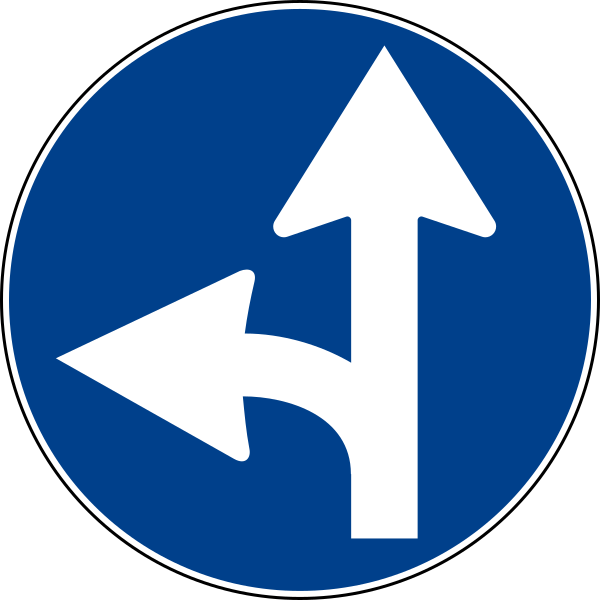
7. Driving straight ahead or turning left mandatory
This traffic sign indicates that traffic must continue straight ahead or turn left. One of the indicated directions must be followed; turning right is prohibited.
English • Traffic sign II.81/c • Straight ahead or left only. These are the only permitted directions.
Italiano • Figura II.81/c • Direzioni consentite diritto e sinistra. Indica che le sole direzioni consentite sono diritto e sinistra.
Sources
🔗 Commons.wikimedia.org (F l a n k e r • CC BY-SA 3.0)
🔗 Normattiva.it • D.P.R. 495/1992 • testo vigente • art. 122, comma 3
🔗 Gazzettaufficiale.it • Gazzetta Ufficiale • Figura II.81/c • pagina 270
SVG source: F l a n k e r • CC BY-SA 3.0 • Original revision 2010-07-17. Wikimedia original unmodified.
8. Driving straight ahead or turning right mandatory
This traffic sign indicates that traffic must continue straight ahead or turn right. One of the indicated directions must be followed; turning left is prohibited.
English • Traffic sign II.81/b • Straight ahead or right only. These are the only permitted directions.
Italiano • Figura II.81/b • Direzioni consentite diritto e destra. Indica che le sole direzioni consentite sono diritto e destra.
Sources
🔗 Commons.wikimedia.org (F l a n k e r • CC BY-SA 3.0)
🔗 Normattiva.it • D.P.R. 495/1992 • testo vigente • art. 122, comma 3
🔗 Gazzettaufficiale.it • Gazzetta Ufficiale • Figura II.81/b • pagina 270
SVG source: F l a n k e r • CC BY-SA 3.0 • Original revision 2010-07-17. Wikimedia original unmodified.
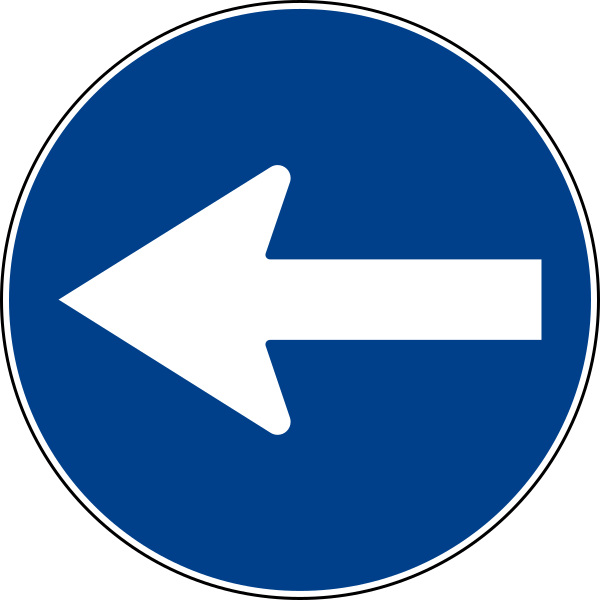
9. Mandatory left
This traffic sign indicates a mandatory direction to the left. Traffic must proceed to the left at the sign and may not continue straight ahead or to the right.
English • Traffic sign II.80/b • Left turn only. Left is the only permitted direction.
Italiano • Figura II.80/b • Direzione obbligatoria a sinistra. Indica che l’unica direzione consentita è a sinistra.
Sources
🔗 Commons.wikimedia.org (F l a n k e r • CC BY-SA 3.0)
🔗 Normattiva.it • D.P.R. 495/1992 • testo vigente • art. 122, comma 2
🔗 Gazzettaufficiale.it • Gazzetta Ufficiale • Figura II.80/b • pagina 269
SVG source: F l a n k e r • CC BY-SA 3.0 • Original revision 2010-07-17. Wikimedia original unmodified.
10. Mandatory right
This traffic sign indicates a mandatory direction to the right. Traffic must proceed to the right at the sign and may not continue straight ahead or to the left.
English • Traffic sign II.80/c • Right turn only. Right is the only permitted direction.
Italiano • Figura II.80/c • Direzione obbligatoria a destra. Indica che l’unica direzione consentita è a destra.
Sources
🔗 Commons.wikimedia.org (F l a n k e r • CC BY-SA 3.0)
🔗 Normattiva.it • D.P.R. 495/1992 • testo vigente • art. 122, comma 2
🔗 Gazzettaufficiale.it • Gazzetta Ufficiale • Figura II.80/c • pagina 269
SVG source: F l a n k e r • CC BY-SA 3.0 • Original revision 2010-07-17. Wikimedia original unmodified.
11. Driving straight ahead mandatory
This traffic sign indicates that driving straight ahead is mandatory. Traffic must continue straight ahead and may not turn left or right at the location to which the sign applies.
English • Traffic sign II.80/a • Straight ahead only. Straight ahead is the only permitted direction.
Italiano • Figura II.80/a • Direzione obbligatoria diritto. Indica che l’unica direzione consentita è diritto.
Sources
🔗 Commons.wikimedia.org (F l a n k e r • CC BY-SA 3.0)
🔗 Normattiva.it • D.P.R. 495/1992 • testo vigente • art. 122, comma 2
🔗 Gazzettaufficiale.it • Gazzetta Ufficiale • Figura II.80/a • pagina 269
SVG source: F l a n k e r • CC BY-SA 3.0 • Original revision 2010-07-17. Wikimedia original unmodified.
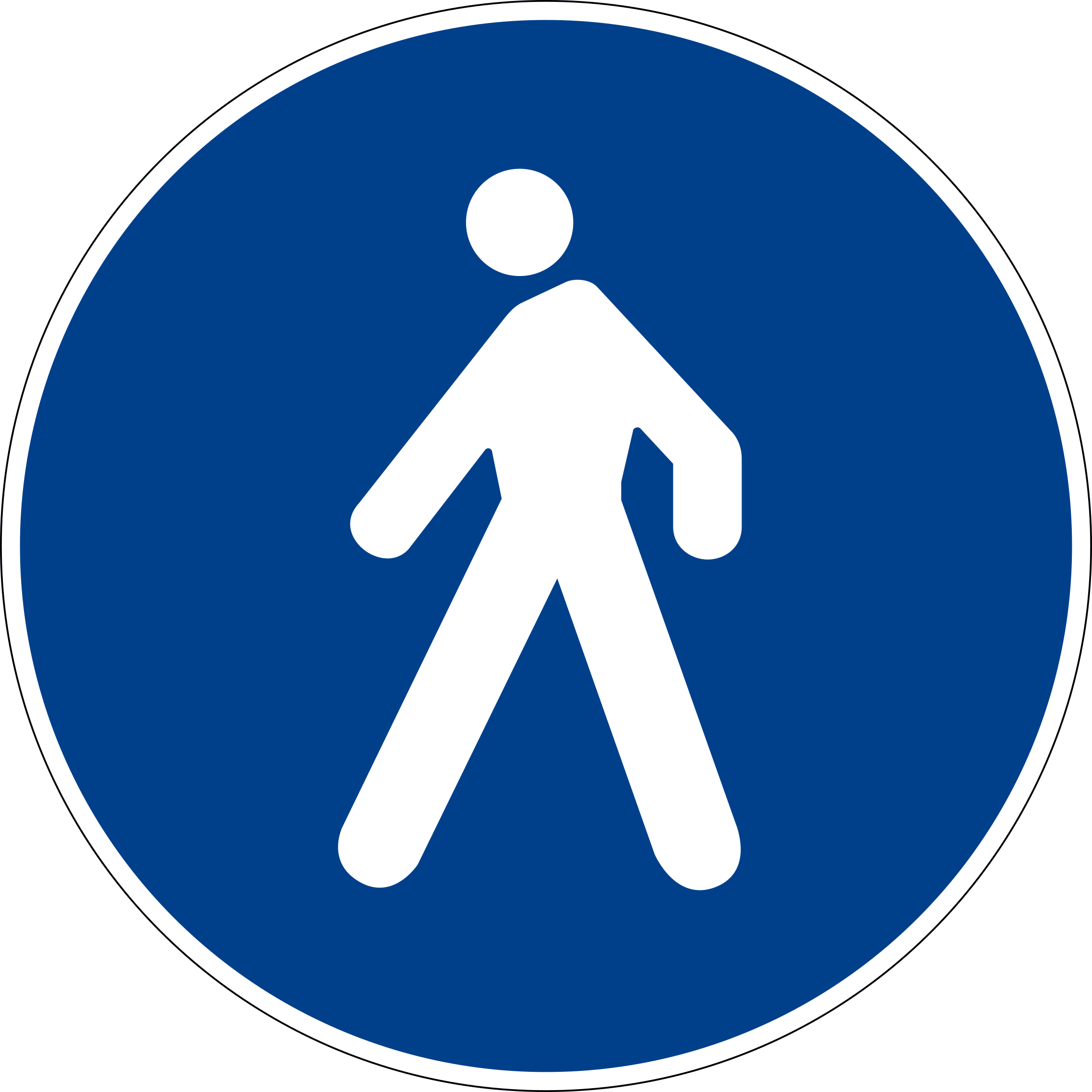
12. Mandatory path for pedestrians
This traffic sign indicates the start of a mandatory path for pedestrians. Pedestrians must use the designated path, while other road users may use it only where the applicable signs or local rules permit them to do so.
English • Traffic sign II.88 • Footpath. Marks a route reserved exclusively for pedestrians; other road-user categories are prohibited.
Italiano • Figura II.88 • Percorso pedonale. Indica un percorso riservato ai soli pedoni; è vietato alle altre categorie di utenti.
Sources
🔗 Commons.wikimedia.org
🔗 Normattiva.it • D.P.R. 495/1992 • testo vigente • art. 122, comma 9(a)
🔗 Gazzettaufficiale.it • Gazzetta Ufficiale • Figura II.88 • pagina 273
SVG source: F l a n k e r • Public domain • Original revision 2026-06-15. Wikimedia original unmodified.
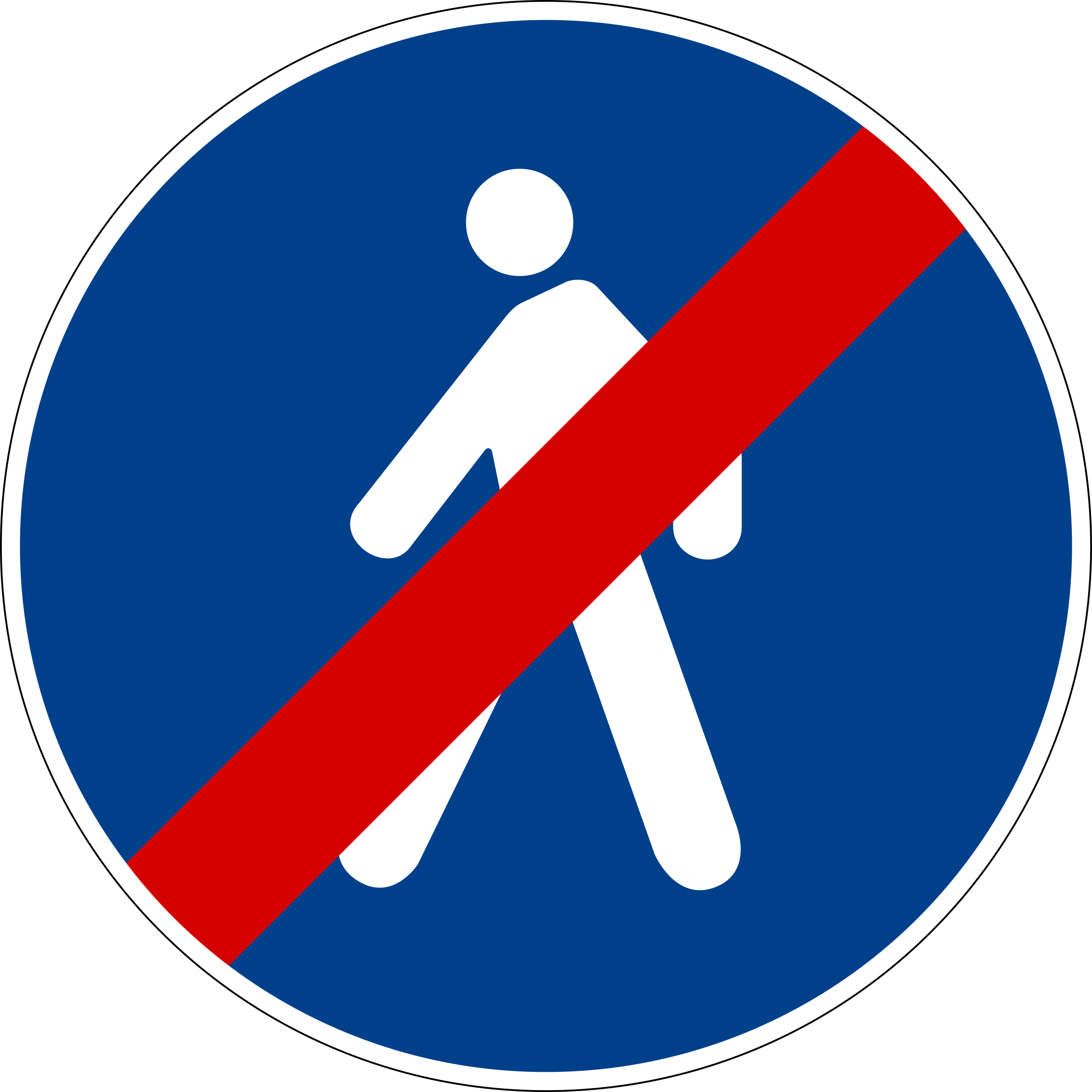
13. End of mandatory path for pedestrians
This traffic sign indicates the end of the mandatory path for pedestrians. The requirement associated with the designated path ends at this point. Pedestrians must continue according to the subsequent path or road layout and applicable local rules.
English • Traffic sign II.89 • End of footpath. Marks the end of the route reserved for pedestrians.
Italiano • Figura II.89 • Fine percorso pedonale. Indica la fine del percorso riservato ai pedoni.
Sources
🔗 Commons.wikimedia.org
🔗 Normattiva.it • D.P.R. 495/1992 • testo vigente • art. 122, comma 10
🔗 Gazzettaufficiale.it • Gazzetta Ufficiale • Figura II.89 • pagina 273
SVG source: F l a n k e r • Public domain • Original revision 2026-06-15. Wikimedia original unmodified.
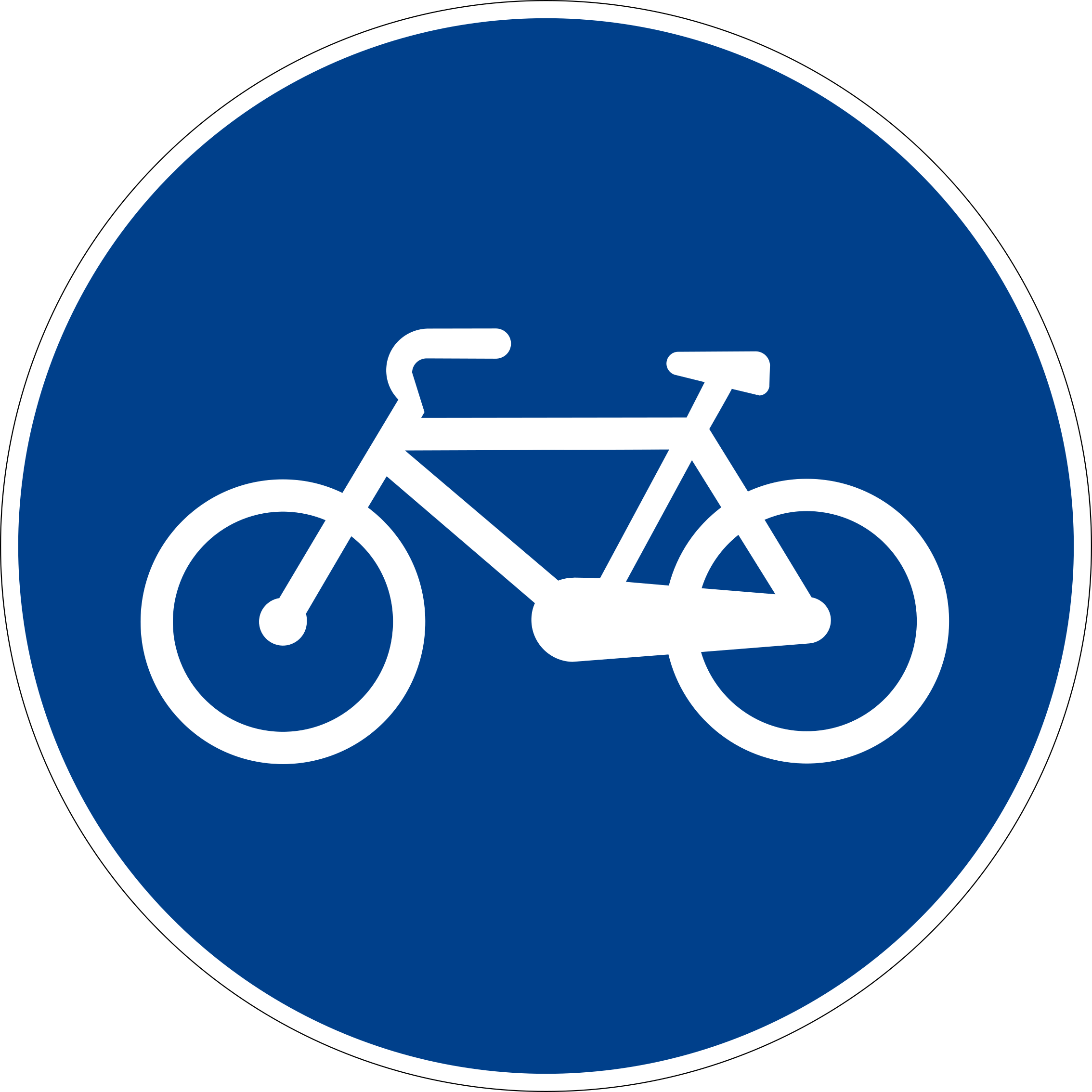
14. Mandatory path for cyclists
This traffic sign indicates a mandatory path for cyclists. Cyclists must use the designated path where the sign applies. Other road users may use the path only where the applicable signs or local rules permit them to do so.
English • Traffic sign II.90 • Cycle path. Marks a track, lane or route reserved for cycles; other road-user categories are prohibited.
Italiano • Figura II.90 • Pista ciclabile. Indica una pista, corsia o itinerario riservato alla circolazione dei velocipedi; è vietato alle altre categorie di utenti.
Sources
🔗 Commons.wikimedia.org (F l a n k e r • CC BY-SA 4.0)
🔗 Normattiva.it • D.P.R. 495/1992 • testo vigente • art. 122, comma 9(b)
🔗 Gazzettaufficiale.it • Gazzetta Ufficiale • Figura II.90 • pagina 273
🔗 Normattiva.it • D.P.R. 495/1992 • allegati e successive modifiche
SVG source: F l a n k e r • CC BY-SA 4.0 • Original revision 2026-05-12. Wikimedia original unmodified.
15. End of mandatory path for cyclists
This traffic sign indicates the end of the mandatory path for cyclists. The requirement associated with the designated path ends at this point. Cyclists must continue according to the road layout, other traffic signs and applicable local rules.
English • Traffic sign II.91 • End of cycle path. Marks the end of the track reserved for cycles.
Italiano • Figura II.91 • Fine pista ciclabile. Indica la fine della pista riservata ai velocipedi.
Sources
🔗 Commons.wikimedia.org
🔗 Normattiva.it • D.P.R. 495/1992 • testo vigente • art. 122, comma 10
🔗 Gazzettaufficiale.it • Gazzetta Ufficiale • Figura II.91 • pagina 273
🔗 Normattiva.it • D.P.R. 495/1992 • allegati e successive modifiche
Replacement SVG: Commons.wikimedia.org • Wikimedia Commons original • Gigillo83 • CC BY-SA 3.0 • Original revision 2014-10-02. Wikimedia original unmodified.
Image via Commons.wikimedia.org
Gigillo83 • CC BY-SA 3.0 • Source revision 2014-10-02. Wikimedia original unmodified.
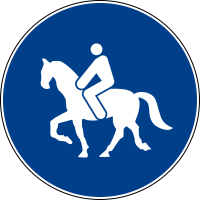
16. Mandatory path for equestrians
This traffic sign indicates a mandatory path for equestrians. Equestrians must use the designated path where the sign applies. Other road users may use it only where the applicable signs or local rules permit them to do so.
English • Traffic sign II.94 • Route reserved for pack or riding animals. Marks a route reserved for four-legged pack or riding animals; other road-user categories are prohibited.
Italiano • Figura II.94 • Percorso riservato ai quadrupedi da soma o da sella. Indica un percorso riservato ai quadrupedi da soma o da sella; è vietato alle altre categorie di utenti.
Sources
🔗 Commons.wikimedia.org
🔗 Normattiva.it • D.P.R. 495/1992 • testo vigente • art. 122, comma 9(d)
🔗 Gazzettaufficiale.it • Gazzetta Ufficiale • Figura II.94 • pagina 275
SVG source: F l a n k e r • Public domain • Original revision 2026-04-03. Wikimedia original unmodified.
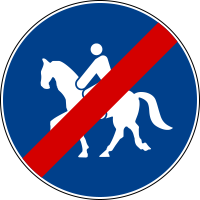
17. End of mandatory path for equestrians
This traffic sign indicates the end of the mandatory path for equestrians. The requirement associated with the designated path ends at this point. Equestrians must continue according to the subsequent path or road layout and applicable local rules.
English • Traffic sign II.95 • End of route reserved for pack or riding animals. Marks the end of the route reserved for four-legged pack or riding animals.
Italiano • Figura II.95 • Fine percorso riservato ai quadrupedi da soma o da sella. Indica la fine del percorso riservato ai quadrupedi da soma o da sella.
Sources
🔗 Commons.wikimedia.org
🔗 Normattiva.it • D.P.R. 495/1992 • testo vigente • art. 122, comma 10
🔗 Gazzettaufficiale.it • Gazzetta Ufficiale • Figura II.95 • pagina 275
SVG source: F l a n k e r • Public domain • Original revision 2026-04-03. Wikimedia original unmodified.
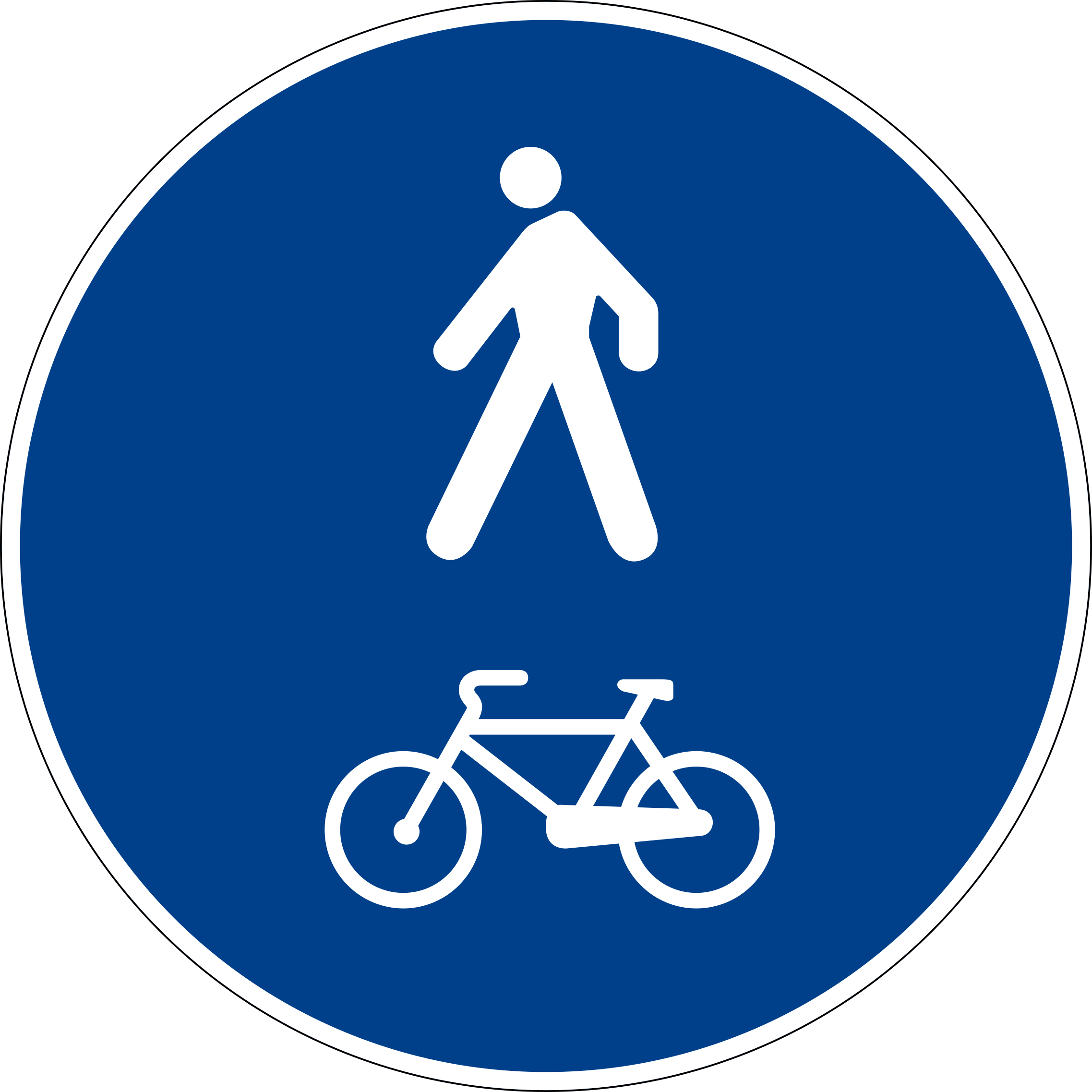
18. Mandatory shared pedestrian and cycle path
This traffic sign indicates a mandatory shared path for pedestrians and cyclists. Pedestrians and cyclists must use the same designated path rather than separate sections. They must share the space safely and follow the applicable local rules.
English • Traffic sign II.92/b • Pedestrian and cycle route. Marks a route reserved for pedestrians and cycles.
Italiano • Figura II.92/b • Percorso pedonale e ciclabile. Indica un percorso riservato ai pedoni e ai velocipedi.
Sources
🔗 Commons.wikimedia.org
🔗 Normattiva.it • D.P.R. 495/1992 • testo vigente • art. 122, comma 9(c)
🔗 Gazzettaufficiale.it • Gazzetta Ufficiale • Figura II.92/b • pagina 274
🔗 Normattiva.it • D.P.R. 495/1992 • allegati e successive modifiche
SVG source: F l a n k e r • Public domain • Original revision 2026-06-15. Wikimedia original unmodified.
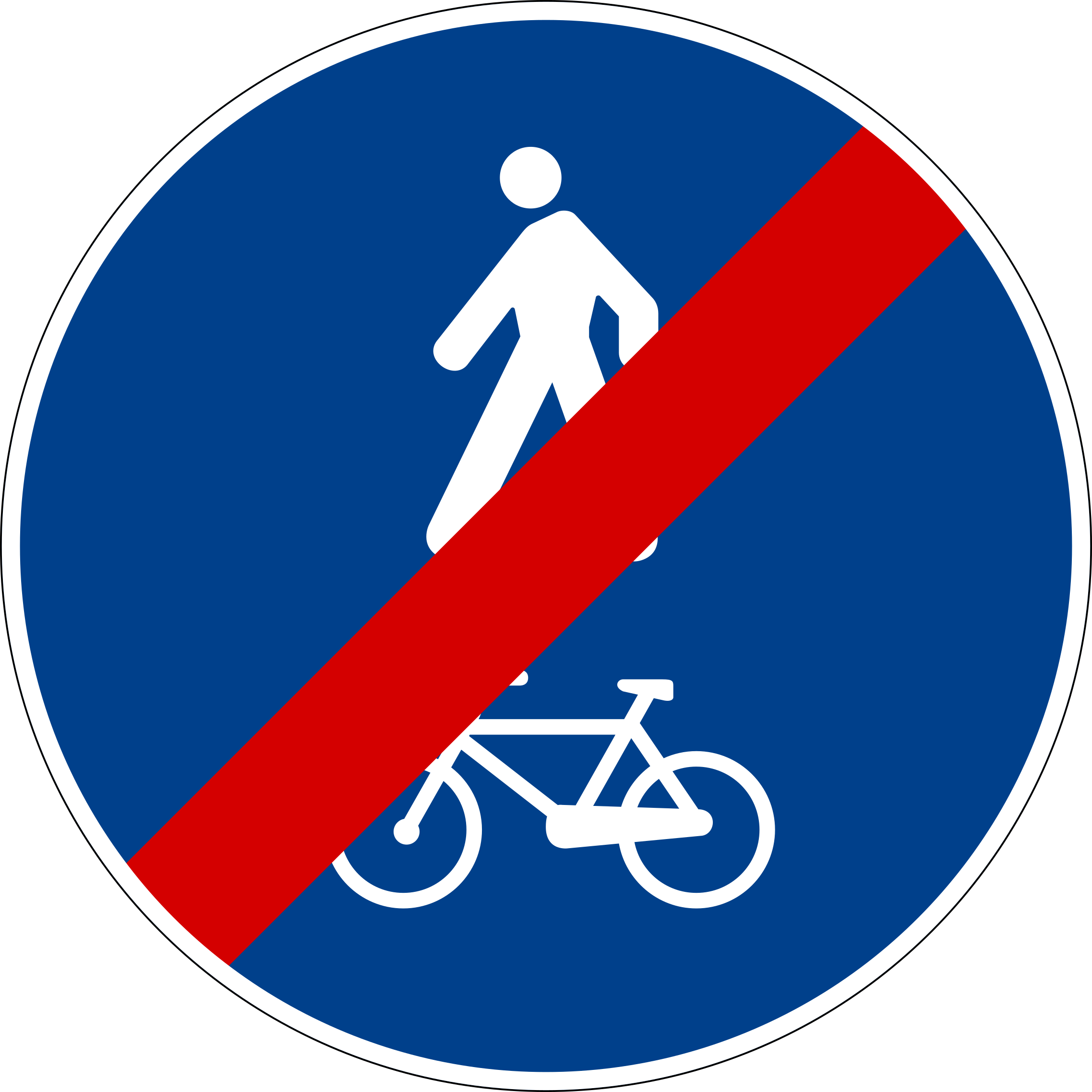
19. End of shared pedestrian and cycle path
This traffic sign indicates the end of the mandatory shared path for pedestrians and cyclists. The shared-path requirement ends at this point. Pedestrians and cyclists must continue according to the subsequent path or road layout and applicable local rules.
English • Traffic sign II.93/b • End of pedestrian and cycle route. Marks the end of the route reserved for pedestrians and cycles.
Italiano • Figura II.93/b • Fine percorso pedonale e ciclabile. Indica la fine del percorso riservato ai pedoni e ai velocipedi.
Sources
🔗 Commons.wikimedia.org
🔗 Normattiva.it • D.P.R. 495/1992 • testo vigente • art. 122, comma 10
🔗 Gazzettaufficiale.it • Gazzetta Ufficiale • Figura II.93/b • pagina 275
🔗 Normattiva.it • D.P.R. 495/1992 • allegati e successive modifiche
SVG source: F l a n k e r • Public domain • Original revision 2026-06-15. Wikimedia original unmodified.
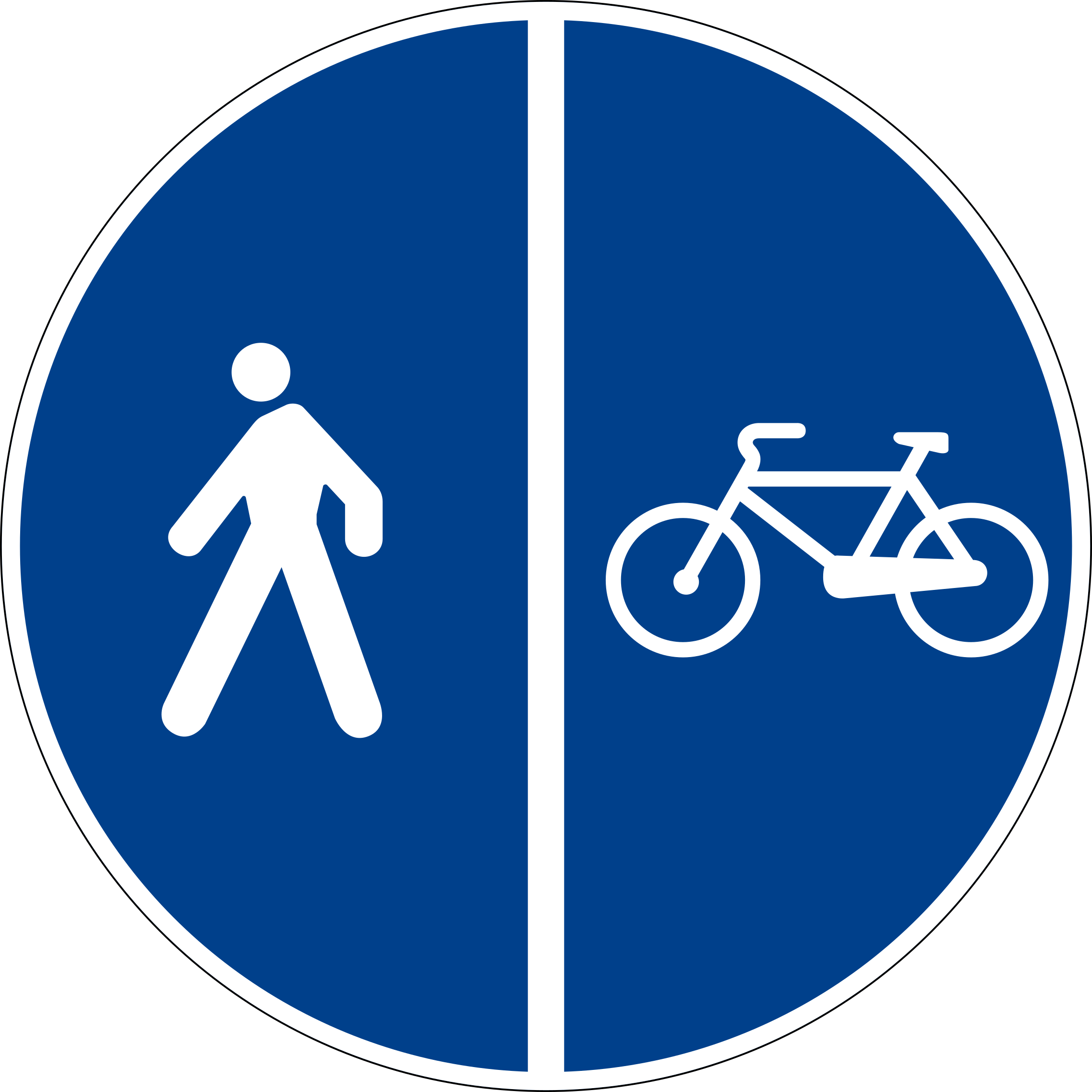
20. Mandatory divided pedestrian and cycle path
This traffic sign indicates a mandatory divided path for pedestrians and cyclists. Pedestrians and cyclists must use the section designated for them. Other road users may use the path only where the applicable signs or local rules permit them to do so.
English • Traffic sign II.92/a • Cycle path alongside a pavement. Marks a reserved cycle path alongside a pavement or pedestrian route.
Italiano • Figura II.92/a • Pista ciclabile contigua al marciapiede. Indica una pista riservata ai velocipedi affiancata a un marciapiede o percorso pedonale.
Sources
🔗 Commons.wikimedia.org
🔗 Normattiva.it • D.P.R. 495/1992 • testo vigente • art. 122, comma 9(c)
🔗 Gazzettaufficiale.it • Gazzetta Ufficiale • Figura II.92/a • pagina 274
🔗 Normattiva.it • D.P.R. 495/1992 • allegati e successive modifiche
SVG source: F l a n k e r • Public domain • Original revision 2026-06-15. Wikimedia original unmodified.
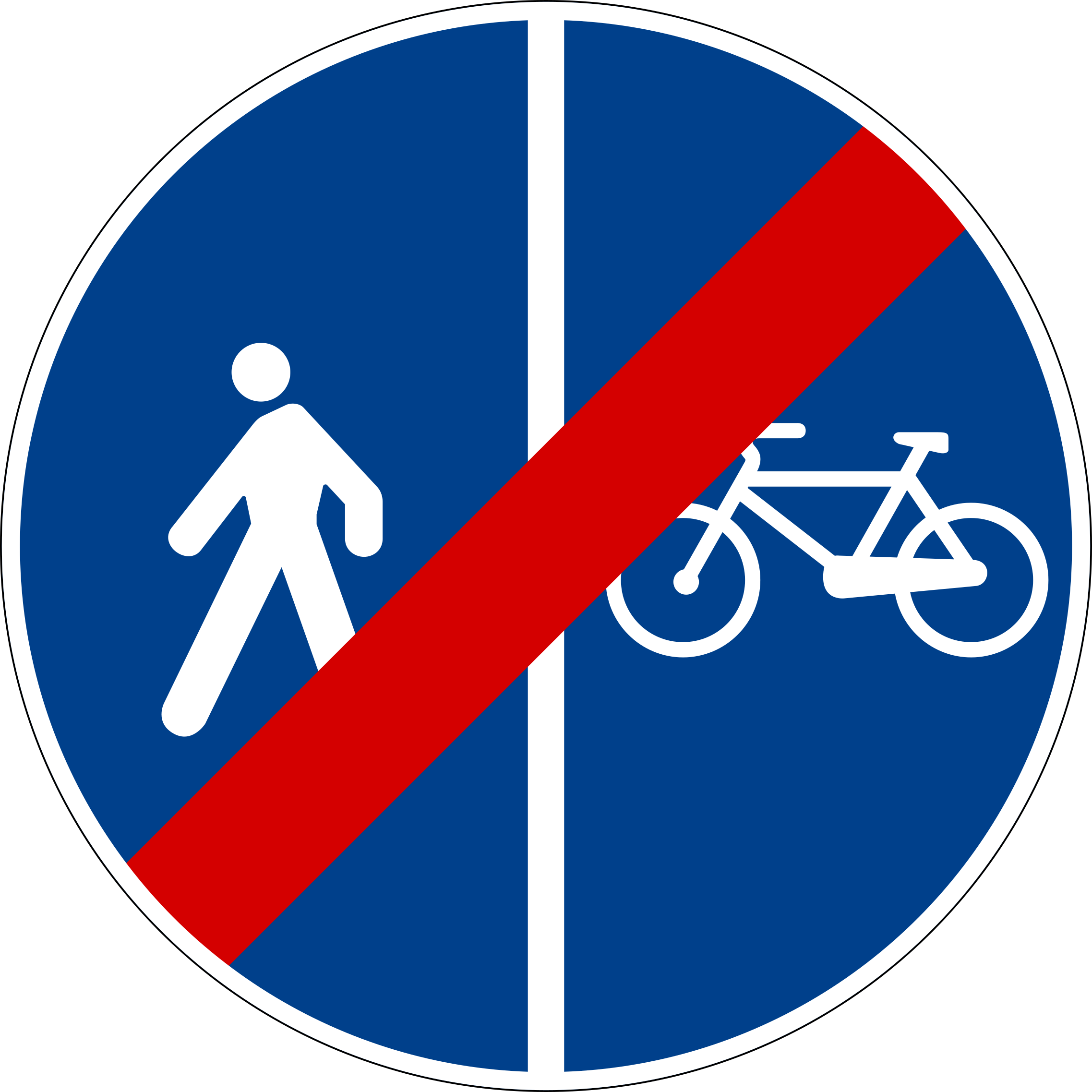
21. End of divided pedestrian and cycle path
This traffic sign indicates the end of the mandatory divided path for pedestrians and cyclists. The requirement to use the separately designated sections ends at this point. Continue according to the subsequent path or road layout and applicable local rules.
English • Traffic sign II.93/a • End of cycle path alongside a pavement. Marks the end of the adjoining cycle path.
Italiano • Figura II.93/a • Fine pista ciclabile contigua al marciapiede. Indica la fine della pista ciclabile contigua al marciapiede.
Sources
🔗 Commons.wikimedia.org
🔗 Normattiva.it • D.P.R. 495/1992 • testo vigente • art. 122, comma 10
🔗 Gazzettaufficiale.it • Gazzetta Ufficiale • Figura II.93/a • pagina 274
🔗 Normattiva.it • D.P.R. 495/1992 • allegati e successive modifiche
SVG source: F l a n k e r • Public domain • Original revision 2026-06-15. Wikimedia original unmodified.
22. Snow chains mandatory
This traffic sign indicates that snow chains are mandatory. Vehicles covered by the sign must use snow chains from this point as required by the applicable rules. Follow any supplementary signs or local instructions specifying the affected vehicles, wheels or conditions.
English • Traffic sign II.87 • Snow chains compulsory. From the sign onwards, vehicles must use snow chains or winter tyres.
Italiano • Figura II.87 • Catene per neve obbligatorie. Dal punto in cui il segnale è posto, obbliga a circolare con catene da neve o pneumatici invernali.
Sources
🔗 Commons.wikimedia.org (F l a n k e r • CC BY-SA 3.0)
🔗 Normattiva.it • D.P.R. 495/1992 • testo vigente • art. 122, comma 8
🔗 Gazzettaufficiale.it • Gazzetta Ufficiale • Figura II.87 • pagina 272
🔗 Normattiva.it • D.P.R. 495/1992 • allegati e successive modifiche
SVG source: F l a n k e r • CC BY-SA 3.0 • Original revision 2010-09-01. Wikimedia original unmodified.
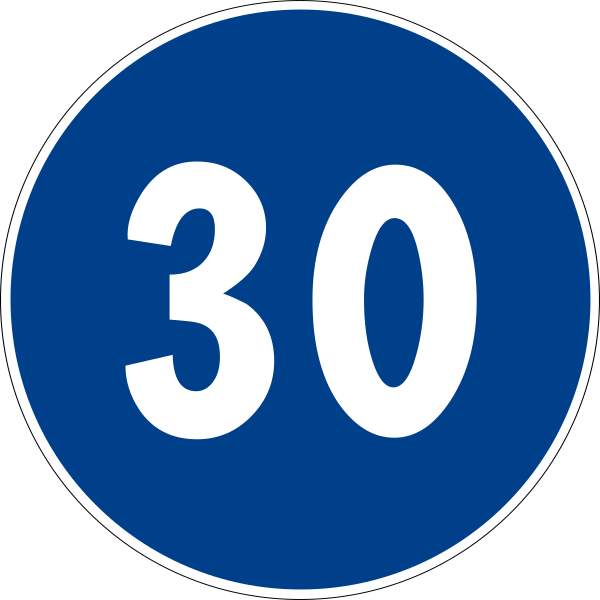
23. Start of a minimum speed
This traffic sign indicates the start of a minimum speed. Road users covered by the sign must travel at or above the indicated speed when conditions allow. Driving more slowly may still be necessary because of traffic, weather, road conditions or another safety-related reason.
English • Traffic sign II.85 • Minimum speed limit. Vehicles on the road or lanes concerned must observe the indicated minimum speed. Vehicles unable to reach it must not enter the section covered by the sign.
Italiano • Figura II.85 • Limite minimo di velocità. Obbliga i veicoli sulla strada o sulle corsie interessate a rispettare la velocità minima indicata. I veicoli che non possono raggiungerla non devono impegnare il tratto soggetto al segnale.
Sources
🔗 Commons.wikimedia.org (F l a n k e r • CC BY-SA 3.0)
🔗 Normattiva.it • D.P.R. 495/1992 • testo vigente • art. 122, comma 7
🔗 Gazzettaufficiale.it • Gazzetta Ufficiale • Figura II.85 • pagina 272
SVG source: F l a n k e r • CC BY-SA 3.0 • Original revision 2023-06-07. Wikimedia original unmodified.
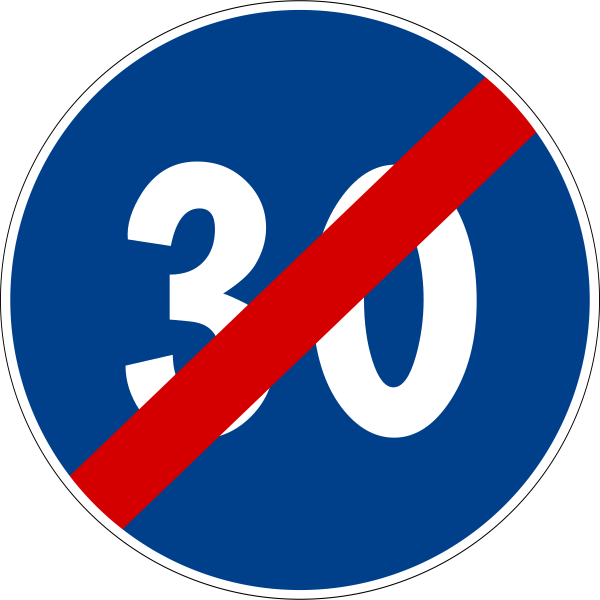
24. End of the minimum speed
This traffic sign indicates the end of the minimum speed. The previously indicated minimum speed no longer applies beyond this point. Continue to follow any other posted speed requirements and the applicable traffic rules.
English • Traffic sign II.86 • End of minimum speed limit. Ends the previously signposted minimum speed requirement.
Italiano • Figura II.86 • Fine limite minimo di velocità. Indica la fine dell’obbligo di velocità minima precedentemente segnalato.
Sources
🔗 Commons.wikimedia.org (F l a n k e r • CC BY-SA 3.0)
🔗 Normattiva.it • D.P.R. 495/1992 • testo vigente • art. 122, comma 7
🔗 Gazzettaufficiale.it • Gazzetta Ufficiale • Figura II.86 • pagina 272
SVG source: F l a n k e r • CC BY-SA 3.0 • Original revision 2023-06-07. Wikimedia original unmodified.
