


Driving licenceUnited States
 Traffic rules
 United States
45. Driving licence
A driving licence is an official document authorising a person to drive one or more specified categories of motor vehicle. It may contain conditions, restrictions, category codes and expiry dates that determine which vehicles the holder may drive.
Drivers must hold a licence that is valid for the vehicle category and jurisdiction concerned. A licence may be provisional, full, restricted, suspended or withdrawn, and additional qualifications may be required for professional driving.
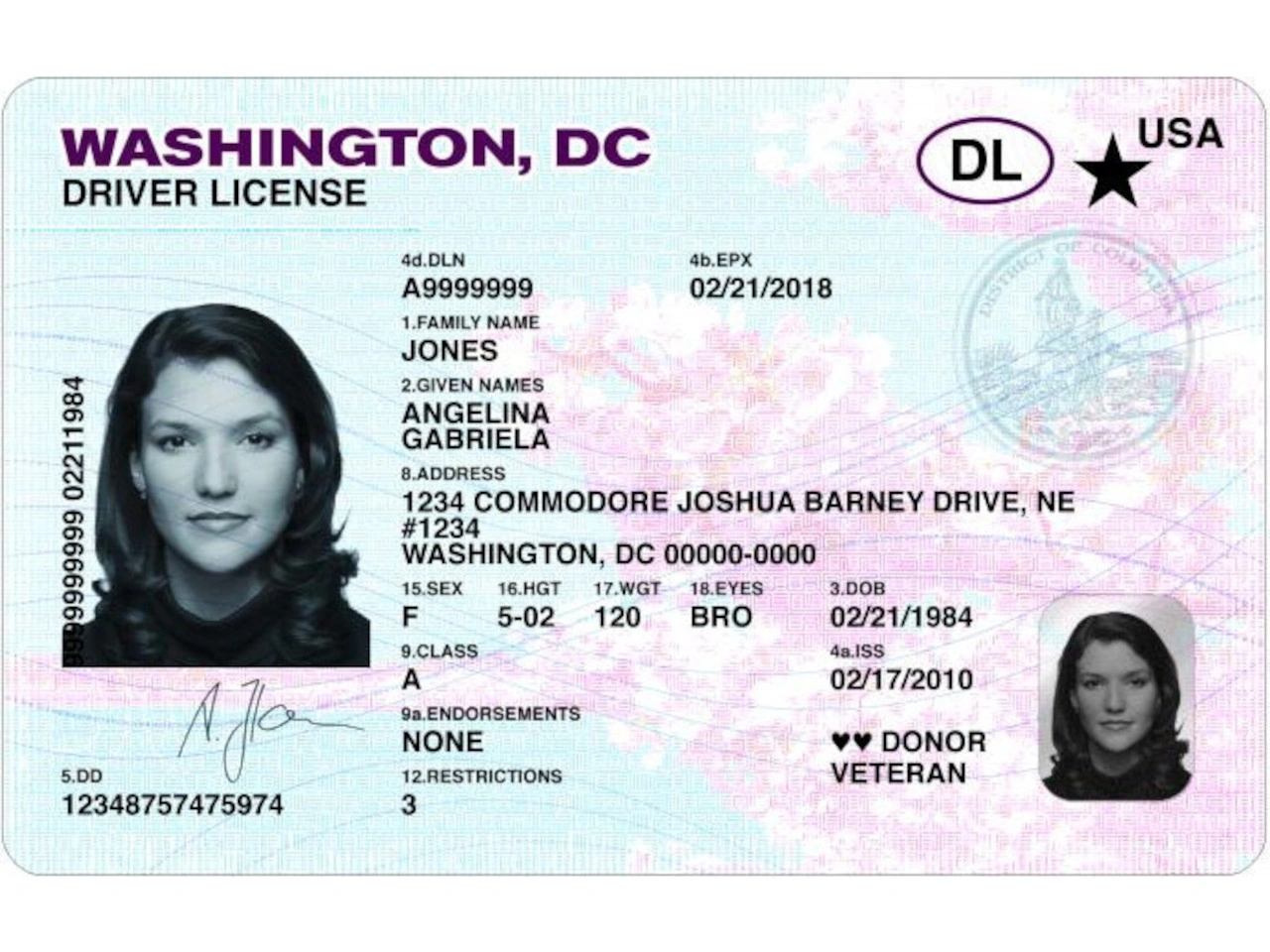
Wikimedia.org • District of Columbia DMV • CC0
What is a driving licence?
A driving licence is an official authorisation to drive specified categories of motor vehicle.
Is a driving licence the same as a driving permit?
The terms may refer to the same document, depending on the country. Some countries use permit specifically for learners or temporary authorisations.
What is a provisional driving licence?
A provisional or learner licence allows a person to practise driving under specified restrictions before obtaining a full licence.
What is a full driving licence?
A full licence is issued after the holder has completed the required tests or training. Restrictions may still apply because of age, vehicle type, medical fitness or licence codes.
Does one licence allow you to drive every vehicle?
No. Driving licences are divided into categories for motorcycles, cars, buses, trucks, trailers and other vehicles.
What is a licence category?
A licence category identifies the type and size of vehicle the holder is authorised to drive.
Must the licence be valid for the vehicle being driven?
Yes. Holding a licence for one category does not normally authorise driving a vehicle belonging to another category.
Can a licence contain restrictions?
Yes. Codes may restrict the holder to an automatic transmission, corrective lenses, an adapted vehicle or another specified condition.
What is the difference between an automatic and manual licence?
In some countries, passing the test in an automatic vehicle restricts the holder to automatic vehicles until an additional test or procedure is completed.
Does a driving licence expire?
Usually, yes. The document, individual categories or medical authorisation may have expiry dates and require renewal.
May you drive with an expired licence?
No. The licence and the category required for the vehicle must remain valid.
Must you carry your driving licence?
This depends on local law. Many countries require drivers to carry the original licence and present it to an authorised officer when requested.
Is a photograph or copy of the licence sufficient?
Not normally. A photograph, scan or photocopy is not generally a substitute for the original document unless an official digital-licence system is legally recognised.
Does a driving licence prove that you own the vehicle?
No. It proves driving authorisation, not ownership, registration or insurance.
What tests are required to obtain a licence?
Requirements may include a theory test, eyesight test, practical driving test, medical examination or compulsory training.
Is there a universal minimum driving age?
No. Minimum ages differ between countries and vehicle categories.
Can a learner drive without supervision?
Only where the provisional-licence system permits independent driving. Other learners must be accompanied by an approved supervisor or instructor.
Can a learner drive in another country?
Often not. Provisional and learner licences are frequently valid only in the country or region that issued them.
What is an international driving permit?
An international driving permit is a standardised translation of a valid national licence intended to help authorities interpret it abroad.
Does an international driving permit replace a national licence?
No. It normally has legal value only when presented together with the valid national driving licence on which it is based.
Is a national licence valid abroad?
This depends on the destination, length of stay, residence status and agreements between the countries concerned. An exchange or international permit may be required.
Can a foreign licence be exchanged?
Some countries exchange recognised foreign licences without new tests, while others require theory, practical or medical examinations.
Can medical fitness affect a licence?
Yes. A medical condition may require an assessment, shorter validity period, adapted vehicle or licence restriction.
Must changes in medical fitness be reported?
This depends on local law. Drivers remain responsible for ensuring that they are physically and mentally fit to drive safely.
Do professional drivers need additional qualifications?
Often, yes. Drivers of trucks, buses, taxis or vehicles used commercially may require professional competence, medical examinations or periodic training.
What happens when a licence is suspended?
The holder may not drive during the suspension period, even if the physical document remains in their possession.
What is disqualification from driving?
Disqualification is a legal prohibition on driving, usually imposed by a court or competent authority for a specified period or until conditions are fulfilled.
What should you do if the licence is lost or stolen?
Report it where required and apply for a replacement through the competent licensing authority. Do not continue driving when local law requires the original document to be carried.
What should you do if the licence is damaged?
Request a replacement when the document is unreadable, damaged or no longer allows the holder to be identified reliably.
Does changing address require a new licence?
This depends on the country and whether the address appears on the licence. Drivers must follow the local notification and replacement procedure.


