


Sentido únicoAustria
 Normas de tráfico
 Austria
13. Sentido único
Una calle de sentido único es una carretera o calzada donde el tráfico de vehículos solo puede circular en una dirección. La dirección permitida se indica mediante señales, marcas viales o el diseño de la carretera.
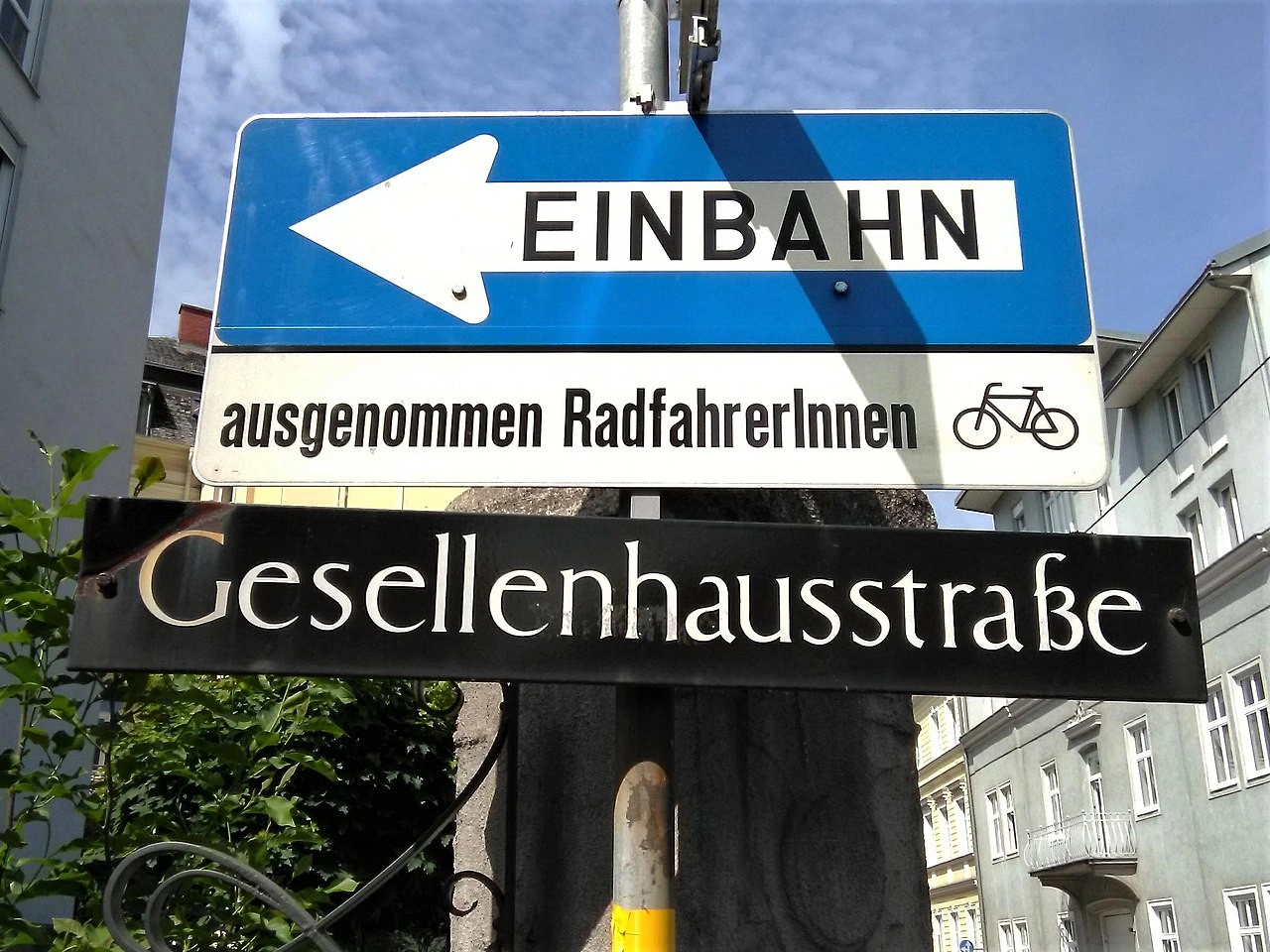
Los conductores deben entrar y circular únicamente en la dirección autorizada y prestar especial atención al girar, estacionar o abandonar propiedades. Algunas normas locales permiten excepciones para ciclistas, transporte público u otros usuarios, que deben estar indicadas expresamente.
What is a one-way road?
A one-way road is a road or carriageway on which vehicles may travel only in the designated direction.
How can you recognise one-way traffic?
One-way traffic is normally indicated by a one-way sign at the entrance and a no-entry sign at the opposite end. Lane arrows and road markings may provide additional guidance.
Is a one-way sign the same as a no-entry sign?
No. A one-way sign confirms the permitted direction of travel. A no-entry sign prohibits drivers from entering from the opposite direction.
Does one-way traffic apply to the entire road?
It may apply to an entire road, one carriageway, a particular lane or only a designated section. Drivers must follow the signs and markings applying to the part of the road they use.
Can a divided road have one-way traffic on each carriageway?
Yes. On a divided road, each carriageway normally carries traffic in one direction even though the road as a whole carries traffic in both directions.
May cyclists travel against one-way traffic?
Only when traffic signs or local law expressly permit contraflow cycling. Drivers should check supplementary signs and remain alert for cyclists approaching from the opposite direction.
May buses travel against one-way traffic?
Public-transport vehicles may use a contraflow lane where signs and road markings permit it. Other drivers may not use that lane unless they are also authorised.
Does a one-way road have its own speed limit?
No. The applicable speed depends on the country, road type, surrounding area and traffic signs.
Does one-way traffic change priority at intersections?
No. Drivers must continue to follow traffic lights, priority signs and the ordinary local priority rules.
Does traffic on a one-way road always have priority?
No. The one-way designation regulates direction of travel, not priority. Traffic entering or crossing the road may still have priority under signs or local law.
Which lane should you use on a one-way road?
Follow the local lane-positioning rules, lane arrows and destination signs. Drivers commonly keep to the normal side of the road unless overtaking, turning or choosing a marked lane.
Where should you position yourself before turning?
Use the lane or side indicated for the intended direction. On many one-way roads, drivers turning towards the opposite side of the road may position themselves closer to that side before turning.
May you overtake on a one-way road?
Overtaking may be permitted where there is sufficient space and no sign or rule prohibits it. The normal overtaking side and safety requirements continue to apply unless local law provides otherwise.
May you reverse on a one-way road?
A short reversing manoeuvre may be permitted where local law allows it and it can be completed safely. Drivers must not use reversing to travel along the road in the prohibited direction.
May you make a U-turn on a one-way road?
You may not turn around and continue against the permitted direction. A U-turn may also be prohibited by signs or general traffic law.
May you park on both sides of a one-way road?
This depends on local law, signs, markings and the available width. Some countries permit parking along either side, while others retain stricter positioning rules.
Can pedestrians come from both directions?
Yes. One-way traffic restrictions normally apply to vehicles using the carriageway, not to pedestrians using pavements or other pedestrian facilities.
Should you still check both directions?
Yes. Cyclists, buses, emergency vehicles or other authorised users may approach from the opposite direction. Drivers should check both directions before turning, crossing or opening a vehicle door.
What should you do if you enter a one-way road incorrectly?
Do not continue against traffic. Stop somewhere safe without creating additional danger and follow lawful directions to leave or correct the situation. Do not reverse blindly into an intersection.
How does one-way traffic end?
The restriction may end at an end sign, an intersection, a change in road design or a sign warning that two-way traffic resumes. Follow the local signs and road layout.


