Prioridad sobre el tráfico en sentido contrarioChequia

Aprende normas de tráfico con explicaciones claras y ejemplos visuales en nuestro libro ilustrado, diseñado para que estudiar sea sencillo y ameno.


23. Prioridad sobre el tráfico en sentido contrario

Prioridad sobre el tráfico en sentido contrario significa que los conductores pueden atravesar primero un tramo estrecho de carretera mientras los vehículos que se aproximan en sentido contrario deben ceder el paso. Normalmente se indica mediante una señal orientada hacia el tráfico que tiene prioridad y otra correspondiente para el sentido opuesto.

La prioridad no permite entrar en el tramo si la salida está bloqueada o si hacerlo resulta inseguro. Los conductores deben avanzar solo cuando puedan hacerlo sin crear peligro ni bloquear el paso.
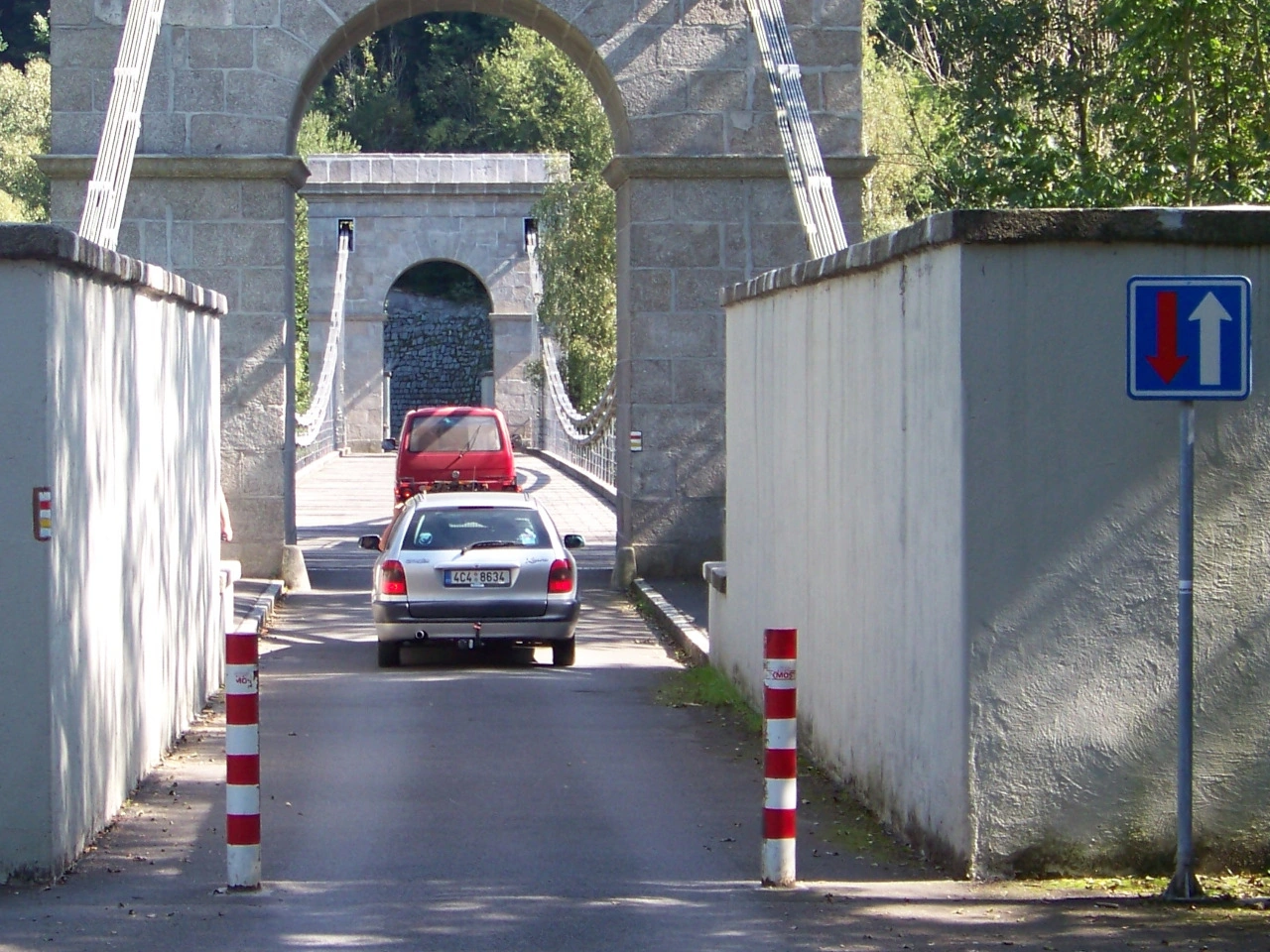
Prioridad sobre el tráfico en sentido contrario
What does priority over oncoming traffic mean?

It means that drivers travelling in your direction have priority through the narrow passage over drivers approaching from the opposite direction.

How can you recognise the sign?

It is commonly a rectangular sign showing two arrows in opposite directions. The larger or lighter arrow represents the direction that has priority, while the other arrow represents oncoming traffic.

Where is this sign normally used?

It is used at a bridge, roadworks area, traffic-calming feature or another narrow section where vehicles travelling in opposite directions cannot pass safely.

What sign does oncoming traffic see?

Drivers approaching from the opposite end normally see a corresponding sign requiring them to give way to oncoming traffic.

Does the sign mean that the road is one-way?

No. Traffic may use the road in both directions, but only one direction should normally pass through the narrow section at a time.

Does the sign give priority along the entire road?

No. It applies only to the particular narrow section associated with the sign.

Does it give you priority at an intersection?

No. It regulates priority between opposing traffic at the narrowing. Traffic lights, intersection signs and ordinary priority rules remain applicable elsewhere.

Does it impose a speed limit?

No. Drivers must respect the applicable speed limit and approach slowly enough to stop safely if the passage is occupied.

Must you stop before entering?

Not normally. You may continue when the passage is clear, but you must slow or stop when necessary to avoid danger.

Does having priority mean you must enter first?

No. Priority is a right to proceed before approaching traffic, not an obligation to continue. Wait when entering would create danger or block the passage.

What if an oncoming vehicle is already in the narrow section?

Reduce speed and allow the vehicle enough room to leave. Do not enter simply because your sign gives you priority if doing so would trap the other vehicle or cause a collision.

May you force an oncoming driver to reverse?

No. Drivers must avoid creating danger. When another vehicle is already committed to the passage, the safest solution may be to wait until it has cleared.

What if both vehicles arrive at the same time?

The driver facing the priority sign may normally proceed first, while the opposite driver must wait. Both drivers should reduce speed and make sure the other has understood the situation.

Does the rule apply to cyclists and motorcycles?

It normally applies to all drivers, including cyclists and motorcyclists, but local law may define the exact road users covered.

Should you leave space for cyclists?

Yes. Do not pass a cyclist in the narrow section unless the required safe lateral distance can be maintained.

What should you do when meeting a large vehicle?

Allow additional width and time. Buses, trucks and vehicles towing trailers may need most or all of the available road space.

May pedestrians be present in the narrow section?

Yes. Drivers must remain alert for pedestrians, particularly where a pavement or verge also becomes narrow or unavailable.

Does the sign permit overtaking?

No. It regulates opposing traffic only. Overtaking remains subject to the ordinary rules, and it is often unsafe near a narrow passage.

May you stop or park in the narrow section?

Only where local law permits it and sufficient space remains. Stopping or parking must not block the passage or create danger.

What if temporary traffic lights are operating?

Follow the traffic lights. Active temporary signals or instructions from authorised workers normally take precedence over the fixed priority arrangement.

Do police or road-worker instructions override the sign?

Yes. Follow instructions from an authorised person even when they differ from the priority indicated by the sign.

When does the priority rule end?

It ends after you have passed through the narrow section controlled by the signs. The ordinary traffic rules then apply again.

1 Chequia 2 Autopista 3 Zona residencial 4 Zona 5 Límite de velocidad 6 Velocidad recomendada 7 Senda peatonal 8 Carril bici 9 Vía compartida 10 Advertencia de peatones 11 Zona peatonal 12 Resalto 13 Aduana 14 Pendiente 15 Carril bus 16 Parada de autobús 17 Calle sin salida 18 Señal de STOP 19 Ceda el paso 20 Glorieta 21 Vía con prioridad 22 Estrechamiento de calzada 23 Prioridad sobre el tráfico en sentido contrario 24 Ceda el paso al tráfico en sentido contrario 25 Paso de peatones 26 Paso a nivel 27 Zona escolar 28 Cruce de animales 29 Calzada deslizante 30 Aeronaves 31 Curva 32 Panel direccional 33 Circulación en sentido contrario 34 Obras 35 Límite de altura 36 Límite de peso 37 Señal de control de velocidad 38 Barreras selectivas 39 Prioridad en la próxima intersección 40 Semáforos 41 Advertencia de semáforos 42 Semáforos peatonales 43 Marcas viales 44 Esquema de intersección 45 Zona avanzada para bicicletas 46 Indicador de velocidad 47 Marcador de ubicación 48 Paneles de aproximación 49 Espejo de tráfico 50 Teléfono de emergencia 51 Frontera internacional 52 Paso inferior peatonal 53 Ruta ciclista 54 Estacionamiento 55 Prohibido estacionar 56 Prohibido parar 57 Aparcamiento disuasorio 58 Kiss and Ride 59 Estacionamiento para personas con discapacidad 60 Gestión del tráfico 61 Marcha atrás 62 Estado de la calzada 63 Permiso provisional 64 Mercancías peligrosas 65 Rampa de frenado de emergencia 66 Atracción turística 67 Límite de carga por eje 68 Matrícula 69 Estación de carga 70 Peligros 71 Ciclista 72 Autobús 73 Policía 74 Ambulancia 75 Taxi 76 Señales de la policía 77 Norma europea de emisiones 78 Bache 79 Camino 80 Partículas 81 Contaminación del aire 82 Hora punta 83 Código de circulación 84 Estación de tren 85 Canaleta de la calle 86 Bicicleta de carga 87 Vehículo forestal 88 Vehículo de construcción 89 Camión articulado 90 Trolebús 91 Speed pedelec 92 Vehículo de reparto 93 Motor al ralentí 94 Grúa 95 Tracción a las cuatro ruedas 96 Prohibido el paso de vehículos 97 Bicicleta 98 Equipamiento de motocicleta 99 Tranvía 100 Vía férrea ...