Prioridad en la próxima intersecciónFinlandia

Aprende normas de tráfico con explicaciones claras y ejemplos visuales en nuestro libro ilustrado, diseñado para que estudiar sea sencillo y ameno.


27. Prioridad en la próxima intersección

Prioridad en la próxima intersección significa que los conductores que circulan por una determinada carretera tienen prioridad frente al tráfico que entra desde carreteras que la cruzan en la siguiente intersección. Esta disposición suele indicarse mediante señales orientadas tanto al tráfico prioritario como al que debe ceder el paso.

A diferencia de una vía con prioridad continuada, esta prioridad solo se aplica en la intersección indicada. Los conductores deben seguir aproximándose con precaución y respetar semáforos, agentes autorizados, cruces, normas de giro y otras señales aplicables.
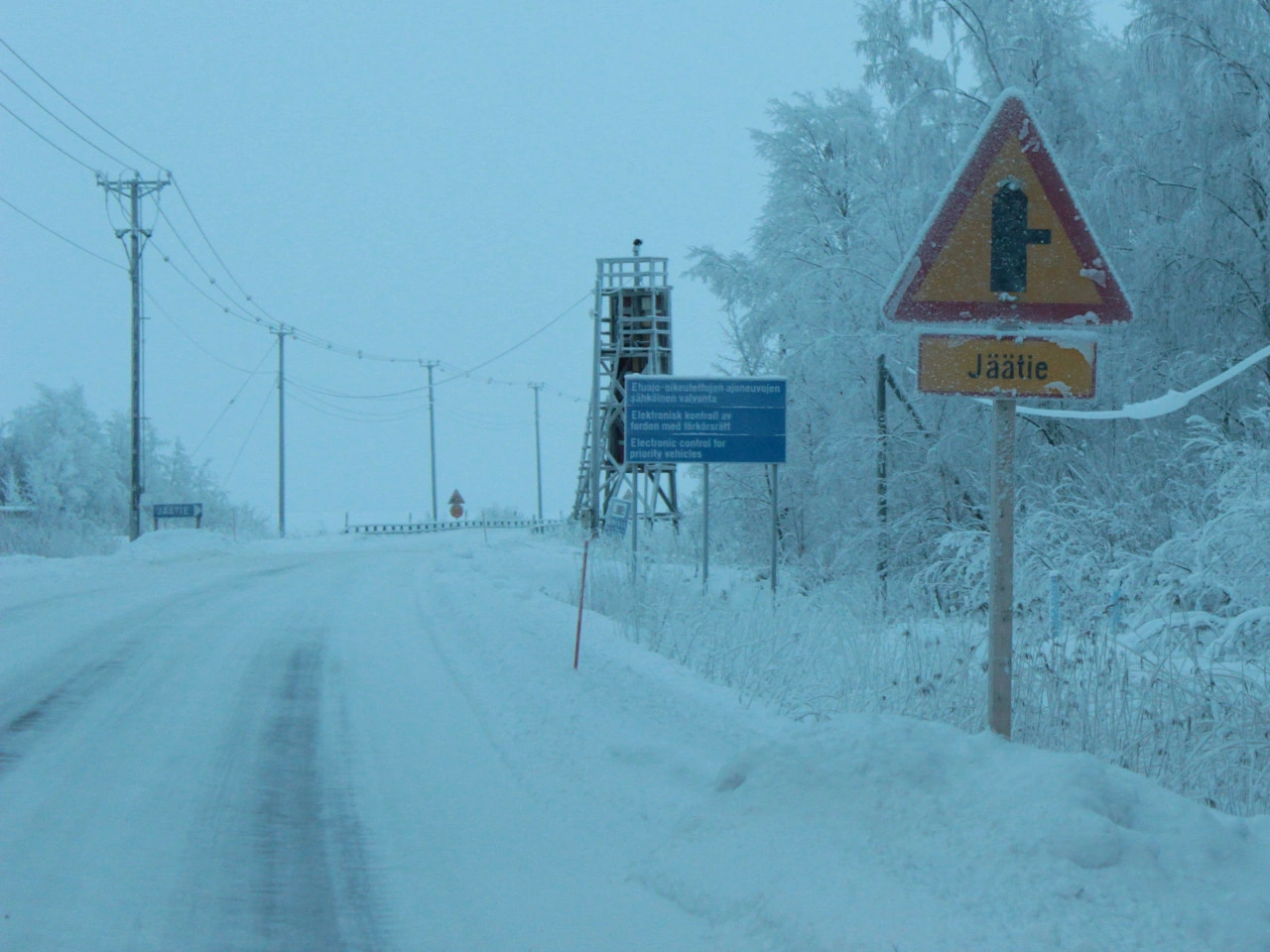
Prioridad en la próxima intersección
What does priority at the next junction mean?

It means that drivers travelling on the indicated road have priority over traffic entering from intersecting roads at the next junction.

Is this the same as a priority road?

No. Priority at the next junction applies to one particular junction. A priority road normally keeps its priority across several junction until its status ends.

Is a main road always a priority road?

No. The term main road may describe a larger, busier or more important road, but legal priority is determined by traffic signs, signals and local rules.

How can you recognise priority at the next junction?

It may be indicated by a priority-junction sign showing a thick line for the priority route and thinner lines for the roads that must give way.

Does the thick line show the priority route?

Yes. On signs using a junction diagram, the thicker line normally represents the road followed by traffic with priority.

Does the priority route always continue straight ahead?

No. The priority route may turn left or right. A diagram or supplementary panel may show which branch retains priority.

What signs do drivers on the side roads normally see?

They commonly face a give-way or stop sign, requiring them to yield to traffic on the priority route.

Does priority from the right still apply?

Not when legally placed signs establish another priority arrangement at that junction. Drivers must follow the actual signs rather than the ordinary default rule.

Does the sign give priority at later junctions?

No. After passing the indicated junction, the priority arrangement at the next junction must be determined separately.

Does having priority mean you may enter without slowing down?

No. Approach at a safe speed and remain prepared for another road user to fail to give way.

Does having priority mean you must proceed first?

No. Priority is not an obligation to continue. Slow down or stop whenever proceeding would create danger.

May you enter a blocked junction?

No. Do not enter when congestion is likely to leave your vehicle stopped inside the junction and obstructing other traffic.

Does the sign impose a speed limit?

No. The applicable general, zonal, posted or vehicle-specific speed limit remains in force.

Does it give priority over pedestrians?

No. Drivers must still yield to pedestrians where crossings, traffic signals or turning rules require it.

Does it give priority over cyclists?

It regulates priority between traffic approaching the junction, but drivers must still respect continuing bike paths, cycle crossings and turning rules.

Must you signal when the priority route turns?

Yes, when following the route involves a change of direction and local law requires signalling. Priority does not remove the obligation to indicate.

Does signalling give you priority?

No. An indicator communicates your intended movement but does not allow you to endanger or obstruct another road user.

Must you yield to oncoming traffic when turning left?

Normally, yes. Priority over side-road traffic does not automatically give a left-turning driver priority over lawful oncoming traffic.

Do functioning traffic lights override the priority signs?

Functioning traffic lights normally control the junction instead of the priority signs. Local rules determine what applies when the lights are switched off or flashing.

Do authorised officers override the signs?

Yes. Instructions from an authorised traffic controller normally take precedence over signs, signals and ordinary priority rules.

Does the sign prohibit overtaking?

No. Overtaking remains subject to the ordinary rules, visibility, road markings and any separate prohibition signs.

Does the sign prohibit stopping or parking?

No. The ordinary stopping and parking rules and any local signs or markings remain applicable.

What applies after you pass the intersection?

The special priority indicated by the sign has been completed. At later junctions, follow the signs, signals or default priority rule applying there.

1 Finlandia 2 Autopista 3 Zona urbana 4 Zona 5 Límite de velocidad 6 Senda peatonal 7 Vía compartida 8 Advertencia de peatones 9 Zona peatonal 10 Muelle 11 Pendiente 12 Carril bus 13 Parada de autobús 14 Calle sin salida 15 Señal de STOP 16 Ceda el paso 17 Glorieta 18 Vía con prioridad 19 Paso a nivel 20 Zona escolar 21 Cruce de animales 22 Circulación en sentido contrario 23 Obras 24 Límite de altura 25 Límite de peso 26 Señal de control de velocidad 27 Prioridad en la próxima intersección 28 Semáforos 29 Permiso de conducir 30 Paneles de aproximación 31 Frontera internacional 32 Ruta ciclista 33 Estacionamiento 34 Prohibido estacionar 35 Estacionamiento en línea 36 Disco de estacionamiento 37 Marcha atrás 38 Intersección sin regulación 39 Berma 40 Límite de población 41 Matrícula 42 Estación de carga 43 Peligros 44 Peatón 45 Ciclista 46 Ciclomotor 47 Autobús 48 Policía 49 Ambulancia 50 Semáforos para tranvías 51 Norma europea de emisiones 52 Bache 53 Camino 54 Partículas 55 Contaminación del aire 56 Hora punta 57 Código de circulación 58 Doble sentido 59 Canaleta de la calle 60 Bicicleta de carga 61 Vehículo forestal 62 Vehículo de construcción 63 Camión articulado 64 Trolebús 65 Speed pedelec 66 Vehículo de reparto 67 Motor al ralentí 68 Grúa 69 Tracción a las cuatro ruedas 70 Prohibido el paso de vehículos 71 Bicicleta 72 Equipamiento de motocicleta 73 Vía férrea 74 Caravana 75 Remolque 76 Enganche de remolque 77 Camión de bomberos 78 Sirena 79 Convoy 80 Luces de vehículos de emergencia 81 Maquinaria agrícola 82 Bicicleta eléctrica 83 Vehículo eléctrico 84 Pedelec 85 Cuadriciclo 86 Microcoche 87 Vehículo todoterreno 88 Furgoneta 89 Vehículo recreativo 90 Scooter 91 Trikke 92 Vehículo de movilidad personal 93 Monopatín 94 Segway 95 Patinete 96 Patines 97 Cartero 98 Autoestopista 99 Niño pequeño 100 Niño ...