ObrasRusia

Aprende normas de tráfico con explicaciones claras y ejemplos visuales en nuestro libro ilustrado, diseñado para que estudiar sea sencillo y ameno.


28. Obras

Las obras viales son actividades de construcción, mantenimiento, reparación o inspección realizadas en la carretera o junto a ella. Pueden modificar temporalmente el trazado, la anchura de los carriles, los límites de velocidad, la prioridad, los sentidos permitidos y las instalaciones para peatones o ciclistas.

Los conductores deben respetar las señales temporales, semáforos, barreras, marcas viales e instrucciones del personal autorizado. Deben reducir la velocidad, aumentar la distancia de seguimiento y estar preparados para carriles estrechos, tráfico detenido, trabajadores, maquinaria y cambios repentinos de ruta.
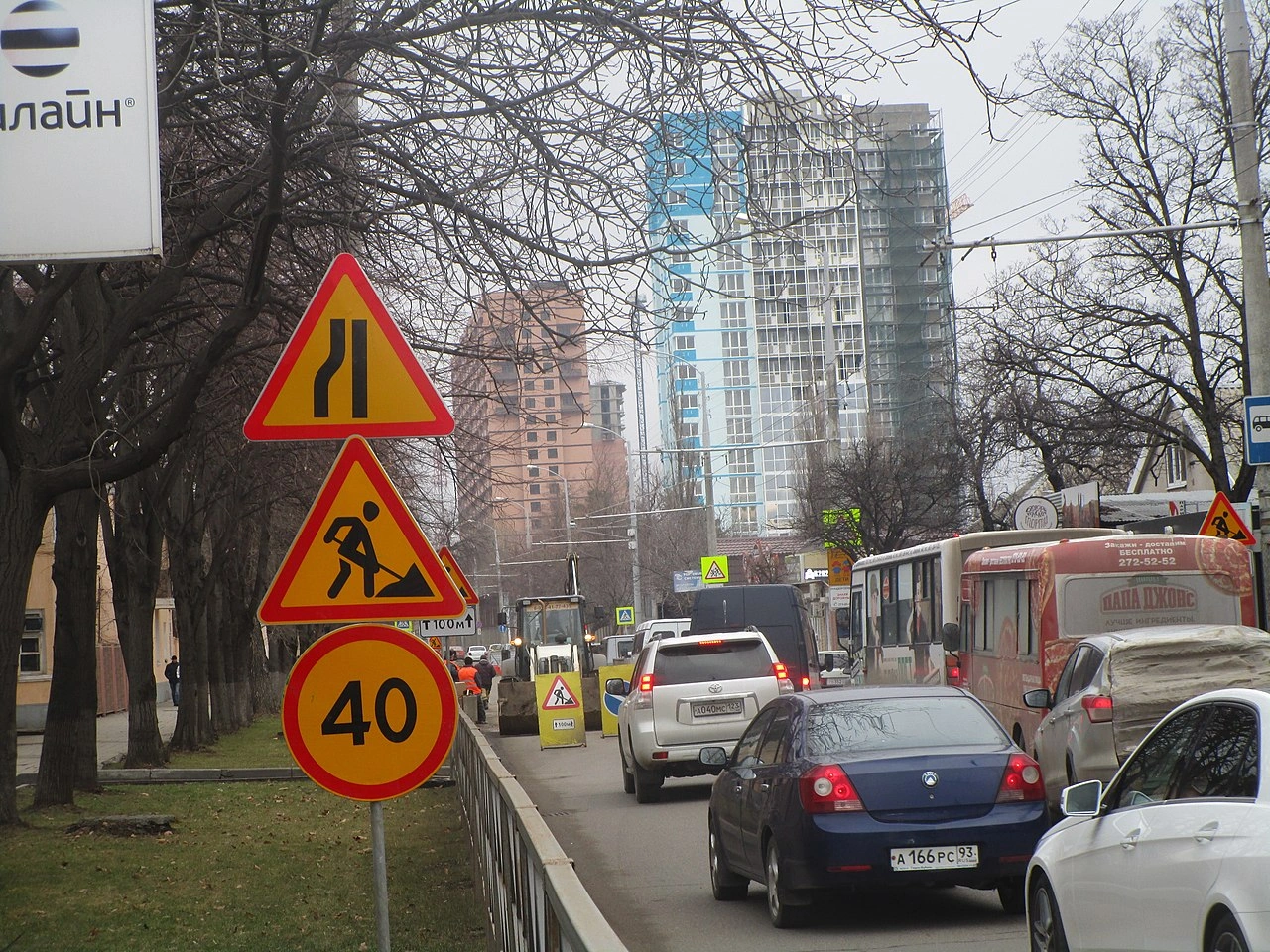
Obras
What are roadworks?

Roadworks are construction, maintenance, repair or inspection activities carried out on or beside a road.

How can you recognise roadworks?

They may be indicated by a roadworks warning sign, cones, barriers, temporary markings, flashing lights, machinery or workers.

Does a roadworks sign impose a speed limit?

No, not by itself. A separate temporary or permanent speed-limit sign establishes the legal maximum speed.

Must you drive below the speed limit?

Yes, when necessary. Narrow lanes, workers, machinery, poor surfaces, congestion or limited visibility may require a substantially lower speed.

Are temporary traffic signs legally binding?

Yes. Correctly installed temporary signs must be obeyed for as long as they are in force.

Which road markings should you follow?

Follow the temporary markings that guide traffic through the works. Local law determines how they take priority over older permanent markings.

Must you obey temporary traffic lights?

Yes. Stop at the line or signal when required and do not proceed until the applicable light permits it.

Must you obey road workers directing traffic?

Obey instructions from workers or controllers who are legally authorised to regulate traffic. Their signals may temporarily replace the ordinary traffic arrangement.

What should you do when a lane closes?

Observe the signs and lane arrows, check mirrors and blind spots and merge safely into the continuing lane.

What is zipper merging?

Zipper merging means that vehicles in an ending or blocked lane merge alternately with vehicles in the continuing lane near the narrowing during congested traffic.

Should you merge early?

This depends on local law and traffic conditions. Where zipper merging applies during congestion, use both lanes and merge near the narrowing. In flowing traffic, change lanes when a safe gap is available.

Who has priority when your lane is obstructed?

Without another traffic control, the driver whose route is obstructed commonly has to yield before moving into the path of approaching or adjacent traffic.

Can temporary lights control alternating traffic?

Yes. Temporary signals may allow only one direction at a time through a narrow section.

May you enter when the exit is blocked?

No. Do not enter a narrow section, intersection or temporary crossing when congestion may leave you stopped inside it.

May you move cones or barriers?

No. Do not move, pass around or ignore traffic-control equipment unless an authorised person instructs you to do so.

May you overtake in roadworks?

Only when signs and markings permit it and sufficient width and visibility remain. Overtaking is often unsafe in narrow or shifted lanes.

May you stop or park in roadworks?

Only where temporary and permanent signs permit it. Do not obstruct workers, machinery, emergency access or temporary pedestrian and cycle routes.

What should you watch for near workers?

Expect workers to enter the road, machinery to move or reverse and vehicles to leave the worksite. Reduce speed and leave generous space.

What should cyclists do at roadworks?

Follow the signed temporary cycle route or lane. Check surrounding traffic carefully before leaving a closed or obstructed bike path.

What should pedestrians do?

Use the designated temporary walkway or crossing and follow barriers, signs, signals and instructions from authorised personnel.

Why should you increase your following distance?

Traffic may brake suddenly because of queues, lane changes, machinery, debris or changing signals. Additional distance provides more time to react.

What should you do if your vehicle breaks down in roadworks?

Move to the safest available location where possible, activate the hazard warning lights and contact assistance. Avoid standing in a live or narrow traffic lane.

Do ordinary traffic rules still apply?

Yes. Rules concerning safe speed, following distance, signalling, priority and vulnerable road users continue to apply unless a lawful temporary arrangement changes them.

1 Rusia 2 Autopista 3 Zona residencial 4 Zona 5 Límite de velocidad 6 Senda peatonal 7 Carril bici 8 Puente 9 Resalto 10 Sentido único 11 Carril bus 12 Parada de autobús 13 Señal de STOP 14 Ceda el paso 15 Glorieta 16 Vía con prioridad 17 Prioridad sobre el tráfico en sentido contrario 18 Ceda el paso al tráfico en sentido contrario 19 Paso de peatones 20 Paso a nivel 21 Dirección obligatoria 22 Zona escolar 23 Adelantamiento 24 Cruce de animales 25 Calzada deslizante 26 Curva 27 Circulación en sentido contrario 28 Obras 29 Límite de altura 30 Semáforos 31 Semáforos peatonales 32 Marcas viales 33 Permiso de conducir 34 Marcador de ubicación 35 Paneles de aproximación 36 Teléfono de emergencia 37 Estacionamiento 38 Prohibido parar 39 Estacionamiento para personas con discapacidad 40 Marcha atrás 41 Estado de la calzada 42 Permiso provisional 43 Salida de emergencia 44 Límite de población 45 Atracción turística 46 Claxon 47 Matrícula 48 Estación de carga 49 Ciclista 50 Ciclomotor 51 Motocicleta 52 Autobús 53 Policía 54 Ambulancia 55 Taxi 56 Bache 57 Camino 58 Partículas 59 Contaminación del aire 60 Intersección 61 Hora punta 62 Código de circulación 63 Canaleta de la calle 64 Bicicleta de carga 65 Vehículo forestal 66 Vehículo de construcción 67 Camión articulado 68 Trolebús 69 Speed pedelec 70 Vehículo de reparto 71 Motor al ralentí 72 Grúa 73 Tracción a las cuatro ruedas 74 Bicicleta 75 Equipamiento de motocicleta 76 Tranvía 77 Tren 78 Vía férrea 79 Caravana 80 Remolque 81 Enganche de remolque 82 Camión de bomberos 83 Sirena 84 Convoy 85 Luces de vehículos de emergencia 86 Maquinaria agrícola 87 Bicicleta eléctrica 88 Vehículo eléctrico 89 Pedelec 90 Cuadriciclo 91 Microcoche 92 Vehículo todoterreno 93 Furgoneta 94 Vehículo recreativo 95 Scooter 96 Trikke 97 Vehículo de movilidad personal 98 Monopatín 99 Segway 100 Patinete ...