Barrières sélectivesBelgique
40. Barrières sélectives
Les barrières sélectives sont des dispositifs physiques de contrôle d’accès qui permettent le passage de certains usagers ou véhicules autorisés tout en limitant les autres. Elles peuvent comprendre des bornes fixes, amovibles, rabattables ou escamotables, des portails, des barrières et des dispositifs de filtrage par largeur.
Les usagers autorisés sont déterminés par les panneaux de signalisation, les conditions d’accès et la réglementation locale, et non par la barrière seule. Les conducteurs doivent approcher lentement, vérifier qu’ils sont autorisés et attendre que toute barrière mobile soit entièrement ouverte ou escamotée avant de continuer.
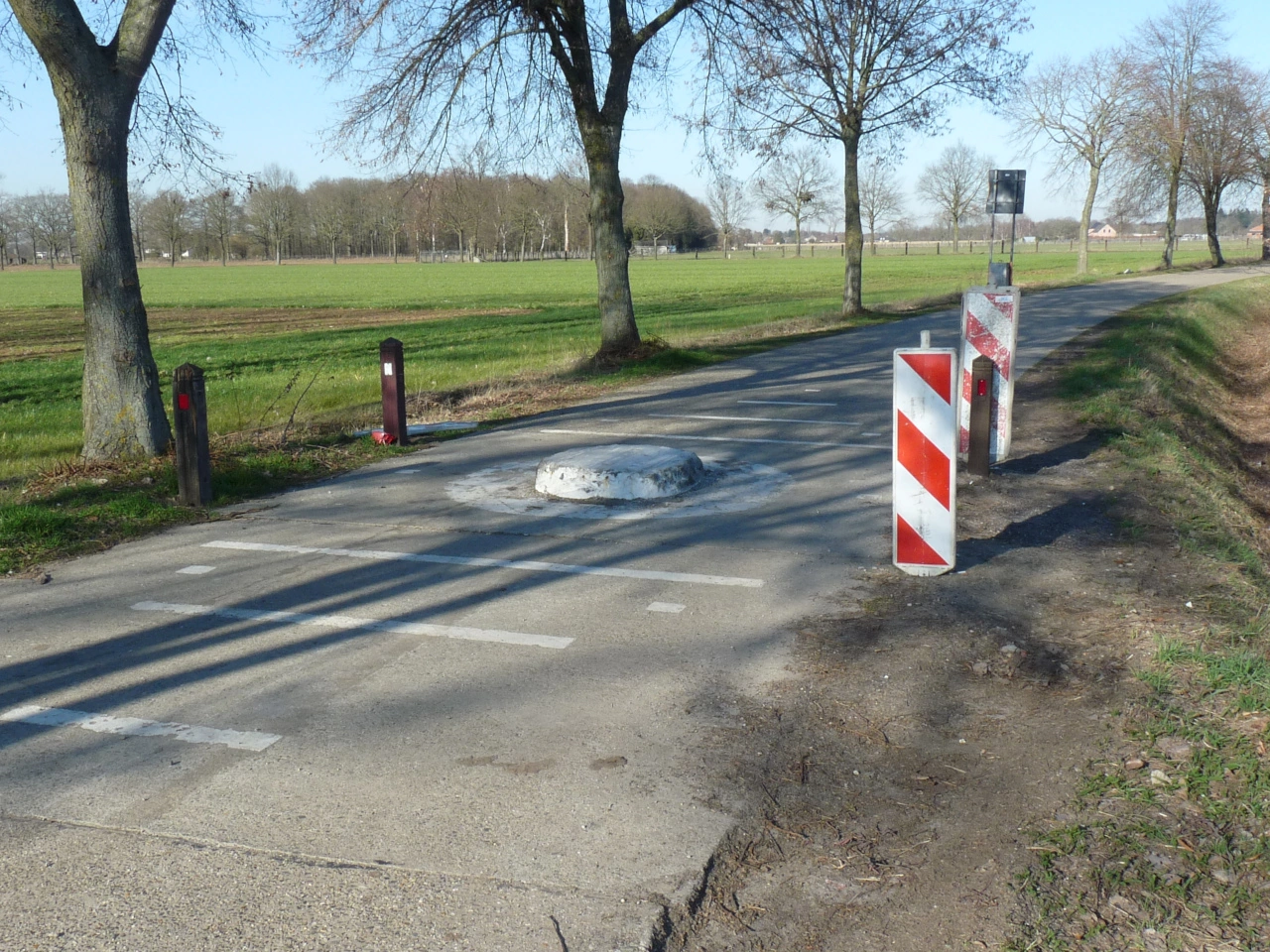
Are selective barriers a separate legal road category in Belgium?
No. The current Belgian Highway Code does not define selective barriers as a separate road category. Access is determined by the applicable traffic signs, permits and local regulations.
Which Belgian sign may prohibit access at a selective barrier?
Traffic sign C3 prohibits access in both directions for every driver. Supplementary signs may exempt particular categories.
Does a closed barrier replace traffic sign C3?
No. The physical installation controls access, while the traffic sign establishes the legal restriction. Both must be respected.
May cyclists be exempted from C3?
Yes. Supplementary panel M2 indicates that the C3 prohibition does not apply to cyclists.
May class A moped riders also be exempted?
Yes. Panel M3 may exempt cyclists and riders of two-wheeled class A mopeds. The applicable symbols must be checked carefully.
May speed-pedelec riders be exempted?
Yes. Panel M11 may exempt speed-pedelec riders, while M12 may exempt cyclists, class A moped riders and speed-pedelec riders.
May a motorcyclist pass between bollards when C3 applies?
No. Being physically able to pass does not create an exception. The rider may enter only when a sign or permit authorises that vehicle category.
Can a selective barrier protect a reserved road?
Yes. Roads reserved for indicated pedestrians, cyclists, riders or speed-pedelec users are currently marked by F99 signs. Physical barriers may help prevent unauthorised motor traffic from entering.
Who may use a Belgian road marked by F99?
The road is principally reserved for the categories shown on the entrance sign. Priority vehicles on an appropriate assignment and certain authorised maintenance, resident, supplier and refuse-collection vehicles may also enter under the prescribed conditions.
What is the speed limit on a current Belgian F99 reserved road?
The maximum speed is 30 km/h.
Does a bollard alone turn a road into a cycle path?
No. A cycle path or reserved road must be identified by its legally prescribed signs or markings. The bollard is only a physical traffic-control device.
Does a lowered bollard cancel the access restriction?
No. Drivers must continue to obey C3, F99 or any other applicable sign even when the device is temporarily lowered.
May you follow an authorised Belgian vehicle through?
No, unless you are independently authorised. The bollard or gate may close immediately behind the first vehicle.
May residents receive access?
Yes, where the road authority or local access rules provide it. Access may use a permit, badge, number-plate recognition or another controlled system.
May delivery vehicles receive access?
They may receive access under the applicable signs, permits and time restrictions. A general delivery purpose does not automatically override a C3 prohibition.
May emergency services pass a selective barrier?
Yes, when their assignment and the applicable rules permit access. The installation may be removable, breakable, remotely controlled or automatically recognised for emergency use.
May you park in front of a Belgian selective barrier?
No, when this blocks authorised traffic or creates danger or unnecessary obstruction. Emergency and service access must remain available.
May you move a fixed or removable bollard?
No, unless you are authorised by the road authority or operator. Road users may not create their own passage through a restricted road.
What should cyclists do at Belgian access bollards?
Reduce speed and pass through the intended opening without unnecessary swerving. Cyclists should avoid overtaking one another where the available space is limited.
What if the opening is too narrow for a cargo bike?
Do not force the bicycle through or enter a pedestrian-only space. Use another authorised opening or contact the road authority when a permitted user cannot pass safely.
Does a retractable bollard currently have its own Belgian warning sign?
No. The current Highway Code in force before 1 June 2027 does not contain a dedicated numbered warning sign for retractable bollards.
How may retractable bollards currently be warned?
They may be indicated by local information, warning lights, road markings or traffic sign A51 with a supplementary panel describing the danger.
What should you do when a retractable bollard is rising or lowering?
Stop and wait until the installation has completed its movement. Proceed only when authorised and when the bollard is fully lowered.
Does a green access light override a prohibition sign?
No. A green access signal permits passage only for road users who are legally authorised to enter.
What changes on 1 June 2027?
Belgium’s new Code of the Public Road introduces warning sign A53 specifically for retractable bollards.
What will Belgian sign A53 mean?
A53 warns drivers that retractable bollards are present ahead. It warns of the physical danger but does not itself grant access.
Does A53 replace C3 or another access sign?
No. A53 is a warning sign. C3, a reserved-road sign or another access regulation still determines who may enter.
What will replace the current F99 reserved-road signs?
From 1 June 2027, traffic signs R9 and R11 indicate the beginning and end of roads reserved for the road users displayed on the sign.
Who will have additional access to an R9 reserved road?
The new code also permits specified residents and visitors, delivery vehicles, vehicles serving adjoining properties, road-work and medical vehicles and holders of a free-passage card, subject to the detailed rules.
Will the physical barrier determine access after 1 June 2027?
No. The traffic signs and legal access rules remain decisive. A bollard or gate is the physical means used to enforce or manage that access.

Règles de circulation
Belgique