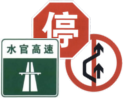
Dirección obligatoriaChina

Aprende normas de tráfico con explicaciones claras y ejemplos visuales en nuestro libro ilustrado, diseñado para que estudiar sea sencillo y ameno.


19. Dirección obligatoria

Una señal de dirección obligatoria exige a los conductores circular únicamente en la dirección o una de las direcciones indicadas por su flecha o flechas. Puede obligar a seguir recto, girar o pasar un obstáculo por un lado determinado.

La señal no determina por sí sola la prioridad ni la velocidad. Los conductores deben seguir utilizando el carril adecuado, señalizar cuando sea obligatorio y ceder el paso conforme a las señales y normas de tráfico locales.

What does a mandatory-direction sign mean?

It requires drivers to follow the direction or one of the directions shown by the arrow or arrows.

How can you recognise a mandatory-direction sign?

It is commonly a blue circular sign with one or more white arrows. Colours and designs may differ in some countries.

What does an upward arrow mean?

It normally means that drivers must continue straight ahead and may not turn in another direction at that location.

What does a left or right arrow mean?

It normally requires drivers to turn or proceed in the direction shown by the arrow.

What do two arrows mean?

Drivers may choose one of the displayed directions. Any direction not shown is prohibited.

What does an arrow beside an obstacle mean?

It requires drivers to pass the traffic island, barrier, roadworks equipment or other obstruction on the side indicated by the arrow.

Is a mandatory-direction sign the same as a one-way sign?

No. A mandatory-direction sign prescribes a movement at a particular location. A one-way sign indicates the permitted direction along a road or carriageway.

Is it the same as a no-turn sign?

No. A mandatory sign states which direction must be followed, while a prohibition sign states which movement is forbidden. Both may produce a similar practical result.

Does the sign impose a speed limit?

No. Drivers must follow the applicable general, zonal or posted speed limit and reduce speed when necessary to complete the required movement safely.

Does the sign give you priority?

No. You must still obey traffic lights, priority signs and the ordinary rules concerning oncoming traffic, pedestrians, cyclists and other road users.

When does the obligation begin?

It normally applies at the sign, intersection or obstacle associated with it. An advance sign may indicate that the obligation begins farther ahead.

Can a mandatory-direction sign apply to only one lane?

Yes. When it is positioned above a particular lane or clearly associated with that lane, it normally applies only to traffic using that lane.

Can road arrows also prescribe a direction?

Yes. Lane arrows may require drivers to use a particular lane and follow one of the directions displayed within that lane.

Must you use an indicator?

Yes, when the required movement involves turning or changing position and local law requires signalling. The sign does not replace the obligation to indicate.

Does signalling give you priority?

No. An indicator communicates your intention but does not allow you to force another road user to brake or change direction.

May you make a U-turn?

Not when doing so would conflict with the mandatory direction or another prohibition. Drivers must follow the permitted route shown by the signs and markings.

May you reverse to avoid following the sign?

No. Reversing must not be used to evade a mandatory direction. Continue along a lawful route and turn around later where permitted.

Does the sign apply to cyclists?

Cyclists are normally treated as drivers and must obey the sign unless a supplementary panel or local rule expressly exempts them.

Can other road users be exempted?

Yes. Supplementary signs may exempt or separately regulate cyclists, public transport or other specified categories where local law permits this.

What if the required route is blocked?

Do not enter a closed or unsafe route. Stop where safe and follow temporary signs, traffic lights or instructions from authorised personnel.

Do traffic lights cancel a mandatory-direction sign?

Not normally. Traffic lights determine when traffic may proceed, while the mandatory-direction sign determines which movement is permitted.

Do police instructions override the sign?

Yes. Instructions from an authorised traffic officer normally take precedence over traffic signs and ordinary traffic rules.

Can a temporary mandatory-direction sign be binding?

Yes. Properly placed temporary signs at roadworks, incidents or events must be obeyed.

What is a mandatory route for dangerous-goods vehicles?

It requires vehicles carrying specified dangerous goods to follow a designated route suitable for their cargo and any applicable tunnel restrictions.

When does the mandatory direction end?

The obligation is normally completed after the driver has followed the required direction at the intersection or passed the obstacle on the indicated side.

1 China 2 Autopista 3 Vía rápida 4 Zona residencial 5 Límite de velocidad 6 Senda peatonal 7 Carril bici 8 Túnel 9 Carretera de peaje 10 Pendiente 11 Carril bus 12 Parada de autobús 13 Señal de STOP 14 Ceda el paso 15 Glorieta 16 Estrechamiento de calzada 17 Paso de peatones 18 Paso a nivel 19 Dirección obligatoria 20 Prohibición de giro 21 Zona escolar 22 Desprendimiento de rocas 23 Curva 24 Panel direccional 25 Circulación en sentido contrario 26 Obras 27 Viento lateral 28 Límite de altura 29 Límite de peso 30 Señal de control de velocidad 31 Prioridad en la próxima intersección 32 Semáforos 33 Advertencia de semáforos 34 Semáforos peatonales 35 Permiso de conducir 36 Marcador de ubicación 37 Espejo de tráfico 38 Estacionamiento 39 Prohibido estacionar 40 Prohibido parar 41 Estacionamiento para personas con discapacidad 42 Marcha atrás 43 Cambio de sentido 44 Intersección sin regulación 45 Permiso provisional 46 Salida de emergencia 47 Rampa de frenado de emergencia 48 Claxon 49 Límite de carga por eje 50 Estación de carga 51 Peatón 52 Motocicleta 53 Turismo 54 Camión 55 Autobús 56 Policía 57 Ambulancia 58 Taxi 59 Señales de la policía 60 Bache 61 Camino 62 Partículas 63 Contaminación del aire 64 Hora punta 65 Código de circulación 66 Canaleta de la calle 67 Bicicleta de carga 68 Vehículo forestal 69 Vehículo de construcción 70 Camión articulado 71 Trolebús 72 Speed pedelec 73 Vehículo de reparto 74 Motor al ralentí 75 Grúa 76 Tracción a las cuatro ruedas 77 Bicicleta 78 Equipamiento de motocicleta 79 Vía férrea 80 Caravana 81 Remolque 82 Enganche de remolque 83 Camión de bomberos 84 Sirena 85 Convoy 86 Luces de vehículos de emergencia 87 Maquinaria agrícola 88 Bicicleta eléctrica 89 Vehículo eléctrico 90 Pedelec 91 Cuadriciclo 92 Microcoche 93 Vehículo todoterreno 94 Furgoneta 95 Vehículo recreativo 96 Scooter 97 Trikke 98 Vehículo de movilidad personal 99 Monopatín 100 Segway ...