SemáforosChina

Aprende normas de tráfico con explicaciones claras y ejemplos visuales en nuestro libro ilustrado, diseñado para que estudiar sea sencillo y ameno.


32. Semáforos

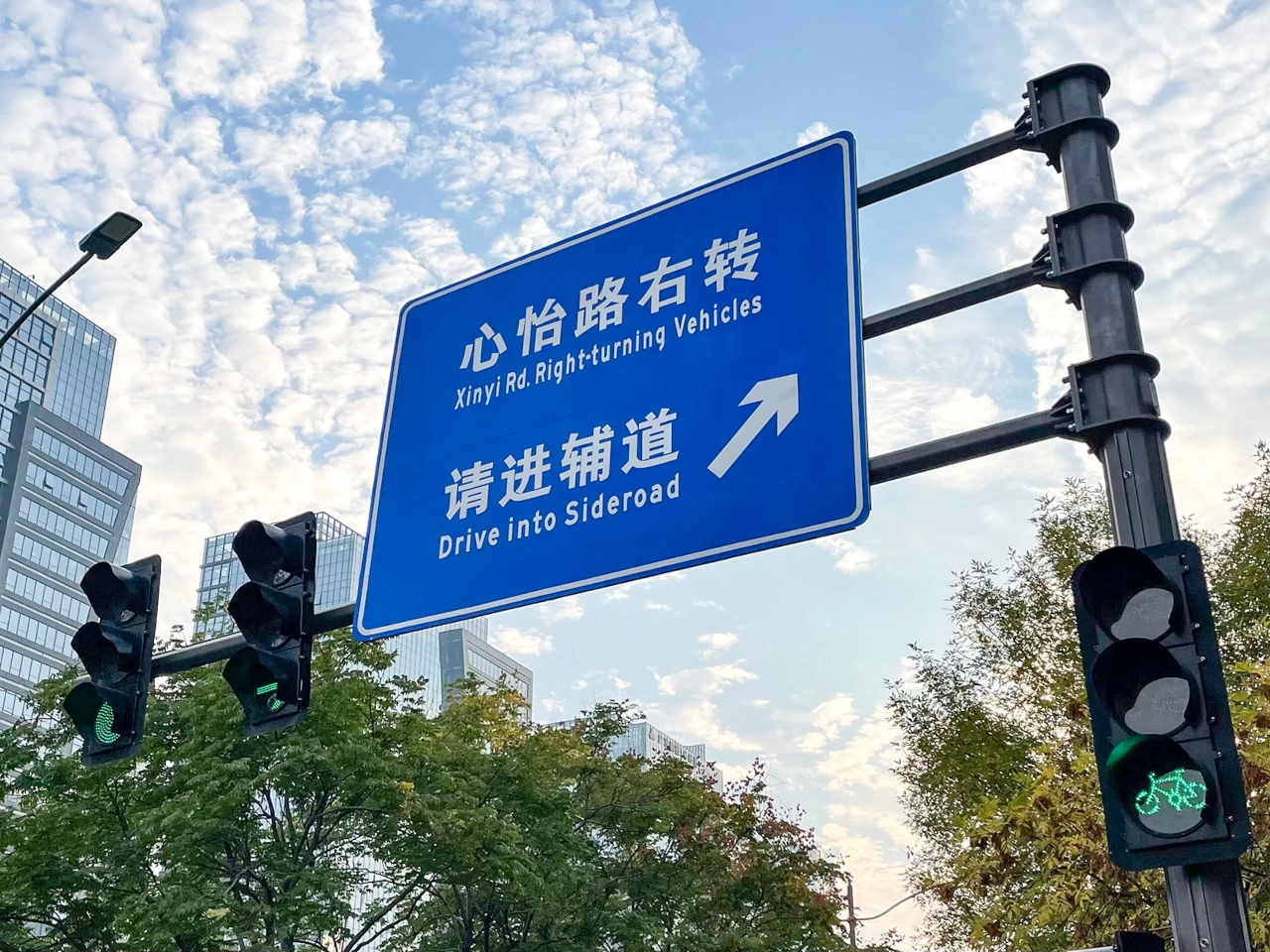
Los semáforos utilizan luces de colores, flechas o símbolos para regular cuándo los usuarios pueden avanzar, deben prepararse para detenerse o deben permanecer detenidos. Pueden existir señales independientes para determinadas direcciones, carriles, peatones, ciclistas o vehículos de transporte público.

Una luz verde permite avanzar solo cuando el recorrido está libre y la maniobra es legal. Los usuarios deben seguir respetando las normas de prioridad, restricciones de giro, marcas de carril e instrucciones de los agentes autorizados.
Semáforos
What are traffic lights?

Traffic lights are signals that use coloured lights, arrows or road-user symbols to regulate traffic movements.

What does a red traffic light mean?

A red light requires road users to stop before the stop line or signal and remain stopped until movement is permitted.

What does a steady amber light mean?

A steady amber light normally requires drivers to stop unless they are already too close to stop safely. It warns that the signal is changing to red.

What does a green traffic light mean?

A green light permits road users to pass the signal, but only when the route is clear and the intended movement is otherwise legal.

Does green mean that you have priority over everyone?

No. You may still have to give way to pedestrians, cyclists, oncoming traffic or other road users when turning or following a conditional arrow.

May you enter a blocked intersection on green?

No. Do not enter when congestion is likely to leave you stopped inside the intersection and obstructing crossing traffic.

Where should you stop at a red light?

Stop before the stop line. When no stop line is provided, stop before the traffic light or at another legally prescribed position.

May you cross the stop line and then stop?

No. The required stop must normally be completed before the stop line. Do not stop on a pedestrian or cycle crossing.

What if the light changes to amber while you are approaching?

Stop when this can be done safely. Continue only when you are already too close to stop without creating danger.

Should you accelerate to pass an amber light?

No. Do not accelerate to avoid stopping. Maintain control and stop unless doing so safely is no longer possible.

What do arrow-shaped traffic lights mean?

They have the same general meaning as circular lights, but the prohibition or permission applies only to the direction shown by the arrow.

What does a green arrow displayed with a red light mean?

It may permit travel in the indicated direction while other movements remain prohibited. Drivers may still have to give way to conflicting traffic and pedestrians.

Does a green arrow override a no-turn sign?

Not universally. Drivers must follow the complete local sign arrangement. A traffic signal does not necessarily cancel a separate regulatory prohibition.

May you turn right on red?

Only where local law or a specific sign or signal expressly permits it. There is no universal right to turn on red.

What does a flashing amber light mean?

It warns of a potential hazard and normally allows cautious passage. The ordinary priority arrangement remains applicable.

What should you do when the normal lights are flashing amber?

Reduce speed, observe the intersection carefully and follow the applicable priority signs or default priority rules.

What does a flashing red light mean?

Its meaning depends on local law. At railway crossings and some movable bridges, flashing red lights normally require road users to stop.

What do lane-control signals mean?

A red cross normally closes the lane, a green downward arrow opens it and an amber diagonal arrow instructs drivers to leave the lane in the indicated direction.

May you continue beneath a red lane-control cross?

No. Move out of the lane safely before reaching the red cross unless an authorised person or emergency rule directs otherwise.

What does an amber diagonal lane arrow mean?

It warns that the lane is closing or unavailable ahead. Drivers must move into the adjacent lane indicated by the arrow when safe.

Can separate lights apply to cyclists?

Yes. A signal displaying a bicycle symbol applies to the road users legally covered by that signal rather than to general motor traffic.

Can separate lights apply to pedestrians?

Yes. Pedestrian lights normally use red and green human figures to indicate whether pedestrians may begin crossing.

What does a flashing green pedestrian light mean?

It normally warns that the crossing period is about to end. Pedestrians who have not started should wait for the next green signal.

What if the pedestrian signal changes while someone is crossing?

A person who entered lawfully should continue without unnecessary delay. Turning drivers must allow the crossing to be completed safely.

Can buses and trams have separate traffic lights?

Yes. Public-transport signals may use bars, circles, triangles or other symbols that apply only to authorised service vehicles.

Do functioning traffic lights override priority signs?

They commonly replace the priority arrangement at that location. Priority signs may apply again when the normal signals are inactive or flashing.

Do instructions from a police officer override traffic lights?

Yes. Instructions from an authorised traffic controller normally take precedence over lights, signs, markings and ordinary rules.

What should you do when the lights are not working?

Reduce speed and follow the priority signs, temporary signals, authorised personnel or default priority rules that apply.

May you clear an intersection after the light turns red?

Yes, when you entered lawfully and must leave the intersection. Complete the movement cautiously without endangering other road users.

Does a green light impose a minimum speed?

No. Drivers may proceed but must continue at a safe and legal speed.

May you use a handheld phone while waiting at red?

This depends on local law. In many countries, a driver temporarily stopped in traffic is still considered to be driving and may not use a handheld device.

1 China 2 Autopista 3 Vía rápida 4 Zona residencial 5 Límite de velocidad 6 Senda peatonal 7 Carril bici 8 Túnel 9 Carretera de peaje 10 Pendiente 11 Carril bus 12 Parada de autobús 13 Señal de STOP 14 Ceda el paso 15 Glorieta 16 Estrechamiento de calzada 17 Paso de peatones 18 Paso a nivel 19 Dirección obligatoria 20 Prohibición de giro 21 Zona escolar 22 Desprendimiento de rocas 23 Curva 24 Panel direccional 25 Circulación en sentido contrario 26 Obras 27 Viento lateral 28 Límite de altura 29 Límite de peso 30 Señal de control de velocidad 31 Prioridad en la próxima intersección 32 Semáforos 33 Advertencia de semáforos 34 Semáforos peatonales 35 Permiso de conducir 36 Marcador de ubicación 37 Espejo de tráfico 38 Estacionamiento 39 Prohibido estacionar 40 Prohibido parar 41 Estacionamiento para personas con discapacidad 42 Marcha atrás 43 Cambio de sentido 44 Intersección sin regulación 45 Permiso provisional 46 Salida de emergencia 47 Rampa de frenado de emergencia 48 Claxon 49 Límite de carga por eje 50 Estación de carga 51 Peatón 52 Motocicleta 53 Turismo 54 Camión 55 Autobús 56 Policía 57 Ambulancia 58 Taxi 59 Señales de la policía 60 Bache 61 Camino 62 Partículas 63 Contaminación del aire 64 Hora punta 65 Código de circulación 66 Canaleta de la calle 67 Bicicleta de carga 68 Vehículo forestal 69 Vehículo de construcción 70 Camión articulado 71 Trolebús 72 Speed pedelec 73 Vehículo de reparto 74 Motor al ralentí 75 Grúa 76 Tracción a las cuatro ruedas 77 Bicicleta 78 Equipamiento de motocicleta 79 Vía férrea 80 Caravana 81 Remolque 82 Enganche de remolque 83 Camión de bomberos 84 Sirena 85 Convoy 86 Luces de vehículos de emergencia 87 Maquinaria agrícola 88 Bicicleta eléctrica 89 Vehículo eléctrico 90 Pedelec 91 Cuadriciclo 92 Microcoche 93 Vehículo todoterreno 94 Furgoneta 95 Vehículo recreativo 96 Scooter 97 Trikke 98 Vehículo de movilidad personal 99 Monopatín 100 Segway ...