


Chutes de pierresItalie
 Règles de circulation
 Italie
25. Chutes de pierres
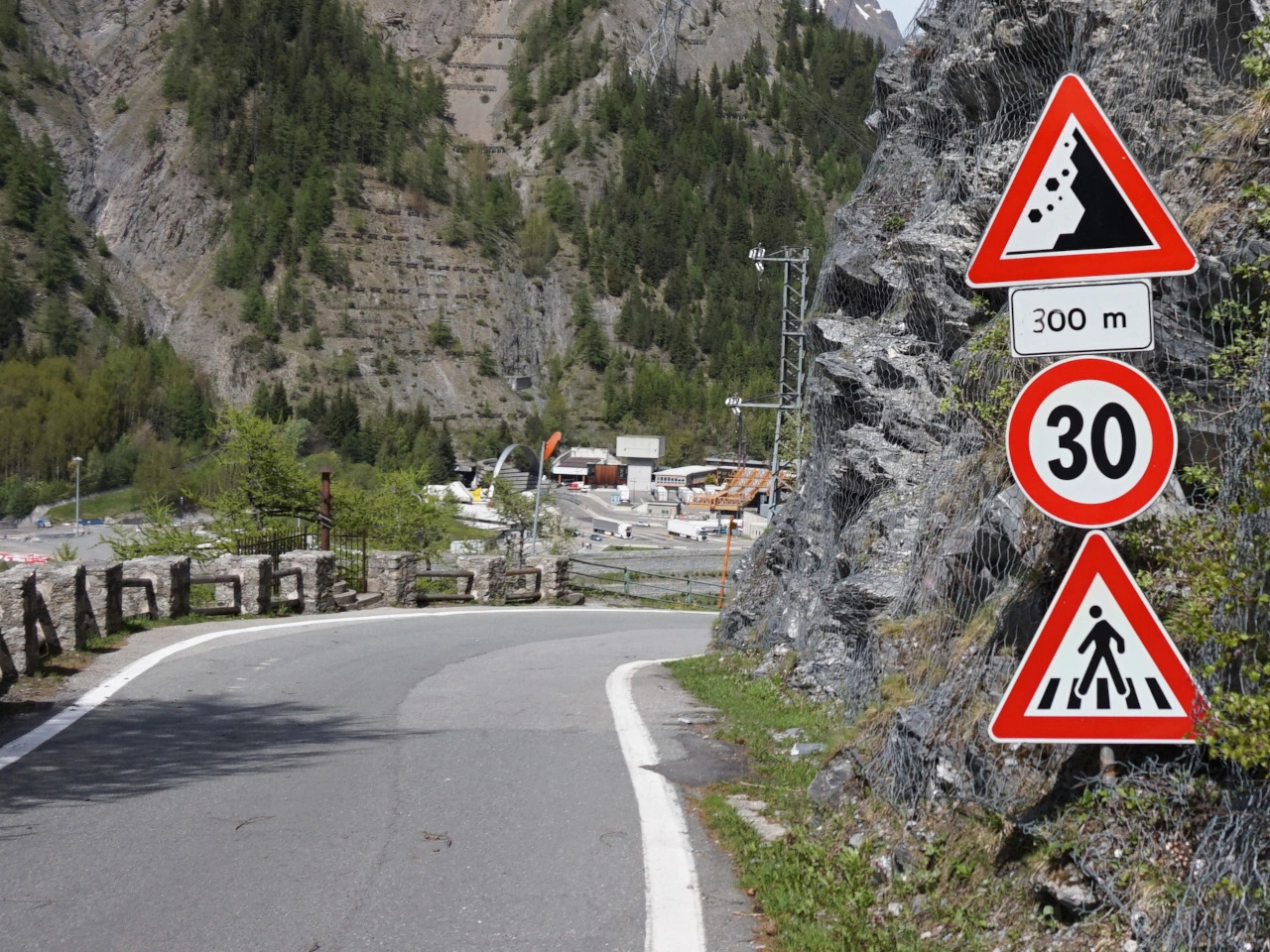
Un avertissement de chutes de pierres signale une section où des rochers ou pierres peuvent tomber d’une falaise, d’une tranchée ou d’un versant abrupt, ou où des matériaux tombés peuvent déjà se trouver sur la chaussée. Le danger peut concerner toute la chaussée et apparaître soudainement.
Les conducteurs doivent réduire leur vitesse, surveiller la route et les pentes devant eux, augmenter leur distance de sécurité et rester prêts à s’arrêter. Ils doivent éviter les arrêts inutiles dans la section exposée et ne jamais tenter de déplacer eux-mêmes des rochers instables.
What does a rockfall warning mean?
It warns that rocks or stones may fall onto the road or may already be lying on the carriageway.
How can you recognise a rockfall sign?
It is commonly a triangular warning sign showing rocks falling from a steep slope. The exact colour and design vary between countries.
Does the sign mean rocks are falling at that moment?
No. It indicates an increased risk. The road may be clear, contain stones from an earlier fall or become dangerous without additional warning.
Does the sign warn only about falling rocks?
Not necessarily. It may also warn about loose or fallen stones already present on the road.
What can cause a rockfall?
Rockfalls may be caused by erosion, heavy rain, frost and thawing, storms, ground movement, vegetation loss, roadworks or natural instability.
When can the risk be greater?
The risk may increase during or after heavy rain, freezing weather, rapid thawing, strong winds, earthquakes or work on a nearby slope.
Does a rockfall sign impose a speed limit?
No. It normally warns of danger rather than setting a numerical limit. Drivers must reduce speed when necessary to react safely.
Does the sign change priority?
No. Traffic lights, priority signs and the ordinary priority rules remain applicable.
How should you approach a rockfall area?
Reduce speed smoothly, increase your following distance and watch the road surface, slope, barriers and vehicles ahead for signs of falling or fallen material.
Should you drive close to the vehicle ahead?
No. Leave additional distance so you can see stones on the road and react if the vehicle ahead brakes or changes direction suddenly.
Should you stop in a rockfall area?
Avoid unnecessary stopping in the exposed section. Stop only when required by traffic, an obstruction or an emergency, and choose the safest available location.
May you overtake in a rockfall area?
The warning sign does not necessarily prohibit overtaking, but drivers should avoid overtaking when visibility, road width, loose stones or the risk of falling material makes it unsafe.
May you stop or park beneath an unstable slope?
Avoid doing so. Even where parking is not expressly prohibited, remaining beneath an unstable cliff or slope may expose the vehicle and its occupants to unnecessary danger.
What should you do when stones are lying on the road?
Reduce speed without harsh steering or braking. Pass only when there is enough clear space and visibility; otherwise, stop at a safe distance and report the obstruction.
Should you swerve around a rock?
Avoid a sudden uncontrolled swerve. Brake while maintaining control and steer around the obstruction only when the adjacent space is clearly safe.
What if the road is completely blocked?
Stop at a safe distance, activate the hazard warning lights when appropriate and contact the police, road authority or emergency services. Do not attempt to drive over unstable debris.
What should you do during an active rockfall?
Do not enter the affected section. Stop well before the danger where possible and move away only when this can be done safely without reversing blindly or entering another hazard.
Should you leave the vehicle during an active rockfall?
Do not stand near the unstable slope or falling material. Leave the vehicle only when remaining inside creates a greater immediate danger and a protected escape route is available.
May you move rocks from the road yourself?
Normally not. A stone may be too heavy, unstable or followed by additional falling material. Keep a safe distance and allow trained services to clear the road.
Why are motorcycles and bicycles especially vulnerable?
Even small stones can cause a rider to lose balance or damage a tyre. Riders should reduce speed, avoid sudden steering and keep a greater distance from other traffic.
Can protective nets eliminate the danger?
No. Nets, barriers and retaining structures reduce the risk but cannot guarantee that every stone will be contained.
What does a distance panel below the sign mean?
It may indicate how far ahead the danger begins. Another panel may indicate the length of the hazardous road section.
What should you do after striking a rock?
Keep control of the vehicle, stop at a safe location and activate the hazard warning lights. Check the tyres, wheels and underside only when it is safe and report any dangerous debris.
Does the absence of a sign mean there is no rockfall risk?
No. Drivers must remain attentive wherever roads run beside cliffs, cuttings or steep slopes, even when no warning sign is displayed.


