Gestion du traficFlandre

Apprenez les règles de circulation avec des explications claires et des exemples visuels dans notre livre illustré, simple et agréable à étudier.


54. Gestion du trafic

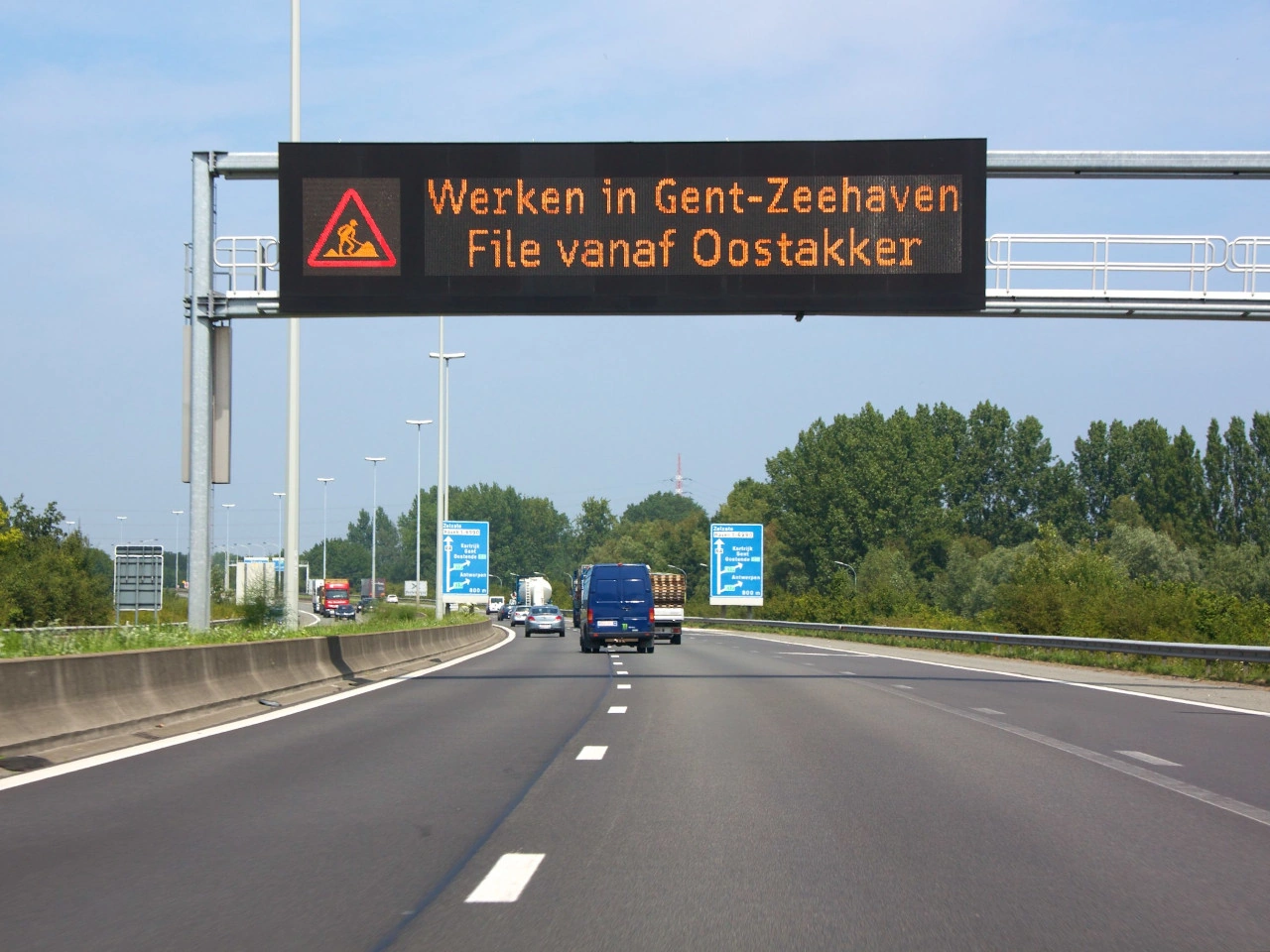
La gestion du trafic est le contrôle, la réglementation et le guidage organisés des usagers afin d’améliorer la sécurité, la fluidité et l’utilisation efficace des routes. Elle peut inclure les feux de circulation, panneaux, marquages, contrôles de voie, limitations variables, déviations et instructions données par des personnes habilitées.

La gestion du trafic peut être permanente ou temporaire. Des mesures temporaires sont couramment mises en place lors de travaux, embouteillages, collisions, événements publics ou autres incidents. Les conducteurs et autres usagers doivent respecter les panneaux, signaux et instructions applicables sur place, même s’ils diffèrent de l’organisation habituelle.
Gestion du trafic
How is traffic managed in Belgium?

Belgian traffic can be managed using traffic lights, road signs, road markings, lane-control signals, temporary traffic arrangements and instructions from authorised persons. Different measures may be used depending on traffic conditions, roadworks or incidents.

Must you obey traffic-management signs in Belgium?

Yes. Road users must obey official traffic lights, road signs and road markings when they comply with the prescribed form, are sufficiently visible and have been installed according to the applicable rules.

Which instruction has priority in Belgian traffic?

The orders of an authorised person take precedence over traffic signs and over the ordinary traffic rules. Traffic signs in turn take precedence over the general traffic rules.

What should you do if a police officer gives an instruction that conflicts with a traffic light?

You must follow the police officer's instruction. Orders given by an authorised person have a higher legal priority than traffic lights, road signs, road markings and the normal traffic rules.

Do traffic lights take precedence over priority signs in Belgium?

When traffic lights are operating at a location, the priority signs on the same road normally do not apply. There are specific exceptions, including flashing amber lights, lane-control signals and the B22 and B23 signs for cyclists and certain other riders.

What does a red cross above a Belgian traffic lane mean?

A red cross above a lane means that traffic is prohibited from using that lane or part of the road. Drivers must leave or avoid the closed lane as directed by the traffic-management signals.

What does a green arrow above a Belgian traffic lane mean?

A green downward-pointing arrow indicates that traffic may use the lane or part of the public road beneath it.

What does an orange diagonal arrow above a Belgian traffic lane mean?

An orange diagonal arrow, whether flashing or not, indicates that the lane must be left in the direction shown by the arrow. Drivers should change lane safely before reaching the closure.

What does a flashing amber traffic light mean in Belgium?

A flashing amber light means that road users may pass the signal but must proceed with increased caution. The flashing amber light does not change the normal priority rules.

What do temporary orange road markings mean in Belgium?

At roadworks, orange temporary lane markings may be used to guide traffic. They have the same meaning as the corresponding white continuous or broken lines and make white longitudinal markings at the same location temporarily inapplicable.

Can traffic be temporarily diverted in Belgium?

Yes. Traffic may be diverted or channelled because of roadworks, incidents or other obstructions. Temporary signs, barriers, markings and other traffic-management measures indicate the route that road users must follow.

Can police temporarily change the traffic arrangement during an emergency?

Yes. In urgent situations where traffic is obstructed, the police may use temporary traffic signs to divert or channel traffic. Such temporary signs must be removed when normal traffic conditions have been restored.

1 Flandre 2 Autoroute 3 Voie rapide 4 Zone résidentielle 5 Agglomération 6 Zone 7 Limitation de vitesse 8 Piste cyclable 9 Rue cyclable 10 Zone piétonne 11 Ralentisseur 12 Douane 13 Circulation à sens unique 14 Quai 15 Pente 16 Voie de bus 17 Impasse 18 Panneau Stop 19 Cédez le passage 20 Rond-point 21 Route prioritaire 22 Rétrécissement de chaussée 23 Priorité sur la circulation venant en sens inverse 24 Cédez le passage à la circulation venant en sens inverse 25 Passage pour piétons 26 Passage à niveau 27 Direction obligatoire 28 Interdiction de tourner 29 Zone scolaire 30 Traversée d’animaux 31 Chutes de pierres 32 Virage 33 Chevron 34 Circulation à contresens 35 Travaux routiers 36 Limitation de hauteur 37 Limitation de largeur 38 Limitation de poids 39 Panneau de contrôle radar 40 Barrières sélectives 41 Panneau directionnel de carrefour 42 Priorité au prochain carrefour 43 Feux de circulation 44 Feux pour piétons 45 Permis de conduire 46 Repère de localisation 47 Miroir routier 48 Frontière internationale 49 Itinéraire cyclable 50 Stationnement 51 Stationnement interdit 52 Dépose-minute 53 Parcmètre 54 Gestion du trafic 55 Marche arrière 56 Carrefour non réglementé 57 État de la chaussée 58 Rocade 59 Autoroute cyclable 60 Plaque d’immatriculation 61 Station de recharge 62 Dangers 63 Tourner au feu rouge 64 Carte d’identité 65 Risque d’incendie 66 Piéton 67 Cyclomoteur 68 Voiture 69 Camion 70 Autobus 71 Police 72 Ambulance 73 Feux de tram 74 Norme européenne d’émissions 75 Nid-de-poule 76 Place 77 Chemin 78 Particules 79 Pollution de l’air 80 Heure de pointe 81 Code de la route 82 Caniveau 83 Vélo cargo 84 Véhicule forestier 85 Véhicule de chantier 86 Ensemble semi-remorque 87 Trolleybus 88 Speed pedelec 89 Véhicule de livraison 90 Moteur au ralenti 91 Dépanneuse 92 Quatre roues motrices 93 Accès interdit à tous les véhicules 94 Vélo 95 Équipement de moto 96 Autorail 97 Voie ferrée 98 Transports publics 99 Caravane 100 Remorque ...