Panneau StopFlandre

Apprenez les règles de circulation avec des explications claires et des exemples visuels dans notre livre illustré, simple et agréable à étudier.


18. Panneau Stop

Un panneau Stop oblige les conducteurs à immobiliser complètement leur véhicule et à céder le passage avant de s’engager sur la route ou de la traverser. L’arrêt doit être effectué à la ligne d’arrêt ou à un autre emplacement prescrit par la loi.

Après l’arrêt, le conducteur ne peut repartir que lorsque cela peut être fait en toute sécurité et sans gêner la circulation prioritaire. Le panneau n’accorde pas la priorité au conducteur qui s’est arrêté.
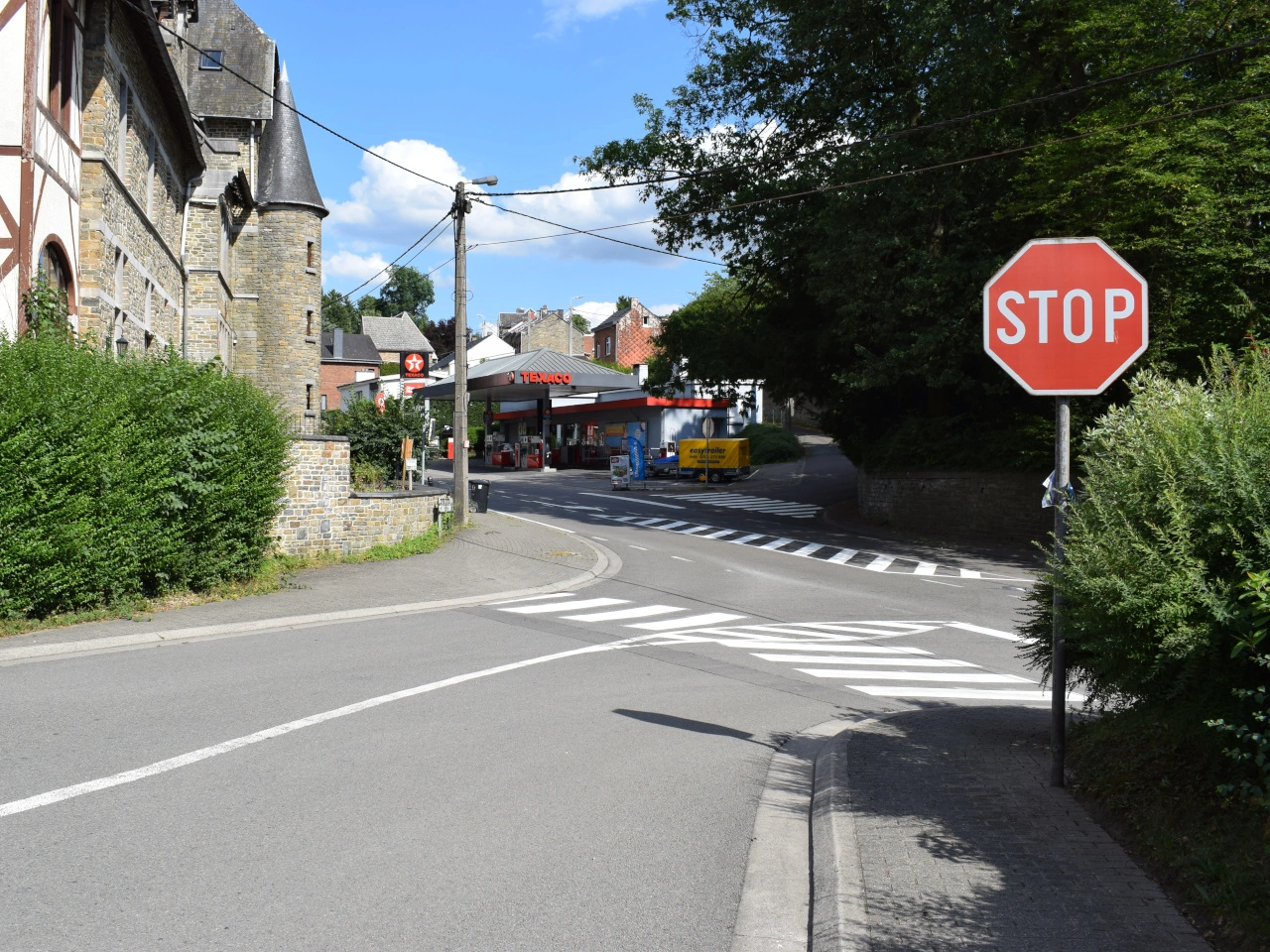
Panneau Stop
Which Belgian traffic signs indicate a stop?

Traffic sign B5 is the Belgian stop sign and means stop and give way. Traffic sign B7 announces an upcoming B5 stop sign and indicates approximately how far away it is.

Arrêt et cédez le passage à tous les conducteurs. Arrêt et cédez le passage à tous les conducteurs.

Signal routier B5 • Marquer l’arrêt et céder la priorité.

Verkeersbord B5 • Stoppen en voorrang verlenen.

Arrêt et cédez le passage plus loin. Arrêt et cédez le passage plus loin.

Signal routier B7 • Signal annonçant le signal B5 à la distance approximativement indiquée.

Verkeersbord B7 • Verkeersbord dat het verkeersbord B5 aankondigt op de bij benadering aangeduide afstand.

What changes for stop signs under Belgium’s new Road Code?

Belgium’s new Code of the Public Road takes effect on 1 June 2027. Traffic sign B5 keeps its existing number and continues to mean stop and give way. The current traffic sign B7, which announces an upcoming B5 stop sign, is no longer included as a separate traffic sign. Instead, the new supplementary sign M3 is used with B5 to announce the stop sign at approximately the indicated distance.

Arrêt et cédez le passage à tous les conducteurs. Arrêt et cédez le passage à tous les conducteurs.

Signal routier B5 • Marquer l’arrêt et céder la priorité.

Verkeersbord B5 • Stoppen en voorrang verlenen.

Arrêt ... mètre(s) plus loin. Arrêt ... mètre(s) plus loin.

Signal routier M3 • Panneau additionnel qui annonce le signal B5 à la distance approximative indiquée (exemple).

Verkeersbord M3 • Onderbord dat het verkeersbord B5 aankondigt op de bij benadering aangeduide afstand (voorbeeld).

Must you always stop at Belgian sign B5?

Yes. You must come to a complete stop even when no other road user is visible.

Is slowing down enough at B5?

No. The vehicle must stop completely. A rolling or very slow passage does not comply with the sign.

Where must you stop when there is a stop line?

You must stop before the white continuous stop line. The line indicates the precise place where drivers must stop because of B5 or a traffic light.

Where must you stop when there is no stop line?

Stop before entering the intersection or priority road, in the immediate vicinity of the B5 sign and at a position from which you can give way safely.

What if you cannot see enough from the stop line?

You must first stop at the line. You may then move forward slowly to improve your view and must stop again when necessary before entering the road.

May your vehicle cross the stop line before stopping?

No. The stop line marks the place before which the mandatory stop must be completed.

Must every driver in a queue stop separately?

Yes. Each driver approaching B5 must make a separate complete stop, even when the preceding vehicle has already stopped.

Who must you give way to after stopping?

You must give way to every driver travelling on the public road or carriageway you are entering. Other priority duties concerning pedestrians, cyclists and crossed paths also remain applicable.

Must you check traffic from both directions?

Yes. Check every direction from which lawful traffic may approach, including contraflow cyclists or mopeds where signs permit them.

Does stopping at B5 give you priority?

No. You may proceed only when this can be done without danger, taking account of the position, speed and distance of the road users who have priority.

What is the difference between B5 and B1?

B5 requires you to stop and give way. B1 requires you to give way but does not require a complete stop when you can proceed safely without stopping.

What does Belgian sign B7 mean?

Traffic sign B7 announces that a B5 stop sign is ahead and indicates its approximate distance.

Is B7 always placed before B5?

No. It is generally used to announce B5, but it is not required in certain situations, including inside built-up areas and on some very narrow roads.

Can B5 warn about two-way cycle traffic?

Yes. A supplementary panel may indicate that cyclists, or cyclists together with certain mopeds, travel in both directions on the road being entered.

Can B5 apply only to cyclists or moped riders?

Yes. An appropriate supplementary panel may limit the stop obligation to cyclists or to cyclists together with indicated two-wheeled moped riders.

Must cyclists obey an ordinary B5 sign?

Yes. When B5 applies to their route and no exception is indicated, cyclists must stop and give way like other drivers.

Can B5 be placed at a roundabout?

Yes. Belgian roundabout entrances may be controlled by B1 or B5. When B5 is displayed, the driver must stop before giving way to traffic on the roundabout.

Does B5 apply when the traffic lights are working?

No, when functioning traffic lights control the same location. Belgian priority signs on that road do not apply while those traffic lights are operating.

What if the traffic light is flashing orange-yellow?

An orange-yellow flashing light does not change the priority arrangement. A B5 sign at that location therefore remains applicable.

What if a police officer directs you through the stop sign?

Follow the officer’s instruction. Orders from an authorised person take precedence over traffic lights, signs, road markings and ordinary traffic rules.

Can a stop line cross a cycle path?

Where longitudinal markings indicate a cycle path, the stop line is normally placed before those markings and may be repeated beyond them when necessary. Drivers must avoid blocking cyclists.

Does B5 change the speed limit?

No. The sign creates a stopping and yielding obligation but does not introduce a new maximum speed.

Why is B5 used instead of B1?

Belgian placement rules normally reserve B5 for situations where visibility is so limited that drivers cannot properly give way without first stopping.

1 Flandre 2 Autoroute 3 Voie rapide 4 Zone résidentielle 5 Agglomération 6 Zone 7 Limitation de vitesse 8 Piste cyclable 9 Rue cyclable 10 Zone piétonne 11 Ralentisseur 12 Douane 13 Circulation à sens unique 14 Quai 15 Pente 16 Voie de bus 17 Impasse 18 Panneau Stop 19 Cédez le passage 20 Rond-point 21 Route prioritaire 22 Rétrécissement de chaussée 23 Priorité sur la circulation venant en sens inverse 24 Cédez le passage à la circulation venant en sens inverse 25 Passage pour piétons 26 Passage à niveau 27 Direction obligatoire 28 Interdiction de tourner 29 Zone scolaire 30 Traversée d’animaux 31 Chutes de pierres 32 Virage 33 Chevron 34 Circulation à contresens 35 Travaux routiers 36 Limitation de hauteur 37 Limitation de largeur 38 Limitation de poids 39 Panneau de contrôle radar 40 Barrières sélectives 41 Panneau directionnel de carrefour 42 Priorité au prochain carrefour 43 Feux de circulation 44 Feux pour piétons 45 Permis de conduire 46 Repère de localisation 47 Miroir routier 48 Frontière internationale 49 Itinéraire cyclable 50 Stationnement 51 Stationnement interdit 52 Dépose-minute 53 Parcmètre 54 Gestion du trafic 55 Marche arrière 56 Carrefour non réglementé 57 État de la chaussée 58 Rocade 59 Autoroute cyclable 60 Plaque d’immatriculation 61 Station de recharge 62 Dangers 63 Tourner au feu rouge 64 Carte d’identité 65 Risque d’incendie 66 Piéton 67 Cyclomoteur 68 Voiture 69 Camion 70 Autobus 71 Police 72 Ambulance 73 Feux de tram 74 Norme européenne d’émissions 75 Nid-de-poule 76 Place 77 Chemin 78 Particules 79 Pollution de l’air 80 Heure de pointe 81 Code de la route 82 Caniveau 83 Vélo cargo 84 Véhicule forestier 85 Véhicule de chantier 86 Ensemble semi-remorque 87 Trolleybus 88 Speed pedelec 89 Véhicule de livraison 90 Moteur au ralenti 91 Dépanneuse 92 Quatre roues motrices 93 Accès interdit à tous les véhicules 94 Vélo 95 Équipement de moto 96 Autorail 97 Voie ferrée 98 Transports publics 99 Caravane 100 Remorque ...