Rue cyclableFlandre

Apprenez les règles de circulation avec des explications claires et des exemples visuels dans notre livre illustré, simple et agréable à étudier.


9. Rue cyclable

Une rue cyclable est une rue conçue ou légalement désignée pour donner aux cyclistes une place prépondérante dans la circulation mixte. Les véhicules à moteur peuvent généralement y entrer, mais doivent adapter leur vitesse et leur comportement à la présence des cyclistes.

Selon le pays, les cyclistes peuvent être autorisés à utiliser une plus grande partie de la chaussée et les véhicules à moteur peuvent être interdits de les dépasser. La limitation de vitesse, les règles de priorité, les véhicules autorisés et le début et la fin de la rue dépendent de la signalisation et de la réglementation locales.

How can you recognise a Belgian cycling zone?

A Belgian cycling zone begins at traffic sign F111 and ends at traffic sign F113. The word indicating the cycling zone on these signs is optional.

Début d'une zone pour cyclistes. Début d'une zone pour cyclistes.

Signal routier F111 • Début d'une zone cyclable. La mention « Zone cyclable » sur le signal est facultative.

Verkeersbord F111 • Begin van de fietszone. De vermelding « Fietszone » op het verkeersbord is facultatief.

Fin de la zone pour cyclistes. Fin de la zone pour cyclistes.

Signal routier F113 • Fin d'une zone cyclable.

Verkeersbord F113 • Einde van een fietszone.

What changes for cyclist streets under Belgium’s new Road Code?

Belgium’s new Code of the Public Road takes effect on 1 June 2027. The current traffic sign F111 marking the beginning of a cycling zone becomes traffic sign R17, while traffic sign F113 marking the end becomes traffic sign R19. The new signs refer to a cycling zone, and the applicable maximum speed may be displayed on the sign. Cyclists may use the full width of the carriageway when it is open only in their direction and the right-hand half when traffic is permitted in both directions. Existing F111 and F113 signs with zonal validity or the wording indicating a cyclist street may remain valid until 1 January 2035.

Début d'une zone pour cyclistes. Début d'une zone pour cyclistes.

Signal routier R17 • Début d'une zone cyclable. La mention « Zone cyclable » peut être indiquée sur le dessus du signal. La vitesse maximale qui s’y applique peut être indiquée à titre informatif sur le signal en bas à droite.

Verkeersbord R17 • Begin van een fietszone. De vermelding “Fietszone” kan bovenaan op het verkeersbord aangeduid zijn. De maximale snelheid die er geldt, kan rechtsonder als aanwijzing op het verkeersbord aangeduid zijn.

Fin de la zone pour cyclistes. Fin de la zone pour cyclistes.

Signal routier R19 • Fin d'une zone cyclable.

Verkeersbord R19 • Einde van een fietszone.

What is a cycling street called in Belgium?

The current Belgian legal term is fietszone, or cycling zone. The older term fietsstraat, meaning bicycle street, may still appear on existing traffic signs.

Are older Belgian fietsstraat signs still valid?

Yes. Existing F111 and F113 signs bearing the older term Fietsstraat may remain in use until 1 January 2035 and continue to indicate a cycling zone.

Can a Belgian cycling zone include several streets?

Yes. A fietszone may consist of one or more public roads on which the special rules concerning cyclists apply.

What is the speed limit in a Belgian cycling zone?

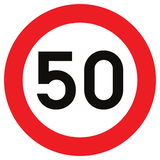
The maximum speed is 30 km/h. This limit applies to every driver, including cyclists and speed-pedelec riders.

May motor vehicles enter a Belgian cycling zone?

Yes. Motor vehicles are permitted unless additional traffic signs restrict access. Their drivers must respect the 30 km/h limit and the prohibition on overtaking cyclists.

May motor vehicles overtake cyclists in a Belgian cycling zone?

No. Motor vehicles may not overtake cyclists within the cycling zone, even when the road appears wide enough to maintain the normal passing distance.

May a motor vehicle overtake when no cyclist is present?

The special prohibition concerns the overtaking of cyclists. Motor vehicles may pass other vehicles only where the ordinary overtaking rules allow it and the manoeuvre can be completed safely.

May cyclists overtake motor vehicles?

Yes. The special overtaking prohibition applies to motor vehicles overtaking cyclists. Cyclists may overtake another vehicle when this is otherwise legal and safe.

May cyclists overtake one another?

Yes. Cyclists may overtake other cyclists when sufficient space and visibility are available and the manoeuvre does not endanger other road users.

Where may cyclists ride on a one-way street in a Belgian cycling zone?

When the carriageway is open to traffic only in the cyclists’ direction, cyclists may use the entire width of the carriageway.

Where may cyclists ride on a two-way street?

When the carriageway is open in both directions, cyclists may use the right-hand half of the carriageway in their direction of travel.

May cyclists ride side by side in a Belgian cycling zone?

Yes. Their right to use the entire carriageway on a one-way street, or its right-hand half on a two-way street, allows cyclists to ride side by side within that space when it is safe.

Do the same rules apply to speed pedelecs?

Yes. For the Belgian cycling-zone rules, drivers of cycles and speed pedelecs are treated as cyclists.

Do cyclists automatically have priority in a cycling zone?

No. The ordinary priority rules remain applicable. Cyclists must obey traffic lights, give-way and stop signs, priority-from-the-right rules and pedestrian crossings.

Does entering a cycling zone change the priority at intersections?

No. Traffic sign F111 introduces the cycling-zone rules but does not by itself make the road a priority road or give cyclists priority over crossing traffic.

May pedestrians use the entire carriageway?

No. A cycling zone is not a woonerf, pedestrian zone or shared pedestrian area. Pedestrians must follow the normal rules concerning pavements, verges, crossings and use of the carriageway.

May you stop or park in a Belgian cycling zone?

The cycling-zone rules do not create a general stopping or parking prohibition. Drivers must follow the ordinary parking rules and any signs or markings and may not obstruct traffic or endanger cyclists.

Does red road surfacing create a cycling zone?

No. Red surfacing, bicycle symbols and road markings may make the zone more visible, but the legal cycling-zone rules begin with traffic sign F111.

When do the Belgian cycling-zone rules end?

The special rules end when the driver passes traffic sign F113. The ordinary speed, positioning and overtaking rules then apply unless another sign introduces a different regulation.

1 Flandre 2 Autoroute 3 Voie rapide 4 Zone résidentielle 5 Agglomération 6 Zone 7 Limitation de vitesse 8 Piste cyclable 9 Rue cyclable 10 Zone piétonne 11 Ralentisseur 12 Douane 13 Circulation à sens unique 14 Quai 15 Pente 16 Voie de bus 17 Impasse 18 Panneau Stop 19 Cédez le passage 20 Rond-point 21 Route prioritaire 22 Rétrécissement de chaussée 23 Priorité sur la circulation venant en sens inverse 24 Cédez le passage à la circulation venant en sens inverse 25 Passage pour piétons 26 Passage à niveau 27 Direction obligatoire 28 Interdiction de tourner 29 Zone scolaire 30 Traversée d’animaux 31 Chutes de pierres 32 Virage 33 Chevron 34 Circulation à contresens 35 Travaux routiers 36 Limitation de hauteur 37 Limitation de largeur 38 Limitation de poids 39 Panneau de contrôle radar 40 Barrières sélectives 41 Panneau directionnel de carrefour 42 Priorité au prochain carrefour 43 Feux de circulation 44 Feux pour piétons 45 Permis de conduire 46 Repère de localisation 47 Miroir routier 48 Frontière internationale 49 Itinéraire cyclable 50 Stationnement 51 Stationnement interdit 52 Dépose-minute 53 Parcmètre 54 Gestion du trafic 55 Marche arrière 56 Carrefour non réglementé 57 État de la chaussée 58 Rocade 59 Autoroute cyclable 60 Plaque d’immatriculation 61 Station de recharge 62 Dangers 63 Tourner au feu rouge 64 Carte d’identité 65 Risque d’incendie 66 Piéton 67 Cyclomoteur 68 Voiture 69 Camion 70 Autobus 71 Police 72 Ambulance 73 Feux de tram 74 Norme européenne d’émissions 75 Nid-de-poule 76 Place 77 Chemin 78 Particules 79 Pollution de l’air 80 Heure de pointe 81 Code de la route 82 Caniveau 83 Vélo cargo 84 Véhicule forestier 85 Véhicule de chantier 86 Ensemble semi-remorque 87 Trolleybus 88 Speed pedelec 89 Véhicule de livraison 90 Moteur au ralenti 91 Dépanneuse 92 Quatre roues motrices 93 Accès interdit à tous les véhicules 94 Vélo 95 Équipement de moto 96 Autorail 97 Voie ferrée 98 Transports publics 99 Caravane 100 Remorque ...