

WeatherSwitzerland
An introduction to the traffic rules and road signs of Switzerland. Learn about driving, road safety and much more in our illustrated book, with answers to frequently asked questions.
For informational purposes only. Always follow official regulations. Some content and images were created with AI assistance.
 Traffic rules
 Switzerland
88. Weather
Weather can have a major effect on driving conditions by reducing visibility, grip and vehicle control. Rain, fog, snow, ice, strong wind and bright sunlight can all increase the risk of an accident. Drivers should adapt their speed and following distance to the conditions, avoid sudden steering or braking on slippery roads and use the appropriate lights when visibility is reduced. Even when driving below the posted speed limit, a driver may still be travelling too fast for the weather and road conditions.
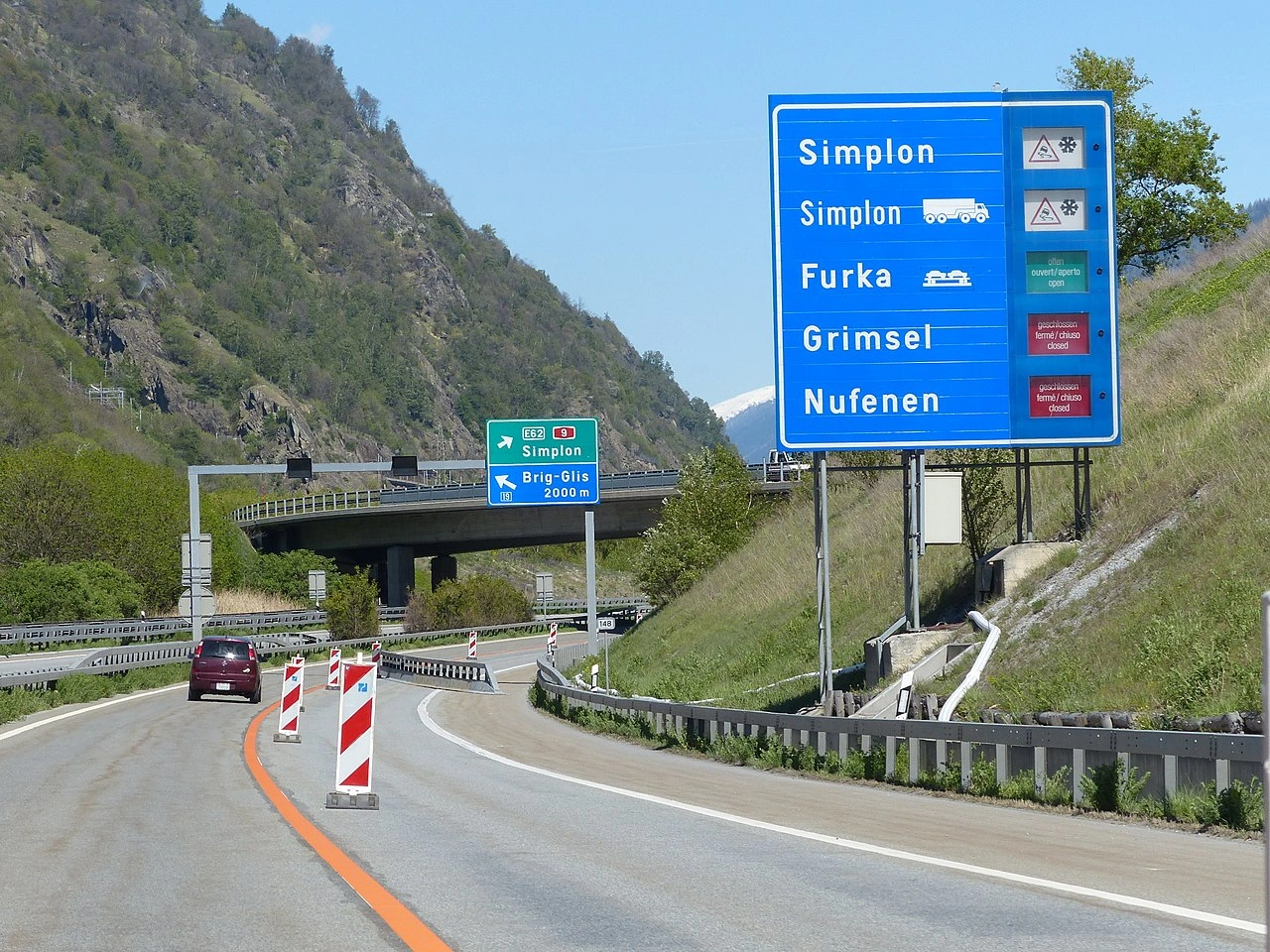
Wikimedia.org • Marc Mongenet • CC BY-SA
How does weather affect driving?
Weather can reduce visibility, tyre grip and vehicle control. Rain, snow, ice, fog, strong wind and bright sunlight may require drivers to reduce speed and increase their following distance.
Should you drive slower in bad weather?
Yes. Drivers should adapt their speed to the weather, visibility and road conditions. The posted speed limit is a maximum and may still be too fast in poor conditions.
Why should you increase the following distance in bad weather?
Wet, snowy or icy roads can increase stopping distances. A larger following distance gives the driver more time and space to react and stop safely.
What should you do when driving in heavy rain?
Reduce speed, increase your following distance, use the appropriate lights and avoid sudden steering or braking. Heavy rain can reduce visibility and increase the risk of aquaplaning.
What should you do when driving in fog?
Reduce speed, increase your following distance and use the appropriate lights. Avoid relying on the vehicle ahead as a guide and make sure you can stop within the distance you can clearly see.
What should you do when driving on snow or ice?
Drive slowly and smoothly, increase the following distance and avoid sudden acceleration, steering or braking. Tyre grip can be greatly reduced on snow and ice.


