


Road surfaceItaly
 Traffic rules
 Italy
Italy
46. Road surface
A road surface warning indicates that the road ahead may be uneven, damaged or in poor condition and could affect the stability, steering or braking of a vehicle. The hazard may include bumps, depressions, potholes, broken pavement or other irregularities in the road surface.
Drivers should reduce speed where necessary, maintain a safe distance and avoid sudden steering or braking when passing over an irregular surface. The exact meaning and appearance of the warning sign vary between countries, so drivers must follow the local traffic signs and regulations.
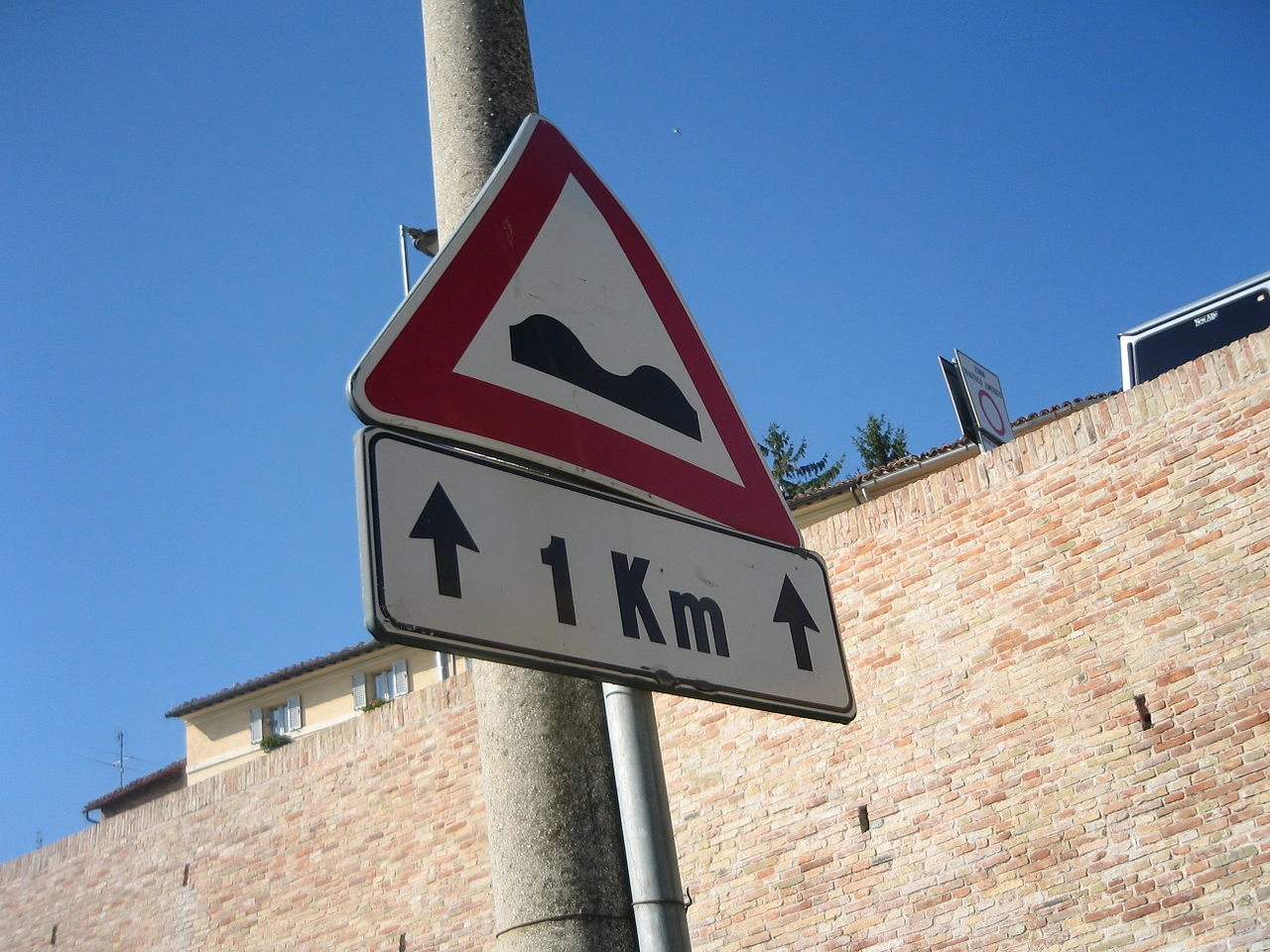
Wikimedia.org • lox • CC0
What does a road surface warning mean?
A road surface warning indicates that the surface ahead may be uneven, damaged or otherwise capable of affecting the safe movement of vehicles.
What kinds of road defects can the warning indicate?
Depending on the country, it may warn of bumps, depressions, potholes, broken pavement, uneven repairs or other surface irregularities.
What should you do when you see a road surface warning?
Reduce speed where necessary, increase your awareness of the road ahead and be prepared for changes in the vehicle's stability or direction.
Does a road surface warning impose a specific speed limit?
Not normally. A warning sign alerts drivers to a hazard rather than establishing a numerical speed limit. A separate speed-limit sign may be used where a particular maximum speed is required.
Should you brake before reaching an uneven road surface?
Where slowing is necessary, it is generally safer to reduce speed before reaching the irregular surface rather than braking sharply while travelling over it.
Why can an uneven road surface be dangerous?
A severe surface irregularity can affect tyre contact, steering, braking and vehicle stability. It can also damage tyres, wheels or suspension components.
Are motorcycles and bicycles particularly affected by uneven surfaces?
Yes. Two-wheeled vehicles can be particularly sensitive to potholes, ridges and other irregularities because these hazards may disturb their balance or alter their direction suddenly.
Is an uneven-road warning the same as a slippery-road warning?
No. An uneven-road warning concerns the physical condition or shape of the road surface. A slippery-road warning concerns reduced tyre grip caused by the surface or conditions such as water, ice, mud or other substances.
Can the warning apply over a longer section of road?
Yes. A supplementary sign may indicate the distance to the hazard or the length of the affected section, depending on the country's traffic-sign system.
Should you increase your following distance on a poor road surface?
Yes, when conditions require it. Additional distance provides more time to react if the vehicle ahead slows suddenly to avoid a pothole or other surface defect.


