


Axle weight limitNetherlands
An introduction to the traffic rules and road signs of Netherlands. Learn about driving, road safety and much more in our illustrated book, with answers to frequently asked questions.
For informational purposes only. Always follow official regulations. Some content and images were created with AI assistance.
 Traffic rules
 Netherlands
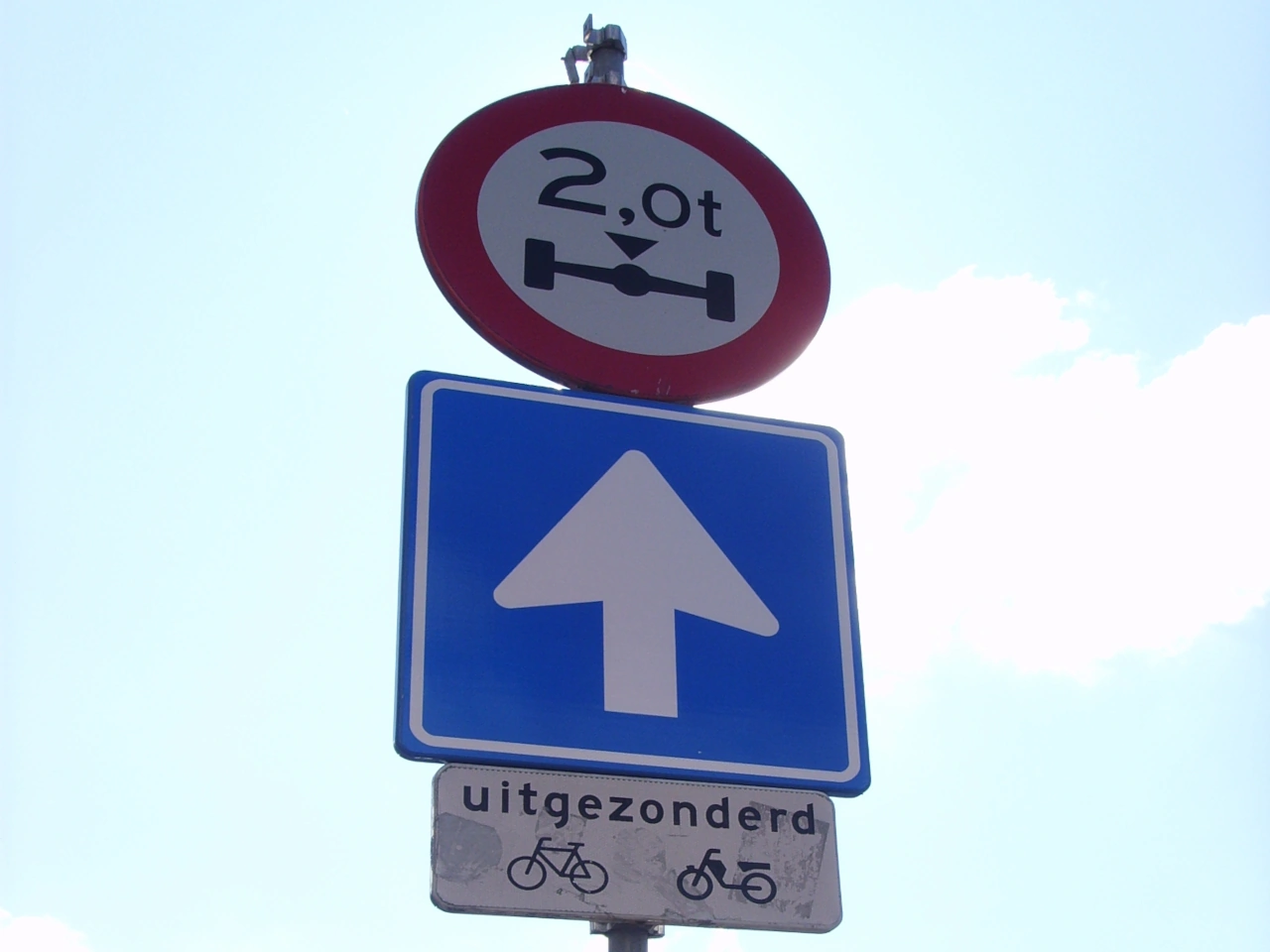
52. Axle weight limit
An axle weight limit is the maximum permitted weight or load carried by a single axle of a vehicle. It limits how much force an axle and its wheels may transmit to the road, independently of the vehicle's total weight.
Axle weight limits help protect bridges and road surfaces from excessive loads and contribute to safe vehicle operation. A vehicle can comply with an overall weight limit while still exceeding an axle limit if its load is distributed incorrectly.
Wikimedia.org • Victor van Werkhooven • CC BY-SA
What does an axle weight limit mean?
An axle weight limit specifies the maximum permitted load carried by an individual axle or axle group. A vehicle exceeding the indicated axle load may not use the restricted road or structure.
Is axle weight the same as total vehicle weight?
No. Total vehicle weight is the combined weight of the entire vehicle and its load, while axle weight is the portion of that weight supported by a particular axle. Both limits may apply at the same time.
Why are axle weight limits used?
They help prevent excessive stress on roads and structures such as bridges. They also ensure that vehicle loads are distributed safely between the axles.


