


NetherlandsNetherlands
 Traffic rules
 Netherlands
1. Netherlands
The Netherlands is a low-lying country in Western Europe, bordering Belgium and Germany and facing the North Sea. Traffic drives on the right, but one of the most important adjustments for foreign drivers is the very large number of cyclists. The country has an extensive network of cycle paths, and drivers regularly cross or turn across bicycle routes in towns and cities. Water also strongly shapes the road environment, with roads running along canals, dikes, polders and major bridges and tunnels.
Dutch is the official language and is the main language used on text-based road and destination signs. In the province of Fryslân, Frisian is also an official language, and drivers may encounter Frisian place names and local signage. Another distinctive feature is the motorway speed system: on most motorways the daytime limit from 06:00 to 19:00 is 100 km/h, while higher limits of 120 or 130 km/h can apply in the evening and at night; several motorway sections now also permit 130 km/h during the day.
AI-generated by Traffic-rules.com • WCIT • CC BY-SA
Which side of the road do you drive on in the Netherlands?
Drive on the right and normally overtake on the left.
Which emergency number should you call in the Netherlands?
Call 112 for urgent police, ambulance or fire-service assistance.
What is the legal alcohol limit for drivers in the Netherlands?
The maximum blood-alcohol level is 0.5‰ (0.5 g/l) for experienced drivers. A lower limit of 0.2‰ (0.2 g/l) applies to beginning drivers.
What is the general speed limit in Dutch built-up areas?
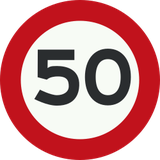
The general maximum speed for motor vehicles is 50 km/h, unless signs indicate another limit. Lower limits such as 30 km/h are common in residential and urban areas.
What is the general speed limit outside built-up areas in the Netherlands?
On ordinary roads outside built-up areas, the general maximum speed for motor vehicles is 80 km/h, unless signs indicate another limit.
What is the speed limit on Dutch main highways or autowegen?
The general maximum speed on an autoweg is 100 km/h, unless signs indicate another limit.
What is the motorway speed limit in the Netherlands?
From 06:00 to 19:00, the maximum on almost all motorways is 100 km/h, although some sections have an 80 km/h limit and selected sections permit 130 km/h during the day. From 19:00 to 06:00, limits of 100, 120 or 130 km/h apply depending on the road. Always follow the posted or electronic speed limit.
Which vehicles may use Dutch motorways and autowegen?
A motorway may only be used by vehicles capable of travelling at more than 60 km/h, while an autoweg may only be used by vehicles capable of travelling at more than 50 km/h. These are vehicle capability requirements, not minimum driving speeds.
Do passenger cars need a motorway vignette in the Netherlands?
No. There is no nationwide motorway vignette for passenger cars and most roads are toll-free. One important exception is the A24 Blankenburg connection near Rotterdam, which uses electronic tolling without toll booths.
Must cars use headlights during the day in the Netherlands?
There is no general requirement to use headlights during normal daylight and good visibility. Dipped headlights must be used at night and during the day when visibility is seriously restricted. Daytime running lights may be used during daylight.
Are winter tyres mandatory in the Netherlands?
No. Winter tyres are not legally mandatory, although they can provide better grip in winter conditions. Studded tyres are prohibited.
Can you use snow chains in the Netherlands?
No. Snow chains may not be used on public roads in the Netherlands because they can damage the road surface and road markings.
Are seat belts mandatory in the Netherlands?
Seat belts must be worn by drivers and passengers on seats equipped with them, subject to specific legal exemptions.
When must children use a child restraint in the Netherlands?
Children under 18 and shorter than 135 cm must generally use an approved child-restraint system suitable for them. A rear-facing child seat must not be used in front of an active frontal airbag.
Who must wear a helmet in the Netherlands?
Motorcycle, moped, light-moped and speed-pedelec riders and passengers must wear an approved helmet as required for their vehicle category. There is currently no general helmet requirement for ordinary bicycles or standard e-bikes.
Can you use a mobile phone while driving in the Netherlands?
A driver may not hold a mobile electronic device while driving. Hands-free use and the use of a device secured in a holder are permitted, provided this can be done safely. A device may be held when the vehicle is stationary.
When must you give way to traffic approaching from the right in the Netherlands?
At an intersection where priority is not otherwise regulated, drivers must generally give way to traffic approaching from the right. Important exceptions include traffic on an unpaved road, which must give way to traffic on a paved road, and trams, which generally have priority.
What must drivers do when turning across a cycle path in the Netherlands?
A turning driver must give way to road users continuing straight on the same road, including cyclists and moped riders travelling beside the vehicle. Drivers should therefore check carefully for cyclists before turning across a cycle path or bicycle lane.
Who has priority at a roundabout in the Netherlands?
Drivers must follow the priority signs and road markings at the roundabout. Where entering traffic has a Give Way sign or shark-teeth markings, traffic already circulating has priority. The roundabout sign itself indicates the compulsory direction of travel and does not by itself determine priority.
What must drivers do at pedestrian crossings in the Netherlands?
Drivers must give way to pedestrians who are crossing or clearly waiting to cross at a pedestrian crossing. Overtaking another vehicle immediately before or on a pedestrian crossing is prohibited.
Must drivers let buses leave bus stops in the Netherlands?
Yes. Within built-up areas, drivers must give a bus sufficient opportunity to leave a bus stop when the bus driver indicates the intention to pull out.
What must drivers do when passengers are boarding or leaving a tram or bus?
If a driver passes a stationary tram or bus on the side where passengers are boarding or leaving, the driver must give way and allow passengers to do so safely.
What is the speed limit in a Dutch home zone or erf?
In a designated erf, the maximum speed is 15 km/h. Pedestrians may use the full width of the road, and parking is generally allowed only in designated parking places.
What do red and amber traffic lights mean in the Netherlands?
Red means stop. Amber also means stop, unless the driver is already so close to the traffic light that stopping safely can no longer reasonably be expected.
What does a red X above a Dutch motorway lane mean?
A red X means that the lane is closed and must not be used. A white arrow warns that a red X is approaching and drivers should move out of the affected lane.
What do green markings between the centre lines mean on Dutch roads?
Outside built-up areas, double white centre lines with green between them normally identify a road with a 100 km/h limit. Double white lines without green generally correspond to an 80 km/h road. Traffic signs always take priority over these road-design features.
What safety equipment must you carry in a car in the Netherlands?
There is no general mandatory equipment list for private cars; for example, a warning triangle and reflective vest do not have to be carried. However, if a stopped vehicle creates a hazard, approaching traffic must be warned using hazard lights or, where necessary, a warning triangle placed about 30 metres from the vehicle.
Which environmental-zone rules apply in the Netherlands?
Some Dutch cities operate environmental zones that restrict older diesel vehicles. Separate zero-emission zones are also being introduced for vans and trucks. The exact access rules depend on the city, vehicle type and emission class, so drivers should check local restrictions before entering.

