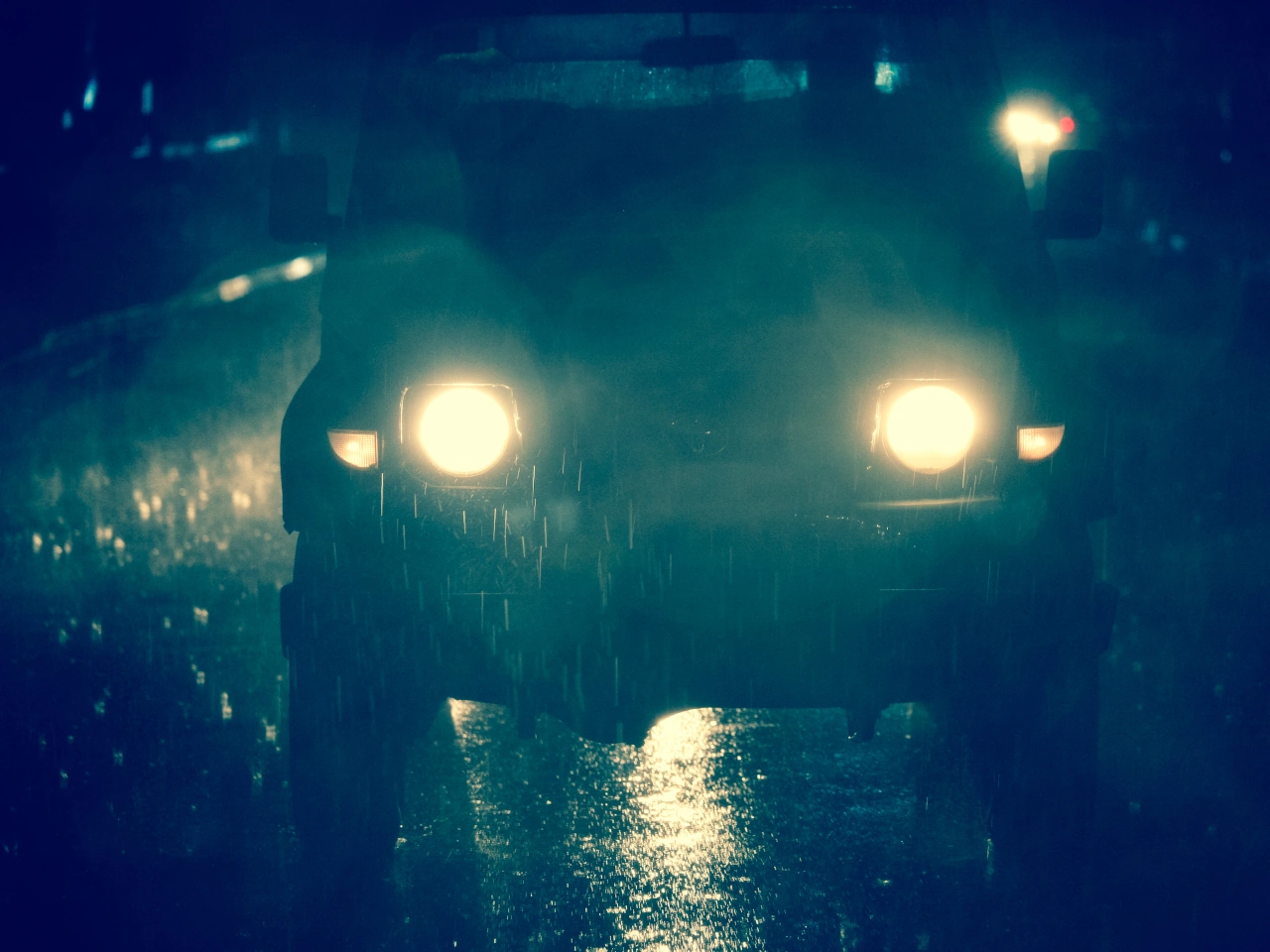
Ceguera nocturnaNoruega
Una introducción a las normas de tráfico y las señales de tráfico de Noruega. Aprenda sobre conducción, seguridad vial y mucho más en nuestro libro ilustrado, con respuestas a las preguntas más frecuentes.
Solo con fines informativos. Siga siempre la normativa oficial. Algunos contenidos e imágenes se crearon con ayuda de la IA.
 Normas de tráfico
 Noruega
202. Ceguera nocturna
La ceguera nocturna, también llamada nictalopía, es una capacidad reducida para ver en oscuridad o con poca luz. Puede dificultar reconocer peatones, ciclistas, marcas viales, curvas u obstáculos de noche y durante el crepúsculo. Puede tener distintas causas, incluidas algunas enfermedades oculares, deficiencias vitamínicas o problemas de retina. Los conductores que tengan dificultades para ver con poca luz deben evitar conducir cuando su visión sea insuficiente y solicitar atención profesional de la vista.