


ItalyItaly
 Traffic rules
 Italy
Italy
1. Italy
Italy is a country in Southern Europe, extending into the Mediterranean and including the large islands of Sicily and Sardinia. Traffic drives on the right, and driving conditions range from Alpine passes and long tunnels in the north to busy historic city centres, coastal roads and island routes. Many autostrade are tolled rather than covered by a national vignette, while drivers entering older city centres must pay particular attention to Zona a Traffico Limitato (ZTL) restrictions, which are often enforced by automatic cameras.
Italian is the official language and is the main language used on road signs. In multilingual areas, drivers may also encounter bilingual or multilingual signs, including Italian-German and sometimes Ladin in South Tyrol and Italian-Slovene in parts of Friuli-Venezia Giulia. Winter equipment is another regional consideration: on roads covered by a winter ordinance, vehicles must generally have winter tyres fitted or approved snow chains available during the prescribed period, commonly from 15 November to 15 April.
AI
Which side of the road do you drive on in Italy?
Drive on the right and normally overtake on the left.
Which emergency number should you call in Italy?
Call 112 for emergency assistance. The European emergency number can be used to obtain help from the appropriate emergency service.
What is the legal alcohol limit for drivers in Italy?
The general blood-alcohol limit is 0.5 g/l. A zero-alcohol limit applies to drivers under 21, drivers during the first three years after obtaining a category B licence and specified professional drivers.
What is the general speed limit in Italian built-up areas?
The general maximum speed is 50 km/h, unless signs indicate another limit. Suitable urban roads may have a higher signed limit of up to 70 km/h, while lower limits are common in many areas.
What is the general speed limit outside built-up areas in Italy?
The general maximum speed on secondary and local roads outside built-up areas is 90 km/h, unless signs indicate another limit.
What is the speed limit on Italian main roads outside built-up areas?
On a strada extraurbana principale, the general maximum speed for passenger cars is 110 km/h, unless signs indicate another limit.
What is the motorway speed limit in Italy?
For passenger cars, the general maximum speed on motorways is 130 km/h, unless signs indicate another limit. Italian law allows a limit of up to 150 km/h on qualifying motorway sections when specifically authorised and signed.
Do Italian speed limits change when it rains?
Yes. During precipitation, the maximum speed is reduced to 110 km/h on motorways and 90 km/h on main extra-urban roads.
Do lower speed limits apply to novice drivers in Italy?
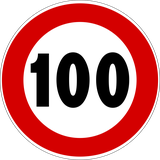
During the first three years after obtaining a category B licence, drivers may not exceed 100 km/h on motorways or 90 km/h on main extra-urban roads.
Do you need a motorway vignette in Italy?
No. Italy does not use a general motorway vignette for passenger cars. Instead, many autostrade charge tolls, often calculated according to the distance travelled and the vehicle category.
Must cars use lights during the day in Italy?
Outside built-up areas, motor vehicles must use dipped headlights or permitted daytime running lights during daytime driving. Mopeds, motorcycles, tricycles and quadricycles must also use the prescribed lights while driving in built-up areas.
When are winter tyres or snow chains required in Italy?
On roads where a winter-equipment obligation is imposed, vehicles must use winter tyres or carry suitable snow chains during the period specified by the road authority. A common period is 15 November to 15 April, but drivers must follow the signs and local ordinance for the road they are using.
Are seat belts mandatory in Italy?
Seat belts are mandatory for drivers and passengers on seats equipped with them, subject to specific legal exemptions.
When must children use a child restraint in Italy?
Children shorter than 150 cm must generally use an approved child-restraint system appropriate for their size. A rear-facing child seat must not be used in front of an active frontal airbag.
When is an anti-abandonment device required for children in Italy?
When carrying a child under four years old in a child-restraint system, an approved anti-abandonment alarm device is required in specified vehicles registered in Italy. The rule also applies to foreign-registered vehicles when they are driven by a person resident in Italy.
Who must wear a helmet in Italy?
Moped and motorcycle riders and passengers must wear an approved protective helmet and keep it correctly fastened while travelling.
Can you use a mobile phone while driving in Italy?
Drivers may not hold or use a smartphone, tablet, laptop or similar device in a way that requires taking their hands from the steering controls. Hands-free equipment that does not require the use of the hands is permitted under the applicable rules.
When must you give way to traffic approaching from the right in Italy?
At an intersection where priority is not otherwise regulated, drivers must generally give way to traffic approaching from the right. Traffic signs, signals and other special priority rules can override this rule.
Who has priority at roundabouts in Italy?
Drivers must follow the priority signs at the roundabout entrance. Where a Give Way sign controls the entrance, traffic already circulating has priority. At an unsigned circular junction, the normal priority-from-the-right rule applies, so circulating traffic does not automatically have priority.
Do trams have priority in Italy?
At crossings of tram or railway tracks, drivers must generally give way to vehicles travelling on rails, unless signs or traffic signals indicate otherwise.
What must drivers do at pedestrian crossings in Italy?
Drivers must give way to pedestrians who are crossing or are preparing to cross at a pedestrian crossing. Turning drivers must also give way to pedestrians crossing the road they are entering.
How much space should drivers leave when overtaking cyclists in Italy?
When road conditions allow, drivers should leave a lateral safety distance of at least 1.5 metres when overtaking a cyclist.
What is a Zona a Traffico Limitato in Italy?
A Zona a Traffico Limitato (ZTL) is an area where vehicle access is restricted according to local rules, often in historic city centres. Restrictions can depend on the time, vehicle or permit, and entrances are frequently monitored by automatic number-plate cameras.
What do the different parking-line colours mean in Italy?
Blue lines generally indicate paid parking, while white lines generally indicate free parking, sometimes with a time limit. Yellow lines normally identify spaces reserved for authorised users or special purposes. Always check the accompanying signs.
How close to an intersection may you park in Italy?
In built-up areas, stopping and parking are generally prohibited at an intersection and within 5 metres of the nearest edge of the intersecting carriageway, unless signs indicate otherwise.
What do red and amber traffic lights mean in Italy?
Red means stop. Amber warns that traffic must stop; drivers may continue only when they are already so close to the stopping point that they cannot stop safely when the amber light appears.
What safety equipment should you carry in a car in Italy?
Cars must have an approved warning triangle for situations in which a stopped vehicle must be marked. Drivers should also keep an approved high-visibility reflective vest or braces accessible, as these must be worn before leaving the vehicle and walking on the road in specified breakdown situations, including on motorway emergency lanes and lay-bys.

