


Pedestrian zoneItaly
 Traffic rules
 Italy
8. Pedestrian zone
A pedestrian zone is an area consisting of one or more streets that are reserved primarily for pedestrians. Motor-vehicle access is normally prohibited or restricted to authorised users, particular purposes or specified times.
Pedestrians may usually use the full width of the available road space. Rules concerning cyclists, deliveries, public transport, vehicle speed, stopping and parking depend on local traffic signs and regulations.
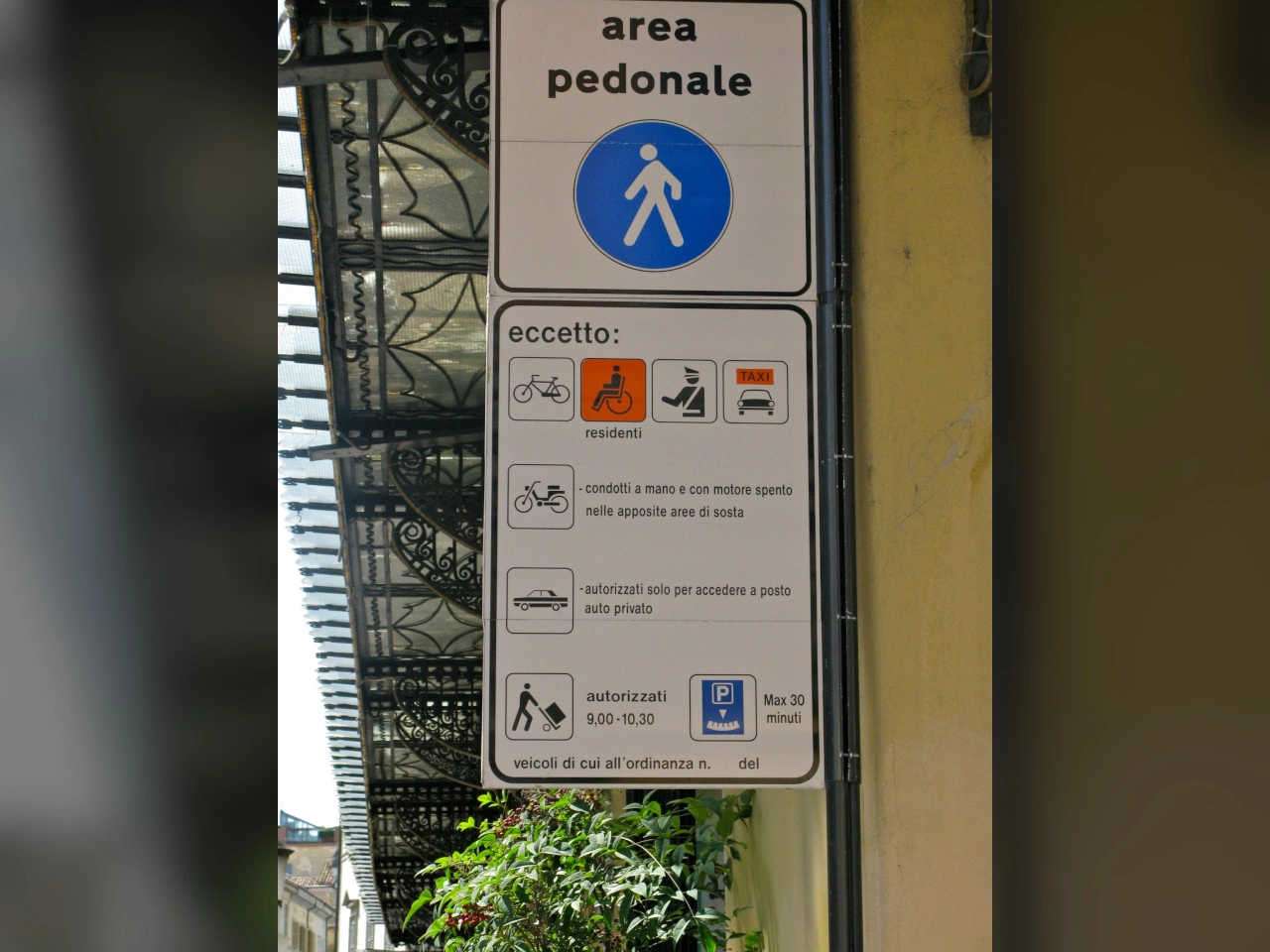
Wikimedia.org • Alain Rouiller • CC BY-SA
How should I recognise pedestrian-only access in Italy?
The official term is area pedonale. The Code excludes vehicle traffic with specified exceptions, including emergency-service vehicles, cycles and vehicles serving people with reduced mobility. Municipalities may impose further restrictions by signs.
🔗 aci.gov.it • Italy, Road Code — articles 3(2), 7, 145(4-bis), 158, 182
🔗 aci.gov.it • ACI official Road Code — article 145
🔗 aci.gov.it • ACI official Road Code — article 182
🔗 aci.gov.it • ACI official Road Code — article 7
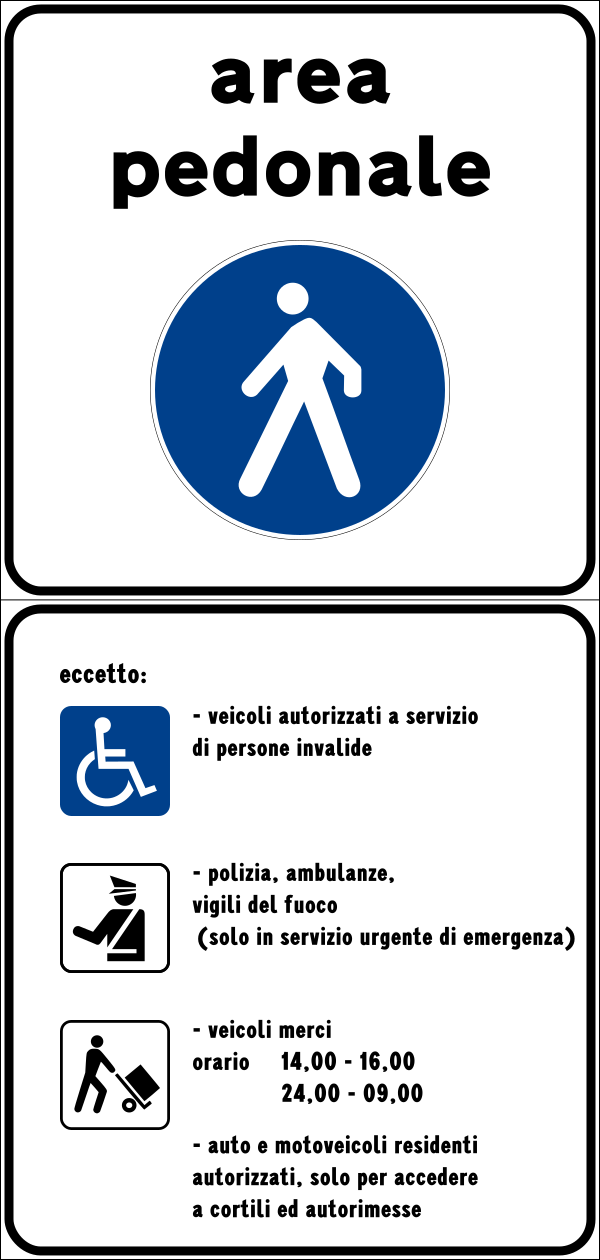 Start of a zone for pedestrians.
English • Traffic sign II.320 • Pedestrian area. Marks the beginning of an area closed to vehicle traffic. Any exemptions, restrictions and exceptions are specified on the supplementary plate and must be read with the sign.
Italiano • Figura II.320 • Area pedonale. Indica l’inizio di una zona interdetta alla circolazione dei veicoli. Eventuali deroghe, limitazioni ed eccezioni sono precisate dal pannello integrativo e vanno lette insieme al segnale.
Sources
🔗 Commons.wikimedia.org
🔗 Normattiva.it • D.P.R. 495/1992 • testo vigente • art. 135, comma 13
🔗 Normattiva.it • Allegati ufficiali aggiornati • Figura II.320
Image via Commons.wikimedia.org
Official design: Ministero dei Lavori Pubblici; vectorisation: Arbalete; incorporated elements by Pav03, Gigillo83 and Earthshaker13 • CC BY-SA 4.0 • Source revision 2024-09-15. Wikimedia original unmodified.
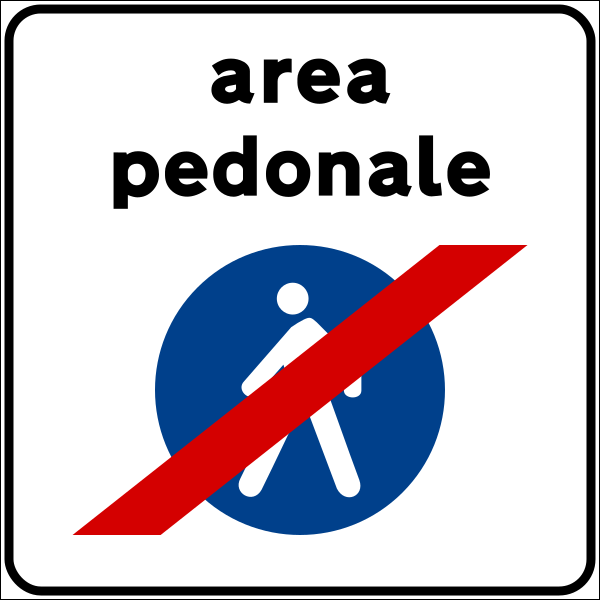 End of the zone for pedestrians.
English • Traffic sign II.321 • End of pedestrian area. Marks the exit from the previously signposted pedestrian area.
Italiano • Figura II.321 • Fine area pedonale. Indica l’uscita dall’area pedonale precedentemente segnalata.
Sources
🔗 Commons.wikimedia.org
🔗 Normattiva.it • D.P.R. 495/1992 • testo vigente • art. 135, comma 13
🔗 Normattiva.it • Allegati ufficiali aggiornati • Figura II.321
Image via Commons.wikimedia.org
Official design: Ministero dei Lavori Pubblici; vectorisation: Arbalete; incorporated elements by Pav03 • CC BY-SA 4.0 • Source revision 2024-09-15. Wikimedia original unmodified.
May cyclists ride in pedestrian areas in Italy?
Cycles are within the national pedestrian-area exceptions, but local signs may restrict them further. Riders and admitted motorists must take particular care around people walking; an area pedonale is not simply an ordinary cycling street.
🔗 aci.gov.it • Italy, Road Code — articles 3(2), 7, 145(4-bis), 158, 182
🔗 aci.gov.it • ACI official Road Code — article 145
Which rules apply to vehicles admitted to pedestrian areas in Italy?
Check the national exception and any municipal restrictions before entering. A zona a traffico limitato is a different category with its own access controls; a permit for one arrangement is not automatically permission for the other.
🔗 aci.gov.it • Italy, Road Code — articles 3(2), 7, 145(4-bis), 158, 182
🔗 aci.gov.it • ACI official Road Code — article 145


