

Traffic rulesPhilippines
 Traffic rules
 Argentina
 Australia
 Austria
 Bangladesh
 Belgium
 Bosnia and Herzegovina
 Brazil
 Canada
 Chile
 China
 Colombia
 Czechia
 Denmark
 Finland
 France
 Germany
 Greece
 Hungary
 Iceland
 India
 Indonesia
 Ireland
 Italy
 Japan
 Malaysia
 Mexico
 Nepal
 Netherlands
 New Zealand
 Norway
 Panama
 Peru
 Philippines
 Poland
 Portugal
 Romania
 Russia
 Serbia
 Slovakia
 Slovenia
 South Africa
 Spain
 Sweden
 Switzerland
 Thailand
 Turkey
 Ukraine
 United Kingdom
 United States
 Uruguay
 Worldwide
1. Philippines
The Philippines is a Southeast Asian archipelago where traffic drives on the right. Driving conditions vary greatly between the heavily congested streets of Metro Manila and other large cities, provincial highways, coastal roads and steep routes through mountainous areas. The country's tropical climate is an important consideration: monsoon rains and tropical cyclones can cause flooding, landslides and road closures, so conditions should be checked before longer journeys during severe weather.
Luzon has an extensive network of controlled-access expressways, many of which are tolled; the Philippines does not use a nationwide vignette, and toll expressways operate cashless/contactless electronic collection using RFID systems. Road signs follow national DPWH standards and use internationally recognizable symbols, with English commonly used on text and direction signs. Foreign tourists with a valid foreign driving licence may generally drive for up to 90 days after arrival.
AI-generated by Traffic-rules.com • WCIT • CC BY-SA
Can you use a mobile phone while driving in the Philippines?
The Anti-Distracted Driving Act prohibits motorists from using handheld mobile communication or electronic entertainment devices while driving, including when temporarily stopped at a red traffic light. Proper hands-free use is permitted when it does not interfere with the driver's line of sight.
🔗 ldr.senate.gov.ph • Philippine Senate, Anti-Distracted Driving Act 10913, sections 4–6
When must children use a child seat in the Philippines?
In vehicles covered by Republic Act 11229, children 12 years old and below must normally use an appropriate child restraint. A child at least 150 cm tall may use the regular seat belt if properly secured. The law also restricts front-seat travel and provides specific vehicle and medical exceptions.
🔗 ldr.senate.gov.ph • Philippine Senate, Child Safety Act 11229, sections 3–5
Are motorcycle helmets compulsory in the Philippines?
Yes. Both the motorcycle driver and back rider must wear a standard protective motorcycle helmet.
🔗 ldr.senate.gov.ph • Philippine Senate, Motorcycle Helmet Act 10054, sections 3–4

2. Speed limit
A speed limit is the maximum legal speed permitted on a road, lane or within a designated area. It may be established by general traffic law or indicated by fixed, variable or temporary traffic signs.
A speed limit is a maximum, not a target speed. Drivers must travel more slowly whenever traffic, visibility, weather, road conditions, vulnerable road users or the condition of the vehicle make the maximum permitted speed unsafe.
Wikimedia.org • Judgefloro • CC0
Which general speed limits apply to cars and motorcycles in the Philippines?
Section 35 sets maxima of 80 km/h on open-country roads without blind corners or closely bordering homes; 40 km/h on designated through streets or boulevards clear of traffic and blind corners; and 30 km/h on other city or municipal streets with light traffic.
The maximum is 20 km/h on crowded streets, at blind intersections, when passing school zones or stationary vehicles, and in comparable dangerous situations.
Do trucks and buses have the same speed limits as cars in the Philippines?
No. Section 35 gives trucks and buses maxima of 50 km/h on qualifying open-country roads, 30 km/h on designated through streets or boulevards and other city or municipal streets with light traffic, and 20 km/h in the specified hazardous situations.
Can the ordinary open-country speed limit be assumed on Philippine expressways?
No. Expressways have posted limits and operating rules that vary by road, section and vehicle category. Follow the applicable expressway signs, including any minimum-speed requirement.
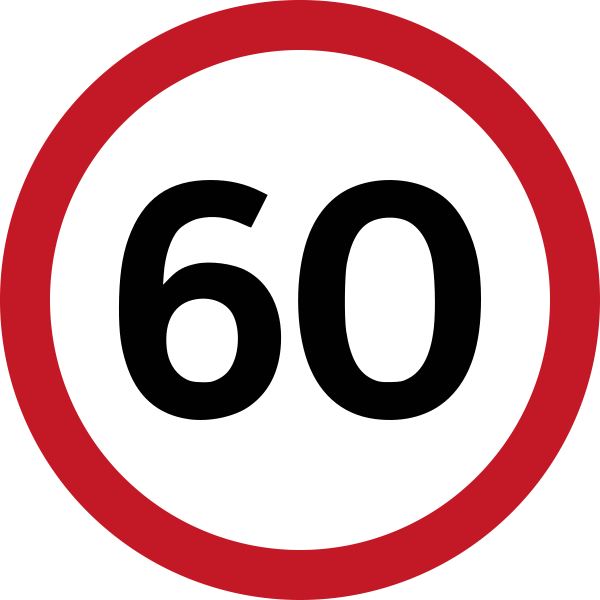 Start of a speed limit.
English • Traffic sign R4-1 • Maximum speed: 60 km/h. Do not exceed 60 km/h. Road conditions may require a lower speed.
Filipino • R4-1 • Pinakamataas na bilis: 60 km/h. Huwag lumampas sa 60 km/h. Maaaring kailanganing magpatakbo nang mas mabagal ayon sa kondisyon ng kalsada.
Sources
🔗 Commons.wikimedia.org
🔗 Fliphtml5.com • LTO • Road Traffic Signs & Pavement Markings • p. 9 (pampublikong kopya)
🔗 Lto.gov.ph • LTO • opisyal na materyal
🔗 Scribd.com • DPWH • R4-1 (pampublikong kopya)
SVG source: Government of the Philippines - Department of Public Works and Highways derivative work: Fry1989 eh? • Public domain • Original revision 2015-07-16. Wikimedia original unmodified.
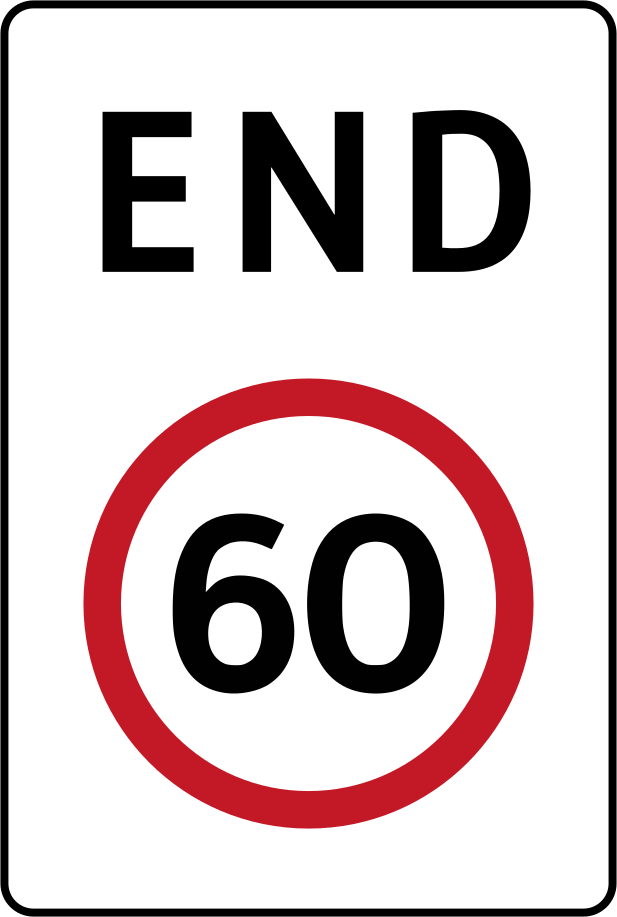 End of the speed limit.
English • Traffic sign R4-2P • End of the 60 km/h speed limit. The special 60 km/h limit ends here. Follow other applicable limits and signs.
Filipino • R4-2P • Katapusan ng 60 km/h na limitasyon. Dito nagtatapos ang espesyal na 60 km/h na limitasyon. Sundin ang iba pang umiiral na limitasyon at mga karatula.
Sources
🔗 Commons.wikimedia.org
🔗 Fliphtml5.com • LTO • Road Traffic Signs & Pavement Markings • p. 9 (pampublikong kopya)
🔗 Lto.gov.ph • LTO • opisyal na materyal
🔗 Scribd.com • DPWH • R4-2P (pampublikong kopya)
SVG source: Government of the Philippines - Department of Public Works and Highways derivative work: Fry1989 eh? • Public domain • Original revision 2018-09-30. Wikimedia original unmodified.
Is driving at the maximum speed always safe in the Philippines?
No. Section 35 requires a prudent speed for the conditions and enough clear distance ahead to stop. Slow further when traffic, visibility or road conditions require it.
3. Bike path
A bike path is a part of a road or a separate route intended primarily or exclusively for people riding bicycles. It may be physically separated from motor traffic, marked on the road surface or identified by traffic signs.
Bike paths may be one-way, two-way or shared with other road users. The permitted users, direction of travel, priority rules and obligation to use the path depend on local traffic signs and regulations.

Wikimedia.org • RamaGaspar • CC BY-SA
How does Philippine official guidance classify a separate bike path?
In the 2020 DPWH classification described in a 2022 University of the Philippines study, a Class I facility is a designated path completely separated from the roadway and shared with pedestrians. Check the actual route’s designation and signs before using it.
Is a Philippine marked bicycle lane the same as a separate bike path?
No. In the 2020 DPWH classification described in a 2022 University of the Philippines study, Class II is a bike lane separated by markings or physical separation; a Class I path is completely apart from the roadway. Check the actual facility and its signs.
Does a Philippine shared-road cycling route exclude motor vehicles?
No. In the 2020 DPWH classification described in a 2022 University of the Philippines study, Class III is a designated and marked bicycle route on the roadway that motor vehicles can also use. It is not a separate bike path.
4. Bridge
A bridge is a structure that carries a road, path or railway over an obstacle such as a river, valley, railway line or another road. A road bridge may carry one or more roadways together with pedestrian or cycling facilities.
Drivers should follow any speed, weight, height, width or vehicle-access restrictions applying to the bridge. Particular care may be necessary on narrow, exposed or movable bridges and when weather conditions such as wind, rain or ice affect the road surface.

Wikimedia.org • Judgefloro • CC0
What should I check before crossing a bridge in the Philippines?
Check the applicable weight, axle-load, width and height restrictions before committing to the crossing. Include the load, trailer and roof equipment when relevant. A bridge warning and a vehicle restriction serve different purposes; comply with both.
Who goes first on a narrow bridge in the Philippines?
Follow any traffic lights, give-way controls or signs allocating priority over oncoming traffic. Do not force your way onto a bridge that cannot accommodate both directions safely. A bridge warning alone does not give your direction priority.
May I stop or park on a bridge in the Philippines?
RA 4136’s Section 46 does not itself list a blanket bridge-and-tunnel parking ban. It prohibits parking at specified places such as intersections and crosswalks and wherever official no-parking signs are erected; other local or facility rules may impose additional prohibitions. Check those controls and use a lawful, safe designated place rather than choosing a bridge or tunnel as a waiting area.
5. Toll road
A toll road is a road, motorway, bridge, tunnel or other route for which users must pay a charge. The toll may apply to all vehicles or only to particular vehicle categories, and the amount can depend on factors such as distance travelled, vehicle type, weight or emissions.
Tolls may be collected at toll booths, electronically or through a vignette or distance-based charging system. Drivers should check the applicable payment rules before using a toll road, especially when travelling in another country.

Wikimedia.org • RamaGaspar • CC BY-SA
Which road-charging system should I check in the Philippines?
The Philippines has regulated toll expressways. The Toll Regulatory Board publishes operator and toll announcements; tariffs and electronic-payment arrangements depend on the expressway used.
🔗 trb.gov.ph • TRB — toll and operator announcements, indexed official material
🔗 trb.gov.ph • TRB — RFID installation and account network information, indexed official material
What should I check before using a charged road in the Philippines?
Check the route, vehicle class and the accepted RFID account or payment arrangement. Ensure the device and account are valid for that operator; do not assume one label or card automatically covers every toll network.
🔗 trb.gov.ph • TRB — toll and operator announcements, indexed official material
🔗 trb.gov.ph • TRB — RFID installation and account network information, indexed official material
Does the absence of a toll booth prove that a road is free in the Philippines?
The absence of a payment booth is not proof that a charged road is free. A vignette, electronic account, vehicle-registration record or another payment procedure may be used where the actual scheme provides for it. Follow the responsible authority or operator’s instructions for that road.
🔗 trb.gov.ph • TRB — toll and operator announcements, indexed official material
🔗 trb.gov.ph • TRB — RFID installation and account network information, indexed official material
6. One-way traffic
One-way traffic means that vehicles on a road or carriageway may travel only in one designated direction. The permitted direction is normally indicated by traffic signs, lane arrows or road markings.
Some road users, such as cyclists or public-transport vehicles, may be allowed to travel in the opposite direction when signs expressly permit it. A one-way road does not by itself determine the speed limit, priority or parking rules.

Wikimedia.org • CC0
How should I read a one-way restriction in the Philippines?
Follow the direction designated by the street’s one-way signs and any entrance restrictions or lane arrows. A compulsory turn at one junction is different from a restriction applying along the street.
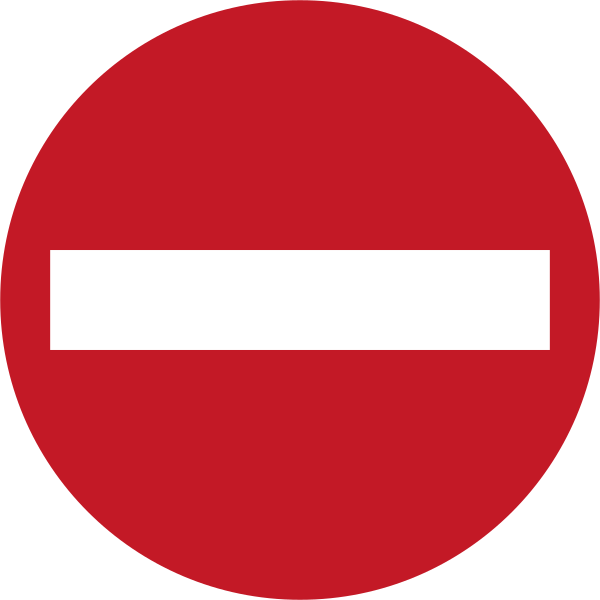 No entry.
English • Traffic sign R3-1 • No entry. No vehicles may enter from this direction.
Filipino • R3-1 • Bawal pumasok. Bawal pumasok ang lahat ng sasakyan mula sa direksiyong ito.
Sources
🔗 Commons.wikimedia.org
🔗 Fliphtml5.com • LTO • Road Traffic Signs & Pavement Markings • p. 7 (pampublikong kopya)
🔗 Lto.gov.ph • LTO • opisyal na materyal
🔗 Scribd.com • DPWH • R3-1 (pampublikong kopya)
SVG source: Government of the Philippines - Department of Public Works and Highways derivative work: Fry1989 eh? • Public domain • Original revision 2015-04-22. Wikimedia original unmodified.
May cyclists travel against the general traffic direction in the Philippines?
Do not assume cyclists are exempt from a road’s direction restriction. Check whether the applicable signs, local traffic arrangement or separately designated cycle facility actually authorise movement in the opposite direction; an ordinary bicycle-route sign is not enough.
Does one-way traffic give me priority or a different speed limit in the Philippines?
A one-way restriction concerns direction. Continue to follow the applicable speed limit, signals, give-way or stop controls and junction-priority rules. Where authorised counterflow traffic exists, check for it before turning or crossing; your permitted direction is not automatic junction priority.
7. Stop sign
A stop sign requires drivers to bring their vehicle to a complete stop and give way before entering or crossing the road ahead. The stop must be made at the stop line or another legally prescribed position.
After stopping, the driver may continue only when this can be done safely and without interfering with traffic that has priority. The sign does not create priority for the driver who has stopped.

Wikimedia.org • RamaGaspar • CC BY-SA
Must I stop completely at a stop sign in the Philippines?
Yes. Come to a complete stop when the applicable stop sign controls your approach, even when you cannot see another road user. Slowing to a crawl is not a stop. The stopping duty is separate from the duty to give way before continuing.
🔗 issuances-library.senate.gov.ph • Philippines RA 4136 — Sections 42–43; actual stop controls
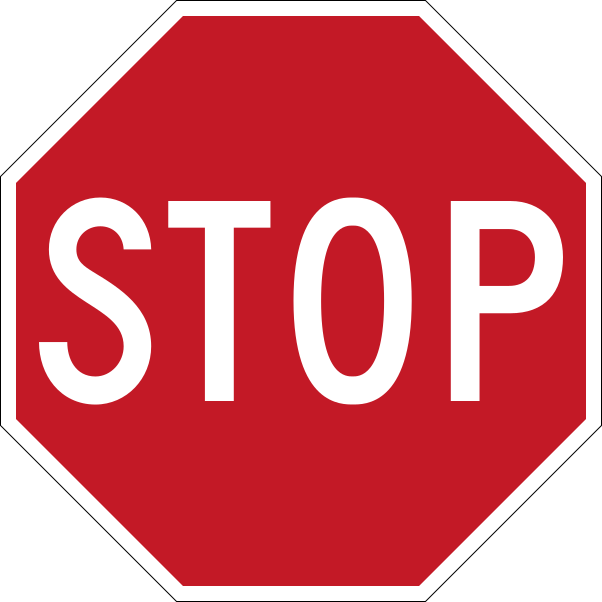 Stop and give way.
English • Traffic sign R1-1 • Stop. Come to a complete stop at the stop line or a safe point before the junction and give way to vehicles and pedestrians.
Filipino • R1-1 • Huminto. Huminto nang lubusan sa stop line o sa ligtas na lugar bago pumasok sa interseksiyon. Magbigay-daan sa mga sasakyan at taong tatawid.
Sources
🔗 Commons.wikimedia.org
🔗 Fliphtml5.com • LTO • Road Traffic Signs & Pavement Markings • p. 5 (pampublikong kopya)
🔗 Lto.gov.ph • LTO • opisyal na materyal
🔗 Scribd.com • DPWH • R1-1 (pampublikong kopya)
SVG source: Department of Public Works and Highways • Public domain • Original revision 2024-07-26. Wikimedia original unmodified.
Where must I stop at a stop-controlled junction in the Philippines?
Stop at the marked stopping place before entering the intersecting route. Follow the actual stop and through-road arrangement and give way to traffic within, or sufficiently close to, the junction to create a hazard.
🔗 issuances-library.senate.gov.ph • Philippines RA 4136 — Sections 42–43; actual stop controls
Does stopping first give me priority at a stop sign in the Philippines?
A complete stop does not, by itself, give you priority. Give way to the road users entitled to pass under the junction’s signs and rules, check pedestrians and cyclists, and proceed only when the gap is safe. Do not follow another stopped vehicle through without satisfying your own stopping and yielding duties.
🔗 issuances-library.senate.gov.ph • Philippines RA 4136 — Sections 42–43; actual stop controls
8. Give way
A give-way sign requires drivers to allow traffic with priority to proceed before entering, crossing or joining a road. Drivers must reduce speed, observe approaching traffic and stop when necessary.
Unlike a stop sign, a give-way sign does not always require a complete stop. The driver may continue without stopping only when the route is clearly safe and no road user with priority is forced to change speed or direction.

Wikimedia.org • Judgefloro • CC BY-SA
What does giving way mean in the Philippines?
The Philippines uses Yield controls alongside the national right-of-way rules. The LTO manual explains yielding before entering a roundabout, while the Traffic Code separately governs through highways and uncontrolled junctions.
🔗 issuances-library.senate.gov.ph • Philippines RA 4136 — Sections 42(d), 43
Must you always stop when giving way in the Philippines?
Do not assume that giving way removes a statutory stopping duty. Section 42(d) requires stopping before crossing a through highway, with an exception allowing reduction to 5 mph (about 8 km/h) when no hazard is apparent. Obey any STOP control and give way before proceeding.
🔗 issuances-library.senate.gov.ph • Philippines RA 4136 — Sections 42(d), 43
What should you check before proceeding after giving way in the Philippines?
Wait until the manoeuvre is safe. Check the priority traffic, the view in both directions and enough space to complete the entry. Giving way to one vehicle does not remove duties towards another driver, a cyclist or a pedestrian.
🔗 issuances-library.senate.gov.ph • Philippines RA 4136 — Sections 42(d), 43
9. Pedestrian crossing
A pedestrian crossing is a designated place where pedestrians may cross a road. It is commonly indicated by road markings, traffic signs, signals or a combination of these measures.
Drivers must approach with appropriate caution and give way when required by local law. Pedestrians must also observe approaching traffic and follow any pedestrian signals or instructions from authorised traffic controllers.
Wikimedia.org • Judgefloro • CC0
When must drivers give way at a pedestrian crossing in Philippines?
Within business or residential districts, Section 42(c) requires drivers to yield to pedestrians crossing in a crosswalk, except at intersections controlled by a traffic officer or traffic signal. Follow the actual control and watch for people already crossing. A warning sign alone is different from a signal or stop instruction.
🔗 issuances-library.senate.gov.ph • Philippines RA 4136 — Sections 42(c), 48, 54
Are all pedestrian crossings controlled the same way in Philippines?
At a crossing controlled by traffic lights or an authorised person, comply with that control. Drivers turning across a pedestrian route must still check carefully for pedestrians.
🔗 issuances-library.senate.gov.ph • Philippines RA 4136 — Sections 42(c), 48, 54
May I enter a pedestrian crossing if the road beyond it is blocked in Philippines?
Do not queue on the crossing or conceal pedestrians from approaching drivers. Wait before entering until there is space to clear the crossing, and do not overtake or pass a vehicle that has stopped for a pedestrian where that would endanger anyone.
🔗 issuances-library.senate.gov.ph • Philippines RA 4136 — Sections 42(c), 48, 54
10. Railway crossing
A railway crossing, also called a level crossing or railroad crossing, is a place where a road or path crosses railway tracks at the same level. It may be protected by barriers, warning lights, bells, traffic signs or a combination of these measures.
Road users must approach carefully and never enter when a train is approaching, warning signals are active or the exit is blocked. They should cross promptly and must never stop, wait or become trapped on the tracks.

Wikimedia.org • Patrickroque01 • CC BY-SA
When must drivers stop at a railway level crossing in Philippines?
Section 42(d) requires stopping before a railway crossing, with a narrow exception allowing a reduction to 5 mph, about 8 km/h, when no hazard is apparent. Follow the actual warning signals, barriers, STOP signs and authorised railway or traffic directions. Stop when a train is approaching and do not enter unless the crossing and exit are clear.
🔗 issuances-library.senate.gov.ph • Philippines RA 4136 — Sections 41(c), 42(d), 48
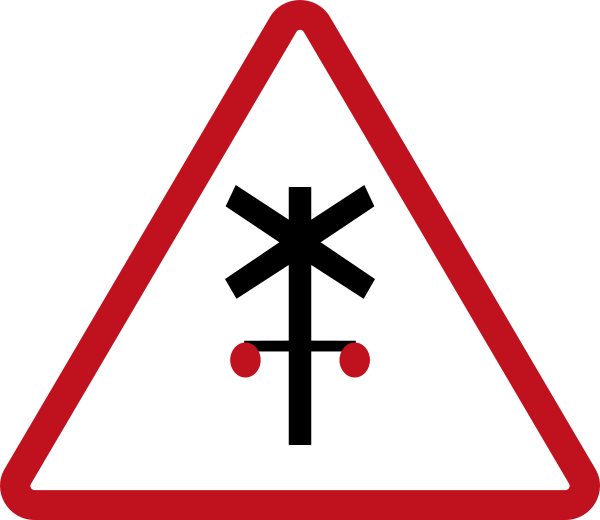 Warning for a railway crossing with barriers.
English • Traffic sign W7-3 • Level crossing with signal control. Obey the lights, signs and other controls.
Filipino • W7-3 • Riles na may signal control. May tawiran ng riles na may signal control sa unahan. Sundin ang mga ilaw, karatula at iba pang kontrol sa tawiran.
Sources
🔗 Commons.wikimedia.org
🔗 Fliphtml5.com • LTO • Road Traffic Signs & Pavement Markings • p. 20 (pampublikong kopya)
🔗 Lto.gov.ph • LTO • opisyal na materyal
🔗 Scribd.com • DPWH • W7-3 (pampublikong kopya)
SVG source: Department of Public Works and Highways (Philippines) Sign redrawn by TagaSanPedroAko. • Public domain • Original revision 2015-06-12. Wikimedia original unmodified.
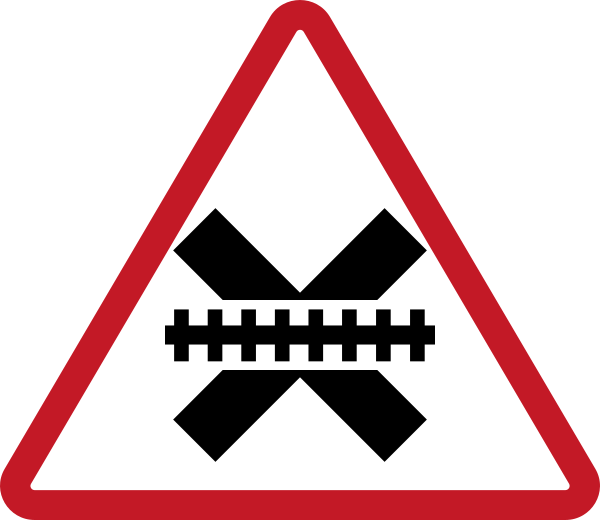 Warning for a railway crossing without barriers.
English • Traffic sign W7-2 • Level crossing without signal control. Look and listen for trains before crossing.
Filipino • W7-2 • Riles na walang signal control. May tawiran ng riles sa unahan na walang signal control. Tingnan at pakinggan kung may paparating na tren bago tumawid.
Sources
🔗 Commons.wikimedia.org
🔗 Fliphtml5.com • LTO • Road Traffic Signs & Pavement Markings • p. 20 (pampublikong kopya)
🔗 Lto.gov.ph • LTO • opisyal na materyal
🔗 Scribd.com • DPWH • W7-2 (pampublikong kopya)
SVG source: Department of Public Works and Highways (Philippines) Sign redrawn by TagaSanPedroAko. • Public domain • Original revision 2015-06-11. Wikimedia original unmodified.
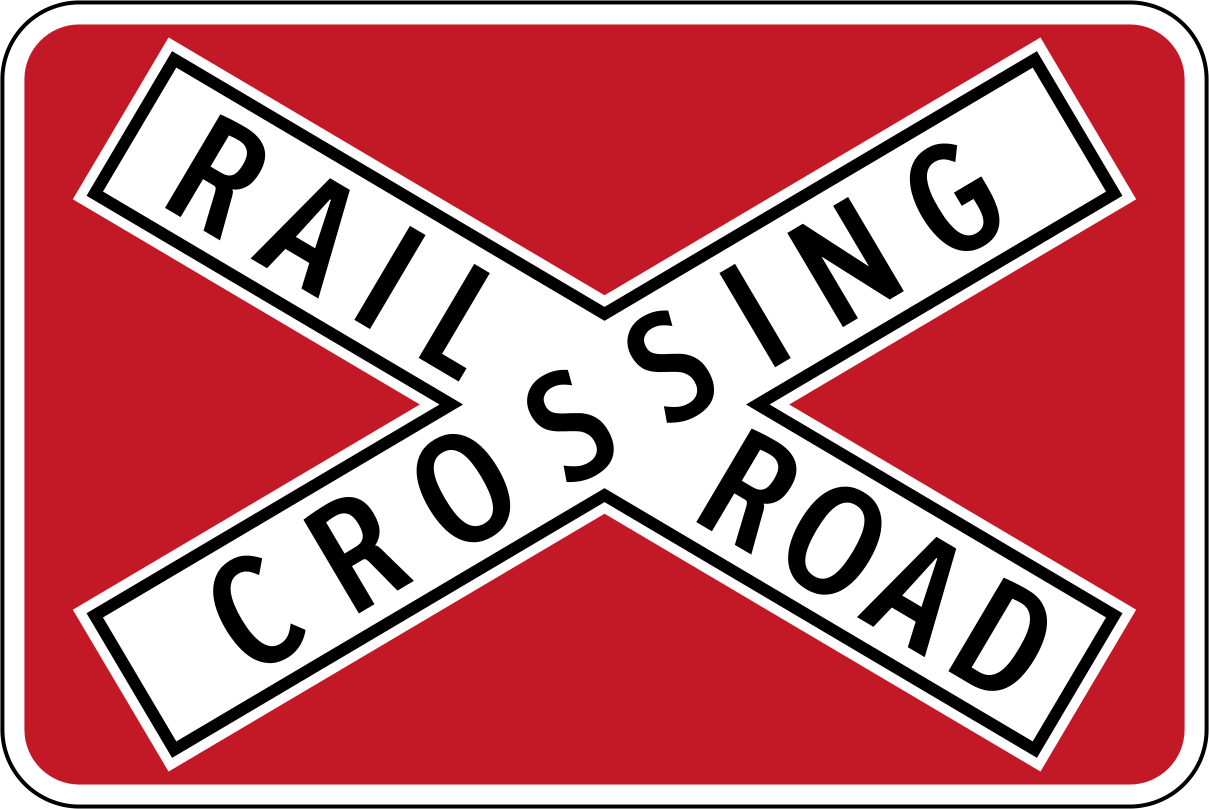 Warning for a railway crossing with one track.
English • Traffic sign W7-4 • Level crossing. This sign marks the crossing. Stop or give way according to the accompanying signals and check that no train is approaching.
Filipino • W7-4 • Lokasyon ng tawiran ng riles. Minamarkahan ng karatulang ito ang tawiran ng riles. Huminto o magbigay-daan ayon sa kasamang karatula at signal; tiyaking walang paparating na tren.
Sources
🔗 Commons.wikimedia.org
🔗 Fliphtml5.com • LTO • Road Traffic Signs & Pavement Markings • p. 20 (pampublikong kopya)
🔗 Lto.gov.ph • LTO • opisyal na materyal
🔗 Scribd.com • DPWH • W7-4 (pampublikong kopya)
SVG source: Government of the Philippines - Department of Public Works and Highways derivative work: Fry1989 eh? derivative work: Offnfopt • Public domain • Original revision 2026-01-06. Wikimedia original unmodified.
Artwork verified against Tuktukph.top • official published diagram W7-4.
Must I stop at every unguarded railway crossing in Philippines?
Section 42(d) requires a driver to stop before traversing a railway crossing, but allows slowing to 5 mph, about 8 km/h, instead when it is apparent that no hazard exists. Obey any STOP sign, warning signal, barrier or authorised direction. An unguarded crossing is not an exemption: look and listen and never enter when a train or blocked exit makes it unsafe.
🔗 issuances-library.senate.gov.ph • Philippines RA 4136 — Sections 41(c), 42(d), 48
What if road traffic is queued beyond a railway crossing in Philippines?
Wait before the tracks until there is room to take your entire vehicle off the crossing. Do not follow another vehicle onto the tracks without checking the exit. Keep the tracks clear even if no train is visible.
🔗 issuances-library.senate.gov.ph • Philippines RA 4136 — Sections 41(c), 42(d), 48
11. Turn prohibition
A turn prohibition prevents drivers from turning in the direction indicated by a traffic sign. It may prohibit a left turn, a right turn or a U-turn at an intersection or along a specified section of road.
Drivers must continue along a permitted route and follow any lane arrows or mandatory-direction signs. A turn prohibition does not itself determine priority or speed, and any exemption for cyclists, public transport or other road users must be expressly indicated.

Wikimedia.org • Judgefloro • CC0
What does a no-turn sign prohibit in Philippines?
It prohibits the left, right or other turn shown at the junction or position controlled by the sign in Philippines. Follow any supplementary panel or authorised direction and choose another legal route.
Does a no-left-turn sign always prohibit a U-turn in Philippines?
Do not assume that a U-turn is allowed or prohibited solely from a no-left-turn sign. Separate U-turn signs and local road rules may apply, and some jurisdictions treat turning restrictions differently. Check the actual control.
Can a no-turn restriction apply only to certain vehicles or hours in Philippines?
Yes, where the local sign system provides a supplementary condition or exemption, such as a vehicle class, time or authorised access. Without a valid exception, comply with the prohibited movement shown.
12. School area
A school area is a road or group of roads near a school where large numbers of children may walk, cycle, cross the road or enter and leave vehicles. It may be identified by warning signs, zone signs, road markings, traffic-calming measures or flashing lights.
Special speed limits, parking restrictions or access rules may apply permanently or only during school arrival and departure times. Drivers should reduce speed, watch carefully for children and be prepared to stop.
Wikimedia.org • Judgefloro • CC BY-SA
What speed rules apply around schools in the Philippines?
Section 35 provides a maximum of 20 km/h when passing school zones, as well as in crowded streets and the other specified dangerous circumstances. The school-zone wording is not conditional on first seeing children. Follow the applicable controls and slow further whenever needed for safety.
Does a school warning sign in the Philippines automatically set the speed limit?
A children or school warning alerts you to a potential hazard; the enforceable numerical speed limit depends on the applicable law, regulatory signs and any time or variable display. Slow further if children are near the road.
How should you pass a school entrance in the Philippines?
Watch for children stepping out from between parked vehicles, obey crossings and any school patrol, and follow stopping or parking restrictions. Do not obstruct visibility near a crossing or school entrance; approach at a speed that permits a safe stop.
13. Overtaking
Overtaking is the act of passing another road user travelling in the same direction. It normally involves moving to another position or lane, passing the slower road user and returning to the appropriate position when it is safe.
Before overtaking, a driver should make sure there is sufficient visibility and space, check mirrors and blind spots, signal when required and ensure that no other road user is already overtaking. The manoeuvre must be completed without exceeding the speed limit or endangering other road users.

Wikimedia.org • Judgefloro • CC BY-SA
On which side do drivers normally overtake in the Philippines?
As traffic normally keeps right, drivers ordinarily overtake on the left. This is the general rule, not permission to pass wherever a lane is available; exceptions and restrictions depend on the local law.
🔗 issuances-library.senate.gov.ph • Philippines RA 4136 — Sections 37, 39–41, 48
When should you avoid overtaking in the Philippines?
Do not begin if approaching traffic, restricted visibility, road markings, an intersection, a crossing or another road user makes the manoeuvre unsafe or unlawful. Check behind and ahead, allow enough space and never exceed the speed limit to complete the pass.
🔗 issuances-library.senate.gov.ph • Philippines RA 4136 — Sections 37, 39–41, 48
What extra care is needed when overtaking slower road users in the Philippines?
Give generous lateral clearance when passing motorcyclists, cyclists and pedestrians, and allow for unexpected changes of direction. National rules may prescribe a minimum passing distance in particular situations. If there is insufficient space, wait rather than squeeze through.
🔗 issuances-library.senate.gov.ph • Philippines RA 4136 — Sections 37, 39–41, 48
14. Curve
A curve is a section of road that changes direction to the left or right. A sharp, unexpected or poorly visible curve can reduce a driver’s view of approaching traffic, stopped vehicles, pedestrians and other hazards.
Drivers should reduce speed before entering the curve, remain within their lane and use smooth steering, braking and acceleration. Warning signs may indicate the direction of the first curve or a series of successive curves.
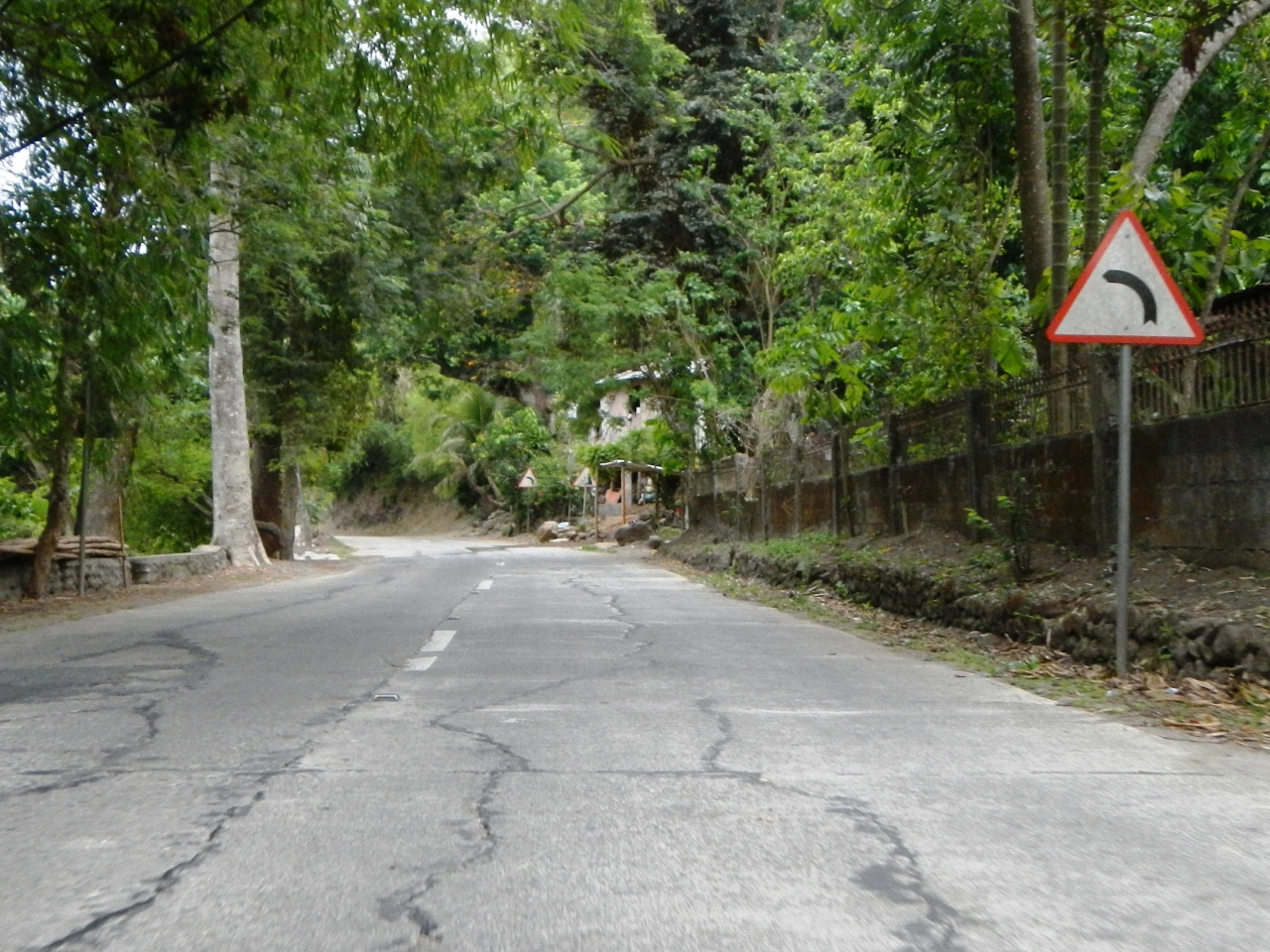
Wikimedia.org • Judgefloro • CC BY-SA
What makes a bend dangerous in the Philippines?
Curves shorten the view ahead and reduce the margin for correcting a mistake. Grip, visibility, road condition and hidden traffic can make the safe speed much lower than the legal maximum. Slow before the bend, retain control and watch for people or vehicles beyond it.
How should you approach a sharp curve in the Philippines?
Slow down before the bend, select the correct lane position, look through the curve and steer smoothly. Keep enough grip and visible stopping distance for the road and weather conditions.
Is overtaking safe on a blind bend in the Philippines?
No. Do not start overtaking where your view of oncoming traffic is obstructed or where signs or road markings prohibit it. Wait until there is a lawful, clear and sufficiently long view ahead.
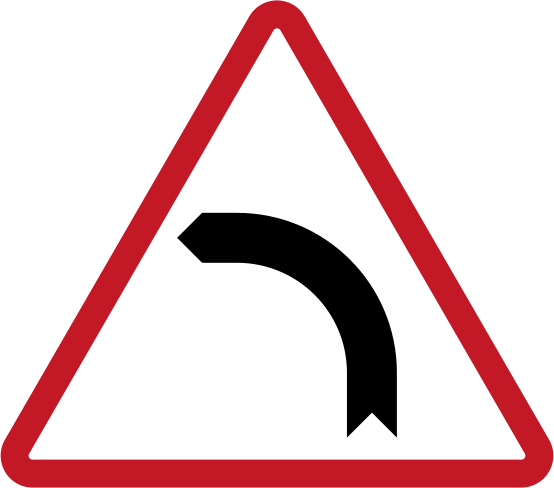 Warning for a curve to the left.
English • Traffic sign W1-3 • Bend to the left. Adjust your speed to the road layout and conditions.
Filipino • W1-3 • Kurba sa kaliwa. May kurba sa kaliwa sa unahan. Magbagal ayon sa hugis ng kalsada at sa mga kondisyon.
Sources
🔗 Commons.wikimedia.org
🔗 Fliphtml5.com • LTO • Road Traffic Signs & Pavement Markings • p. 14 (pampublikong kopya)
🔗 Lto.gov.ph • LTO • opisyal na materyal
🔗 Scribd.com • DPWH • W1-3 (pampublikong kopya)
SVG source: Government of the Philippines - Department of Public Works and Highways derivative work: TagaSanPedroAko (Let's talk/Usap tayo) derivative work: Fry1989 eh? • Public domain • Original revision 2015-05-14. Wikimedia original unmodified.
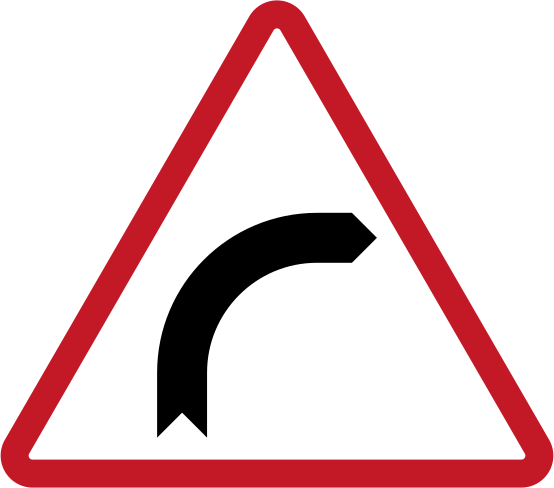 Warning for a curve to the right.
English • Traffic sign W1-3 • Bend to the right. Adjust your speed to the road layout and conditions.
Filipino • W1-3 • Kurba sa kanan. May kurba sa kanan sa unahan. Magbagal ayon sa hugis ng kalsada at sa mga kondisyon.
Sources
🔗 Commons.wikimedia.org
🔗 Fliphtml5.com • LTO • Road Traffic Signs & Pavement Markings • p. 14 (pampublikong kopya)
🔗 Lto.gov.ph • LTO • opisyal na materyal
🔗 Scribd.com • DPWH • W1-3 (pampublikong kopya)
SVG source: Government of the Philippines - Department of Public Works and Highways derivative work: Fry1989 eh? • Public domain • Original revision 2015-05-14. Wikimedia original unmodified.
15. Chevron
A chevron is a V-shaped or arrow-shaped road marker used to show a sharp change in the direction of a road. Chevron boards are normally placed along the outside of a curve so that their points indicate the direction in which the road continues.
Chevrons improve the visibility and alignment of a curve, especially in darkness or poor weather. They do not normally impose a speed limit or determine priority, so drivers must reduce speed before the curve and follow all other signs and road markings.

Wikimedia.org • Judgefloro • CC BY-SA
What is the purpose of chevron boards on a road in the Philippines?
Chevron alignment boards help drivers see which way a sharp bend continues, especially in darkness or poor visibility. Their precise shape and colour depend on the local sign system; pay attention to the alignment shown rather than assuming one universal design.
Do chevron boards give priority or order a turn at junctions in the Philippines?
Not ordinary curve-alignment chevrons. They guide you around a bend. Give-way, no-entry, keep-direction and other mandatory traffic signs must be read separately; similar-looking arrows can have different legal meanings.
Is the speed shown by a chevron in the Philippines a compulsory maximum?
A chevron alone does not set a numerical maximum speed. If an advisory-speed panel or a regulatory speed-limit sign is displayed alongside it, identify which type it is and follow the binding speed rules.
16. Roadworks
Roadworks are construction, maintenance, repair or inspection activities carried out on or beside a road. They may temporarily change the road layout, lane widths, speed limits, priority, permitted directions and facilities for pedestrians or cyclists.
Drivers must follow the temporary signs, traffic lights, barriers, road markings and instructions from authorised personnel. They should reduce speed, increase their following distance and remain prepared for narrow lanes, stopped traffic, workers, machinery and sudden changes in the route.

Wikimedia.org • RamaGaspar • CC BY-SA
What should you watch for when approaching roadworks in the Philippines?
Look for temporary warnings, cones, barriers, narrow lanes and construction vehicles. Road layouts can change temporarily, including lane shifts, traffic-light control and short one-way sections. Expect workers and slow or stationary traffic near the worksite.
Is a temporary speed limit at roadworks binding in the Philippines?
Where an authorised temporary regulatory speed limit is in force, you must obey it. A roadworks warning alone should not be mistaken for a new numerical limit, but conditions may require driving more slowly.
What if only one lane remains open through roadworks in the Philippines?
Follow the temporary signals, stop/go instructions, lane arrows and priority signs. Do not enter an opposing traffic lane until permitted, and give vulnerable road users and road workers extra room.
17. Weight limit
A weight limit prohibits vehicles or vehicle combinations whose mass exceeds the value shown from entering or passing a road section, bridge, tunnel or other structure. Depending on local law, the restriction may concern the vehicle’s actual loaded mass, maximum authorised mass or load on an individual axle.
Drivers must know which type of mass the sign refers to and must include the vehicle, passengers, cargo and any trailer where required. A vehicle that exceeds the limit must use another suitable route.

Wikimedia.org • Judgefloro • CC BY-SA
What should you do if your vehicle exceeds a bridge weight limit in Philippines?
Do not drive onto the bridge. Follow the signed alternative route and check the vehicle’s gross and axle loads as applicable. A general heavy-vehicle permit does not automatically authorise crossing every restricted bridge.
18. Traffic lights
Traffic lights use coloured lights, arrows or symbols to regulate when road users may proceed, must prepare to stop or must remain stopped. Separate signals may apply to particular directions, lanes, pedestrians, cyclists or public-transport vehicles.
A green light permits movement only when the route is clear and the movement is otherwise legal. Road users must still follow priority rules, turning restrictions, lane markings and instructions from authorised traffic controllers.

Wikimedia.org • Eugene Pante • CC BY-SA
19. Pedestrian lights
Pedestrian lights are traffic signals that regulate when pedestrians may begin crossing a road. They normally display a red standing figure to prohibit starting and a green walking figure to permit crossing.
A flashing signal or countdown may warn that the permitted crossing period is ending. Pedestrians should cross without unnecessary delay, while turning drivers must remain alert and allow pedestrians who entered lawfully to finish crossing safely.
Wikimedia.org • Judgefloro • CC0
20. Driving licence
A driving licence is an official document authorising a person to drive one or more specified categories of motor vehicle. It may contain conditions, restrictions, category codes and expiry dates that determine which vehicles the holder may drive.
Drivers must hold a licence that is valid for the vehicle category and jurisdiction concerned. A licence may be provisional, full, restricted, suspended or withdrawn, and additional qualifications may be required for professional driving.

Wikimedia.org • Harold08 • CC BY-SA
Which driving-licence entitlement is needed for an ordinary car in the Philippines?
In the Philippines, an ordinary car requires the relevant LTO driving-licence vehicle category; the codes shown on the licence determine what may be driven. A different entitlement may be needed for motorcycles, heavy vehicles, trailers or passenger transport.
Can a visitor drive in the Philippines using a driving licence issued abroad?
Foreign tourists can generally use a valid foreign driving licence for up to 90 days after arrival, provided it authorises the vehicle and meets Philippine recognition requirements. Longer stays and other circumstances require checking the Land Transportation Office’s rules.
Does an International Driving Permit replace the original licence in the Philippines?
No. An International Driving Permit accompanies the underlying valid driving licence; it does not replace it. Carry both when using an IDP, and check which permit or translation is accepted for your licence and visit.
🔗 gov.uk • UK Government, IDP must accompany valid licence
🔗 gov.uk • UK Government, driving-document requirements in the Philippines
21. Parking
Parking means leaving a vehicle stationary at a place for a period of time rather than stopping only briefly because of traffic conditions or another immediate necessity. Many countries distinguish parking from a short stop made to pick up or drop off passengers or to load or unload goods, although the exact legal definition varies.
Parking may be permitted, restricted, reserved, time-limited or prohibited by traffic signs, road markings, parking zones and local regulations. Drivers must park without creating a danger or unnecessary obstruction and must comply with any conditions concerning payment, permits, vehicle categories or maximum parking duration.
Wikimedia.org • Judgefloro • CC0
How must you secure an unattended car on a Philippine highway?
Switch off the engine and ignition, and apply the handbrake effectively.
🔗 elibrary.judiciary.gov.ph • Philippines, Republic Act 4136, sections 41–42, 46–47 and 52–54
Can passenger loading obstruct traffic in the Philippines?
No. Loading and unloading must not block other vehicles.
🔗 elibrary.judiciary.gov.ph • Philippines, Republic Act 4136, sections 41–42, 46–47 and 52–54
22. No parking
No parking indicates that vehicles may not be left parked at the location or along the section of road covered by the restriction. Depending on local law, a driver may still be allowed to stop briefly to pick up or drop off passengers or to load or unload goods, provided stopping itself is not prohibited.
A no-parking restriction may apply continuously or only during specified times, days, vehicle categories or sections of road. Its exact extent and exceptions are determined by the traffic sign, supplementary panels, road markings and local traffic regulations.

Wikimedia.org • Judgefloro • CC BY-SA
Can you park inside a Philippine intersection?
No. Intersection parking is prohibited.
🔗 elibrary.judiciary.gov.ph • Philippines, Republic Act 4136, sections 41–42, 46–47 and 52–54
What junction clearance applies in the Philippines?
Keep six metres clear from intersecting kerb lines.
🔗 elibrary.judiciary.gov.ph • Philippines, Republic Act 4136, sections 41–42, 46–47 and 52–54
Can you park on a Philippine crosswalk?
No. Crosswalks must remain clear.
🔗 elibrary.judiciary.gov.ph • Philippines, Republic Act 4136, sections 41–42, 46–47 and 52–54
How far from a Philippine fire hydrant must you avoid parking?
Keep four metres clear.
🔗 elibrary.judiciary.gov.ph • Philippines, Republic Act 4136, sections 41–42, 46–47 and 52–54
Can you wait across a private driveway in the Philippines?
No. Parking or standing there is prohibited.
🔗 elibrary.judiciary.gov.ph • Philippines, Republic Act 4136, sections 41–42, 46–47 and 52–54
Can you double-park in the Philippines while staying inside?
No. The prohibition applies to attended and unattended vehicles.
🔗 elibrary.judiciary.gov.ph • Philippines, Republic Act 4136, sections 41–42, 46–47 and 52–54
What clearance applies at Philippine fire-station entrances?
Do not park within four metres of the driveway entrance.
🔗 elibrary.judiciary.gov.ph • Philippines, Republic Act 4136, sections 41–42, 46–47 and 52–54
Can you park on a Philippine footpath?
No, unless that location is intended for vehicle parking.
🔗 elibrary.judiciary.gov.ph • Philippines, Republic Act 4136, sections 41–42, 46–47 and 52–54
23. Reversing
Reversing means driving a vehicle backwards. It is commonly used when parking, leaving a confined space or repositioning a vehicle where forward movement is not practical.
Before reversing, the driver should check mirrors and blind spots, look carefully around the vehicle and make sure the area behind is clear. Reversing should be performed slowly and only for as long as necessary because visibility behind the vehicle is often limited.
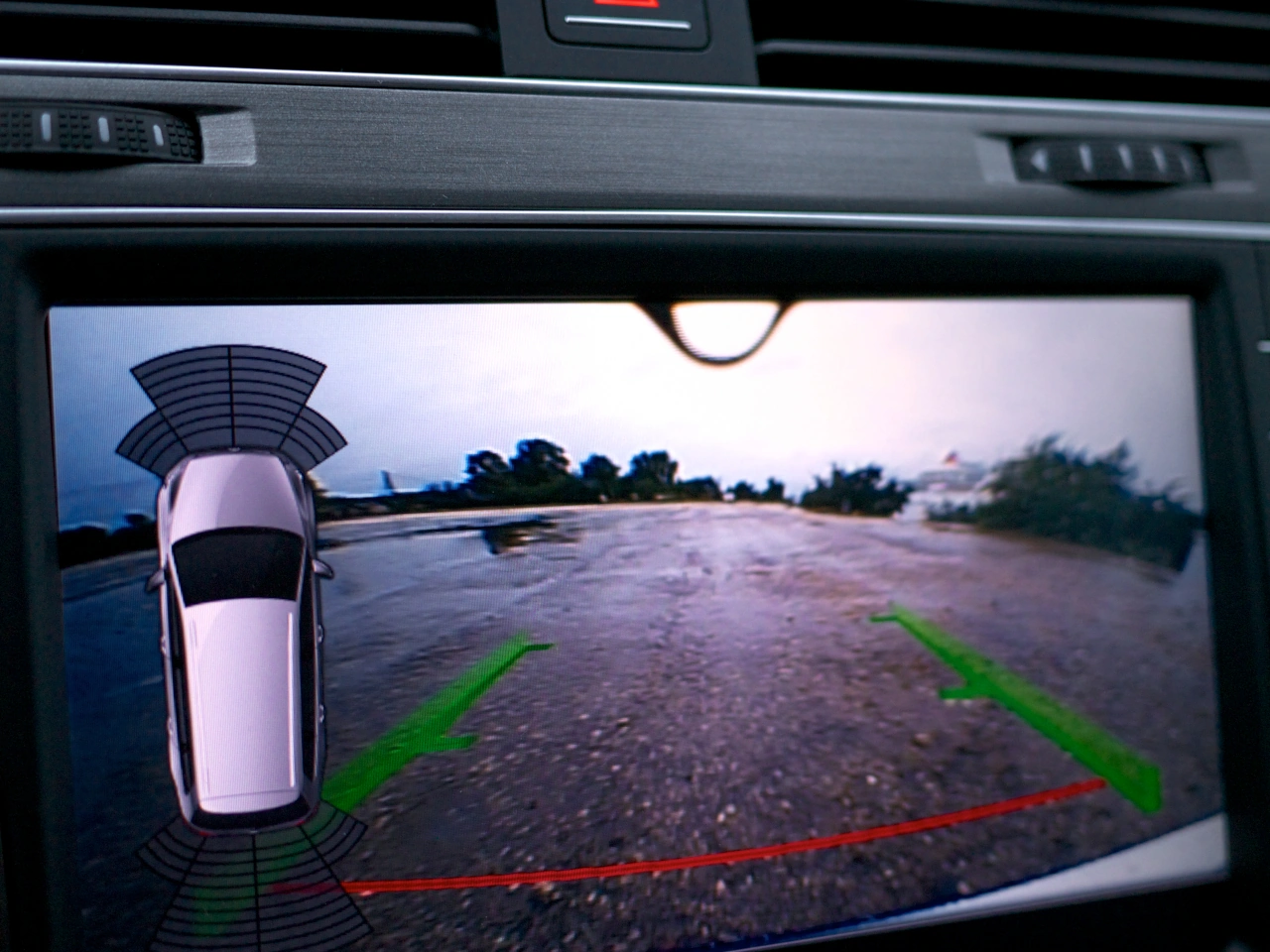
Wikimedia.org • Kārlis Dambrāns • CC BY
What should you check before reversing?
Check behind and around the vehicle for pedestrians, cyclists, other vehicles and obstacles. Use mirrors and cameras where available, but also look directly because monitoring systems can have blind spots.
🔗 gov.uk • Great Britain Highway Code, Rules 200–203; national guidance example
Should you reverse for a long distance?
No. Reversing should normally be limited to the distance necessary to complete the manoeuvre safely. Driving forward generally provides better visibility and vehicle control.
🔗 gov.uk • Great Britain Highway Code, Rules 200–203; national guidance example
24. Uncontrolled crossroad
An uncontrolled crossroad is an intersection where traffic priority is not specifically regulated by traffic lights, an authorised person or signs assigning priority to particular approaches. Drivers must therefore determine who has priority using the default traffic rules that apply in that country.
The applicable rule varies between countries and may include priority from the right, priority from the left or another default right-of-way rule. Drivers should approach an uncontrolled crossroad carefully, observe traffic from every direction and never assume that a wider or busier road automatically has priority.

Wikimedia.org • Judgefloro • CC0
What is an uncontrolled crossroad?
An uncontrolled crossroad is an intersection where priority is not specifically assigned by traffic lights, an authorised person or priority signs. Drivers must use the default priority rules of the country.
Who has priority at an uncontrolled crossroad?
This depends on the local traffic law. Some countries use priority from the right, while others use different rules. Drivers should know the default intersection rule of the country in which they are driving.
What should you do if you are unsure who has priority?
Reduce speed and be prepared to stop. Never force your way through an intersection simply because the priority situation is unclear.
25. Provisional licence
A provisional licence allows a learner driver to practise driving on public roads before obtaining a full driving licence. The conditions vary between countries and may determine whether the learner must be accompanied by an approved supervisor, which vehicles may be driven, where and when driving is permitted and how long the licence remains valid. A provisional licence is normally subject to stricter rules than a full licence and is intended specifically for learning and gaining practical driving experience.

Wikimedia.org • Judgefloro • CC0
What is a provisional driving licence?
The meaning depends on the jurisdiction. In Great Britain and Flanders, a provisional licence can authorise learning under specified conditions. In the Australian Capital Territory, a provisional licence follows the learner stage and assessment. It is not a universal synonym for a learner licence.
🔗 vlaanderen.be • Flanders, obtaining a category B driving licence; learner provisional licences
🔗 gov.uk • GOV.UK, driving lessons and learning to drive; GB learner rules
Can you drive alone with a provisional licence?
Check the jurisdiction, licence stage and its conditions. In Flanders, some provisional licences require a registered supervisor, while another option permits independent practice after approved training. In Great Britain, car learners must follow the supervision rules. Other countries may use provisional for a later licensing stage.
🔗 vlaanderen.be • Flanders, obtaining a category B driving licence; learner provisional licences
🔗 gov.uk • GOV.UK, driving lessons and learning to drive; GB learner rules
How long is a provisional licence valid?
There is no universal validity period or renewal procedure. Check the issuing authority’s rules for the particular licence. For example, Flanders distinguishes 18-month and 36-month provisional learner licences; another jurisdiction may use provisional for a different stage altogether.
🔗 vlaanderen.be • Flanders, obtaining a category B driving licence; learner provisional licences
🔗 gov.uk • GOV.UK, driving lessons and learning to drive; GB learner rules