


Traffic rulesIndonesia
 Traffic rules
 Argentina
 Australia
 Austria
 Bangladesh
 Belgium
 Bosnia and Herzegovina
 Brazil
 Canada
 Chile
 China
 Colombia
 Czechia
 Denmark
 Finland
 France
 Germany
 Greece
 Hungary
 Iceland
 India
 Indonesia
 Ireland
 Italy
 Japan
 Malaysia
 Mexico
 Nepal
 Netherlands
 New Zealand
 Norway
 Panama
 Peru
 Philippines
 Poland
 Portugal
 Romania
 Russia
 Serbia
 Slovakia
 Slovenia
 South Africa
 Spain
 Sweden
 Switzerland
 Thailand
 Turkey
 Ukraine
 United Kingdom
 United States
 Uruguay
 Worldwide
1. Indonesia
Indonesia is a vast archipelagic country in Southeast Asia, stretching across thousands of islands between the Indian and Pacific Oceans. Traffic drives on the left. Driving conditions differ greatly between densely populated Java, tourist areas such as Bali, major roads on Sumatra and Sulawesi, and more remote island regions; inter-island journeys may also involve ferries. Bahasa Indonesia is the principal language used for written road information. Tropical weather is another important factor, with heavy rain capable of quickly reducing visibility and producing standing water or flooding on roads.
Indonesia has a growing network of tolled expressways, especially on Java and Sumatra, but there is no nationwide vignette. Toll-road payments are cashless, normally using electronic money, and the national maximum on free-flow toll roads is generally 100 km/h with a 60 km/h minimum, although posted limits can be lower. Motorcycles dominate traffic in many parts of the country but are generally prohibited from toll roads; the Bali Mandara Toll Road is a notable exception because it provides a separate motorcycle lane. On ordinary roads, national maximum limits are generally 80 km/h interurban, 50 km/h urban and 30 km/h in residential areas.
AI-generated by Traffic-rules.com • WCIT • CC BY-SA
What is the alcohol limit for driving in Indonesia?
Indonesia’s Road Traffic and Transport Act requires a driver to drive with full concentration. Its explanation expressly includes alcohol or drugs that affect driving ability among the conditions that interfere with this duty. Do not drink alcohol before driving.
🔗 peraturan.bpk.go.id • Indonesia, Act 22/2009, Articles 106–107 and explanatory note 106(1)
What speed limits apply to passenger cars in Indonesia?
Built-up areas: The national maximum for an urban area is generally 50 km/h. A lower speed limit may be established and signed for an individual road.
Outside built-up areas: The national maximum on an interurban road is generally 80 km/h, unless a lower limit is established.
Residential areas: The national maximum in a residential area is generally 30 km/h, unless signs establish another applicable limit.
Toll roads and other free-flow roads: On free-flow roads such as toll expressways, the national framework generally provides for a maximum of 100 km/h and a minimum of 60 km/h. Always follow the posted limit because individual sections can have lower limits.
Are seat belts compulsory in Indonesia?
Yes. National law expressly requires the driver and the passenger seated beside the driver in a four-wheeled or larger motor vehicle to wear seat belts.
Can you use a mobile phone while driving in Indonesia?
A driver must operate the vehicle with full concentration. Indonesian law specifically treats activities such as using a telephone that interfere with concentration as incompatible with this duty, so a driver should not handle or use a phone in a distracting way while driving.
Are motorcycle helmets compulsory in Indonesia?
Yes. Both the motorcycle rider and passenger must wear a helmet that meets the Indonesian National Standard (SNI).
🔗 peraturan.bpk.go.id • Indonesian Government, Road Traffic and Transport Act 22/2009
Must motorcycles use headlights during the daytime in Indonesia?
Yes. Motorcycle riders must use their main headlight during the daytime as well as complying with the normal lighting requirements at night and in poor conditions.
🔗 peraturan.bpk.go.id • Indonesian Government, Road Traffic and Transport Act 22/2009

2. Motorway
A motorway is a road specially designed and signposted for motor traffic. Motorways normally have separate carriageways for opposing traffic, controlled access through designated entrances and exits, no direct access to neighbouring properties, and no level crossings with other roads, railways or paths.
Special traffic rules apply on motorways. The permitted road users, speed limits, lane rules, tolls and emergency procedures vary between countries, so drivers must follow the local traffic signs and regulations.
Wikimedia.org • nusakambangan666 • CC BY
How do people refer to an expressway in Indonesia?
Jalan bebas hambatan is a public road with full access control, no at-grade junctions and fencing along its road reserve. Jalan tol is a toll road in that category, forming part of the national road network. Check the actual speed signs and vehicle restrictions; the toll-road name does not establish one identical limit everywhere.
🔗 peraturan.bpk.go.id • Indonesia — PP 23/2024 Articles 1 and 68–69; PM 111/2015 Article 3
🔗 peraturan.bpk.go.id • BPK — Law 6/2023, Article 55, amendments to Act 22/2009
🔗 jdih.kemenkeu.go.id • PP 79/2013 — road-network and speed provisions
🔗 peraturan.bpk.go.id • PP 30/2021 — current implementing amendments
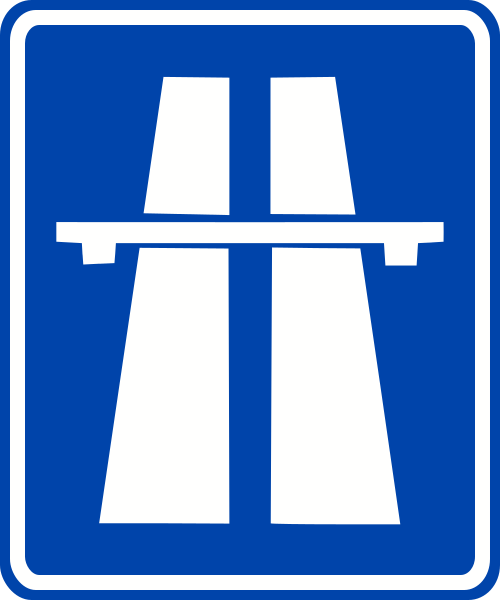 Start of a motorway.
English • Traffic sign PM 13/2014 • V.4a • Toll road begins. Marks the start of the toll road.
Bahasa Indonesia • PM 13/2014 • V.4a • Awal jalan tol. Menandai batas awal jalan tol.
Sources
🔗 Commons.wikimedia.org
🔗 Andalalin.jakarta.go.id • PM 13 Tahun 2014 • Lampiran • hlm. PDF 124
SVG source: Ministry of Transportation (Indonesia) • Public domain • Original revision 2019-05-11. Wikimedia original unmodified.
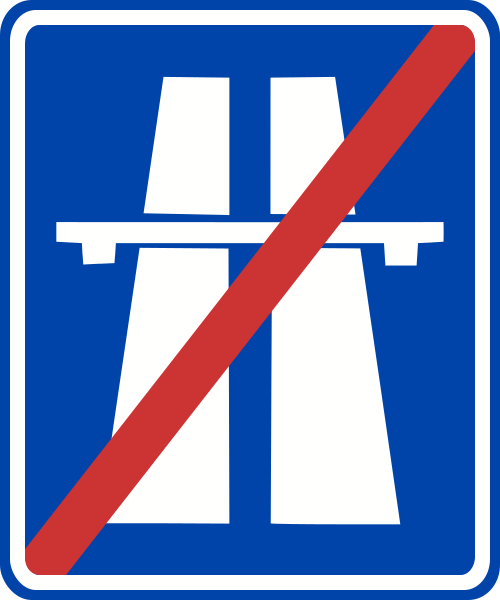 End of the motorway.
English • Traffic sign PM 13/2014 • V.4b • Toll road ends. Marks the end of the toll road.
Bahasa Indonesia • PM 13/2014 • V.4b • Akhir jalan tol. Menandai batas akhir jalan tol.
Sources
🔗 Commons.wikimedia.org
🔗 Andalalin.jakarta.go.id • PM 13 Tahun 2014 • Lampiran • hlm. PDF 124
SVG source: Menteri Perhubungan (Minister of Transportation of Indonesia) • Public domain • Original revision 2019-05-11. Wikimedia original unmodified.
What speed limit applies to cars on an expressway in Indonesia?
On freeways such as toll expressways, the national framework normally provides a maximum of 100 km/h and a minimum of 60 km/h in free-flow conditions. Follow lower posted maxima and slow down for queues or unsafe conditions.
🔗 peraturan.bpk.go.id • Indonesia — PP 23/2024 Articles 1 and 68–69; PM 111/2015 Article 3
🔗 peraturan.bpk.go.id • BPK — Law 6/2023, Article 55, amendments to Act 22/2009
🔗 jdih.kemenkeu.go.id • PP 79/2013 — road-network and speed provisions
🔗 peraturan.bpk.go.id • PP 30/2021 — current implementing amendments
Can I stop on an Indonesian toll expressway for a break?
No. Use a designated rest or service area for an ordinary break. Toll-road traffic lanes must not be used for stopping, while the shoulder is reserved for emergency use, including vehicles making an emergency stop. Follow police traffic directions and the operator’s emergency instructions; the shoulder is not a normal rest area.
🔗 peraturan.bpk.go.id • Indonesia — PP 23/2024 Articles 1 and 68–69; PM 111/2015 Article 3
🔗 peraturan.bpk.go.id • BPK — Law 6/2023, Article 55, amendments to Act 22/2009
🔗 jdih.kemenkeu.go.id • PP 79/2013 — road-network and speed provisions
🔗 peraturan.bpk.go.id • PP 30/2021 — current implementing amendments
Can I use a handheld phone while driving on an Indonesian expressway?
Driving requires full concentration. Do not use a handheld phone in a way that interferes with attention or control. Arrange navigation before the journey and stop at a suitable rest area if you need to handle the phone.
🔗 peraturan.bpk.go.id • Indonesia — PP 23/2024 Articles 1 and 68–69; PM 111/2015 Article 3
🔗 peraturan.bpk.go.id • BPK — Law 6/2023, Article 55, amendments to Act 22/2009
🔗 jdih.kemenkeu.go.id • PP 79/2013 — road-network and speed provisions
🔗 peraturan.bpk.go.id • PP 30/2021 — current implementing amendments
3. Speed limit
A speed limit is the maximum legal speed permitted on a road, lane or within a designated area. It may be established by general traffic law or indicated by fixed, variable or temporary traffic signs.
A speed limit is a maximum, not a target speed. Drivers must travel more slowly whenever traffic, visibility, weather, road conditions, vulnerable road users or the condition of the vehicle make the maximum permitted speed unsafe.

Wikimedia.org • Udin Bahrudin • CC0
Which general speed limits should car drivers know in Indonesia?
The national framework provides maxima of 50 km/h in urban areas, 30 km/h in residential areas, 80 km/h on interurban roads and 100 km/h on freeways. Lower limits can be established and signed. On freeways, a 60 km/h minimum applies under free-flow conditions; congestion or other unsafe conditions are not a reason to maintain that speed.
🔗 peraturan.bpk.go.id • Indonesia — Act Article 21; PM 111/2015 Article 3
🔗 peraturan.bpk.go.id • BPK — Law 6/2023, Article 55, amendments to Act 22/2009
🔗 jdih.kemenkeu.go.id • PP 79/2013 — road-network and speed provisions
🔗 peraturan.bpk.go.id • PP 30/2021 — current implementing amendments
Must I maintain Indonesia’s freeway minimum when traffic is congested?
No. The 60 km/h minimum in the national framework is conditional on free-flow conditions. Congestion or a hazard can require a lower speed. Do not accelerate to meet a minimum where doing so would be unsafe.
🔗 peraturan.bpk.go.id • Indonesia — Act Article 21; PM 111/2015 Article 3
🔗 peraturan.bpk.go.id • BPK — Law 6/2023, Article 55, amendments to Act 22/2009
🔗 jdih.kemenkeu.go.id • PP 79/2013 — road-network and speed provisions
🔗 peraturan.bpk.go.id • PP 30/2021 — current implementing amendments
Does an Indonesian residential road have the normal 50 km/h urban maximum?
The national framework distinguishes kawasan perkotaan, an urban area, from kawasan permukiman, a residential area. Their maxima are generally 50 and 30 km/h respectively. Read the local classification and any lower signed restriction.
🔗 peraturan.bpk.go.id • Indonesia — Act Article 21; PM 111/2015 Article 3
🔗 peraturan.bpk.go.id • BPK — Law 6/2023, Article 55, amendments to Act 22/2009
🔗 jdih.kemenkeu.go.id • PP 79/2013 — road-network and speed provisions
🔗 peraturan.bpk.go.id • PP 30/2021 — current implementing amendments
4. Bridge
A bridge is a structure that carries a road, path or railway over an obstacle such as a river, valley, railway line or another road. A road bridge may carry one or more roadways together with pedestrian or cycling facilities.
Drivers should follow any speed, weight, height, width or vehicle-access restrictions applying to the bridge. Particular care may be necessary on narrow, exposed or movable bridges and when weather conditions such as wind, rain or ice affect the road surface.

Wikimedia.org • CEphoto, Uwe Aranas • CC BY-SA
What should I check before crossing a bridge in Indonesia?
Check the applicable weight, axle-load, width and height restrictions before committing to the crossing. Include the load, trailer and roof equipment when relevant. A bridge warning and a vehicle restriction serve different purposes; comply with both.
🔗 peraturan.bpk.go.id • Indonesia — Act Articles 105–106 and 118–121; actual restrictions
🔗 peraturan.bpk.go.id • BPK — Law 6/2023, Article 55, amendments to Act 22/2009
Who goes first on a narrow bridge in Indonesia?
Follow any traffic lights, give-way controls or signs allocating priority over oncoming traffic. Do not force your way onto a bridge that cannot accommodate both directions safely. A bridge warning alone does not give your direction priority.
🔗 peraturan.bpk.go.id • Indonesia — Act Articles 105–106 and 118–121; actual restrictions
🔗 peraturan.bpk.go.id • BPK — Law 6/2023, Article 55, amendments to Act 22/2009
May I stop or park on a bridge in Indonesia?
Follow the bridge’s stopping and parking controls and the general safety requirements. Parking must use legally permitted space; a bridge edge or footway is not made into a parking area by its apparent width.
🔗 peraturan.bpk.go.id • Indonesia — Act Articles 105–106 and 118–121; actual restrictions
🔗 peraturan.bpk.go.id • BPK — Law 6/2023, Article 55, amendments to Act 22/2009
5. Toll road
A toll road is a road, motorway, bridge, tunnel or other route for which users must pay a charge. The toll may apply to all vehicles or only to particular vehicle categories, and the amount can depend on factors such as distance travelled, vehicle type, weight or emissions.
Tolls may be collected at toll booths, electronically or through a vignette or distance-based charging system. Drivers should check the applicable payment rules before using a toll road, especially when travelling in another country.

Wikimedia.org • wowo_s • CC BY
Which road-charging system should I check in Indonesia?
Indonesia’s jalan tol network uses cashless payment arrangements. The Toll Road Regulatory Agency advises drivers about the accepted electronic payment system; check the actual toll operator’s requirements.
🔗 peraturan.bpk.go.id • BPK — Law 6/2023, Article 55, amendments to Act 22/2009
What should I check before using a charged road in Indonesia?
Prepare an accepted electronic payment method and sufficient balance before joining the toll road. Do not assume cash is accepted in a lane intended for electronic payment or that every bank product is compatible.
🔗 peraturan.bpk.go.id • BPK — Law 6/2023, Article 55, amendments to Act 22/2009
Does the absence of a toll booth prove that a road is free in Indonesia?
The absence of a payment booth is not proof that a charged road is free. A vignette, electronic account, vehicle-registration record or another payment procedure may be used where the actual scheme provides for it. Follow the responsible authority or operator’s instructions for that road.
🔗 peraturan.bpk.go.id • BPK — Law 6/2023, Article 55, amendments to Act 22/2009
6. Slope
A slope is a section of road that rises or descends noticeably. A steep slope can affect vehicle speed, braking distance, traction, visibility and the ability of heavy or low-powered vehicles to maintain a steady speed.
Warning signs may indicate a steep ascent or dangerous descent and may show the gradient as a percentage. Drivers should adjust their speed early, select a suitable gear and remain prepared for slow vehicles, bends and changing road conditions.
Wikimedia.org • CEphoto, Uwe Aranas • CC BY-SA
What does a steep-slope warning mean in Indonesia?
Indonesian warning signs distinguish uphill and downhill hazards. The Traffic and Transport Act requires attention to signs, road conditions and safe speed.
🔗 peraturan.bpk.go.id • Indonesia — Act Articles 109 and 111
🔗 peraturan.bpk.go.id • BPK — Law 6/2023, Article 55, amendments to Act 22/2009
🔗 peraturan.bpk.go.id • PM 13/2014 — full national traffic-sign regulation and illustrated annexes
🔗 peraturan.bpk.go.id • BPK — current PM 13/2014 status and repeal of old KM 61/1993
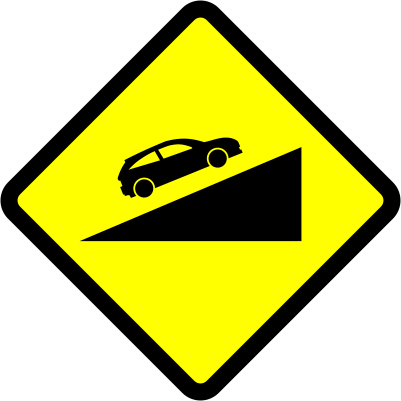 Warning for a steep ascent.
English • Traffic sign PM 13/2014 • II.2c • Gentle ascent. Warns of a gentle uphill gradient. The drawing shows the gentle version although the filename refers to a steep ascent.
Bahasa Indonesia • PM 13/2014 • II.2c • Tanjakan landai. Memperingatkan adanya tanjakan landai di depan. Gambar menunjukkan varian landai, meskipun nama berkas menyebut tanjakan curam.
Sources
🔗 Commons.wikimedia.org (มองโกเลีย๔๔ • CC BY-SA 4.0)
🔗 Andalalin.jakarta.go.id • PM 13 Tahun 2014 • Lampiran • hlm. PDF 50
SVG source: มองโกเลีย๔๔ • CC BY-SA 4.0 • Original revision 2024-05-25. Wikimedia original unmodified.
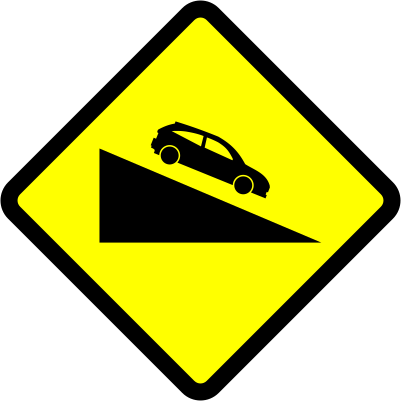 Warning for a steep descent.
English • Traffic sign PM 13/2014 • II.2a • Gentle descent. Warns of a gentle downhill gradient. The drawing shows the gentle version although the filename refers to a steep descent.
Bahasa Indonesia • PM 13/2014 • II.2a • Turunan landai. Memperingatkan adanya turunan landai di depan. Gambar menunjukkan varian landai, meskipun nama berkas menyebut turunan curam.
Sources
🔗 Commons.wikimedia.org (มองโกเลีย๔๔ • CC BY-SA 4.0)
🔗 Andalalin.jakarta.go.id • PM 13 Tahun 2014 • Lampiran • hlm. PDF 49
SVG source: มองโกเลีย๔๔ • CC BY-SA 4.0 • Original revision 2024-05-19. Wikimedia original unmodified.
How should I approach a steep descent in Indonesia?
Reduce speed before the descent and select a suitable gear to help control the vehicle. Keep enough following distance and avoid building up speed that requires continuous heavy braking. A warning gives no fixed safe descent speed: the gradient, surface, visibility, load and vehicle can require a speed well below the legal maximum.
🔗 peraturan.bpk.go.id • Indonesia — Act Articles 109 and 111
🔗 peraturan.bpk.go.id • BPK — Law 6/2023, Article 55, amendments to Act 22/2009
🔗 peraturan.bpk.go.id • PM 13/2014 — full national traffic-sign regulation and illustrated annexes
🔗 peraturan.bpk.go.id • BPK — current PM 13/2014 status and repeal of old KM 61/1993
What should I check when meeting or overtaking on a slope in Indonesia?
On an uphill or downhill road too narrow for vehicles to pass each other, Article 111 requires the downhill driver to give the uphill vehicle an opportunity to proceed. Article 109 also requires a clear view and enough space before overtaking. Do not attempt a pass towards a blind crest.
🔗 peraturan.bpk.go.id • Indonesia — Act Articles 109 and 111
🔗 peraturan.bpk.go.id • BPK — Law 6/2023, Article 55, amendments to Act 22/2009
🔗 peraturan.bpk.go.id • PM 13/2014 — full national traffic-sign regulation and illustrated annexes
🔗 peraturan.bpk.go.id • BPK — current PM 13/2014 status and repeal of old KM 61/1993
7. Roundabout
A roundabout is a circular road arrangement in which traffic travels around a central island in one designated direction. Vehicles enter and leave through connecting roads, and traffic signs or local rules determine who has priority.
Drivers should reduce speed, choose a suitable lane, observe all road users and signal as required when leaving. The direction of travel, entry priority, lane use and rules for cyclists and pedestrians depend on local traffic signs and regulations.
Wikimedia.org • AdriansyahYS • CC BY-SA
Who has priority at a roundabout in Indonesia?
Indonesia’s Traffic and Transport Act requires drivers at a bundaran to give priority to vehicles coming from the right. Read that rule with the actual signs, signals and lane arrangement.
🔗 peraturan.bpk.go.id • Indonesia — Act Articles 112–113
🔗 peraturan.bpk.go.id • BPK — Law 6/2023, Article 55, amendments to Act 22/2009
 Mandatory roundabout direction.
English • Traffic sign PM 13/2014 • IV.1f • Roundabout direction. Follow the arrows when entering and circulating.
Bahasa Indonesia • PM 13/2014 • IV.1f • Arah di bundaran. Wajib mengikuti arah panah saat memasuki dan mengitari bundaran.
Sources
🔗 Commons.wikimedia.org (มองโกเลีย๔๔ • CC BY-SA 4.0)
🔗 Andalalin.jakarta.go.id • PM 13 Tahun 2014 • Lampiran • hlm. PDF 105
SVG source: มองโกเลีย๔๔ • CC BY-SA 4.0 • Original revision 2024-05-11. Wikimedia original unmodified.
 Warning for a roundabout.
English • Traffic sign PM 13/2014 • II.4b3 • Roundabout junction. Warns of a roundabout ahead.
Bahasa Indonesia • PM 13/2014 • II.4b3 • Persimpangan bundaran. Memperingatkan adanya persimpangan dengan bundaran di depan.
Sources
🔗 Commons.wikimedia.org (มองโกเลีย๔๔ • CC BY-SA 4.0)
🔗 Andalalin.jakarta.go.id • PM 13 Tahun 2014 • Lampiran • hlm. PDF 52
SVG source: มองโกเลีย๔๔ • CC BY-SA 4.0 • Original revision 2024-05-23. Wikimedia original unmodified.
How should you choose a roundabout lane in Indonesia?
Choose your intended exit before entering and follow the lane arrows and destination signs. Keep to the marked route and make any permitted lane change only when safe; having priority over entering traffic does not give you priority to change lanes.
🔗 peraturan.bpk.go.id • Indonesia — Act Articles 112–113
🔗 peraturan.bpk.go.id • BPK — Law 6/2023, Article 55, amendments to Act 22/2009
What should you check when leaving a roundabout in Indonesia?
Check the lane you will cross or enter, signal the manoeuvre as required and look for cyclists and pedestrians at the exit. Obey any separate crossing controls and do not force an exit across another vehicle’s path.
🔗 peraturan.bpk.go.id • Indonesia — Act Articles 112–113
🔗 peraturan.bpk.go.id • BPK — Law 6/2023, Article 55, amendments to Act 22/2009
8. Pedestrian crossing
A pedestrian crossing is a designated place where pedestrians may cross a road. It is commonly indicated by road markings, traffic signs, signals or a combination of these measures.
Drivers must approach with appropriate caution and give way when required by local law. Pedestrians must also observe approaching traffic and follow any pedestrian signals or instructions from authorised traffic controllers.

Wikimedia.org • kasman70 • CC BY
When must drivers give way at a pedestrian crossing in Indonesia?
In Indonesia, check for people already on a marked pedestrian crossing and give way as required by local signs and traffic law. Do not assume that a warning sign alone gives the same instruction as a stop or pedestrian signal.
🔗 peraturan.bpk.go.id • Indonesia — Act Articles 106(2), 116(2)(f), 131–132
🔗 peraturan.bpk.go.id • BPK — Law 6/2023, Article 55, amendments to Act 22/2009
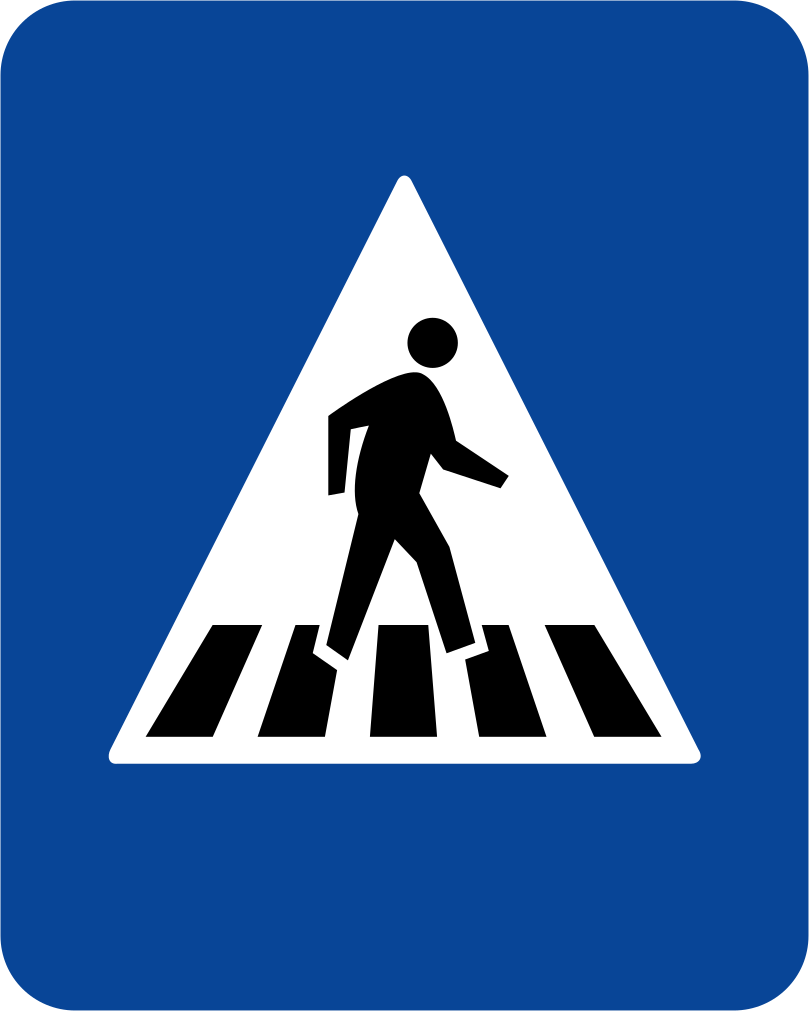 Crossing for pedestrians.
English • Traffic sign PM 13/2014 • V.5e • Pedestrian crossing place. Marks a pedestrian crossing facility.
Bahasa Indonesia • PM 13/2014 • V.5e • Tempat penyeberangan. Menunjukkan lokasi fasilitas penyeberangan pejalan kaki.
Sources
🔗 Commons.wikimedia.org
🔗 Andalalin.jakarta.go.id • PM 13 Tahun 2014 • Lampiran • hlm. PDF 127
SVG source: มองโกเลีย๔๔ • CC0 • Original revision 2024-05-04. Wikimedia original unmodified.
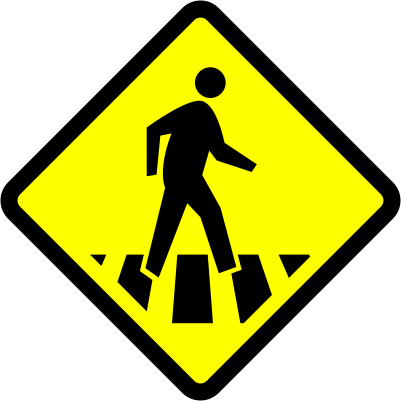 Warning for a pedestrian crossing.
English • Traffic sign PM 13/2014 • II.6a • Pedestrians crossing. Warns of many pedestrians using a crossing facility.
Bahasa Indonesia • PM 13/2014 • II.6a • Penyeberang jalan. Memperingatkan banyaknya pejalan kaki yang menggunakan fasilitas penyeberangan.
Sources
🔗 Commons.wikimedia.org
🔗 Andalalin.jakarta.go.id • PM 13 Tahun 2014 • Lampiran • hlm. PDF 56
SVG source: Ministry of Transportation (Indonesia) • Public domain • Original revision 2024-05-23. Wikimedia original unmodified.
Are all pedestrian crossings controlled the same way in Indonesia?
At a crossing controlled by traffic lights or an authorised person, comply with that control. Drivers turning across a pedestrian route must still check carefully for pedestrians.
🔗 peraturan.bpk.go.id • Indonesia — Act Articles 106(2), 116(2)(f), 131–132
🔗 peraturan.bpk.go.id • BPK — Law 6/2023, Article 55, amendments to Act 22/2009
May I enter a pedestrian crossing if the road beyond it is blocked in Indonesia?
Do not queue on the crossing or conceal pedestrians from approaching drivers. Wait before entering until there is space to clear the crossing, and do not overtake or pass a vehicle that has stopped for a pedestrian where that would endanger anyone.
🔗 peraturan.bpk.go.id • Indonesia — Act Articles 106(2), 116(2)(f), 131–132
🔗 peraturan.bpk.go.id • BPK — Law 6/2023, Article 55, amendments to Act 22/2009
9. Railway crossing
A railway crossing, also called a level crossing or railroad crossing, is a place where a road or path crosses railway tracks at the same level. It may be protected by barriers, warning lights, bells, traffic signs or a combination of these measures.
Road users must approach carefully and never enter when a train is approaching, warning signals are active or the exit is blocked. They should cross promptly and must never stop, wait or become trapped on the tracks.
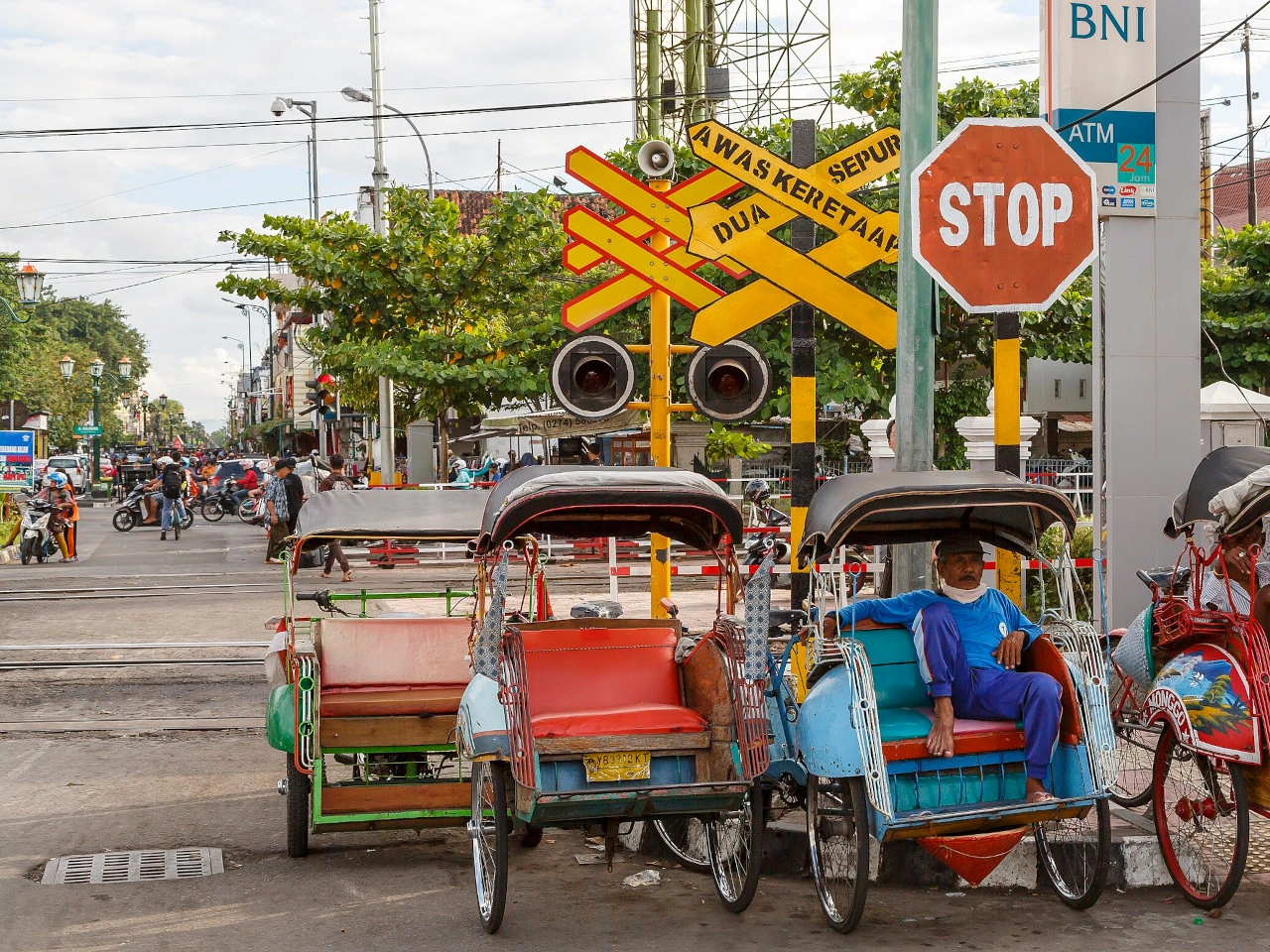
Wikimedia.org • CEphoto, Uwe Aranas • CC BY-SA
When must drivers stop at a railway level crossing in Indonesia?
At a crossing in Indonesia, obey red warning signals, barriers, STOP signs and authorised railway personnel. Stop whenever a train is approaching and it is not safe to cross; rules at an unguarded crossing may differ from a crossing controlled by lights or barriers.
🔗 peraturan.bpk.go.id • Indonesia — Act Articles 114 and 116
🔗 peraturan.bpk.go.id • BPK — Law 6/2023, Article 55, amendments to Act 22/2009
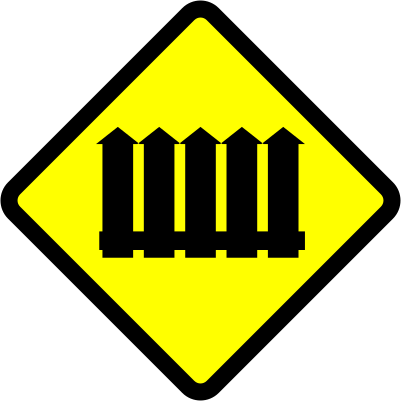 Warning for a railway crossing with barriers.
English • Traffic sign PM 13/2014 • II.8e • Railway crossing with gates. Warns of a gated railway level crossing ahead.
Bahasa Indonesia • PM 13/2014 • II.8e • Perlintasan kereta berpintu. Memperingatkan adanya perlintasan sebidang kereta api dengan pintu di depan.
Sources
🔗 Commons.wikimedia.org (มองโกเลีย๔๔ • CC BY-SA 4.0)
🔗 Andalalin.jakarta.go.id • PM 13 Tahun 2014 • Lampiran • hlm. PDF 59
SVG source: มองโกเลีย๔๔ • CC BY-SA 4.0 • Original revision 2024-05-12. Wikimedia original unmodified.
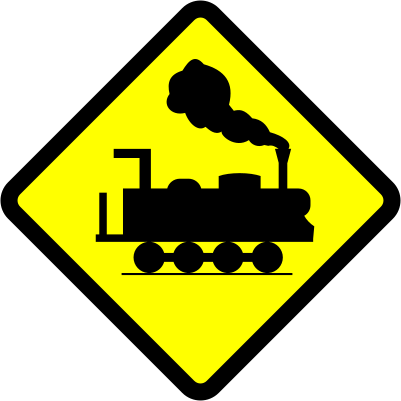 Warning for a railway crossing without barriers.
English • Traffic sign PM 13/2014 • II.8f • Railway crossing without gates. Warns of an ungated railway level crossing ahead.
Bahasa Indonesia • PM 13/2014 • II.8f • Perlintasan kereta tanpa pintu. Memperingatkan adanya perlintasan sebidang kereta api tanpa pintu di depan.
Sources
🔗 Commons.wikimedia.org (มองโกเลีย๔๔ • CC BY-SA 4.0)
🔗 Andalalin.jakarta.go.id • PM 13 Tahun 2014 • Lampiran • hlm. PDF 59
SVG source: มองโกเลีย๔๔ • CC BY-SA 4.0 • Original revision 2024-05-12. Wikimedia original unmodified.
 Warning for a railway crossing with one track.
English • Traffic sign PM 13/2014 • III.1e • Single-track railway crossing. Do not proceed across until safe from conflict with trains.
Bahasa Indonesia • PM 13/2014 • III.1e • Perlintasan kereta jalur tunggal. Jangan melanjutkan perjalanan melewati perlintasan kereta jalur tunggal sebelum dipastikan aman dari konflik dengan kereta.
Sources
🔗 Commons.wikimedia.org
🔗 Andalalin.jakarta.go.id • PM 13 Tahun 2014 • Lampiran • hlm. PDF 76
SVG source: มองโกเลีย๔๔ • CC0 • Original revision 2024-05-09. Wikimedia original unmodified.
 Warning for a railway crossing with two or more tracks.
English • Traffic sign PM 13/2014 • III.1f • Double-track railway crossing. Do not proceed across until safe from conflict with trains.
Bahasa Indonesia • PM 13/2014 • III.1f • Perlintasan kereta jalur ganda. Jangan melanjutkan perjalanan melewati perlintasan kereta jalur ganda sebelum dipastikan aman dari konflik dengan kereta.
Sources
🔗 Commons.wikimedia.org
🔗 Andalalin.jakarta.go.id • PM 13 Tahun 2014 • Lampiran • hlm. PDF 76
SVG source: มองโกเลีย๔๔ • CC0 • Original revision 2024-05-09. Wikimedia original unmodified.
Must I stop at every unguarded railway crossing in Indonesia?
In Indonesia, the stopping duty depends on the actual STOP or GIVE WAY controls and any additional national or vehicle-specific rule. Look and listen carefully; do not assume a crossing without barriers is automatically safe or that the same stop rule applies in every country.
🔗 peraturan.bpk.go.id • Indonesia — Act Articles 114 and 116
🔗 peraturan.bpk.go.id • BPK — Law 6/2023, Article 55, amendments to Act 22/2009
What if road traffic is queued beyond a railway crossing in Indonesia?
Wait before the tracks until there is room to take your entire vehicle off the crossing. Do not follow another vehicle onto the tracks without checking the exit. Keep the tracks clear even if no train is visible.
🔗 peraturan.bpk.go.id • Indonesia — Act Articles 114 and 116
🔗 peraturan.bpk.go.id • BPK — Law 6/2023, Article 55, amendments to Act 22/2009
10. Turn prohibition
A turn prohibition prevents drivers from turning in the direction indicated by a traffic sign. It may prohibit a left turn, a right turn or a U-turn at an intersection or along a specified section of road.
Drivers must continue along a permitted route and follow any lane arrows or mandatory-direction signs. A turn prohibition does not itself determine priority or speed, and any exemption for cyclists, public transport or other road users must be expressly indicated.

Wikimedia.org • CEphoto, Uwe Aranas • CC BY-SA
What does a no-turn sign prohibit in Indonesia?
It prohibits the left, right or other turn shown at the junction or position controlled by the sign in Indonesia. Follow any supplementary panel or authorised direction and choose another legal route.
🔗 peraturan.bpk.go.id • BPK — Law 6/2023, Article 55, amendments to Act 22/2009
🔗 peraturan.bpk.go.id • PM 13/2014 — full national traffic-sign regulation and illustrated annexes
🔗 peraturan.bpk.go.id • BPK — current PM 13/2014 status and repeal of old KM 61/1993
Does a no-left-turn sign always prohibit a U-turn in Indonesia?
Do not assume that a U-turn is allowed or prohibited solely from a no-left-turn sign. Separate U-turn signs and local road rules may apply, and some jurisdictions treat turning restrictions differently. Check the actual control.
🔗 peraturan.bpk.go.id • BPK — Law 6/2023, Article 55, amendments to Act 22/2009
🔗 peraturan.bpk.go.id • PM 13/2014 — full national traffic-sign regulation and illustrated annexes
🔗 peraturan.bpk.go.id • BPK — current PM 13/2014 status and repeal of old KM 61/1993
Can a no-turn restriction apply only to certain vehicles or hours in Indonesia?
Yes, where the local sign system provides a supplementary condition or exemption, such as a vehicle class, time or authorised access. Without a valid exception, comply with the prohibited movement shown.
🔗 peraturan.bpk.go.id • BPK — Law 6/2023, Article 55, amendments to Act 22/2009
🔗 peraturan.bpk.go.id • PM 13/2014 — full national traffic-sign regulation and illustrated annexes
🔗 peraturan.bpk.go.id • BPK — current PM 13/2014 status and repeal of old KM 61/1993
11. School area
A school area is a road or group of roads near a school where large numbers of children may walk, cycle, cross the road or enter and leave vehicles. It may be identified by warning signs, zone signs, road markings, traffic-calming measures or flashing lights.
Special speed limits, parking restrictions or access rules may apply permanently or only during school arrival and departure times. Drivers should reduce speed, watch carefully for children and be prepared to stop.

Wikimedia.org • CEphoto, Uwe Aranas • CC BY-SA
What speed rules apply around schools in Indonesia?
Urban and residential road categories have different maximum speeds, and local signs may set lower limits close to schools.
🔗 peraturan.bpk.go.id • BPK — Law 6/2023, Article 55, amendments to Act 22/2009
🔗 jdih.kemenkeu.go.id • PP 79/2013 — road-network and speed provisions
🔗 peraturan.bpk.go.id • PP 30/2021 — current implementing amendments
🔗 peraturan.bpk.go.id • PM 13/2014 — full national traffic-sign regulation and illustrated annexes
🔗 peraturan.bpk.go.id • BPK — current PM 13/2014 status and repeal of old KM 61/1993
Does a school warning sign in Indonesia automatically set the speed limit?
A children or school warning alerts you to a potential hazard; the enforceable numerical speed limit depends on the applicable law, regulatory signs and any time or variable display. Slow further if children are near the road.
🔗 peraturan.bpk.go.id • BPK — Law 6/2023, Article 55, amendments to Act 22/2009
🔗 jdih.kemenkeu.go.id • PP 79/2013 — road-network and speed provisions
🔗 peraturan.bpk.go.id • PP 30/2021 — current implementing amendments
🔗 peraturan.bpk.go.id • PM 13/2014 — full national traffic-sign regulation and illustrated annexes
🔗 peraturan.bpk.go.id • BPK — current PM 13/2014 status and repeal of old KM 61/1993
How should you pass a school entrance in Indonesia?
Watch for children stepping out from between parked vehicles, obey crossings and any school patrol, and follow stopping or parking restrictions. Do not obstruct visibility near a crossing or school entrance; approach at a speed that permits a safe stop.
🔗 peraturan.bpk.go.id • BPK — Law 6/2023, Article 55, amendments to Act 22/2009
🔗 jdih.kemenkeu.go.id • PP 79/2013 — road-network and speed provisions
🔗 peraturan.bpk.go.id • PP 30/2021 — current implementing amendments
🔗 peraturan.bpk.go.id • PM 13/2014 — full national traffic-sign regulation and illustrated annexes
🔗 peraturan.bpk.go.id • BPK — current PM 13/2014 status and repeal of old KM 61/1993
12. Curve
A curve is a section of road that changes direction to the left or right. A sharp, unexpected or poorly visible curve can reduce a driver’s view of approaching traffic, stopped vehicles, pedestrians and other hazards.
Drivers should reduce speed before entering the curve, remain within their lane and use smooth steering, braking and acceleration. Warning signs may indicate the direction of the first curve or a series of successive curves.

Wikimedia.org • CEphoto, Uwe Aranas • CC BY-SA
What makes a bend dangerous in Indonesia?
A bend can shorten the visible road and reduce the margin for correcting an error. Slow before entering and maintain control within the distance you can see to be clear. Grip, traffic and hidden road users can require a speed well below the posted maximum.
🔗 peraturan.bpk.go.id • BPK — Law 6/2023, Article 55, amendments to Act 22/2009
🔗 peraturan.bpk.go.id • PM 13/2014 — full national traffic-sign regulation and illustrated annexes
🔗 peraturan.bpk.go.id • BPK — current PM 13/2014 status and repeal of old KM 61/1993
How should you approach a sharp curve in Indonesia?
Slow down before the bend, select the correct lane position, look through the curve and steer smoothly. Keep enough grip and visible stopping distance for the road and weather conditions.
🔗 peraturan.bpk.go.id • BPK — Law 6/2023, Article 55, amendments to Act 22/2009
🔗 peraturan.bpk.go.id • PM 13/2014 — full national traffic-sign regulation and illustrated annexes
🔗 peraturan.bpk.go.id • BPK — current PM 13/2014 status and repeal of old KM 61/1993
Is overtaking safe on a blind bend in Indonesia?
No. Do not start overtaking where your view of oncoming traffic is obstructed or where signs or road markings prohibit it. Wait until there is a lawful, clear and sufficiently long view ahead.
🔗 peraturan.bpk.go.id • BPK — Law 6/2023, Article 55, amendments to Act 22/2009
🔗 peraturan.bpk.go.id • PM 13/2014 — full national traffic-sign regulation and illustrated annexes
🔗 peraturan.bpk.go.id • BPK — current PM 13/2014 status and repeal of old KM 61/1993
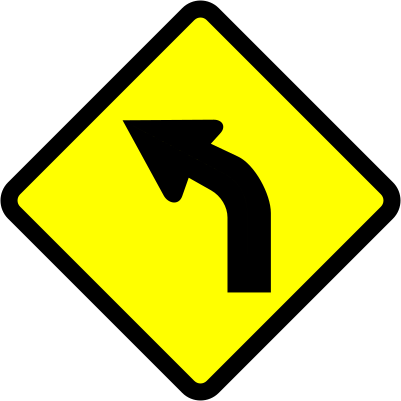 Warning for a curve to the left.
English • Traffic sign PM 13/2014 • II.1a • Left-hand bend. Warns of a left-hand bend ahead.
Bahasa Indonesia • PM 13/2014 • II.1a • Tikungan ke kiri. Memperingatkan adanya tikungan ke kiri di depan.
Sources
🔗 Commons.wikimedia.org
🔗 Andalalin.jakarta.go.id • PM 13 Tahun 2014 • Lampiran • hlm. PDF 46
SVG source: Ministry of Transportation (Indonesia) • Public domain • Original revision 2024-05-23. Wikimedia original unmodified.
13. Priority at the next junction
Priority at the next junction means that drivers travelling on a particular road have priority over traffic entering from intersecting roads at the next junction. The priority arrangement is normally indicated by signs facing both the priority traffic and the traffic that must give way.
Unlike a continuing priority road, this priority applies only at the indicated intersection. Drivers must still approach cautiously and obey traffic lights, authorised officers, crossings, turning rules and other applicable signs.

Wikimedia.org • CEphoto, Uwe Aranas • CC BY-SA
How is priority at the next junction determined in Indonesia?
Follow the actual signs, signals and road markings. At an uncontrolled junction, Article 113 gives priority to the main road over a smaller branch or adjoining property; it also specifies left-side priority at equal-sized four-way junctions, left-side priority at oblique three-way junctions, and priority for the continuing road at a perpendicular T-junction. Identify the actual layout before applying a default.
🔗 peraturan.bpk.go.id • Indonesia — Act Articles 103–104 and 113
🔗 peraturan.bpk.go.id • BPK — Law 6/2023, Article 55, amendments to Act 22/2009
Does priority at one junction automatically continue along the entire road in Indonesia?
No. Read each junction’s controls and apply Article 113 to its actual layout and road relationship. A road name, route number or destination diagram does not itself establish continuing priority. Signals, signs, markings and authorised police directions must be obeyed.
🔗 peraturan.bpk.go.id • Indonesia — Act Articles 103–104 and 113
🔗 peraturan.bpk.go.id • BPK — Law 6/2023, Article 55, amendments to Act 22/2009
May a driver with priority ignore pedestrians or another safety obligation at the next junction in Indonesia?
No. Junction priority does not cancel duties towards pedestrians, traffic signals, emergency vehicles or other road users where the law gives them precedence. Approach at a speed allowing you to stop safely.
🔗 peraturan.bpk.go.id • Indonesia — Act Articles 103–104 and 113
🔗 peraturan.bpk.go.id • BPK — Law 6/2023, Article 55, amendments to Act 22/2009
14. Traffic lights
Traffic lights use coloured lights, arrows or symbols to regulate when road users may proceed, must prepare to stop or must remain stopped. Separate signals may apply to particular directions, lanes, pedestrians, cyclists or public-transport vehicles.
A green light permits movement only when the route is clear and the movement is otherwise legal. Road users must still follow priority rules, turning restrictions, lane markings and instructions from authorised traffic controllers.

Wikimedia.org • Rantemario • CC BY-SA
What must a driver do at red, amber and green signals in Indonesia?
Red requires stopping before the stop line. Amber after green warns that red is coming and tells drivers to prepare to stop; amber together with red warns that green is coming and tells drivers to prepare to move. Green permits movement, subject to the other applicable road rules.
May you turn at a red traffic light in Indonesia?
Do not turn left directly through a signal-controlled junction unless a road sign or traffic signal authorises it. Law 22/2009, article 112(3), specifically rejects a general left-turn-without-waiting rule. Follow the actual permitted direction.
🔗 dinhub.purworejokab.go.id • Law 22/2009, article 112(3), official transport-department explanation
Can a green light remove the need to give way to pedestrians in Indonesia?
No. A green light does not remove the duty to protect pedestrians. Indonesia’s Road Traffic and Transport Act requires drivers to prioritise pedestrian and cyclist safety, obey traffic controls, and respect pedestrians’ priority at crossing places. Check the crossing before proceeding.
🔗 peraturan.bpk.go.id • Indonesian Government, Road Traffic and Transport Act 22/2009
15. Driving licence
A driving licence is an official document authorising a person to drive one or more specified categories of motor vehicle. It may contain conditions, restrictions, category codes and expiry dates that determine which vehicles the holder may drive.
Drivers must hold a licence that is valid for the vehicle category and jurisdiction concerned. A licence may be provisional, full, restricted, suspended or withdrawn, and additional qualifications may be required for professional driving.
Wikimedia.org • CC BY-SA
Which driving-licence entitlement is needed for an ordinary car in Indonesia?
In Indonesia, an ordinary private car is generally covered by SIM A, subject to applicable licensing conditions. A different entitlement may be needed for motorcycles, heavy vehicles, trailers or passenger transport.
🔗 peraturan.bpk.go.id • Indonesia — Act Articles 77–85; SIM A and treaty-based foreign recognition
🔗 peraturan.bpk.go.id • BPK — Law 6/2023, Article 55, amendments to Act 22/2009
Can a visitor drive in Indonesia using a driving licence issued abroad?
Recognition depends on where the licence was issued, the category, its validity and the visitor’s status or length of stay. Check the local licensing authority before driving; temporary residence or employment can change the conditions.
🔗 peraturan.bpk.go.id • Indonesia — Act Articles 77–85; SIM A and treaty-based foreign recognition
🔗 peraturan.bpk.go.id • BPK — Law 6/2023, Article 55, amendments to Act 22/2009
Does an International Driving Permit replace the original licence in Indonesia?
No. An International Driving Permit accompanies the underlying valid driving licence; it does not replace it. Carry both when using an IDP, and check which permit or translation is accepted for your licence and visit.
🔗 gov.uk • UK Government, IDPs and underlying driving licences
16. Parking
Parking means leaving a vehicle stationary at a place for a period of time rather than stopping only briefly because of traffic conditions or another immediate necessity. Many countries distinguish parking from a short stop made to pick up or drop off passengers or to load or unload goods, although the exact legal definition varies.
Parking may be permitted, restricted, reserved, time-limited or prohibited by traffic signs, road markings, parking zones and local regulations. Drivers must park without creating a danger or unnecessary obstruction and must comply with any conditions concerning payment, permits, vehicle categories or maximum parking duration.

Wikimedia.org • CEphoto, Uwe Aranas • CC BY-SA
Where may on-road public parking be provided in Indonesia?
At designated, signed or marked locations on district, village or city roads.
🔗 peraturan.bpk.go.id • Indonesia, Law 22 of 2009, Articles 1, 43 and 118–121
How must drivers warn others during an emergency roadside stop in Indonesia?
Use a warning triangle, hazard lights or another warning signal.
🔗 peraturan.bpk.go.id • Indonesia, Law 22 of 2009, Articles 1, 43 and 118–121
Does Indonesia require warning equipment for an emergency stop by a solo motorcycle?
Article 121 exempts motorcycles without sidecars from that warning requirement.
🔗 peraturan.bpk.go.id • Indonesia, Law 22 of 2009, Articles 1, 43 and 118–121
How does Indonesian law define parking?
It is a stationary vehicle left by its driver.
🔗 peraturan.bpk.go.id • Indonesia, Law 22 of 2009, Articles 1, 43 and 118–121
How does Indonesian law distinguish stopping from parking?
Stopping is temporary and the driver does not leave the vehicle.
🔗 peraturan.bpk.go.id • Indonesia, Law 22 of 2009, Articles 1, 43 and 118–121
Must an Indonesian public car park show its tariffs?
Yes. Off-road operators must provide information on charges, hours and space availability.
🔗 peraturan.bpk.go.id • Indonesia, Government Regulation 79 of 2013, Articles 102 and 105–109
Must you pay after entering an Indonesian car park that has no space?
No. Article 102 waives the fee if you enter but obtain no parking space.
🔗 peraturan.bpk.go.id • Indonesia, Government Regulation 79 of 2013, Articles 102 and 105–109
Should you receive proof of parking in an Indonesian off-road public car park?
Yes. Operators must provide parking evidence and a space.
🔗 peraturan.bpk.go.id • Indonesia, Government Regulation 79 of 2013, Articles 102 and 105–109
17. No parking
No parking indicates that vehicles may not be left parked at the location or along the section of road covered by the restriction. Depending on local law, a driver may still be allowed to stop briefly to pick up or drop off passengers or to load or unload goods, provided stopping itself is not prohibited.
A no-parking restriction may apply continuously or only during specified times, days, vehicle categories or sections of road. Its exact extent and exceptions are determined by the traffic sign, supplementary panels, road markings and local traffic regulations.

Wikimedia.org • Mohamad Sani • CC BY
Can you park on an Indonesian pedestrian crossing?
No. Designated pedestrian and cycle crossings must remain clear.
🔗 peraturan.bpk.go.id • Indonesia, Government Regulation 79 of 2013, Articles 102 and 105–109
Can you park in an Indonesian cycle lane?
No. Dedicated cycle lanes are prohibited parking locations.
🔗 peraturan.bpk.go.id • Indonesia, Government Regulation 79 of 2013, Articles 102 and 105–109
Can you park across an Indonesian property access?
No. Entrances and exits are excluded from on-road parking locations.
🔗 peraturan.bpk.go.id • Indonesia, Government Regulation 79 of 2013, Articles 102 and 105–109
Can you park where your vehicle hides an Indonesian traffic signal?
No. Parking must not conceal traffic signs or signals.
🔗 peraturan.bpk.go.id • Indonesia, Government Regulation 79 of 2013, Articles 102 and 105–109
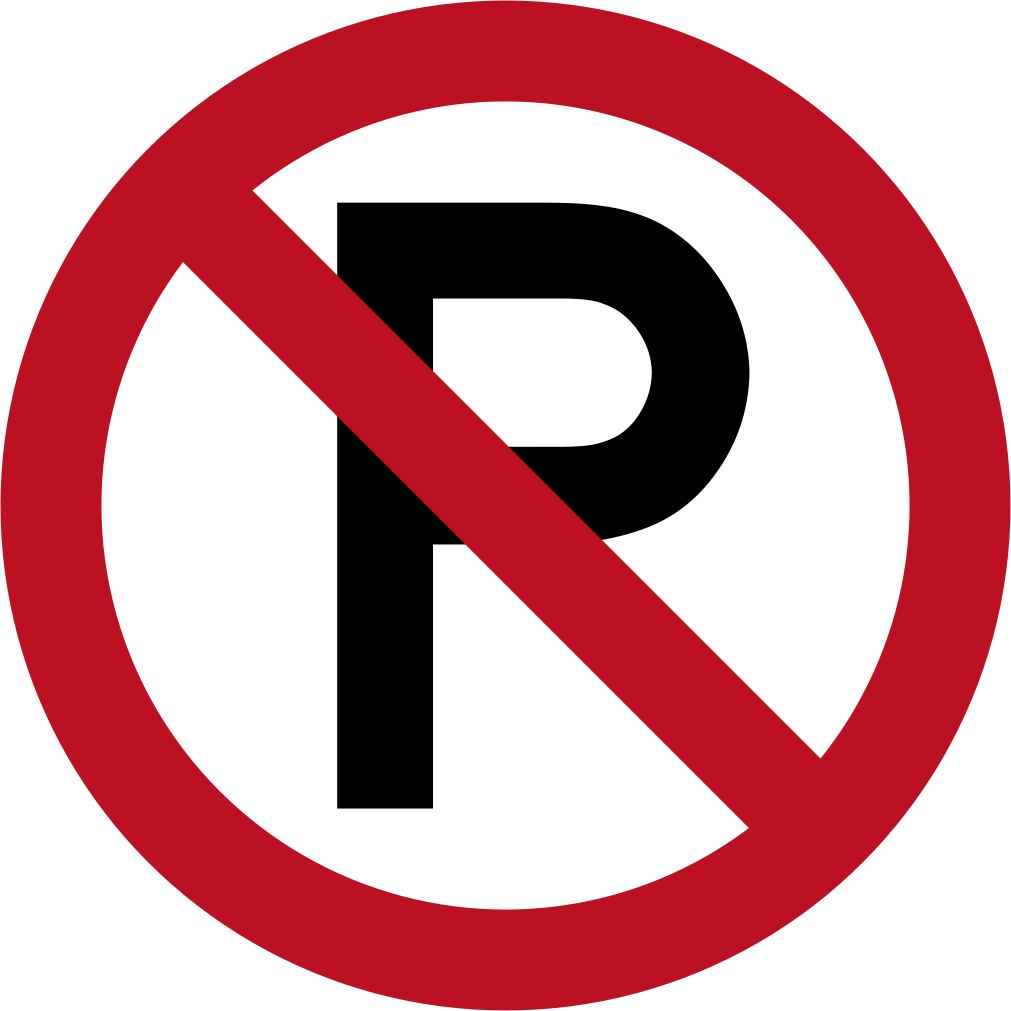 Parking prohibited.
English • Traffic sign PM 13/2014 • III.3b • No parking. Vehicles must not park on the controlled section.
Bahasa Indonesia • PM 13/2014 • III.3b • Dilarang parkir. Kendaraan dilarang parkir pada bagian jalan yang diatur oleh rambu ini.
Sources
🔗 Commons.wikimedia.org
🔗 Andalalin.jakarta.go.id • PM 13 Tahun 2014 • Lampiran • hlm. PDF 82
SVG source: Ministry of Transportation (Indonesia) • Public domain • Original revision 2024-05-01. Wikimedia original unmodified.
18. No stopping
No stopping means that vehicles are not permitted to stop voluntarily at the indicated location, even briefly for picking up or dropping off passengers or loading or unloading goods. It is a stricter restriction than a no-parking rule.
A no-stopping restriction may be indicated by a traffic sign, road marking or local traffic regulation. Drivers should continue to a place where stopping is permitted unless they are forced to stop by traffic conditions, an emergency or another legal requirement.

Wikimedia.org • CEphoto, Uwe Aranas • CC BY
Can a private car make an ordinary stop on an Indonesian toll road?
No. Toll roads are excluded from places permitted for ordinary stopping.
🔗 peraturan.bpk.go.id • Indonesia, Law 22 of 2009, Articles 1, 43 and 118–121
Does an absent no-stopping sign make every Indonesian roadside safe to stop?
No. Stops that endanger safety or disrupt traffic remain prohibited.
🔗 peraturan.bpk.go.id • Indonesia, Law 22 of 2009, Articles 1, 43 and 118–121
 Parking and stopping prohibited.
English • Traffic sign PM 13/2014 • III.3a • No stopping. Vehicles must not stop on the controlled section.
Bahasa Indonesia • PM 13/2014 • III.3a • Dilarang berhenti. Kendaraan dilarang berhenti pada bagian jalan yang diatur oleh rambu ini.
Sources
🔗 Commons.wikimedia.org
🔗 Andalalin.jakarta.go.id • PM 13 Tahun 2014 • Lampiran • hlm. PDF 82
SVG source: Ministry of Transportation (Indonesia) • Public domain • Original revision 2024-05-01. Wikimedia original unmodified.
19. Reversing
Reversing means driving a vehicle backwards. It is commonly used when parking, leaving a confined space or repositioning a vehicle where forward movement is not practical.
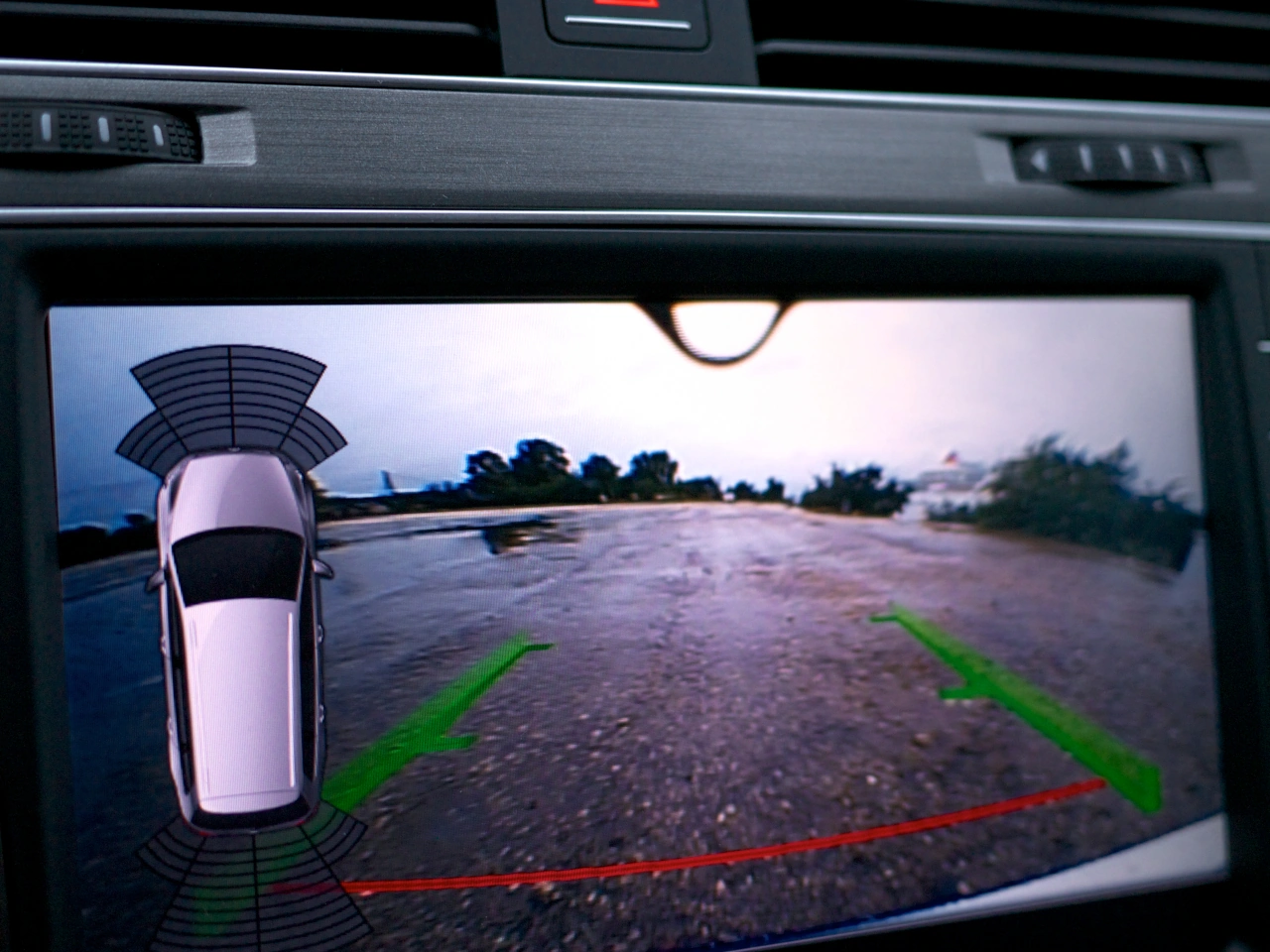
Before reversing, the driver should check mirrors and blind spots, look carefully around the vehicle and make sure the area behind is clear. Reversing should be performed slowly and only for as long as necessary because visibility behind the vehicle is often limited.
Wikimedia.org • Kārlis Dambrāns • CC BY
What should you check before reversing?
Check behind and around the vehicle for pedestrians, cyclists, other vehicles and obstacles. Use mirrors and cameras where available, but also look directly because monitoring systems can have blind spots.
🔗 gov.uk • Great Britain Highway Code, Rules 200–203; national guidance example
Should you reverse for a long distance?
No. Reversing should normally be limited to the distance necessary to complete the manoeuvre safely. Driving forward generally provides better visibility and vehicle control.
🔗 gov.uk • Great Britain Highway Code, Rules 200–203; national guidance example
20. U-turn
A U-turn is a driving manoeuvre in which a vehicle turns around to travel in the opposite direction. It normally involves crossing part of the roadway and re-entering traffic facing the direction from which the vehicle came.
Before making a U-turn, the driver should check surrounding traffic, pedestrians and cyclists, signal when required and make sure there is enough visibility and space to complete the manoeuvre safely. U-turns may be prohibited by traffic signs or on particular types of roads.
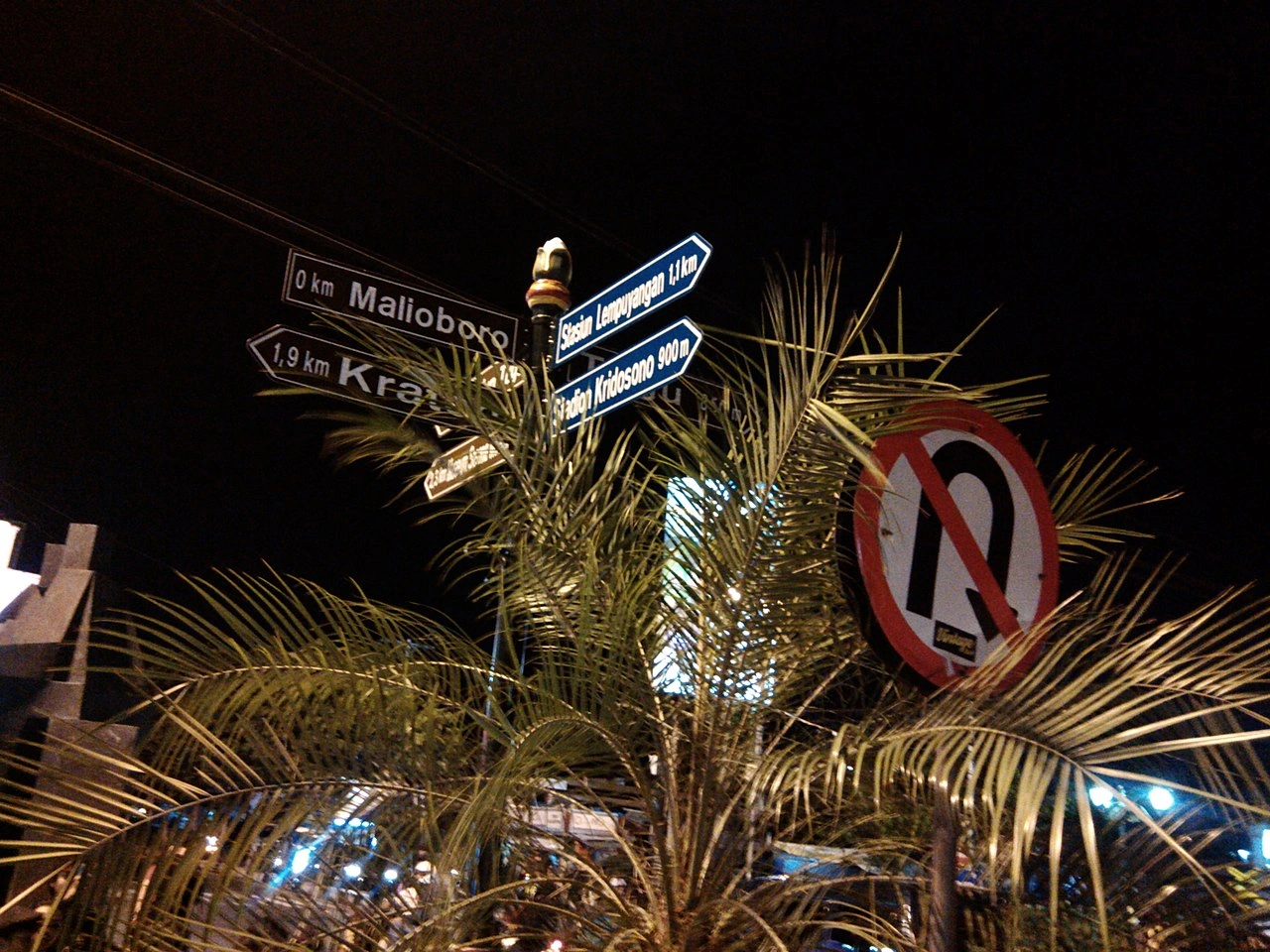
Wikimedia.org • sugeng widodo • CC BY-SA
What observations precede Indonesian U-turns?
Check traffic ahead, beside and behind the vehicle.
🔗 peraturan.bpk.go.id • Indonesia — Act Article 112
🔗 peraturan.bpk.go.id • BPK — Law 6/2023, Article 55, amendments to Act 22/2009
Must Indonesian U-turns be signalled?
Yes. Use direction indicators or the prescribed hand signal.
🔗 peraturan.bpk.go.id • Indonesia — Act Article 112
🔗 peraturan.bpk.go.id • BPK — Law 6/2023, Article 55, amendments to Act 22/2009
21. Uncontrolled crossroad
An uncontrolled crossroad is an intersection where traffic priority is not specifically regulated by traffic lights, an authorised person or signs assigning priority to particular approaches. Drivers must therefore determine who has priority using the default traffic rules that apply in that country.
The applicable rule varies between countries and may include priority from the right, priority from the left or another default right-of-way rule. Drivers should approach an uncontrolled crossroad carefully, observe traffic from every direction and never assume that a wider or busier road automatically has priority.

Wikimedia.org • Aris Setiawan • CC BY-SA
What is an uncontrolled crossroad?
An uncontrolled crossroad is an intersection where priority is not specifically assigned by traffic lights, an authorised person or priority signs. Drivers must use the default priority rules of the country.
Who has priority at an uncontrolled crossroad?
This depends on the local traffic law. Some countries use priority from the right, while others use different rules. Drivers should know the default intersection rule of the country in which they are driving.
What should you do if you are unsure who has priority?
Reduce speed and be prepared to stop. Never force your way through an intersection simply because the priority situation is unclear.
22. Licence plate
A licence plate, also called a registration plate or number plate, is a plate displaying a unique registration identifier assigned to a vehicle by the competent registration authority. It allows the vehicle to be identified for purposes such as registration, traffic enforcement, taxation, insurance and parking control.
The appearance, format, placement and number of plates required vary between countries and vehicle categories. Drivers must ensure that required licence plates are correctly fitted, clearly visible and legible and must follow the local rules when a plate is lost, stolen, damaged or replaced.

Wikimedia.org • RasyaAbhirama13 • CC BY-SA
What is a licence plate?
A licence plate is a plate displaying the registration identifier assigned to a vehicle. It allows authorities and other authorised systems to identify the vehicle's registration.
Is a licence plate the same as a registration plate?
Yes. Licence plate, registration plate and number plate are different terms commonly used for the plate displaying a vehicle's official registration number.
What should you do if a licence plate is lost or stolen?
Follow the local reporting and replacement procedure. For example, UK guidance says stolen plates should be reported to the police and DVLA, and replacement plates are needed before driving. Check the registration authority’s procedure for a lost plate; it may differ from the theft process.
23. Bus
A bus is a motor vehicle designed to transport multiple passengers, usually along roads as part of public transport, school transport, private transport or another passenger service. Buses generally have more passenger capacity than cars and may be designed to carry seated passengers, standing passengers or both.
Special rules may apply to buses concerning the driving licence, passenger capacity, speed limits, seat belts, bus lanes, stops and passenger boarding. The legal classification of buses and coaches and the rules applying to them vary between countries, so drivers and passengers must follow the local traffic regulations.

Wikimedia.org • Naufal Farras • CC BY-SA
What is a bus?
A bus is a motor vehicle designed to transport a relatively large number of passengers. It may be used for public transport, school transport, private services or other passenger transport.
🔗 gov.uk • Great Britain Highway Code, Rules 83–88; national guidance example
🔗 gov.uk • Great Britain Highway Code, Rules 221–223; national guidance example
Do buses always have priority when leaving a bus stop?
No. Some countries require other drivers to give way to buses leaving designated stops, particularly in urban areas, while others apply the normal merging rules.
🔗 gov.uk • Great Britain Highway Code, Rules 83–88; national guidance example
🔗 gov.uk • Great Britain Highway Code, Rules 221–223; national guidance example
Do buses have special speed limits?
They can. Some countries impose lower maximum speeds on buses than on passenger cars, particularly on high-speed roads. Different limits may apply to buses and coaches.
🔗 gov.uk • Great Britain Highway Code, Rules 83–88; national guidance example
🔗 gov.uk • Great Britain Highway Code, Rules 221–223; national guidance example
24. Police
Police are public authorities responsible for enforcing laws, maintaining public safety and managing situations that may affect road traffic. In traffic, police officers may control vehicles, enforce traffic rules, investigate collisions, direct traffic and respond to emergencies.
Road users must follow lawful instructions given by police officers or other authorised traffic-control personnel. Police directions may temporarily override traffic lights, road signs or normal traffic arrangements, depending on local law.
Wikimedia.org • Everyone Sinks Starco • CC BY-SA
What is the role of police in road traffic?
Police help enforce traffic law, investigate collisions and respond to risks on the road. For example, Greater Manchester Police describe targeted road enforcement, a round-the-clock roads-policing response and specialist serious-collision investigation. Exact responsibilities and powers vary by jurisdiction.
🔗 gmp.police.uk • Greater Manchester Police, Roads Policing Strategy2024–2026
Must you obey a police officer directing traffic?
Yes. Lawful directions given by an authorised police officer must be followed. In many countries, those directions take precedence over traffic lights, road signs and normal priority rules.
What should you do if police signal you to stop?
Slow down, follow the officer's directions and stop at a safe location as instructed. Do not make sudden movements or continue driving unless directed to do so.
25. Ambulance
An ambulance is a vehicle equipped and used to provide emergency medical assistance or transport patients to or between healthcare facilities. Ambulances may carry medical equipment and trained personnel who can provide treatment during transport.
During an emergency response, an ambulance may use warning lights and a siren and may receive special priority or exemptions from certain traffic rules. Other road users must follow the local rules for emergency vehicles, make sufficient space and avoid obstructing their passage.

Wikimedia.org • Vulphere • CC BY
What is an ambulance?
An ambulance is a specially equipped vehicle used to provide emergency medical assistance and transport sick or injured people.
🔗 gov.uk • Great Britain Highway Code, Rule 219, emergency vehicles; national guidance example
What should you do when an ambulance approaches?
Make space safely for an ambulance on an emergency response, following the local rules and any lawful directions. Slow down or stop where necessary without sudden or dangerous movements. Do not assume that its emergency status allows you to pass a red light or disregard another traffic control.
🔗 gov.uk • Great Britain Highway Code, Rule 219, emergency vehicles; national guidance example
Can an ambulance exceed the speed limit?
Many countries permit emergency vehicles to depart from certain normal speed rules during an urgent mission, subject to safety requirements and national legislation.
🔗 gov.uk • Great Britain Highway Code, Rule 219, emergency vehicles; national guidance example