


Catalytic converterWorldwide
An introduction to the traffic rules and road signs of Worldwide. Learn about driving, road safety and much more in our illustrated book, with answers to frequently asked questions.
For informational purposes only. Always follow official regulations. Some content and images were created with AI assistance.
 Traffic rules
 Worldwide
387. Catalytic converter
A catalytic converter is an emissions-control device fitted in a vehicle's exhaust system. It uses chemical reactions to convert harmful exhaust pollutants into less harmful substances before the exhaust gases are released into the atmosphere.
Depending on the engine and system, a catalytic converter can reduce pollutants such as carbon monoxide, unburned hydrocarbons and nitrogen oxides. It must reach an appropriate operating temperature to work effectively and can be damaged by contamination, overheating or engine faults.
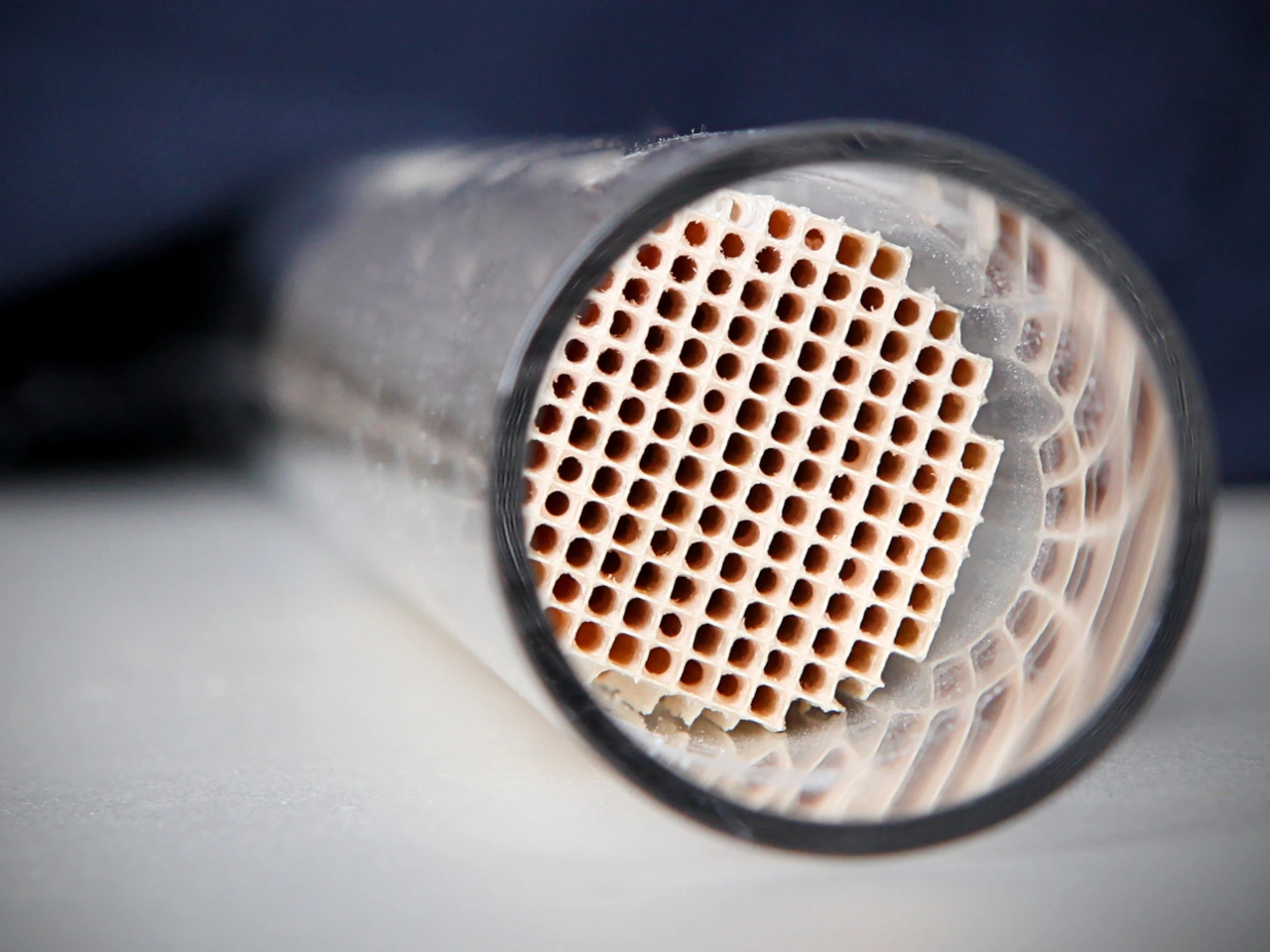
Wikimedia.org • Oak Ridge National Laboratory • CC BY
What does a catalytic converter do?
A catalytic converter reduces harmful pollutants in engine exhaust by converting them through chemical reactions into less harmful substances before they leave the exhaust system.
Where is the catalytic converter located?
It is installed in the exhaust system between the engine and the exhaust outlet. Its exact position varies between vehicles and may be relatively close to the engine so that it reaches its operating temperature quickly.
What are signs of a faulty catalytic converter?
Possible signs include an emissions or engine warning light, excessive exhaust emissions, reduced engine performance, unusual exhaust smells or failure of an emissions test. These symptoms can also have other causes and should be diagnosed properly.


