


All-way stopWorldwide
An introduction to the traffic rules and road signs of Worldwide. Learn about driving, road safety and much more in our illustrated book, with answers to frequently asked questions.
For informational purposes only. Always follow official regulations. Some content and images were created with AI assistance.
 Traffic rules
 Worldwide
63. All-way stop
An all-way stop is an intersection where traffic approaching from every direction is required to stop before entering. It is usually indicated by a stop sign on each approach and is commonly used where traffic from intersecting roads needs to be controlled without traffic lights.
Every driver must come to a complete stop and proceed only when it is safe and permitted. The rules determining which vehicle may proceed first differ between countries, so drivers should follow the local priority rules rather than assuming that the first vehicle to arrive always has priority.
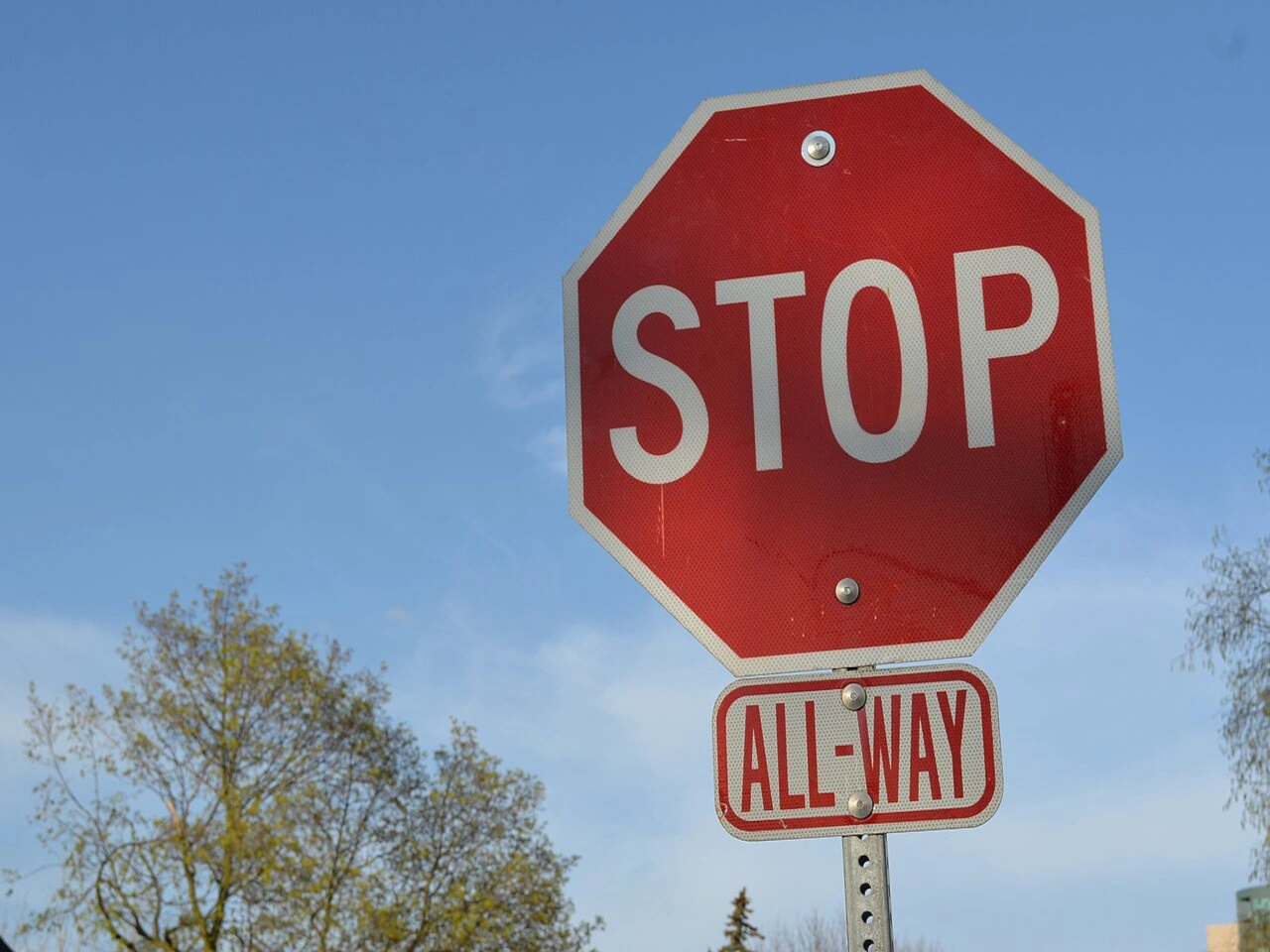
Wikimedia.org • Raysonho • CC BY-SA
Do you still have to stop when no other traffic is present?
Yes. Where a stop sign requires a complete stop, the driver must stop even when no other vehicles or road users are visible.
Does first arrival always determine priority at an intersection where everyone has a STOP sign?
Do not rely on arrival order alone. Follow the local all-way-STOP rules and check for pedestrians and other conflicts. California’s handbook, for example, uses arrival order, requires yielding to the right for simultaneous arrivals, and gives pedestrians priority. Stop fully and proceed only when it is safe.
🔗 dmv.ca.gov • California DMV, Driver Handbook, right-of-way at four-way stops


