FußgängerüberwegJapan

Lerne Verkehrsregeln mit klaren Erklärungen und visuellen Beispielen in unserem illustrierten Buch – einfach, verständlich und anschaulich.


21. Fußgängerüberweg

Ein Fußgängerüberweg ist eine ausgewiesene Stelle, an der Fußgänger eine Straße überqueren können. Er wird häufig durch Fahrbahnmarkierungen, Verkehrszeichen, Lichtsignale oder eine Kombination dieser Maßnahmen gekennzeichnet.

Fahrer müssen sich mit angemessener Vorsicht nähern und Vorfahrt gewähren, wenn das örtliche Recht dies verlangt. Fußgänger müssen ebenfalls auf den herannahenden Verkehr achten und vorhandene Fußgängersignale oder Anweisungen befugter Verkehrsregler befolgen.
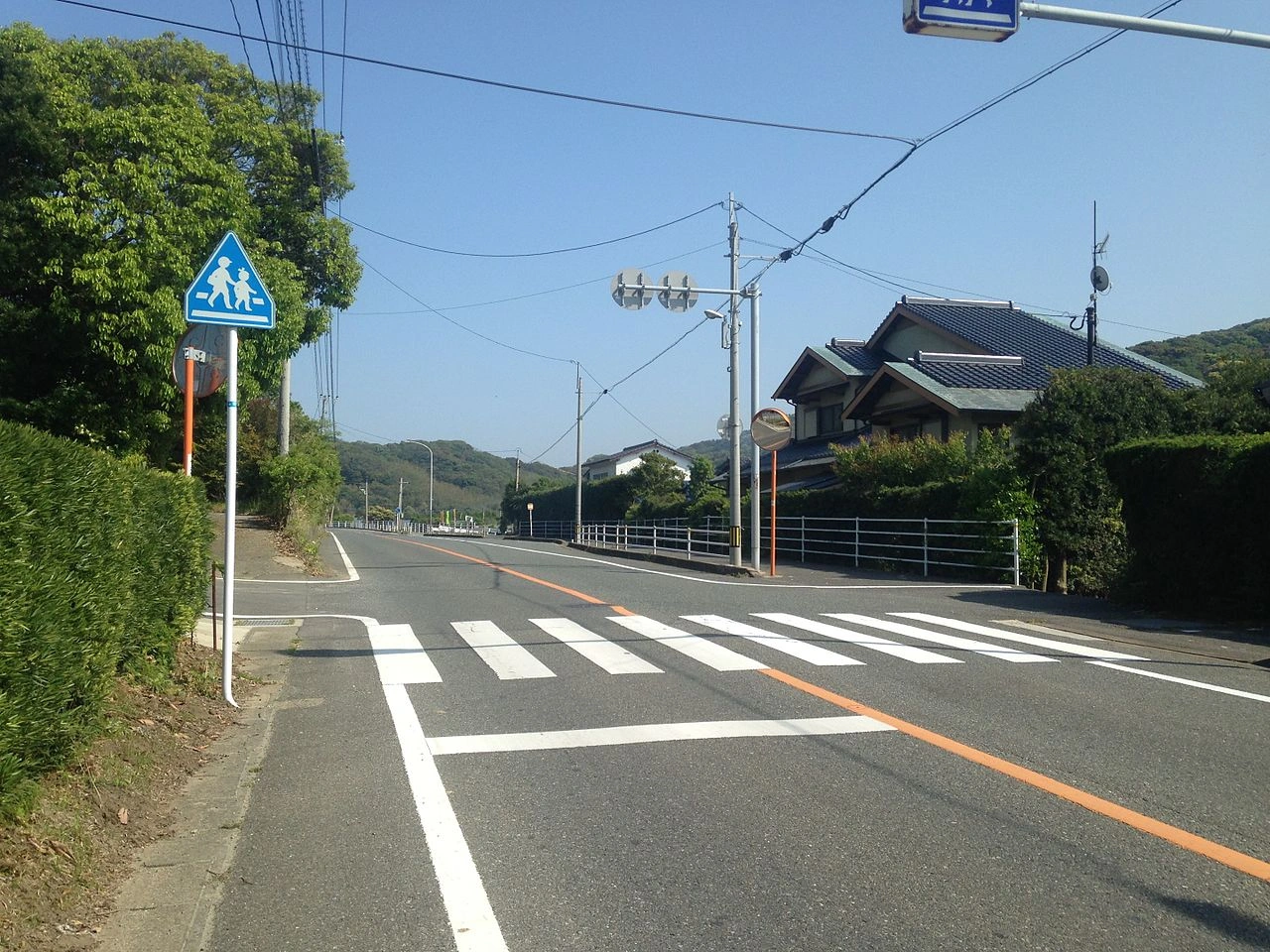
Fußgängerüberweg
What is a pedestrian crossing?

A pedestrian crossing is a designated place for pedestrians to cross a road. It may be controlled by traffic lights or operate without signals.

How can you recognise a pedestrian crossing?

It may be indicated by white road markings, traffic signs, flashing lights, pedestrian signals or a raised crossing. Its appearance varies between countries.

Is a pedestrian crossing the same as a zebra crossing?

A zebra crossing is a type of pedestrian crossing marked by broad contrasting stripes or rectangles. Not every pedestrian crossing uses this design.

Do pedestrians always have priority?

Not universally. Priority depends on local law, traffic signals and whether the pedestrian is already crossing or clearly preparing to cross.

Must drivers stop for pedestrians waiting beside the crossing?

This depends on local law. In many countries, drivers must give way when a pedestrian is clearly intending or preparing to enter the crossing.

How should drivers approach a pedestrian crossing?

Reduce speed, observe both sides of the road and be prepared to stop. Pay particular attention to children, older people and persons with limited mobility.

May you enter a crossing when traffic is congested?

No. Do not enter when traffic ahead may force you to stop on the crossing and block pedestrians.

Where should you stop for a pedestrian?

Stop before the crossing or before the applicable stop line. Leave the crossing completely clear.

May you overtake near a pedestrian crossing?

Overtaking may be prohibited, particularly when another vehicle has stopped or slowed for the crossing. Even where no specific prohibition applies, overtaking is unsafe when pedestrians may be hidden from view.

May you stop or park on a pedestrian crossing?

Normally not. Stopping or parking on or immediately before a crossing can obstruct pedestrians and hide them from approaching drivers.

Does a pedestrian crossing impose a speed limit?

Not by itself. Drivers must respect the applicable speed limit and reduce their speed further when necessary to stop safely.

Do traffic lights change the priority rules?

Yes. Drivers and pedestrians must follow the signals applying to them. Drivers must still allow pedestrians who lawfully started crossing to finish safely.

May pedestrians cross when their signal is red?

No. Pedestrians must wait when the pedestrian signal prohibits them from entering the road.

What if the pedestrian signal changes while someone is crossing?

A pedestrian who entered lawfully should continue at a normal pace. Drivers must allow the crossing to be completed safely.

May cyclists ride across a pedestrian crossing?

This depends on local law. In many countries, a person riding a bicycle is treated as a driver and does not receive pedestrian priority. A cyclist walking beside the bicycle is normally treated as a pedestrian.

Is a pedestrian crossing also a cycle crossing?

Not automatically. A separate cycle crossing, cycle path or combined crossing may be indicated by additional markings or signs.

Must pedestrians use a nearby crossing?

Some countries require pedestrians to use a crossing when one is located within a specified distance. Other countries allow crossing elsewhere when it can be done safely.

May pedestrians remain standing on the crossing?

No. Pedestrians should cross without unnecessary delay and should not obstruct traffic by stopping or lingering on the road.

Does a raised pedestrian crossing change priority?

The raised surface itself does not necessarily determine priority. Drivers and pedestrians must follow the crossing markings, signs, signals and local rules.

What should drivers check when turning across a crossing?

Check for pedestrians approaching from both sides and give way where required. Turning drivers should not focus only on motor traffic.

What should pedestrians do before crossing?

Observe approaching traffic, make sure drivers have sufficient time to react and cross carefully. Priority does not remove the need to avoid stepping into the path of a vehicle that cannot stop safely.

1 Japan 2 Autobahn 3 Schnellstraße 4 Zone 5 Geschwindigkeitsbegrenzung 6 Mindestgeschwindigkeit 7 Gehweg 8 Radweg 9 Gemeinsamer Geh- und Radweg 10 Tunnel 11 Mautstraße 12 Einbahnverkehr 13 Kaianlage 14 Steigung oder Gefälle 15 Busspur 16 Bushaltestelle 17 Stoppschild 18 Vorfahrt gewähren 19 Kreisverkehr 20 Fahrbahnverengung 21 Fußgängerüberweg 22 Bahnübergang 23 Vorgeschriebene Fahrtrichtung 24 Abbiegeverbot 25 Schulbereich 26 Überholen 27 Wild- oder Viehwechsel 28 Rutschige Fahrbahn 29 Steinschlag 30 Kurve 31 Falschfahrt 32 Straßenarbeiten 33 Seitenwind 34 Höhenbegrenzung 35 Breitenbegrenzung 36 Gewichtsbeschränkung 37 Geschwindigkeitskontrolle 38 Selektive Sperren 39 Wegweiser an einer Kreuzung 40 Ampeln 41 Warnung vor Ampeln 42 Fußgängerampeln 43 Fahrbahnmarkierungen 44 Führerschein 45 Kilometrierungsmarkierung 46 Verkehrsspiegel 47 Notruftelefon 48 Radroute 49 Parken 50 Parkverbot 51 Halteverbot 52 Behindertenparkplatz 53 Verkehrsmanagement 54 Rückwärtsfahren 55 Wenden 56 Ungeregelte Kreuzung 57 Fahrbahnschäden 58 Vorläufiger Führerschein 59 Notausgang 60 Ortsgrenze 61 Hupe 62 Kennzeichen 63 Ladestation 64 Allgemeine Gefahr 65 Fußgänger 66 Radfahrer 67 Moped 68 Motorrad 69 Pkw 70 Lkw 71 Bus 72 Polizei 73 Krankenwagen 74 Schlagloch 75 Weg 76 Feinstaub 77 Luftverschmutzung 78 Hauptverkehrszeit 79 Straßenverkehrsordnung 80 Gegenverkehr 81 Straßenrinne 82 Lastenfahrrad 83 Forstfahrzeug 84 Baufahrzeug 85 Sattelzug 86 Oberleitungsbus 87 Speed-Pedelec 88 Lieferfahrzeug 89 Leerlauf 90 Abschleppwagen 91 Allradantrieb 92 Verbot für Fahrzeuge 93 Fahrrad 94 Motorradausrüstung 95 Straßenbahn 96 Gleis 97 Wohnwagen 98 Anhänger 99 Anhängerkupplung 100 Feuerwehrfahrzeug ...