


Traffic managementGermany
 Traffic rules
 Germany
78. Traffic management
Traffic management is the organised control, regulation and guidance of road users to improve safety, traffic flow and the efficient use of roads. It can include traffic lights, road signs, road markings, lane controls, variable speed limits, diversions and directions given by authorised persons.
Traffic management may be permanent or temporary. Temporary measures are commonly introduced during roadworks, congestion, collisions, public events or other incidents. Drivers and other road users must follow the signs, signals and instructions applying at the location, even when they differ from the normal traffic arrangement.
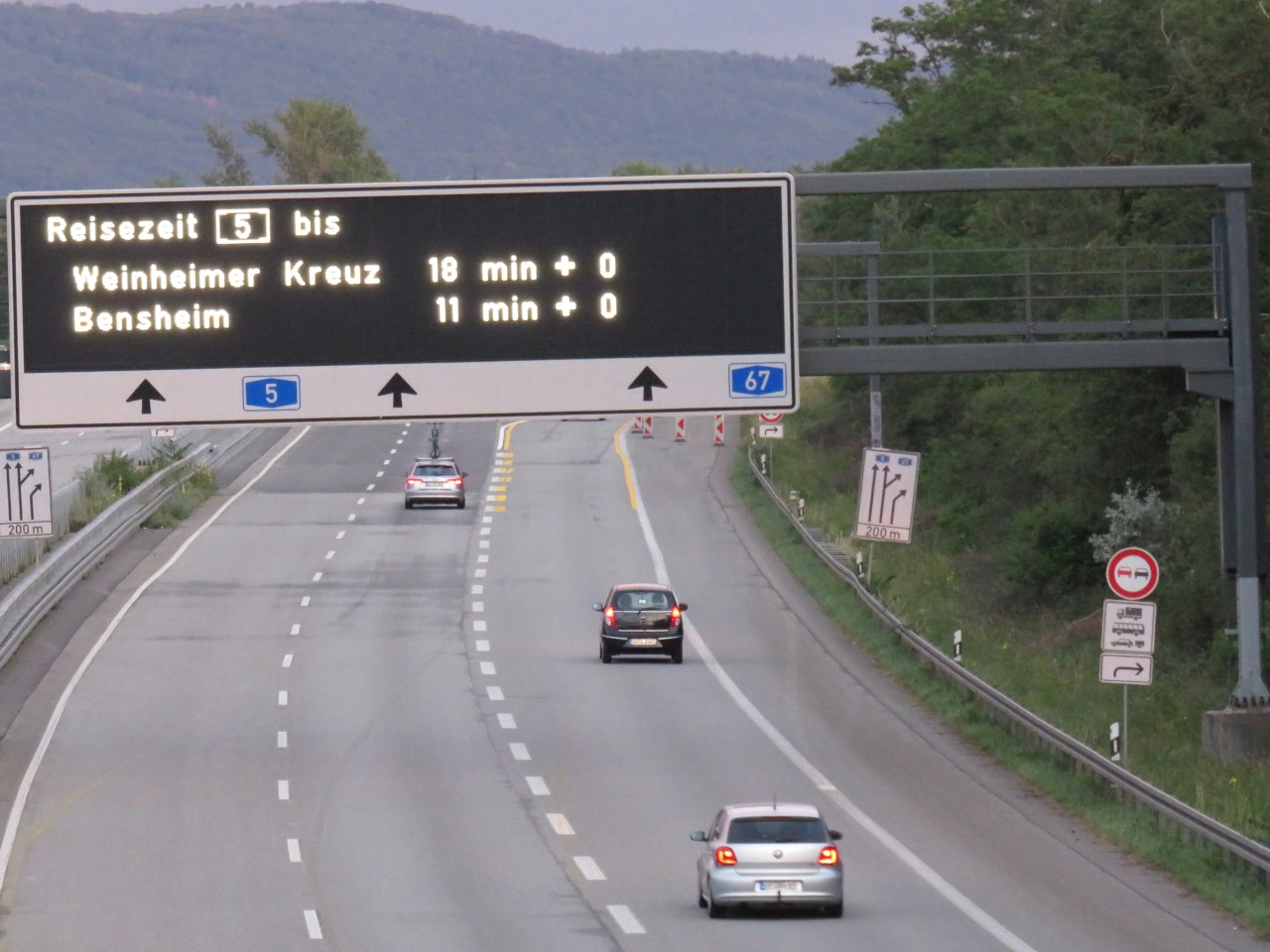
Wikimedia.org • Adl252 • CC BY-SA
What is traffic management?
Traffic management is the organised control and guidance of traffic using signs, signals, road markings, lane controls, speed restrictions, diversions and other measures.
Why is traffic management used?
Traffic management is used to improve safety, control traffic flow and reduce disruption. It can also protect road workers, pedestrians, cyclists and emergency services.
How can traffic be managed?
Common methods include traffic lights, road signs, road markings, variable-message signs, lane-control signals, temporary barriers, speed restrictions and diversions. Authorised persons may also direct traffic.
Can traffic management change the normal speed limit?
Yes. Temporary or variable speed-limit signs may impose a different maximum speed because of congestion, roadworks, weather, incidents or other conditions. Drivers must follow the limit currently displayed.
Can traffic management change which lanes you may use?
Yes. Lane-control signals, temporary signs or road markings may close lanes, move traffic into different lanes or require drivers to change lane. Follow the current signs and markings rather than the normal road layout.
What should you do when a traffic lane is closed?
Move into an open lane safely and in good time, following any arrows, signs and local merging rules. Never continue along a lane that is clearly indicated as closed.
Can temporary traffic signs be compulsory?
Yes. Properly authorised temporary signs used for roadworks, incidents or other traffic-management measures must be obeyed in the same way as other official traffic signs.
What should you do when an authorised person directs traffic?
Follow the directions of the authorised person. In many countries, these directions take precedence over traffic lights, road signs or the normal traffic rules.
How is traffic managed around roadworks?
Roadworks may use temporary speed limits, lane closures, barriers, temporary markings, traffic lights and diversions. Road users should reduce speed where necessary and carefully follow the temporary route.
Does traffic management also protect pedestrians and cyclists?
Yes. Temporary or permanent traffic arrangements should account for pedestrians and cyclists as well as motor vehicles. They may be provided with separate routes, crossings, signals or diversions where necessary.


