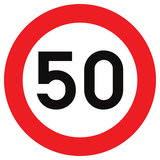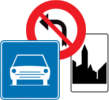
Contaminación del aireBruselas
79. Contaminación del aire
La contaminación del aire es la presencia de gases, partículas u otras sustancias en concentraciones que pueden perjudicar la salud humana, el medio ambiente o los ecosistemas. El tráfico contribuye mediante emisiones de escape y fuentes no relacionadas con el escape como desgaste de frenos, neumáticos y polvo de la carretera.
Entre los contaminantes importantes del tráfico se incluyen óxidos de nitrógeno, material particulado, monóxido de carbono y compuestos orgánicos volátiles. Algunos se emiten directamente y otros se forman en la atmósfera mediante reacciones químicas. Las normas de emisiones, tecnologías más limpias y medidas de gestión del tráfico ayudan a reducirlos.
Is road traffic an important source of air pollution in Belgium?
Yes. Road traffic contributes to several air pollutants, particularly nitrogen oxides and particulate matter, and its influence can be especially important near busy roads and in densely populated areas.
Which traffic-related pollutant is especially important near Belgian roads?
Nitrogen dioxide (NO2) is strongly associated with road traffic. The highest concentrations in Flanders are particularly linked to heavily trafficked roads.
Does Belgian road traffic also produce particulate matter?
Yes. Vehicles can contribute particulate matter through exhaust emissions as well as brake wear, tyre wear, road wear and resuspended road dust.
Do modern diesel cars still affect Belgian air quality?
Yes. Modern emission-control systems have greatly reduced pollutants from newer vehicles, but diesel traffic can still contribute to nitrogen-oxide and particulate emissions. The actual emissions depend on the vehicle technology, condition and driving circumstances.
How does Belgium measure air pollution?
Air quality is monitored through regional measurement networks, with Belgian data coordinated and reported through IRCEL-CELINE. Pollutants monitored include particulate matter, nitrogen dioxide and ozone.
Can you check current air quality in Belgium?
Yes. Belgian and regional air-quality services provide current measurements, maps and air-quality indices so that people can check conditions in their area.
What is the Belgian air-quality index?
Belgium uses the BelAQI air-quality index to communicate short-term air quality based on concentrations of important pollutants such as particulate matter, nitrogen dioxide and ozone.
Why does Brussels have a Low Emission Zone?
The Brussels Low Emission Zone restricts the most polluting vehicles in order to reduce traffic-related air pollution and improve public health.
Are Belgian low-emission zones based directly on measured exhaust pollution?
Not normally. Vehicle access is generally determined using characteristics such as the vehicle category, fuel type and Euro emission standard rather than measuring the emissions of each vehicle when it enters the zone.
Do electric cars eliminate all traffic-related air pollution?
No. Fully electric cars have no combustion-engine exhaust emissions while driving, but tyres, road wear and braking can still produce particulate matter.
Can air quality vary significantly within the same Belgian city?
Yes. Traffic-related pollution can vary considerably over short distances. Concentrations can be higher beside busy roads than in quieter streets or urban-background locations.
How can drivers help reduce traffic-related air pollution?
Drivers can reduce unnecessary emissions by maintaining their vehicle correctly, avoiding unnecessary idling, driving smoothly and using lower-emission transport alternatives where practical. Public transport, cycling and walking can also reduce the amount of motor traffic contributing to urban air pollution.

Normas de tráfico
Bruselas