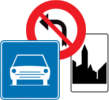
Vehículo eléctricoBruselas
108. Vehículo eléctrico
Un vehículo eléctrico, o EV, utiliza uno o más motores eléctricos para propulsarse y almacena energía eléctrica en una batería recargable u otro sistema de almacenamiento. Un vehículo totalmente eléctrico utiliza únicamente energía eléctrica para la propulsión, mientras que un híbrido enchufable combina una cadena eléctrica con otra fuente como un motor de combustión.
Los vehículos eléctricos pueden recargarse desde una fuente externa mediante un punto o estación de carga. Las normas de permiso, matriculación, seguro, estacionamiento y acceso dependen de la categoría del vehículo y de la normativa local, no simplemente de que utilice electricidad.
What is an electric vehicle in Belgium?
An electric vehicle uses an electric drivetrain for propulsion. A fully electric vehicle relies entirely on electric propulsion, while a plug-in hybrid combines electric propulsion with another power source such as a combustion engine.
Do electric cars follow different traffic rules in Belgium?
No. An electric passenger car follows the ordinary Belgian rules for cars concerning speed, priority, lane use, parking and road access unless a specific rule provides otherwise.
Which driving licence do you need for an electric car in Belgium?
An ordinary electric passenger car normally requires a category B driving licence when its maximum authorised mass does not exceed 3500 kg and it is designed for no more than eight passengers in addition to the driver.
Must an electric car be registered in Belgium?
Yes. An electric car subject to ordinary vehicle registration must be registered with the DIV and display the required registration plate before being used in traffic.
Does an electric car need insurance in Belgium?
Yes. Motor vehicles participating in Belgian road traffic must normally have at least the required civil-liability motor insurance.
Does charging an electric vehicle count as parking in Belgium?
Yes. Belgian law expressly considers charging the battery of an electric or hybrid-electric vehicle to be parking.
How is a parking space for electric vehicles indicated in Belgium?
An E9 parking sign can be supplemented with the prescribed electric-vehicle symbol to reserve a parking place for electric or hybrid-electric vehicles.
Must an electric vehicle be plugged in at a Belgian public charging space?
Yes. At a reserved parking place equipped with public charging infrastructure, an electric or hybrid-electric vehicle must be connected to that infrastructure while parked there.
Can an electric car park at a charger without being connected?
No where the Belgian rule reserving the public charging space applies. Merely being an electric vehicle is not sufficient; the vehicle must be connected to the charging infrastructure.
Does parking at a Belgian charging point automatically mean parking is free?
No. A charging-space reservation does not remove any applicable parking charges, time restrictions or other local parking conditions.
Can a plug-in hybrid use a Belgian electric-vehicle charging space?
Yes. Belgian parking rules for these spaces expressly include hybrid-electric vehicles, subject to the applicable signs and requirement to connect to public charging infrastructure.
Can fully electric vehicles enter the Brussels Low Emission Zone?
Yes. Fully electric vehicles are currently authorised to travel in the Brussels LEZ and benefit from an automatic exemption from the emission-based access restrictions.
Does an electric vehicle produce particulate pollution?
A fully electric vehicle produces no combustion-engine exhaust particles, but tyres, brakes and road-surface interaction can still generate particulate matter.
Can an electric car use Belgian motorways?
Yes. An ordinary electric car may use a motorway under the same access rules as a comparable conventional car. Electric propulsion does not create a separate motorway restriction.

Normas de tráfico
Bruselas