


Limitation de hauteurJapon
 Règles de circulation
 Japon
Japon
34. Limitation de hauteur
Une limitation de hauteur interdit l’accès ou le passage aux véhicules dont la hauteur totale dépasse la valeur indiquée sur une section de route, un pont, un tunnel, un portail ou un autre ouvrage. La hauteur du véhicule comprend son chargement et tout équipement fixé au-dessus.
Les conducteurs de véhicules hauts doivent connaître leur hauteur exacte, tenir compte des avertissements en amont et emprunter un autre itinéraire si nécessaire. Ils ne doivent jamais se fier uniquement à leur appréciation visuelle ni tenter de passer sous un ouvrage lorsque la hauteur libre disponible est incertaine.
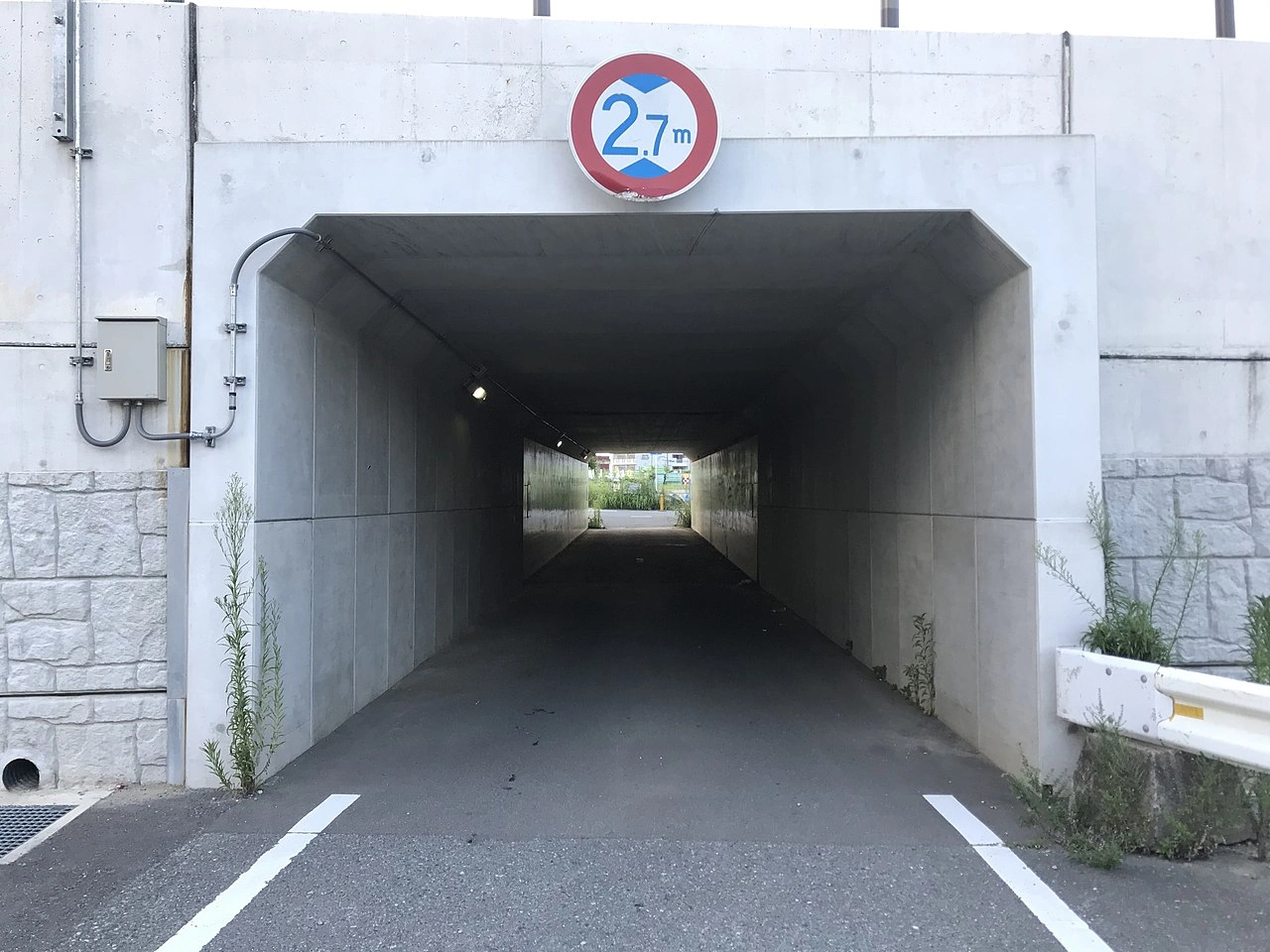
What does a height-limit sign mean?
It prohibits vehicles whose total height exceeds the displayed value from continuing beyond the sign.
How can you recognise a height-limit sign?
It is commonly a circular regulatory sign showing a height in metres, feet or another local unit between vertical arrows.
What is included in the vehicle’s total height?
The height includes the vehicle, its load and any attached equipment, such as roof boxes, bicycles, machinery, antennas or raised loading equipment.
Does the limit apply to trailers?
Yes. Every part of a vehicle combination must fit beneath the restriction, including the towing vehicle, trailer and load.
Does the sign show the exact physical clearance?
Not necessarily. Road authorities may display a lower value than the measured clearance to provide a safety margin.
May a vehicle exactly as high as the displayed value pass?
The legal wording commonly prohibits vehicles higher than the displayed value, but drivers should not attempt to pass without a practical safety margin. Measurement errors, movement and road conditions can reduce the available clearance.
How can a vehicle’s height change?
Loading, tyre pressure, suspension settings, raised equipment, replacement tyres and road movement can alter the vehicle’s total height.
Can air suspension affect the height?
Yes. The vehicle may rise or lower depending on its suspension mode, speed and load. Use the maximum travelling height when planning the route.
Can the clearance vary between lanes?
Yes. An arched bridge, tunnel roof or overhead structure may provide different clearance in each lane. Follow lane-specific signs and markings.
Can the clearance vary across the width of one lane?
Yes. Clearance may be lower near the edge of an arch or where the road slopes sideways. Remain within the authorised marked path.
Can resurfacing reduce the available clearance?
Yes. A new road surface can raise the road level and reduce the space beneath a bridge or structure.
Can snow, water or road debris affect clearance?
Yes. Material on the road can raise the vehicle or restrict the usable route. Flooding may also conceal the road surface or another hazard.
Where are height restrictions commonly found?
They are common at bridges, tunnels, car parks, loading areas, gateways, railway structures and roads with overhead equipment.
Is a height-limit sign a warning or a prohibition?
It is normally a prohibition. A vehicle that exceeds the displayed height may not pass.
Does a height-limit sign impose a speed limit?
No. The applicable road or posted speed limit remains in force, although drivers should approach cautiously.
Does the sign change priority?
No. Traffic lights, priority signs and ordinary priority rules remain applicable.
Can a height restriction be announced in advance?
Yes. An advance sign may show the restriction and the distance to it so that high vehicles can choose another route.
What should you do when your vehicle is too high?
Do not continue. Stop where safe and follow the signed diversion or another suitable route. Do not reverse into traffic without assistance.
Should you rely on a navigation system?
No. Navigation may contain outdated or incomplete vehicle restrictions. Traffic signs and the actual road conditions always take precedence.
Should professional drivers know their vehicle’s height?
Yes. Drivers of trucks, buses, motorhomes and vehicles carrying roof loads should know and, where useful, display the vehicle’s maximum travelling height inside the cab.
What should you do when uncertain about your height?
Stop before the restriction in a safe place and verify the vehicle’s height. Choose another route when safe clearance cannot be confirmed.
May you move into another lane with greater clearance?
Only when signs and markings permit it and the manoeuvre can be completed safely. Do not cross a closed lane, continuous line or opposing traffic merely to gain clearance.
May you lower or remove equipment to pass?
Only in a safe place and when the equipment can be secured correctly afterwards. Never stop beneath the structure or in a live lane to alter the vehicle.
What should you do if your vehicle strikes a bridge?
Stop immediately where safe, activate the hazard warning lights and contact the emergency services or police. Do not continue because the vehicle, load or structure may be unstable.
Should traffic continue beneath a struck bridge?
No, when damage may have occurred. Keep away from the structure and follow instructions from the police, road authority or railway operator.


